

 Preview
 Send
Send Share
Share
 Details

 Download
 Similars
 X-Ray
X-Ray Diaporama
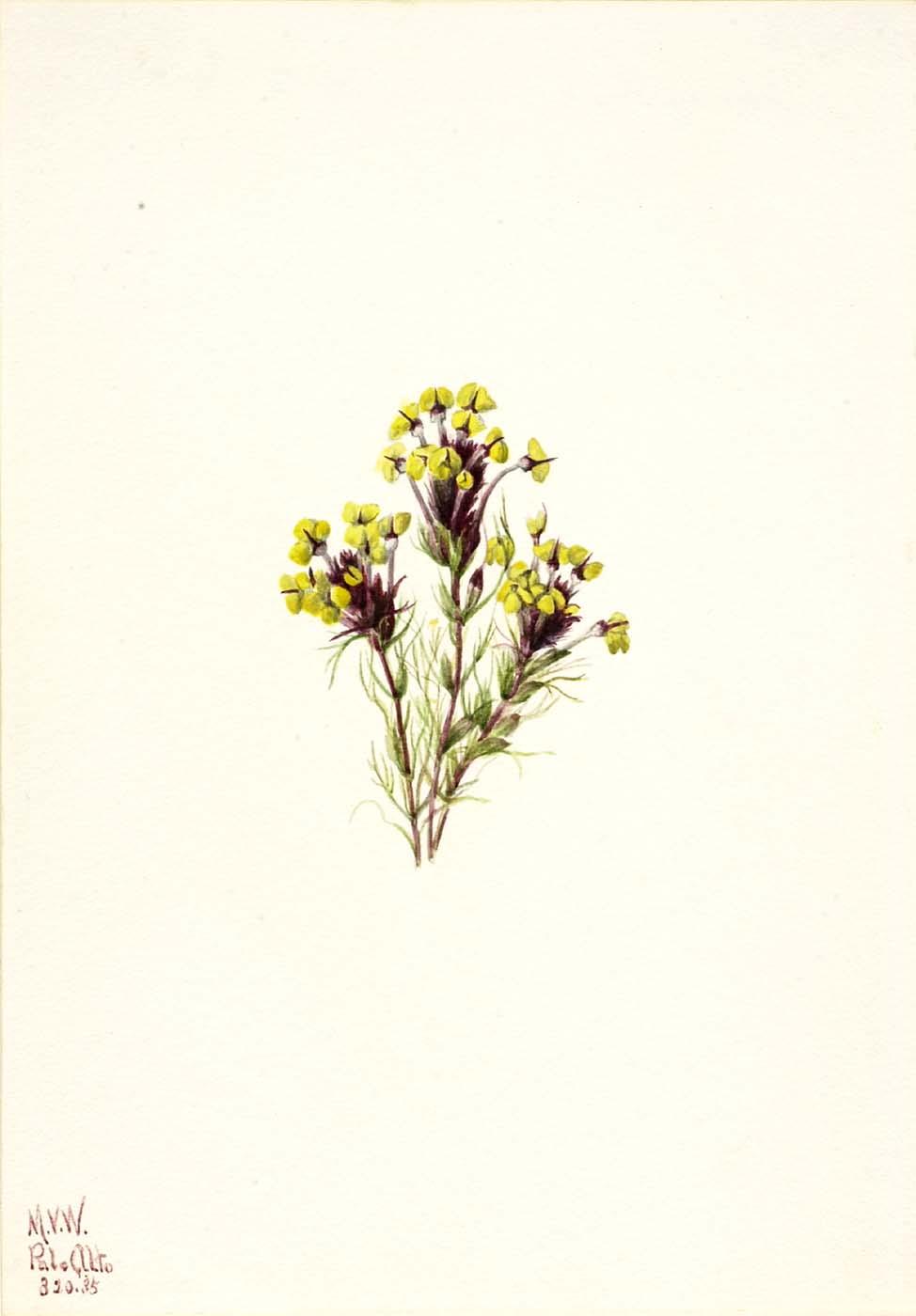
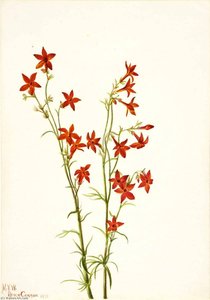
Owl's Clover (Orthocarpus erianthus)
 Watercolor
- WallArt
- Botanical Art
 1935
1935- Modern
 26.0 x 18.0 cm
 Read More
Purchase a high-resolution, enhanced digital image, far superior to the online preview.
Each file is meticulously prepared by our in-house specialists using advanced tools and expert manual retouching. We ensure every image has exceptional clarity, precise color accuracy, and fine detail.
The final file is delivered via email within 72 hours, optimized for immediate use in professional, editorial, and print environments. This is the same quality trusted by top-tier design studios, publishers, and galleries.
Digital Image
Download a high-resolution file for personal display, printing, and creative projects. ( Buy Print Buy Hand Made Painting)
Included in Every Digital Image Order
Expert Digital Delivery, Guaranteed
When you choose ArtsDot.com, you're not just getting an image - you're receiving a professionally enhanced digital artwork, crafted with precision and backed by a satisfaction guarantee. Here's everything that comes with your order, automatically:

Fast Email Delivery
Your high-resolution digital image file will be emailed to you within 72 hours of ordering - ready for immediate use.

AI-Enhanced Digital File
Your artwork is professionally optimized using advanced AI tools and manual editing, ensuring maximum detail, clarity, and color accuracy.

Free Lifetime Re-Delivery
Accidentally deleted or lost your file? No worries - we'll resend it to you anytime, free of charge.

No Import Fees - Ever
Enjoy your artwork instantly with zero customs, duties, or delivery fees - digital downloads are always tax-free.

Color Accuracy Guarantee
We ensure your digital image reflects the original colors as closely as possible using professional tools and color management.

60-Day Satisfaction Guarantee
If you're not satisfied with your digital image, we'll revise it or refund 100% within 60 days - no questions asked.

100% Money-Back Guarantee
Not satisfied? Get a full refund within 60 days of receiving your digital file - no questions asked.

Bulk Order Discounts
Buy 3 images, save 10% - Buy 5, save 15% - Buy 10+, save 20%. Great for creative projects, galleries, and agencies.
Collectible Description
Owl's Clover (Orthocarpus erianthus): A Botanical Masterpiece
The watercolor painting Owl's Clover (Orthocarpus erianthus) by Mary Vaux Walcott is a stunning example of botanical art, showcasing the delicate beauty and scientific accuracy characteristic of her work. Created in 1935, this piece resides within the esteemed collection of the Smithsonian American Art Museum in the United States. Measuring 26 x 18 cm, it exemplifies Walcott's meticulous attention to detail and her ability to capture the intricate essence of nature.
The Artist’s Style and Technique
Mary Vaux Walcott's artistic style is defined by her masterful use of watercolor. This medium allows for a remarkable level of delicacy and subtlety, perfectly suited to rendering the intricate details of flowers and plants. Her paintings are not merely beautiful; they are also highly accurate representations, making them invaluable resources for botanists as well as art enthusiasts. Walcott’s technique involved layering washes of color to build depth and form, often employing dry brush techniques to create texture and a sense of realism. The composition is tightly focused on the floral subject, emphasizing its intricate details against a pale cream-colored background. Perspective is largely flattened, prioritizing accurate representation over realistic spatial relationships.
Botanical Accuracy and Scientific Significance
“Owl’s Clover (Orthocarpus erianthus)” isn't just an aesthetically pleasing artwork; it represents a significant contribution to botanical documentation. Walcott was renowned as the "Audubon of Botany," reflecting her dedication to accurately portraying wildflowers. Her work served not only as artistic expression but also as a valuable resource for scientific study, providing detailed visual records of plant species. The painting’s precision and clarity demonstrate Walcott's commitment to both art and science, bridging the gap between aesthetic beauty and botanical understanding. The Smithsonian American Art Museum recognizes this significance, preserving her work as an important part of American artistic heritage.
Historical Context and Legacy
Created in 1935, “Owl’s Clover” reflects a period when botanical illustration was highly valued for its scientific utility. During the late 19th and early 20th centuries, detailed botanical illustrations were essential tools for naturalists and researchers. Walcott's work stands out for its exceptional quality and her dedication to capturing the essence of each plant species. Her legacy extends beyond individual artworks; she established the Charles Doolittle Walcott Medal in honor of her husband, recognizing significant contributions to pre-Cambrian and Cambrian life research. The painting itself is a testament to her enduring impact on both the art world and the scientific community.
Other Notable Works by Mary Vaux Walcott
Explore more of Mary Vaux Walcott's botanical artistry through her other acclaimed works:
- Northern Bedstraw (Galium boreale)
- Jacob's Ladder (Polemonium viscosum)
- Siberian Onion (Allium sibericum)
These paintings, along with other beautiful examples of botanical art, can be found on ArtsDot.com.
Related Artworks
Artist Biography
A Life Blossoming in Watercolor: The World of Mary Vaux Walcott
Born into the refined world of Philadelphia’s Quaker society in 1860, Mary Morris Vaux seemed destined for a life of quiet domesticity. Yet, from an early age, a vibrant artistic spirit stirred within her, ignited by a simple gift – a set of watercolor paints at the tender age of eight. These weren't merely tools for recreation; they were keys unlocking a lifelong passion for capturing the delicate beauty of the natural world, particularly wildflowers. Little could anyone have predicted that this early inclination would blossom into a remarkable career, earning her the affectionate title “the Audubon of Botany.” Her story is not simply one of artistic talent, but also of resilience, scientific curiosity, and a pioneering spirit that defied societal expectations. The weight of familial responsibility fell upon young Mary after her mother’s death in 1880, compelling her to dedicate herself to caring for her father and two younger brothers. This devotion didn't extinguish her creative flame; rather, it fueled a deep connection with the landscapes they explored during their annual summer expeditions to the Canadian Rockies.The Allure of the Rockies: Nature as Muse and Subject
These journeys were transformative. The rugged grandeur of the Canadian Rockies became Mary’s artistic laboratory. Alongside her brothers, she didn't merely observe the landscape; she meticulously documented it – studying mineralogy, charting glacial movements through drawings and photographs, and immersing herself in the intricate details of alpine flora. This wasn’t passive observation but active engagement with the scientific underpinnings of nature. It was during these expeditions that Mary began to hone her skills as a botanical illustrator, initially at the request of botanists eager for accurate depictions of rare species. Her approach was revolutionary for its time: she rendered plants to scale, showcasing their delicate structures and vibrant colors with unparalleled precision. Unlike many floral paintings of the era, which often romanticized or stylized their subjects, Walcott’s work prioritized scientific accuracy alongside artistic expression. The vastness of the landscape also fostered a spirit of adventure; in 1900, she became the first woman recorded to summit Mount Stephen, a feat that underscored her physical courage and unwavering determination.A Partnership Forged in Science and Art
Mary’s life took another significant turn in 1914 when she married Charles Doolittle Walcott, then Secretary of the Smithsonian Institution and a renowned paleontologist. This union wasn't merely a personal connection; it was a meeting of minds deeply committed to scientific exploration. Their marriage fostered a unique partnership where art and science intertwined seamlessly. They continued their annual expeditions to the Rockies, with Charles pursuing his geological research while Mary dedicated herself to her botanical paintings. These weren’t separate endeavors but complementary pursuits, each enriching the other. The Smithsonian Institution became a crucial platform for showcasing Mary's work, culminating in the publication of *North American Wild Flowers* in 1925 – a monumental five-volume collection featuring over 400 of her meticulously crafted illustrations. This publication cemented her reputation as a leading botanical artist and earned her the enduring moniker “the Audubon of Botany,” acknowledging the parallel between her detailed floral studies and John James Audubon’s iconic depictions of birds.Legacy in Bloom: A Lasting Contribution to Art and Science
Mary Vaux Walcott's influence extends far beyond the beauty of her paintings. Her work represents a unique synthesis of artistic skill, scientific observation, and adventurous spirit. She wasn’t simply documenting flowers; she was capturing their essence, revealing their intricate structures, and celebrating their vital role in the natural world. Her illustrations continue to be valued by both art enthusiasts and botanists alike, serving as invaluable resources for identifying and studying North American flora. Beyond her artistic achievements, Walcott also demonstrated a commitment to public service, serving on the federal Board of Indian Commissioners from 1927 to 1932 and actively advocating for improved conditions on Native American reservations. Upon her death in 1940, she bequeathed a substantial sum to the Smithsonian Institution, ensuring that future generations would benefit from scientific research and publication. A mountain peak in Jasper National Park, Mount Mary Vaux, stands as a lasting tribute to her adventurous spirit and enduring legacy. Her story serves as an inspiration, demonstrating how passion, dedication, and a deep connection with nature can blossom into a life of remarkable achievement.Key Achievements & Recognition
- Pioneering Botanical Illustration: Renowned for her scientifically accurate and artistically exquisite watercolor paintings of wildflowers.
- “The Audubon of Botany”: Affectionately known by this title, recognizing the significance of her work in botanical art.
- *North American Wild Flowers* (1925): Publication of a five-volume collection showcasing over 400 of her illustrations, solidifying her reputation.
- First Woman to Summit Mount Stephen: A testament to her adventurous spirit and physical endurance.
- Contributions to Glacial Geology: Documented glacial recession in the Canadian Rockies alongside her brothers, providing valuable data for climate change studies.
- Philanthropic Legacy: Bequeathed a significant sum to the Smithsonian Institution to support scientific research.
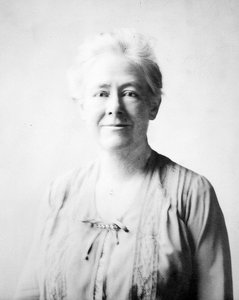
Mary Vaux Walcott
1860 - 1940 , United States of America
Quick Facts
- Artistic Movement Or Style: Botanical Illustration
- Date Of Birth: July 31, 1860
- Date Of Death: August 22, 1940
- Full Name: Mary Vaux Walcott
- Nationality: American
- Notable Artworks:
- Autumn Leaves
- Gaillardia aristata
- Rosa bourgeauiana
- Dendromecon rigidum
- Fremontodendron mexicanum
- Place Of Birth: Philadelphia, USA

