

 Preview
 Send
Send Share
Share
 Details

 Download
 Similars
 X-Ray
X-Ray Diaporama
 Stats
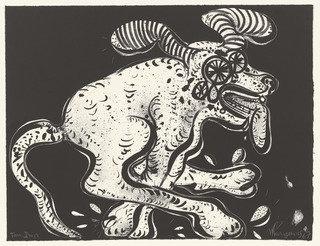
StatsUntitled
 1975
1975 53.0 x 63.0 cm
 Read More
Purchase a high-resolution, enhanced digital image, far superior to the online preview.
Each file is meticulously prepared by our in-house specialists using advanced tools and expert manual retouching. We ensure every image has exceptional clarity, precise color accuracy, and fine detail.
The final file is delivered via email within 72 hours, optimized for immediate use in professional, editorial, and print environments. This is the same quality trusted by top-tier design studios, publishers, and galleries.
Digital Image
Download a high-resolution file for personal display, printing, and creative projects. ( Switch to Print Buy Hand Made Painting)
Included in Every Digital Image Order
Expert Digital Delivery, Guaranteed
When you choose ArtsDot.com, you're not just getting an image - you're receiving a professionally enhanced digital artwork, crafted with precision and backed by a satisfaction guarantee. Here's everything that comes with your order, automatically:

Fast Email Delivery
Your high-resolution digital image file will be emailed to you within 72 hours of ordering - ready for immediate use.

AI-Enhanced Digital File
Your artwork is professionally optimized using advanced AI tools and manual editing, ensuring maximum detail, clarity, and color accuracy.

Free Lifetime Re-Delivery
Accidentally deleted or lost your file? No worries - we'll resend it to you anytime, free of charge.

No Import Fees - Ever
Enjoy your artwork instantly with zero customs, duties, or delivery fees - digital downloads are always tax-free.

Color Accuracy Guarantee
We ensure your digital image reflects the original colors as closely as possible using professional tools and color management.

100-Day Satisfaction Guarantee
If you're not satisfied with your digital image, we'll revise it or refund 100% within 100 days - no questions asked.

100% Money-Back Guarantee
Not satisfied? Get a full refund within 100 days of receiving your digital file - no questions asked.

Bulk Order Discounts
Buy 3 images, save 10% - Buy 5, save 15% - Buy 10+, save 20%. Great for creative projects, galleries, and agencies.
Related Artworks





Artist Biography
Pinchas Burstein: Forging Truth from Trauma – The Life and Art of Maryan
The canvases of Maryan, a name adopted in 1950 to signify a profound personal transformation, are not merely depictions of the world; they are visceral embodiments of trauma, resilience, and an unrelenting quest for truth. Born Pinchas Burstein in Nowy Sącz, Poland, in 1927, his early life was tragically shattered by the horrors of World War II and the Holocaust. This experience—the brutal realities of Auschwitz, the amputation of his leg, and the solitary survival against overwhelming odds—became the bedrock upon which his entire artistic vision was built. Maryan’s work stands as a uniquely powerful testament to this history, not through straightforward representation, but through a complex interplay of symbolism, distorted figures, and an intensely psychological approach that continues to resonate with viewers today.
Early Life and the Shadow of War
Pinchas Burstein’s childhood was rooted in Orthodox Jewish tradition. His family, bakers by trade, instilled in him a strong sense of community and faith. However, the invasion of Poland in 1939 irrevocably altered his trajectory. At just twelve years old, he found himself caught within the machinery of Nazi persecution, enduring imprisonment at Auschwitz concentration camp. This period of unimaginable suffering – marked by starvation, forced labor, and witnessing unspeakable atrocities – fundamentally shaped his understanding of humanity and fueled a deep-seated need to confront and process these experiences through art. The trauma extended beyond mere survival; it left him physically scarred, necessitating the amputation of his leg in 1945, further isolating him within a world that had betrayed its ideals.
From Displacement to Artistic Formation
Following the war, Burstein’s journey led him through displaced persons camps in Germany before he immigrated to Palestine in 1947. This period was marked by challenges and a sense of displacement, as his disability and unfamiliarity with the new environment created obstacles. Seeking artistic training, he enrolled at the Bezalel Academy of Art and Design in Jerusalem, where he witnessed the tumultuous events surrounding the creation of the State of Israel. It was during this time that he began to develop his distinctive style, experimenting with figuration and exploring themes of identity, loss, and the complexities of human relationships. In 1950, he relocated to Paris, adopting the name Maryan Bergman – a deliberate act of self-definition, rejecting the label imposed upon him by the Nazis and forging a new identity from the ashes of his past.
The Parisian Years and the Emergence of ‘Personnage’
Paris became the crucible for Maryan's artistic development. He enrolled at the École nationale supérieure des Beaux-Arts, immersing himself in the vibrant avant-garde scene of the time. Influenced by artists like Fernand Léger and drawing inspiration from the CoBrA movement – a group known for its raw, expressive approach to painting – he began to develop his signature style, characterized by distorted figures, exaggerated gestures, and a palpable sense of unease. This period saw the emergence of his most recognizable series: the ‘Personnages.’ These weren’t portraits in the traditional sense; rather, they were symbolic representations of individuals grappling with internal conflicts, anxieties, and the weight of their pasts. The Personnages are often depicted in states of vulnerability or distress, rendered through a deliberately unsettling aesthetic that reflects the artist's own psychological landscape.
A Legacy of Truth-Painting
Maryan’s move to New York City in 1962 marked a new chapter in his career. He established himself as an independent artist, creating a prolific body of work that explored themes of sexuality, violence, and the human condition. His later years were marked by a period of intense introspection and artistic experimentation, culminating in the creation of *Ecce Homo* (1975), a film that combined performance art with historical imagery to confront his experiences during the Holocaust. Maryan died in 1977 in New York City, leaving behind a legacy as one of the most compelling and emotionally resonant artists of the post-war era. His work continues to be exhibited and studied for its unflinching honesty, its profound exploration of trauma, and its enduring message of resilience. The Spertus Institute’s collection, built through a long-standing friendship with art collector Herman Spertus, stands as a testament to Maryan's importance within the art world.

maryan s maryan
1927 - 1977 , Poland
Quick Facts
- Artistic Movement Or Style: Post-expressionism
- Artists Or Movements Influenced By This Artist: ['CoBrA group']
- Artists Who Influenced This Artist:
- Picasso
- Dubuffet
- Date Of Birth: January 1, 1927
- Date Of Death: June 15, 1977
- Full Name: Pinchas Burstein (Maryan)
- Nationality: Polish, American
- Notable Artworks:
- Personnage paintings
- Ecce Homo
- Place Of Birth: Nowy Sącz, Poland