 Preview
 Send
Send Share
Share
 Details

 Download
 Similars
 X-Ray
X-Ray Diaporama
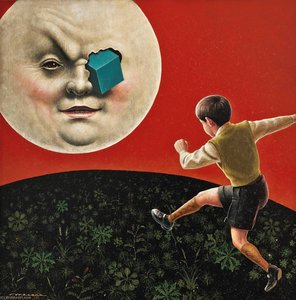
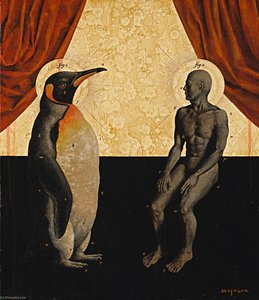
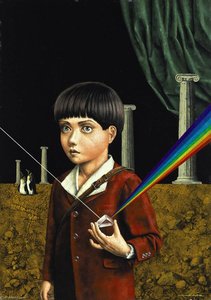
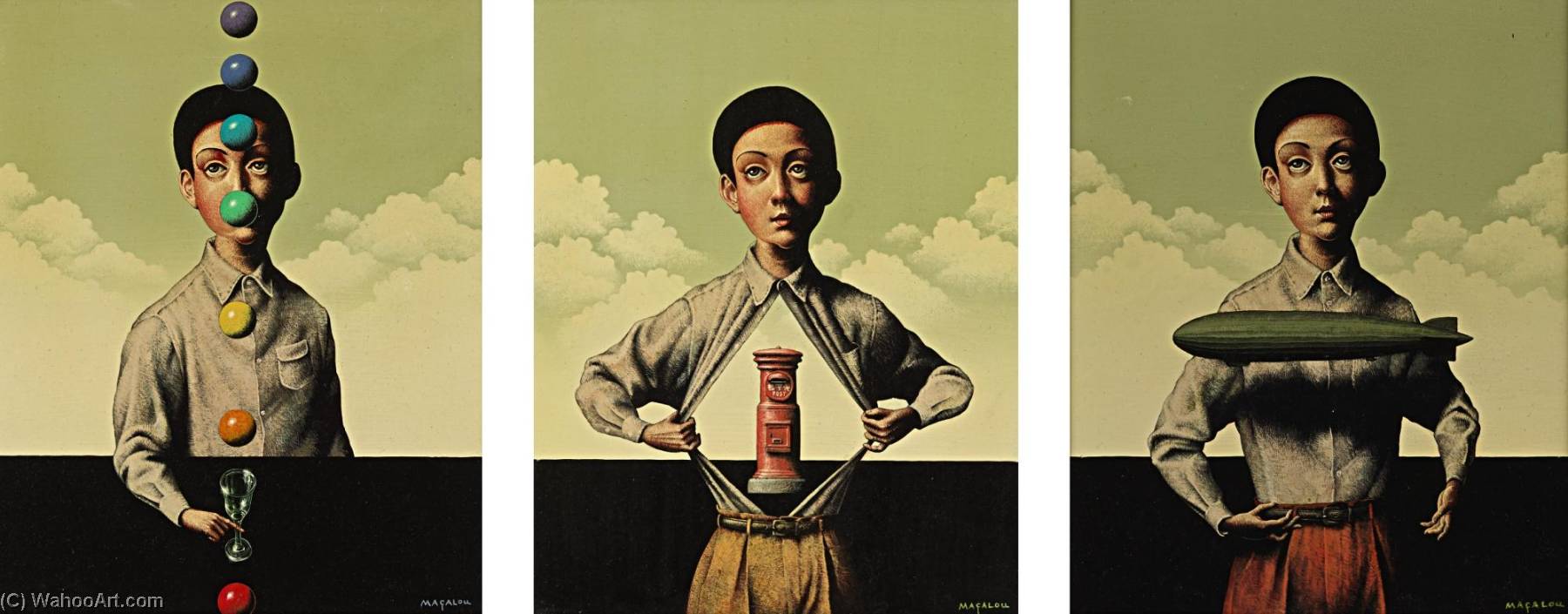
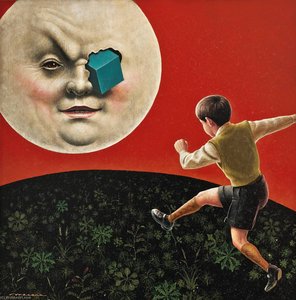
Rainbow Cocktail, The Post Box, The Flying Ship (triptych)
 1946
1946 27.0 x 22.0 cm
 Read More
Giclée / Art Print
Museum-quality giclée or canvas print with fast production and flexible finish options. ( Buy Hand Made Painting Buy Image)




































Pick from our preset sizes that match the artwork's original proportions.

You may enter your own dimensions to fit a specific frame or space. If your selected size does not match the original image's proportions, we will either crop the artwork or extend the image with a mirrored or solid-fill edge. A digital mockup will be sent for your approval before production begins.
Please note that the on-screen preview does not reflect the actual cropping or extension. Only the mockup will accurately show the final composition.
While custom sizes are available, we recommend selecting a dimension from the predefined list to preserve the original proportions.
Worldwide Delivery () in 2 weeks instead of standard 4/5 weeks. (27 August)

Free Worldwide Express Shipping

High-Quality Linen Canvas

Full Shipping Insurance

Customs Tax Refund Guarantee

True Color Matching Guarantee

60-Day Return Policy (Defects Only)

100% Money-Back Guarantee

Bulk Discount Offer
 Glass option is only available in size under 110 CM

Rainbow Cocktail, The Post Box, The Flying Ship (triptych)
Giclée / Art Print
Reproduction Size
-


Total Price
$ 63
Related Artworks
Artist Biography
Masaru Shichinohe: A Surrealist Vision from Japan
Masaru Shichinohe, a name perhaps still relatively unknown outside of Japan’s artistic circles, is a painter whose work possesses a captivating and deeply unsettling beauty. Born in 1959 in Aomori Prefecture, his journey to becoming a prominent surrealist artist began not with canvas and paint, but with the structured world of architecture. After graduating from Musashino Art University with a degree in Architecture, Shichinohe spent three years working for an architectural firm before realizing that his true passion lay elsewhere – in creating worlds entirely of his own imagining.
This shift wasn’t abrupt; it was a gradual evolution fueled by a dissatisfaction with the rigid constraints of design. He transitioned into illustration, publishing several notable works including *Campanella: the mechanical boy and the magic bugle* and *Hako-Shonen (Box-Boy)*, experiences that laid the groundwork for his distinctive artistic style. These early ventures established him as a skilled visual storyteller, but it was his move to painting that truly unleashed his singular vision.
The Alchemy of Acrylic: Technique and Style
Shichinohe’s technique is immediately striking. He primarily utilizes acrylic paint on wooden panels, a choice that adds an unexpected textural element to his work. Unlike the prevalent Superflat movement dominating Japanese art at the time of his emergence, Shichinohe deliberately embraced a more traditional approach, layering and building up his images with meticulous care. This process involves numerous, almost invisible layers – dry brushstrokes applied in progressively lighter tones – that gradually reveal details and create an illusion of depth.
He masterfully employs transparency, particularly when depicting metallic surfaces, creating shimmering reflections that further enhance the otherworldly quality of his paintings. The artist’s control over light and shadow is exceptional; he doesn't simply paint a scene but sculpt it with color, imbuing each piece with a sense of volume and atmosphere. This painstaking layering process, combined with his deliberate use of dry brushstrokes, results in surfaces that possess an almost lacquered smoothness – a remarkable contrast to the often-rough texture of wood.
Influences and Symbolism
Shichinohe’s work is deeply rooted in surrealism, drawing inspiration from the movement's core tenets: the exploration of dreams, the disruption of rational thought, and the embrace of the irrational. He cites Inagaki Taruho, a significant Japanese novelist known for his fantastical narratives, as a key influence, reflecting a shared fascination with machines, science, mysticism, and youth – themes that frequently appear in Shichinohe’s paintings.
His imagery is often characterized by striking juxtapositions and unsettling combinations. Recurring motifs include enigmatic female figures—often nurses or other domestic roles—that are paired with strikingly similar male characters, creating a subtle but persistent sense of duality and unease. This mirroring effect, coupled with the artist’s meticulous attention to detail and his exploration of symbolic imagery, invites viewers to decipher hidden meanings within each composition.
The paintings themselves seem to operate on multiple levels, simultaneously referencing classical art traditions—particularly the High Renaissance—while simultaneously venturing into realms of fantasy and the subconscious. Shichinohe’s work can be interpreted as a meditation on the nature of reality, memory, and identity, inviting viewers to confront their own perceptions and assumptions.
A Legacy of Quiet Intensity
Despite his relatively low profile outside Japan, Masaru Shichinohe has cultivated a dedicated following among collectors and art enthusiasts who recognize the unique power of his work. His paintings—typically small in scale (around 30 x 30 cm)—are highly sought after for their intricate detail, evocative atmosphere, and profound symbolic depth.
While many of his works remain available only in Japanese, Shichinohe’s influence continues to grow as more international collectors discover the captivating surrealism of his vision. His commitment to a meticulous, layered technique, combined with his exploration of timeless themes—dreams, identity, and the intersection of science and imagination—solidifies his place as a significant figure within contemporary art.
Quick Facts
- Artistic Movement Or Style: Surrealism, Realist
- Artists Who Influenced This Artist: ['Inagaki Taruho']
- Full Name: Masaru Shichinohe
- Nationality: Japanese
- Notable Artworks:
- Garden
- Repulsive Force Series
- Sewing Girl
- Place Of Birth: Aomori Prefecture, Japan