 Preview
 Send
Send Share
Share
 Details

 Download
 Similars
 X-Ray
X-Ray Diaporama
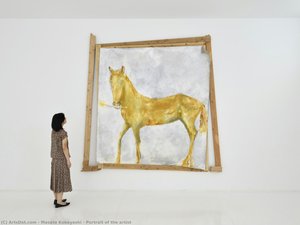
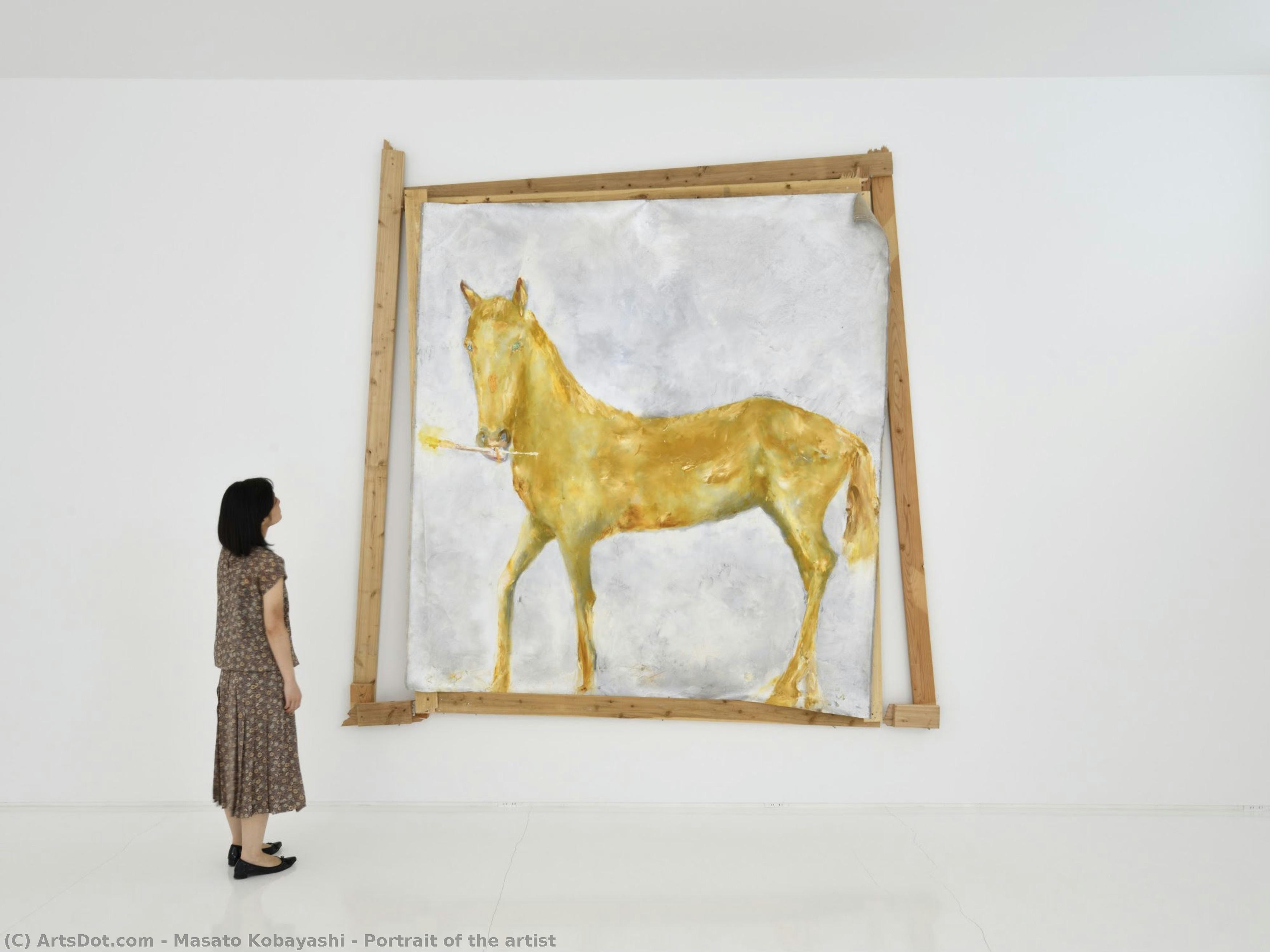
Portrait of the artist
 2019
2019 278.0 x 288.0 cm
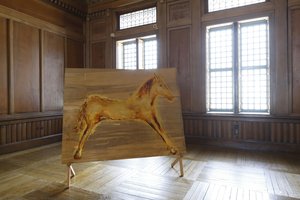
 Meiji Jingu Forest Festival of Art
 Read More
Hand Made Oil Reproduction
Hand-painted oil on canvas in your size and frame, made to order by our artists. ( Buy Print Buy Image)




































Pick from our preset sizes that match the artwork's original proportions.

You may enter your own dimensions to fit a specific frame or space. If your selected size does not match the original image's proportions, we will either crop the artwork or extend the painting with additional hand-painted elements. A digital mockup will be sent for your approval before production begins.
Please note that the on-screen preview does not reflect the actual cropping or extension. Only the mockup will accurately show the final composition.
While custom sizes are available, we recommend selecting a dimension from the predefined list to preserve the original proportions.
After order, ArtsDot.com team will email client for instructions and provide a mockup preview
Worldwide Delivery () in 3/4 weeks instead of standard 5 weeks. (30 August). No compromise on quality.

Free Worldwide Express Shipping

High-Quality Linen Canvas

Full Shipping Insurance

Customs Tax Refund Guarantee

True Color Matching Guarantee

60-Day Return Policy (Defects Only)

100% Money-Back Guarantee

Bulk Discount Offer
 Glass option is only available in size under 110 CM

Portrait of the artist
Reproduction Medium
Reproduction Size
-


Total Price
$ 263
Related Artworks




Artist Biography
A Vision of Untamed Beauty: The Artistry of Masato Kobayashi
Born in the vibrant metropolis of Tokyo in 1957, Masato Kobayashi has emerged as a singular and provocative force within contemporary Japanese art. His work represents a deliberate departure from the polished, controlled aesthetics often found in traditional painting, opting instead for a visceral approach that prioritizes raw texture and spontaneous energy. To encounter a Kobayashi canvas is to witness an eruption of color and form—an experience that feels both unsettling and profoundly captivating. His artistic journey began amidst the experimental movements of the late 1980s and early 1990s in Japan, where he absorbed the transformative influences of masters like Gerhard Richter and Antoni Tapies. From them, he drew a fascination with abstraction and the power of chance operations, seeking to transcend conventional boundaries through a method that merges the physical act of creation with the final image.
The very foundation of Kobayashi’s technique challenges the fundamental mechanics of the medium. Rejecting the standard practice of mounting a pre-stretched canvas onto a wooden frame, he developed a revolutionary methodology where the stretching of the canvas and the application of paint occur simultaneously. This process creates works that rarely adhere to a traditional rectangular structure; instead, they are often fixed onto precariously balanced, irregular wooden stretchers that mirror the organic chaos of the paint itself. He does not merely brush pigment onto a surface; he applies paint directly from the tube onto his hands, smearing and rubbing the medium into the loosely attached fabric. This intimate, physical engagement allows him to integrate the soul and body of the painting, resulting in surfaces that resemble geological formations or turbulent seascapes.
Global Recognition and Artistic Evolution
Kobayashi’s ascent to international prominence was marked by his selection as a representative of Japan at the prestigious Sao Paulo Biennial of 1996. His monumental canvases, characterized by thick impasto and heavy applications of paint, garnered critical acclaim for their uncompromising honesty and expressive power. This milestone cemented his reputation as a provocateur on the global stage, capable of commanding attention through sheer textural complexity. His career has been further enriched by significant international residencies and exhibitions, including his time in Ghent, Belgium. Moving to Ghent in 1997 under the guidance of the legendary curator Jan Hoet, Kobayashi’s work underwent a period of profound evolution, deepening his engagement with space and materiality.
Throughout his decades-long career, his exhibition history reflects a bridge between Eastern and Western art worlds, featuring major solo shows such as:
- The Miyagi Museum of Art, Sendai (2000)
- S.M.A.K. (Museum of Contemporary Art Ghent), Belgium (2001)
- Tensta Konsthall, Sweden (2004)
Beyond the gallery walls, Kobayashi has continued to influence the next generation of artists through his role as a professor at the Tokyo University of the Arts. His legacy is defined by a philosophical stance against the illusion of perfection. By incorporating mixed media elements like sand or resin and embracing the unpredictable nature of drips and bold strokes, he reminds the viewer that true beauty resides in imperfection. His work remains a testament to the power of the unrefined, offering a window into a world where chaos and beauty are inextricably linked.
masato kobayashi
1957 - , Japan
Quick Facts
- Artistic Movement Or Style: Contemporary Art; Abstract Expressionism; Mixed Media Art
- Date Of Birth: Tokyo, Japan (1957)
- Date Of Death: Living
- Full Name: masato kobayashi
- Nationality: Japanese
- Notable Artworks:
- KINKA ZAN
- Model of this planet
- Place Of Birth: Tokyo