 Preview
 Send
Send Share
Share
 Details

 Download
 Similars
 X-Ray
X-Ray Diaporama
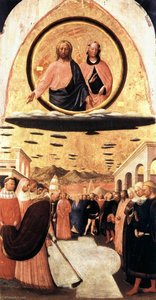
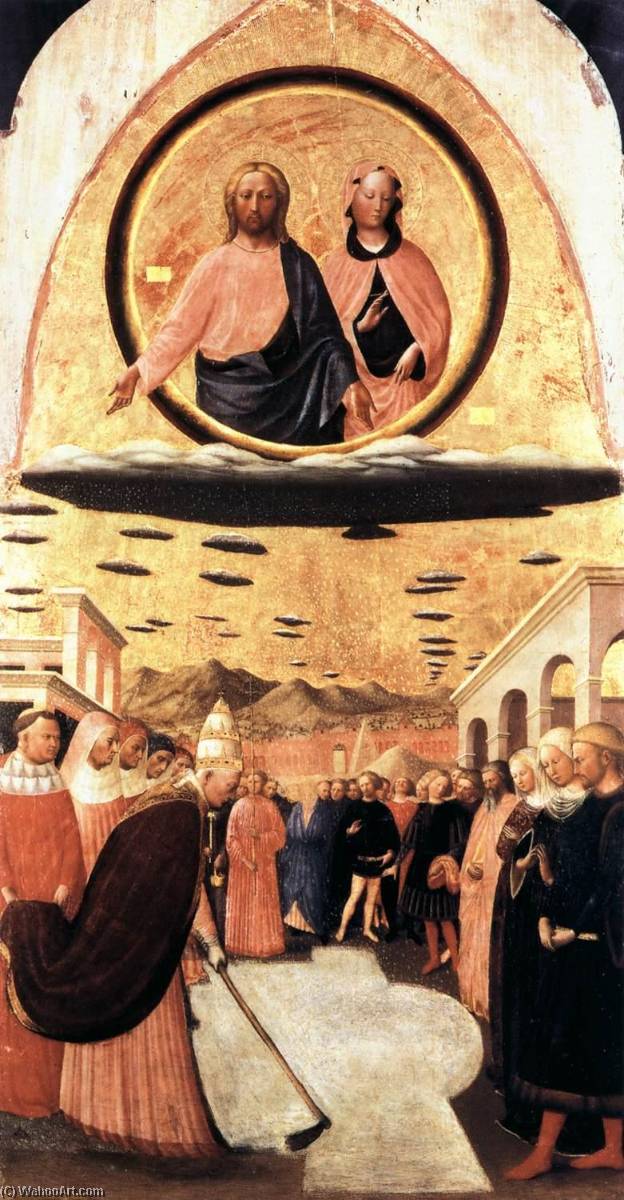
The Founding of Santa Maria Maggiore
 1425
1425 144.0 x 76.0 cm
 Read More
Hand Made Oil Reproduction
Hand-painted oil on canvas in your size and frame, made to order by our artists. ( Buy Print Buy Image)




































Pick from our preset sizes that match the artwork's original proportions.

You may enter your own dimensions to fit a specific frame or space. If your selected size does not match the original image's proportions, we will either crop the artwork or extend the painting with additional hand-painted elements. A digital mockup will be sent for your approval before production begins.
Please note that the on-screen preview does not reflect the actual cropping or extension. Only the mockup will accurately show the final composition.
While custom sizes are available, we recommend selecting a dimension from the predefined list to preserve the original proportions.
After order, ArtsDot.com team will email client for instructions and provide a mockup preview
Worldwide Delivery () in 3/4 weeks instead of standard 5 weeks. (31 August). No compromise on quality.

Free Worldwide Express Shipping

High-Quality Linen Canvas

Full Shipping Insurance

Customs Tax Refund Guarantee

True Color Matching Guarantee

60-Day Return Policy (Defects Only)

100% Money-Back Guarantee

Bulk Discount Offer
 Glass option is only available in size under 110 CM

The Founding of Santa Maria Maggiore
Reproduction Medium
Reproduction Size
-


Total Price
$ 263
Related Artworks


Artist Biography
Early Life and Florentine Beginnings
Masolino di Cristoforo, born in Florence around 1383-1384, emerged during a pivotal moment in the Italian Renaissance. While precise details of his early life remain elusive – a common fate for artists predating widespread biographical documentation – it’s clear he received training within the Florentine artistic milieu. The city was already buzzing with innovation, witnessing the groundbreaking work of figures like Giotto and the burgeoning talents of Donatello and Brunelleschi. Masolino's initial apprenticeship likely occurred in the workshop of a relatively unknown master; however, his rapid development suggests an innate gift and a keen observational ability. He quickly absorbed the prevailing Gothic style but demonstrated an early inclination towards a more naturalistic representation of form and space – a shift that would define his career and influence those around him. His earliest documented work, the altarpiece for the chapel of the Cardinal of Prato in Santa Maria Maggiore (1406), reveals a delicate hand and a nascent understanding of perspective, hinting at the revolutionary path he was about to forge.The Pioneering Use of Perspective and Collaboration with Masaccio
Masolino’s name became inextricably linked with that of Tommaso di Ser Giovanni Cassai, better known as Masaccio. The two artists collaborated on a series of frescoes in the Brancacci Chapel within the church of Santa Maria del Carmine in Florence – a project begun around 1424-1425. This collaboration is arguably one of the most significant events in the history of Renaissance art. While both artists contributed to the cycle depicting scenes from the life of Saint Peter, their distinct styles are readily discernible. Masaccio’s figures possess a monumental solidity and dramatic realism, achieved through his masterful application of chiaroscuro and linear perspective. Masolino, however, brought an elegance and refinement to the compositions, focusing on graceful poses, vibrant colors, and intricate details. Crucially, it was within these frescoes that Masolino began experimenting with a more systematic approach to creating depth – notably, his early use of the central vanishing point. Though not fully developed as Brunelleschi’s scientific method, this innovation marked a crucial step towards representing three-dimensional space on a two-dimensional surface. The *Expulsion from Paradise* and *Temptation of Adam and Eve*, both attributed to Masolino in the Brancacci Chapel, showcase his lyrical style and burgeoning understanding of perspective. These works are not merely depictions of biblical narratives; they are explorations of human emotion and psychological states rendered with unprecedented sensitivity.Roman Commissions and a Shift in Style
Around 1428, Masolino accepted a commission to decorate the chapel of San Nicola in the Palazzo Mascardi in Rome. This move marked a significant turning point in his career. Away from the immediate influence of Masaccio, his style underwent a noticeable transformation. The Roman frescoes exhibit a greater emphasis on decorative elements and classical motifs – reflecting the artistic environment of the Eternal City. The scenes depicting the life of Saint Nicholas are characterized by their opulent colors, elaborate drapery, and refined compositions. While still retaining his characteristic elegance, Masolino’s work in Rome displays a more courtly aesthetic, appealing to the tastes of the papal court. This period also saw him experimenting with different narrative approaches, incorporating complex symbolic elements into his designs.Later Years and Lasting Legacy
Masolino returned to Florence briefly before undertaking further commissions in Castile, Spain, at the invitation of Don Enrique III. He began work on a polyptych for the chapel of San Ildefonso in Toledo Cathedral around 1430-1432, but his untimely death in Castile in 1436 cut short his artistic endeavors. The unfinished polyptych, though incomplete, demonstrates his continued mastery of color and composition. Despite his relatively short career, Masolino’s influence on the development of Renaissance art was profound.- His pioneering use of perspective paved the way for artists like Piero della Francesca.
- His elegant style and refined technique influenced a generation of Florentine painters.
- His collaboration with Masaccio remains a cornerstone of Renaissance artistic innovation, showcasing the dynamic interplay between different approaches to representation.