

 Preview
 Send
Send Share
Share
 Details

 Download
 Similars
 X-Ray
X-Ray Diaporama
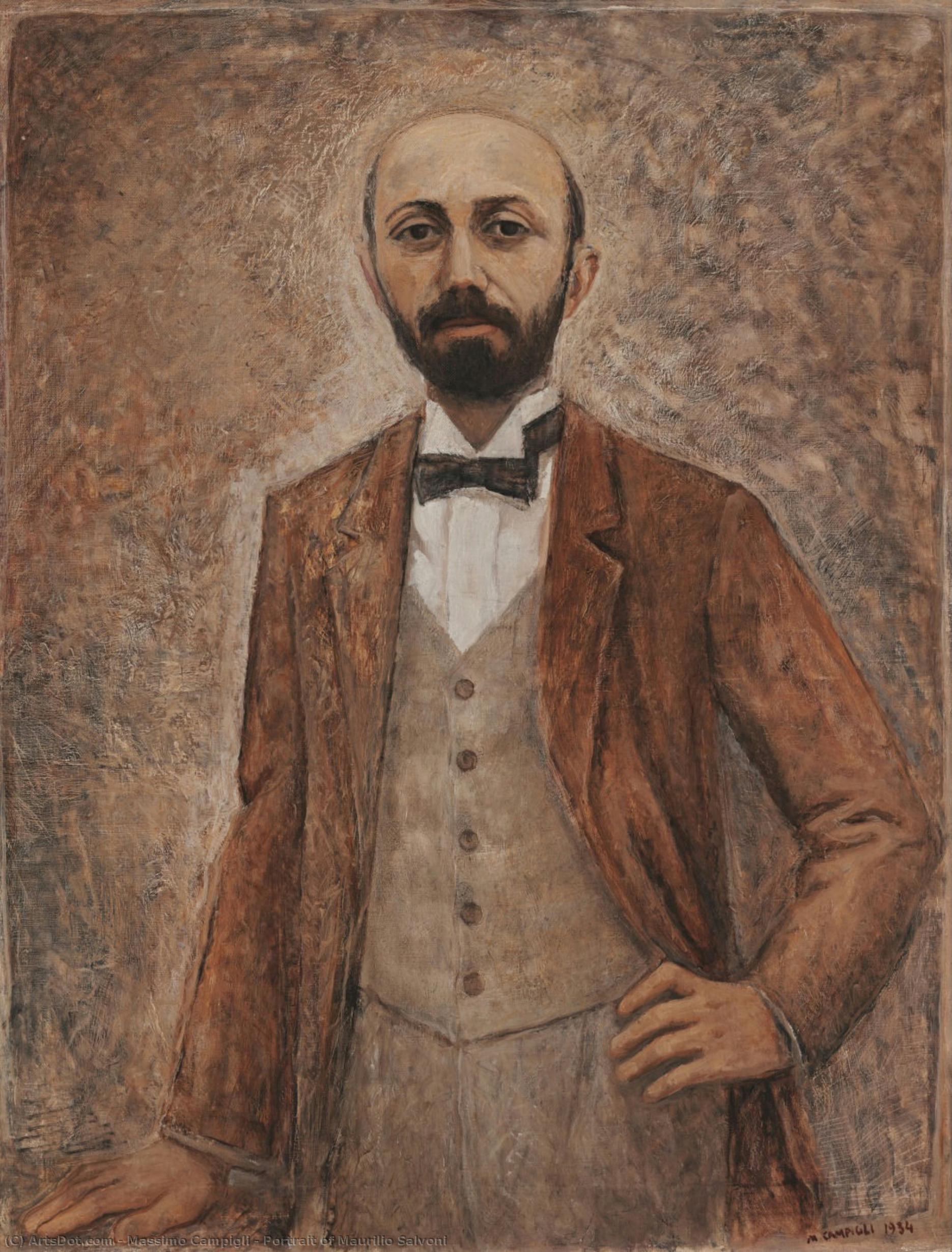
Portrait of Maurilio Salvoni


 Read More
Purchase a high-resolution, enhanced digital image, far superior to the online preview.
Each file is meticulously prepared by our in-house specialists using advanced tools and expert manual retouching. We ensure every image has exceptional clarity, precise color accuracy, and fine detail.
The final file is delivered via email within 72 hours, optimized for immediate use in professional, editorial, and print environments. This is the same quality trusted by top-tier design studios, publishers, and galleries.
Digital Image
Download a high-resolution file for personal display, printing, and creative projects. ( Buy Print Buy Hand Made Painting)
Included in Every Digital Image Order
Expert Digital Delivery, Guaranteed
When you choose ArtsDot.com, you're not just getting an image - you're receiving a professionally enhanced digital artwork, crafted with precision and backed by a satisfaction guarantee. Here's everything that comes with your order, automatically:

Fast Email Delivery
Your high-resolution digital image file will be emailed to you within 72 hours of ordering - ready for immediate use.

AI-Enhanced Digital File
Your artwork is professionally optimized using advanced AI tools and manual editing, ensuring maximum detail, clarity, and color accuracy.

Free Lifetime Re-Delivery
Accidentally deleted or lost your file? No worries - we'll resend it to you anytime, free of charge.

No Import Fees - Ever
Enjoy your artwork instantly with zero customs, duties, or delivery fees - digital downloads are always tax-free.

Color Accuracy Guarantee
We ensure your digital image reflects the original colors as closely as possible using professional tools and color management.

60-Day Satisfaction Guarantee
If you're not satisfied with your digital image, we'll revise it or refund 100% within 60 days - no questions asked.

100% Money-Back Guarantee
Not satisfied? Get a full refund within 60 days of receiving your digital file - no questions asked.

Bulk Order Discounts
Buy 3 images, save 10% - Buy 5, save 15% - Buy 10+, save 20%. Great for creative projects, galleries, and agencies.
Collectible Description
Portrait of Maurilio Salvoni – An Expressionist Echo of Antiquity
Massimo Campigli’s “Portrait of Maurilio Salvoni” (1934) stands as a testament to the artist's singular vision—a blend of Futurist dynamism and profound contemplation rooted in Etruscan influences. Executed in oil on canvas, this artwork transcends mere representation; it strives for an emotional resonance that speaks to the complexities of human experience. Campigli’s distinctive style is immediately recognizable through its textured brushstrokes and layered application of paint, creating a surface rich with palpable energy and subtle nuances. The artist eschews photographic realism, prioritizing instead the expressive power of color and form to convey mood and psychological depth.- Subject Matter: The portrait depicts Maurilio Salvoni, a Roman educator known for his innovative pedagogical approach—a figure embodying intellectual curiosity and humanist ideals.
- Style & Technique: Campigli’s oeuvre leans heavily into Expressionism, characterized by distorted forms and heightened color palettes designed to communicate inner feelings rather than objective observation. The artist skillfully employs impasto techniques – thick layers of paint applied with a palette knife – to sculpt the surface of the canvas and imbue it with textural richness.
- Historical Context: Painted in the wake of World War I, “Portrait of Maurilio Salvoni” reflects the anxieties and uncertainties of its time while simultaneously anchoring itself in the timeless beauty of Etruscan art—a fascination evident in Campigli’s deliberate use of earthy tones and geometric shapes reminiscent of ancient sculptures.
- Symbolism: The melancholic gaze of Salvoni's eyes suggests introspection and perhaps a quiet sorrow, mirroring the broader cultural mood of disillusionment following the war. The formal attire symbolizes status and responsibility—a visual shorthand for the artist’s exploration of human dignity and intellect.
Campigli’s Futurist Roots & Parisian Influence
Massimo Campigli's artistic journey began amidst the fervor of Futurism, where he collaborated with luminaries like Umberto Boccioni and Carlo Carrà. This engagement fueled his experimentation with dynamic compositions and bold color palettes—a stylistic impulse that would persist throughout his career. However, Campigli’s artistic temperament extended beyond the confines of Futurist dogma; he cultivated a deep appreciation for Impressionism and Post-Impressionism during his formative years in Paris, absorbing influences from artists such as Claude Monet and Vincent van Gogh.A Textured Meditation on Human Essence
The artwork’s dominant texture—achieved through meticulous brushwork and impasto—serves as a crucial element of its expressive power. Campigli doesn't merely depict Salvoni; he captures the very essence of his being, conveying an aura of quiet contemplation and intellectual seriousness. The muted earthy color palette contributes to the overall somber mood, inviting viewers to engage in a dialogue with the subject’s inner life—a hallmark of Campigli’s artistic vision.Discover Your Perfect Reproduction
At ArtsDot.com, we offer high-quality reproductions of Massimo Campigli's “Portrait of Maurilio Salvoni,” allowing you to bring this evocative artwork into your home or office. Explore our curated collection and select the size that best suits your aesthetic preferences—delivered swiftly and securely directly to your doorstep. Let’s transform art history into a vibrant part of your daily life!Related Artworks
![Fort Worth Art Museum The Italian Film: Neorealism And Beyond Poster And Event Calendar\n\n[front View] — Massimo Vignelli, Vignelli Associates, Contemporary Realism](/media/artworks/images-thumb/9a/f3/9af3622e1fac840c383fbfca8217073b.jpg)
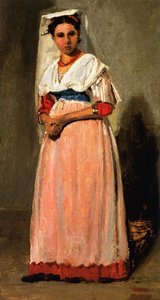
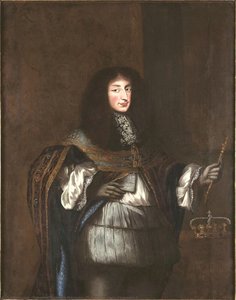
Artist Biography
A Life Bridging Worlds: The Artistic Journey of Massimo Campigli
Born Max Ihlenfeld in Berlin in 1895, Massimo Campigli’s artistic path was one of constant movement and reinvention, a journey that carried him from the burgeoning avant-garde circles of early 20th-century Europe to a uniquely personal style steeped in antiquity. His childhood relocation to Florence instilled within him an enduring connection to Italian culture, a foundation upon which his later explorations would build. The family’s subsequent move to Milan in 1909 proved pivotal, immersing the young Ihlenfeld – soon to embrace the name Campigli – in a vibrant artistic milieu. He began contributing to the literary magazine *Letteratura*, and quickly found himself drawn into the orbit of Futurists like Umberto Boccioni and Carlo Carrà, even publishing experimental works reflecting their ethos of dynamism and modernity in 1914. However, his engagement with Futurism remained tangential; Campigli’s artistic temperament would ultimately lead him down a different path, one characterized by introspection and a reverence for the past rather than an embrace of relentless progress.From War to Paris: Forging a New Vision
The upheaval of World War I dramatically altered Campigli's trajectory. Captured and deported to Hungary as a prisoner of war from 1916 to 1918, he endured hardship that undoubtedly shaped his worldview. Following the armistice, he relocated to Paris in 1919, establishing himself as a foreign correspondent for the Milanese newspaper *Corriere della Sera*. This period marked a crucial turning point in his artistic development. Immersed in the Parisian art scene, he began painting seriously, absorbing influences from artists such as Giorgio de Chirico, Alberto Savinio, Gino Severini, and Filippo De Pisis. Frequent visits to the Louvre Museum ignited a profound fascination with ancient Egyptian art – a passion that would become a defining characteristic of his oeuvre. Early works reveal traces of Picasso and Léger’s geometric stylizations, blended with elements of Purism, yet even in these formative pieces, a distinct sensibility began to emerge—a yearning for monumentality and an exploration of form that hinted at the artist he was becoming.Etruscan Echoes and Monumental Forms
Campigli’s artistic voice truly crystallized in the 1920s. His first solo exhibition at Rome's Bragaglia Gallery in 1923 signaled his arrival as a significant new force in Italian art. Over the next few years, his figures evolved towards an increasingly monumental quality, characterized by stylized poses and interwoven limbs that conveyed a sense of sculptural solidity. He became associated with the “Paris Italians” group, alongside fellow expatriate artists who shared a common heritage and artistic concerns. A watershed moment arrived in 1928 with a visit to the National Etruscan Museum in Rome. The encounter with Etruscan art proved transformative, inspiring him to adopt subdued tones, schematic forms, and archaisms that resonated deeply with his aesthetic sensibilities. This influence extended beyond mere stylistic imitation; Campigli sought to capture the *spirit* of Etruscan art—its sense of timelessness, its inherent dignity, and its connection to a vanished world. A journey to Romania with his first wife, Magdalena Rădulescu, further enriched his artistic vision, leading him to depict women engaged in domestic tasks and agricultural labor in asymmetrical compositions imbued with rough textures reminiscent of ancient frescoes.Legacy and Lasting Influence
Throughout the 1930s, Campigli achieved international recognition, with solo exhibitions in New York, Paris, and Milan solidifying his reputation. He actively engaged with broader cultural debates, signing Mario Sironi’s Mural Art Manifesto in 1933 and undertaking several large-scale mural commissions, including works for the Geneva League of Nations, the Milan Courts of Justice, and the Liviano University in Padua. Despite personal changes – a divorce followed by remarriage to sculptor Giuditta Scalini in 1939 – Campigli continued to explore his signature themes, dividing his time between Rome, Paris, and Saint-Tropez after World War II. His later works saw him experimenting with increasingly abstract compositions, culminating in canvases marked by bold colored markings during the 1960s. A retrospective exhibition at the Palazzo Reale in Milan in 1967 celebrated his life’s work, a testament to his enduring contribution to 20th-century art. Massimo Campigli passed away in Saint-Tropez in 1971, leaving behind a body of work that continues to captivate and inspire. He remains an important figure, bridging the gap between Futurism and a more classical, monumental style, and offering a unique vision informed by a deep fascination with ancient civilizations and a profound sense of human dignity. His paintings resonate with a timeless quality, inviting contemplation and reminding us of the enduring power of art to connect us to the past and illuminate the present.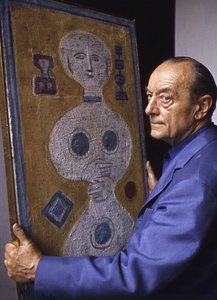
Massimo Campigli
1895 - 1971 , Germany
Quick Facts
- Artistic Movement Or Style: Futurism, Etruscan influence
- Artists Or Movements Influenced By This Artist: Modern Italian art
- Artists Who Influenced This Artist:
- De Chirico
- Picasso
- Léger
- Date Of Birth: July 4, 1895
- Date Of Death: May 31, 1971
- Full Name: Massimo Campigli
- Nationality: Italian
- Notable Artworks:
- Untitled (383)
- Portrait of Maurilio Salvoni
- Untitled (468)
- Place Of Birth: Berlin, Germany

