 Preview
 Send
Send Share
Share
 Details

 Download
 Similars
 X-Ray
X-Ray Diaporama
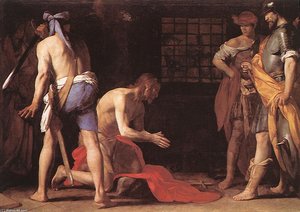
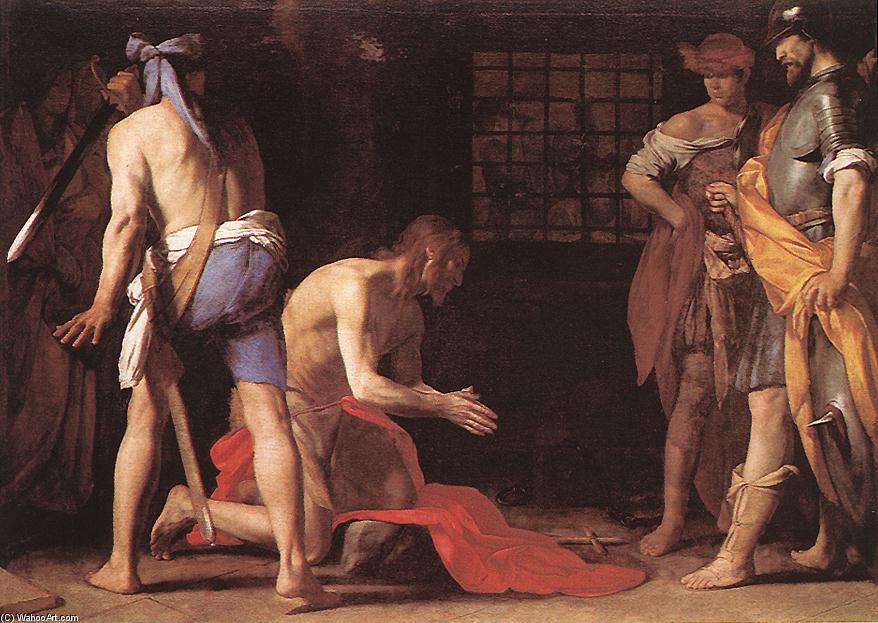
Beheading of St John the Baptist
 Oil On Canvas
- WallArt
- Baroque
 1634
1634 184.0 x 258.0 cm
 Museo del Prado
 Read More
Hand Made Oil Reproduction
Hand-painted oil on canvas in your size and frame, made to order by our artists. ( Buy Print Buy Image)




P118B $10

P118H $10

P118W $10

P438Z $10

P508JH $12

P508YH $12

P805H $10

P805Z $10

P919BZ $10

P919G $10

P919XJ $10

P959ZH $10

P968JZ $12

W106C $8

W218G $10

W218JH $8

W218Y $10

W307PJ $10

W316G $10

W316PJ $8

W316Y $10

W398PJ $8

W4111J $10

W500HY $15

W500JH $15

W692G $12

W849H $8

W940BG $15

W953PJ $8




Pick from our preset sizes that match the artwork's original proportions.

You may enter your own dimensions to fit a specific frame or space. If your selected size does not match the original image's proportions, we will either crop the artwork or extend the painting with additional hand-painted elements. A digital mockup will be sent for your approval before production begins.
Please note that the on-screen preview does not reflect the actual cropping or extension. Only the mockup will accurately show the final composition.
While custom sizes are available, we recommend selecting a dimension from the predefined list to preserve the original proportions.
After order, ArtsDot.com team will email client for instructions and provide a mockup preview
Worldwide Delivery () in 3/4 weeks instead of standard 5 weeks. (17 August). No compromise on quality.

Free Worldwide Express Shipping

High-Quality Linen Canvas

Full Shipping Insurance

Customs Tax Refund Guarantee

True Color Matching Guarantee

60-Day Return Policy (Defects Only)

100% Money-Back Guarantee

Bulk Discount Offer
 Glass option is only available in size under 110 CM

Beheading of St John the Baptist
Reproduction Medium
Reproduction Size
-


Total Price
$ 388
Artwork Description
The Haunting Majesty of St. John the Baptist’s Beheading
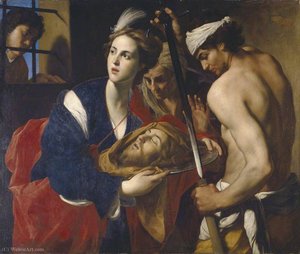
Massimo Stanzione's "Beheading of St. John the Baptist," painted in 1634, is not merely a depiction of a biblical event; it’s a visceral plunge into Baroque drama and profound human emotion. This monumental canvas, measuring an impressive 184 x 258 cm, resides within the Museo del Prado in Madrid, yet its power transcends geographical boundaries, captivating viewers with its raw intensity and masterful execution. Stanzione, deeply influenced by Caravaggio’s revolutionary approach to light and shadow – a style he dubbed “Caravaggism” – transforms a violent episode into a study of suffering, judgment, and the unsettling beauty of mortality.
The scene unfolds within a dimly lit interior space, likely a prison or dungeon, suggested by the rough stone walls and barred window. Christ, depicted in his final moments, is subjected to the brutal act of flagellation – a harrowing tableau rendered with unflinching realism. The composition is meticulously structured around a pyramidal form, anchored by Christ’s body and radiating outwards to encompass the surrounding figures. Roman soldiers, some observing with detached indifference, others reacting with palpable horror, contribute to the sense of moral ambiguity. Crucially, Stanzione doesn't shy away from portraying the onlookers as complicit in the tragedy, their gazes reflecting a complex blend of fear, pity, and perhaps even a disturbing fascination.
A Masterclass in Baroque Technique
Stanzione’s technical prowess is immediately evident. The painting is executed in oil on canvas, utilizing a technique that allows for both luminous highlights and deep, impenetrable shadows – a hallmark of Caravaggism. The artist employs *chiaroscuro* with exceptional skill, dramatically sculpting the figures and creating an atmosphere of intense theatricality. Note the way light catches the folds of Christ’s robe, highlighting the texture of the fabric and emphasizing his vulnerability. The stark contrast between light and dark not only enhances the drama but also serves to draw the viewer's eye directly to the central figure – a deliberate strategy employed by Stanzione to amplify the emotional impact.
The color palette is rich and saturated, dominated by deep reds that bleed across Christ’s drapery, symbolizing sacrifice and bloodshed. These vibrant hues are juxtaposed with cooler tones in the background, creating a dynamic visual tension. Furthermore, Stanzione demonstrates an extraordinary attention to detail – from the rough texture of Christ's skin to the weathered stone walls, every element contributes to a palpable sense of physicality and immediacy. The meticulous rendering of textures invites the viewer to almost *feel* the scene unfolding before them.
Symbolism and Spiritual Weight
Beyond its technical brilliance, “Beheading of St. John the Baptist” is laden with symbolic meaning. The event itself – the execution of a martyr – represents Christ’s sacrifice for humanity's sins. The act of flagellation serves as a potent metaphor for suffering and redemption. However, Stanzione doesn’t offer a simplistic moralizing interpretation. Instead, he presents a complex portrait of human nature, exposing both its capacity for cruelty and its potential for compassion. The figures surrounding Christ are not merely passive observers; they embody various facets of humanity – indifference, fear, judgment, and even a flicker of empathy.
The inclusion of Salome, Herodias’ daughter, who holds the severed head, adds another layer of complexity to the scene. Her youthful beauty contrasts sharply with the brutality of the event, prompting viewers to contemplate the consequences of unchecked ambition and moral corruption. The Mystic Lamb, a recurring motif in Christian art, symbolizes Christ's sacrifice and offers a glimmer of hope amidst the darkness. The overall effect is profoundly unsettling – a meditation on mortality, guilt, and the enduring struggle between good and evil.
A Legacy of Dramatic Intensity
Massimo Stanzione’s “Beheading of St. John the Baptist” stands as a testament to the power of Baroque art to evoke intense emotion and explore profound spiritual themes. Influenced by Caravaggio, Stanzione masterfully combines dramatic lighting, realistic detail, and symbolic imagery to create a work that continues to resonate with viewers centuries later. The painting’s enduring appeal lies not only in its technical brilliance but also in its ability to confront us with the uncomfortable truths about human nature – our capacity for both great cruelty and profound compassion. It remains a powerful reminder of Christ's sacrifice and a haunting exploration of the complexities of faith, morality, and mortality.
Related Artworks
Artist Biography
The Neapolitan Master: The Life and Legacy of Massimo Stanzione
In the vibrant, sun-drenched streets of seventeenth-century Naples, a period when the city stood as one of the most significant urban centers in Europe, a painter emerged who would redefine the visual language of the Italian Baroque. Massimo Stanzione, born in Frattamaggiore in 1585, was not merely a participant in the artistic ferment of his time; he was a transformative force. While many of his contemporaries were content to follow a single stylistic path, Stanzione possessed a rare, dualistic vision. He achieved what many thought impossible: the seamless marriage of the raw, visceral shadows of Caravaggio with the refined, lyrical grace of the Bolognese school. This unique synthesis earned him the prestigious moniker, the Neapolitan Guido Reni, marking him as an artist of unparalleled elegance and dramatic power.
The foundations of Stanzione’s artistry were laid in the fertile soil of Naples, likely under the tutelage of masters such as Fabrizio Santafede and Battistello Caracciolo. However, the true catalyst for his stylistic evolution was the profound impact of Caravaggio’s tenebrism. From this revolutionary approach, Stanzione adopted a mastery of light and shadow that lent his figures a startling, tactile presence. Yet, it was during his formative journeys to Rome—most notably between 1617 and 1630—that his palette began to bloom with a new, classical sophistication. Immersed in the Eternal City, he absorbed the balanced compositions of Annibale Carracci and the luminous, revamped Caravaggism of Simon Vouet. This period of Roman exposure allowed him to temper the brutal realism of his youth with an idealized naturalism, creating works that were as much about poetic beauty as they were about dramatic tension.
A Career of Distinction and Royal Recognition
Stanzione’s ascent within the social and artistic hierarchies of Europe was nothing short of meteoric. His talent was recognized not only by the clergy but by the highest echelons of nobility and the Papacy itself. The year 1621 marked a significant milestone when Pope Gregory XV bestowed upon him the prestigious title of Knight of the Golden Spur. His honors continued to accumulate, and under the reign of Urban VIII, he was invested with the Order of Christ, an achievement that granted him the esteemed title of Caballero Massimo in Spain. Such accolades reflect a career that transcended the boundaries of local craftsmanship, positioning him as a figure of international importance.
His body of work is characterized by a remarkable versatility, ranging from intimate, psychologically penetrating portraits to monumental altarpieces and sweeping frescoes. Some of his most enduring contributions to the art world include:
- Portrait of a Woman in Popular Costume: A masterpiece that showcases his ability to capture both the texture of fabric and the soulful dignity of his subjects.
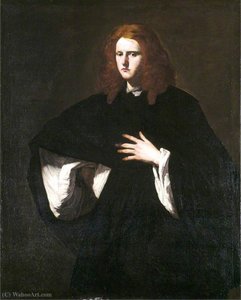
- Portrait of Jerome Banks: An example of his skill as a portraitist, demonstrating the nuanced light that defines his mature style.
- Large-scale Religious Altarpieces: These works served as the backbone of Neapolitan churches, utilizing his signature rich colors to inspire awe and devotion in the faithful.
The Twilight of a Master and His Enduring Influence
As the mid-seventeenth century approached, Stanzione stood alongside Jusepe de Ribera as the titan of the Neapolitan painting scene. Together, they dominated the artistic landscape, creating a period of intense competition and creative flowering. While Ribera leaned into the gritty, earthy realism of the Spanish tradition, Stanzione offered a more polished, colorful alternative that appealed to the aesthetic sensibilities of the era's elite. His influence was profound and far-reaching; his method of blending dramatic chiaroscuro with classical grace became a blueprint for subsequent generations of local artists, most notably the great Francesco Solimena.
Tragically, the very era of prosperity that allowed his art to flourish also brought the devastation of the plague. In 1656, a catastrophic outbreak swept through Naples, claiming many lives and bringing much of the city's vibrant culture to a standstill. It is believed that Stanzione himself fell victim to this epidemic, passing away at the height of his influence. Though his life was cut short, his legacy remained etched in the stone and canvas of Naples. Through his ability to harmonize the rugged with the refined, Massimo Stanzione ensured that the Neapolitan Baroque would forever be remembered as a period of profound emotional depth and exquisite classical beauty.
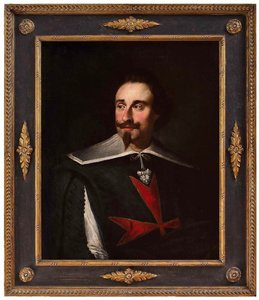
massimo stanzione
1585 - 1656 , Italy
Quick Facts
- Artistic Movement Or Style: Baroque; Neapolitan Baroque
- Artists Or Movements Influenced By This Artist: ['Francesco Solimena']
- Artists Who Influenced This Artist:
- Caravaggio
- Fabrizio Santafede
- Battistello Caracciolo
- Annibale Carracci
- Simon Vouet
- Date Of Birth: 1585
- Date Of Death: 1656
- Full Name: Massimo Stanzione
- Nationality: Italian
- Notable Artworks:
- Portrait of a woman in popular costume
- Portrait of Jerome Banks
- Place Of Birth: Frattamaggiore, Naples, Italy
Related Articles

John Singer Sargent's 25 Masterpieces: Portraits & Beyond | ArtsDot
Explore 25 iconic John Singer Sargent paintings – from dazzling portraits to Impressionist landscapes. Discover the stories behind Madame X, El Jaleo & more! Find museum-quality art reproductions and elevate your home decor with ArtsDot.com.

John Constable's Masterpieces: Explore 25 Iconic Landscapes for Your Home
Journey through John Constable's 25 most celebrated landscapes. Explore Romanticism, Dedham Vale & his masterful use of light in iconic paintings like 'Hay Wain'. Find museum-quality art reproductions and elevate your home decor on ArtsDot.com.

Baroque Drama: Bringing Opulence & Emotion into Contemporary Interiors
Explore the opulent world of Baroque interior design! Discover key elements, modern applications & how to bring dramatic elegance into your home with 's authentic reproductions.

The Dramatic Flourish: Exploring the Baroque Movement's Enduring Legacy in Art History
Explore the dramatic world of Baroque art! Discover iconic artists like Caravaggio & Rubens, defining techniques, and its lasting impact on art history. Expert insights for collectors & enthusiasts at ArtsDot.
Baroque Painting's Greatest Hits: 10 Masterpieces for Your Home | ArtsDot
Journey through Baroque painting's glory! Explore 10 masterpieces by Caravaggio, Rembrandt & Vermeer. Discover dramatic lighting, rich colors & timeless stories. Find museum-quality art reproductions for your home at ArtsDot.com.