![Fort Worth Art Museum The Italian Film: Neorealism And Beyond Poster And Event Calendar\n\n[front View] — Massimo Vignelli, Vignelli Associates](/media/artworks/images-full/37/0b/370b422109e94df2e1b1b2dcb86d199c.jpg)
 Send
Send Share
Share
 Details

 Download
 Similars
 Diaporama
Fort Worth Art Museum The Italian Film: Neorealism and Beyond poster and event calendar\n\n[front view]
 Black and White Photography
- Photo
- Contemporary Realism
 1976
1976- Modern
 45.0 x 43.0 cm
 Vignelli Center for Design Studies
 Read More
Giclée / Art Print
Museum-quality giclée or canvas print with fast production and flexible finish options. ( Buy Hand Made Painting Buy Image)




































Pick from our preset sizes that match the artwork's original proportions.

You may enter your own dimensions to fit a specific frame or space. If your selected size does not match the original image's proportions, we will either crop the artwork or extend the image with a mirrored or solid-fill edge. A digital mockup will be sent for your approval before production begins.
Please note that the on-screen preview does not reflect the actual cropping or extension. Only the mockup will accurately show the final composition.
While custom sizes are available, we recommend selecting a dimension from the predefined list to preserve the original proportions.
Worldwide Delivery () in 2 weeks instead of standard 4/5 weeks. (31 August)

Free Worldwide Express Shipping

High-Quality Linen Canvas

Full Shipping Insurance

Customs Tax Refund Guarantee

True Color Matching Guarantee

60-Day Return Policy (Defects Only)

100% Money-Back Guarantee

Bulk Discount Offer
 Glass option is only available in size under 110 CM

Fort Worth Art Museum The Italian Film: Neorealism and Beyond poster and event calendar\n\n[front view]
Giclée / Art Print
Reproduction Size
-


Total Price
$ 63
A Symphony of Shadows: The Melancholy of Vignelli’s Vision
In the quiet intersection of graphic design and cinematic soul, Massimo Vignelli’s 1976 poster for the Fort Worth Art Museum’s exhibition, “Italian Film: Neorealism and Beyond,” emerges as a profound masterwork of visual storytelling. This is not merely an announcement of an event; it is a window into the human psyche. At its heart lies a striking, close-up portrait of a young woman, her face partially veiled by her own hands in a gesture of deep introspection. The composition captures a fleeting moment of vulnerability, where the boundary between the observer and the observed dissolves. Through this deliberate obscuration, Vignelli invites us to contemplate what remains hidden behind the mask of our public personas, creating an immediate, visceral connection with anyone who has ever sought refuge in solitude.
The aesthetic language of the piece is deeply rooted in the tenets of Italian Neorealism, a movement that revolutionized cinema by stripping away the artifice of Hollywood to reveal the raw, unvarnished truth of everyday existence. Vignelli honors this legacy through his masterful use of black and white photography. By eschewing the distraction of color, he directs our gaze toward the subtle interplay of light and shadow—the way a highlight catches the curve of a cheek or how deep, velvety blacks swallow the contours of a hand. The slight graininess of the print adds a layer of temporal texture, lending the image an archival, documentary-like quality that feels both immediate and timelessly nostalgic.
Geometric Precision Meets Emotional Depth
While the subject matter evokes a sense of profound emotion, the structural execution of the poster is a triumph of modernist discipline. Vignelli, a titan of 20th-century design, utilizes a rigorous geometric framework to anchor the emotional weight of the portrait. Rectangular text blocks and structured typographic elements act as architectural pillars, providing a stable, organized counterpoint to the fluid, organic shapes of the human form. The oval silhouette of the woman’s face serves as a focal point of soft geometry, echoing the modernist belief that maximum impact can be achieved through minimal complexity.
For the discerning collector or interior designer, this piece offers a unique opportunity to introduce a sense of sophisticated drama into a space. Its stark contrast and balanced composition make it an ideal centerpiece for a gallery wall or a minimalist study, where its somber tones can harmonize with contemporary textures like polished concrete, dark wood, or brushed metal. To possess a reproduction of this work is to hold a fragment of design history—a piece that celebrates the ability of simple lines and profound shadows to communicate the most complex of human experiences.
Related Artworks
![Milano\n\n[cover View, Folded] — Massimo Vignelli, Vignelli Associates, Contemporary Digital Art](/media/artworks/images-thumb/d9/d4/d9d4b14c78e469c5d339069b4321c34b.jpg)
![The White House\n\n[front View] — Massimo Vignelli, Vignelli Associates, Modernist Design](/media/artworks/images-thumb/a8/c8/a8c8083505c92320e67caa42c197cd7d.jpg)

Artist Biography
A Life Dedicated to Form: The World of Massimo Vignelli
Born in Milan, Italy, in 1931, Massimo Vignelli’s journey was one of unwavering dedication to the principles of modernist design. From a young age, he demonstrated an innate understanding of visual communication, beginning his formal training in architecture at the Politecnico di Milano and later continuing at the Università Iuav di Venezia. However, it was an apprenticeship with the esteemed Castiglioni brothers – pioneers in Italian industrial design – that truly ignited his passion for shaping the world through thoughtful creation. This early exposure instilled in him a belief in functionality, simplicity, and the power of elegant solutions to everyday problems. He wasn’t merely designing objects; he was crafting experiences, streamlining interactions, and elevating the mundane into the memorable. This formative period laid the groundwork for a career that would redefine visual culture across continents.From Italy to New York: A Transatlantic Vision
Vignelli's path led him to America in 1966, where he became instrumental in establishing the New York office of Unimark International. This marked a pivotal moment, not only for his career but also for the landscape of American design. Unimark quickly rose to prominence, and Vignelli’s contributions – most notably the enduring logo for American Airlines – solidified his reputation as a master of corporate identity. However, a growing divergence in creative philosophy prompted him to embark on an independent venture. In 1971, alongside his wife and lifelong collaborator, Lella Vignelli, he founded Vignelli Associates. This partnership proved extraordinarily fruitful, becoming synonymous with sophisticated design solutions that spanned graphic design, interior design, product design, and architecture. The firm’s ethos was rooted in a belief that good design should be accessible, timeless, and profoundly useful – principles they consistently championed throughout their careers.Iconic Creations: A Legacy of Clarity
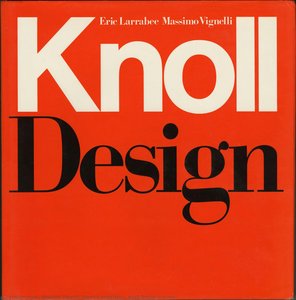
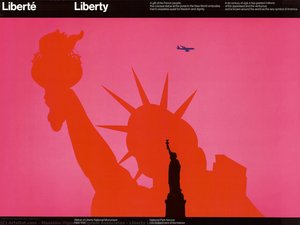
Massimo Vignelli's influence is woven into the fabric of modern life. Perhaps his most recognizable achievement is the redesign of the New York City Subway map in 1972. While initially controversial for its departure from strict geographical accuracy, it was a bold statement in clarity and usability. Vignelli prioritized legibility and intuitive navigation over literal representation, creating a diagrammatic map that continues to guide millions of commuters daily. This project exemplifies his core design philosophy: prioritizing communication above all else. Beyond the subway map, Vignelli Associates left an indelible mark on countless brands and institutions. Their work for Bloomingdale’s – including the iconic brown paper bag with its simple white logo – transformed a shopping experience into a statement of style. They designed furniture for Knoll, packaging for Heller, and corporate identities that became instantly recognizable symbols of quality and innovation. His *Heller Rainbow Dinnerware* stands as a testament to his minimalist aesthetic, showcasing vibrant color within clean geometric forms. The *Tredicesima Triennale di Milano* poster exemplifies his bold use of color and shape, while the *Knoll Design* cover demonstrates his ability to create striking visuals for renowned brands.A Lasting Impact: Beyond Aesthetics
Massimo Vignelli’s impact extends far beyond individual projects; he fundamentally reshaped how we perceive design itself. He was a staunch advocate for typographic discipline, famously advocating for a limited palette of typefaces – believing that true creativity lies not in endless options but in masterful execution with carefully chosen tools. His book, *The Vignelli Canon*, became a manifesto for designers, outlining his principles of clarity, simplicity, and enduring elegance. He wasn’t simply creating visually pleasing objects; he was striving to create order out of chaos, to communicate effectively, and to elevate the human experience through thoughtful design. His work continues to inspire generations of designers, reminding them that true innovation lies in stripping away the unnecessary and focusing on the essential. The Vignelli Center for Design Studies at the Rochester Institute of Technology serves as a lasting tribute to his legacy, preserving an extensive archive of his work and fostering continued exploration of his groundbreaking ideas. He passed away in 2014, but his designs remain powerfully present, shaping our world with their enduring elegance and unwavering commitment to clarity.
massimo vignelli, vignelli associates
1931 - 2014 , Italy
Quick Facts
- Artistic Movement Or Style: Modernism, Minimalism
- Date Of Birth: January 10, 1931
- Date Of Death: May 27, 2014
- Full Name: Massimo Vignelli
- Nationality: Italian
- Notable Artworks:
- Heller Rainbow Dinnerware
- Tredicesima Triennale di Milano
- Knoll Design (cover)
- Place Of Birth: Milan, Italy
Related Articles

White on Canvas: 10 Masterpieces & Timeless Elegance for Your Home Decor
Explore 10 iconic white paintings by Monet, Whistler & Rothko! Discover the stories behind these serene masterpieces and their impact on art history. Find museum-quality reproductions for your home decor at .
Massimo Vignelli: A Legacy of Modernist Clarity in Graphic Design & Visual Communication
Explore the enduring impact of Massimo Vignelli's modernist design philosophy. Discover his iconic works, key principles, and lasting legacy in graphic design & corporate identity. Learn from a true master.

Dark Masterpieces: 10 Iconic Paintings Dominated by Black Tones |
Explore 10 iconic paintings dominated by black tones, from Rembrandt’s chiaroscuro to Goya's dark expressions. Discover the stories behind these masterpieces & find museum-quality art reproductions for your home at .

Monochrome Visions: Exploring the Aesthetic & Historical Significance of Black & White Photography
Explore the rich history & artistic power of black and white photography. From early techniques to iconic masters like Ansel Adams, discover why monochrome continues to captivate art lovers today. Expert insights for collectors.

Mars Black Masterpieces: 10 Iconic Paintings & Timeless Art Decor Ideas
Delve into the power of 'Mars Black' with 10 iconic paintings by masters like Rembrandt & Caravaggio. Explore dramatic chiaroscuro, gothic art, and timeless beauty. Find museum-quality reproductions & elevate your home decor on .
![Fort Worth Art Museum The Italian Film: Neorealism and Beyond poster and event calendar\n\n[front view]](/media/artworks/images-thumb/9a/f3/9af3622e1fac840c383fbfca8217073b.jpg)
![Heller Rainbow Dinnerware\n\n[front view]](/media/artworks/images-thumb/cd/9c/cd9c3f1015cd05d21f20d796279c84cb.jpg)
![Heller The Rainbow Group\n\n[front view]](/media/artworks/images-thumb/63/ff/63ff27e205bc52fa330b5129aaab17df.jpg)
![Knoll Au Louvre\n\n[front cover]](/media/artworks/images-thumb/2d/58/2d58532dc1c1248432ee69d88c0253d2.jpg)
![Knoll International\n\n[front view]](/media/artworks/images-thumb/3f/ee/3feeb868249b96ea2d449739ed478876.jpg)
![Tredicesima Triennale di Milano\n\n[red on pink]](/media/artworks/images-thumb/d5/7c/d57c0494b16c39484ce82132534f6312.jpg)