

 Preview
 Send
Send Share
Share
 Details

 Download
 Similars
 X-Ray
X-Ray Diaporama
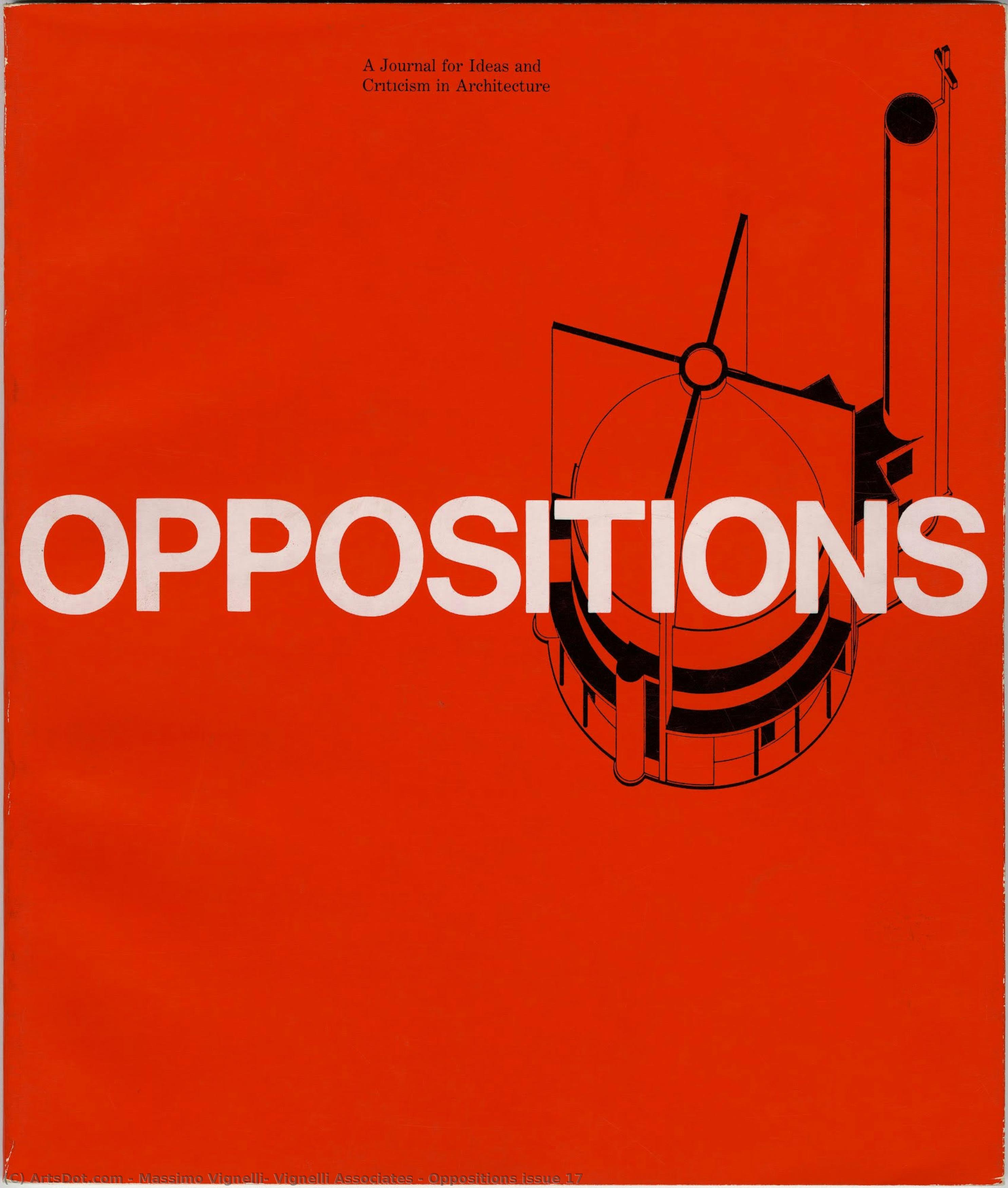
Oppositions issue 17
 Painting
- Modernism
 1979
1979 21.0 x 24.0 cm
 Vignelli Center for Design Studies
 Read More
Purchase a high-resolution, enhanced digital image, far superior to the online preview.
Each file is meticulously prepared by our in-house specialists using advanced tools and expert manual retouching. We ensure every image has exceptional clarity, precise color accuracy, and fine detail.
The final file is delivered via email within 72 hours, optimized for immediate use in professional, editorial, and print environments. This is the same quality trusted by top-tier design studios, publishers, and galleries.
Digital Image
Download a high-resolution file for personal display, printing, and creative projects. ( Buy Print Buy Hand Made Painting)
Included in Every Digital Image Order
Expert Digital Delivery, Guaranteed
When you choose ArtsDot.com, you're not just getting an image - you're receiving a professionally enhanced digital artwork, crafted with precision and backed by a satisfaction guarantee. Here's everything that comes with your order, automatically:

Fast Email Delivery
Your high-resolution digital image file will be emailed to you within 72 hours of ordering - ready for immediate use.

AI-Enhanced Digital File
Your artwork is professionally optimized using advanced AI tools and manual editing, ensuring maximum detail, clarity, and color accuracy.

Free Lifetime Re-Delivery
Accidentally deleted or lost your file? No worries - we'll resend it to you anytime, free of charge.

No Import Fees - Ever
Enjoy your artwork instantly with zero customs, duties, or delivery fees - digital downloads are always tax-free.

Color Accuracy Guarantee
We ensure your digital image reflects the original colors as closely as possible using professional tools and color management.

60-Day Satisfaction Guarantee
If you're not satisfied with your digital image, we'll revise it or refund 100% within 60 days - no questions asked.

100% Money-Back Guarantee
Not satisfied? Get a full refund within 60 days of receiving your digital file - no questions asked.

Bulk Order Discounts
Buy 3 images, save 10% - Buy 5, save 15% - Buy 10+, save 20%. Great for creative projects, galleries, and agencies.
Collectible Description
The Geometry of Division: Exploring Vignelli's Oppositions
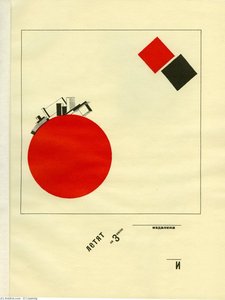
To stand before this piece, an artifact from the intellectual crucible that was the Institute for Architecture and Urban Studies, is to encounter pure, distilled thought rendered in pigment. This work, Oppositions issue 17, is far more than a mere graphic reproduction; it is a visual thesis statement on duality itself. Massimo Vignelli, whose career became synonymous with modernist clarity, has presented us here with an image that strips away the superfluous until only the essential remains. The composition—a vibrant field of red punctuated by stark white and bisected by a decisive black line—demands contemplation. It speaks in the universal language of form, suggesting that profound ideas often emerge from the tension between two opposing forces.
A Dialogue Between Form and Void
The technique employed here is deceptively simple: bold fields of color meeting precise geometric lines. The background's intense red acts as an emotional anchor, a saturated field against which all other elements are measured. At its heart lies the pristine white circle, a perfect locus of potentiality. This circle is not whole; it is cleaved by that unwavering black line, dividing what could be into two distinct halves. Vignelli masterfully introduces a secondary element—the smaller circle nestled to the right—which acts as both an echo and a counterpoint to the primary division. It invites the viewer's eye to wander, suggesting that opposition is not merely a binary split, but a complex relationship between parts.
Historical Resonance: The Avant-Garde Mindset
Understanding this piece requires acknowledging its context: 1979, and the intellectual ferment surrounding architectural theory. Vignelli Associates were deeply embedded in circles that questioned established norms, collaborating with minds like Peter Eisenman and Kenneth Frampton. This artwork captures the spirit of an "Avant-Garde think tank"—a place where ideas about structure, space, and meaning were rigorously debated. The piece embodies the modernist belief that clarity of form leads to clarity of thought. It is a visual manifestation of critical discourse, suggesting that every concept, every building, every idea, exists in relation to its opposite.
Symbolism and Emotional Impact for the Modern Collector
For the collector or designer seeking inspiration, this piece offers immediate intellectual depth without sacrificing aesthetic grace. The symbolism is rich: red often signifies passion or warning; white represents purity or emptiness; and the dividing line speaks directly to choice, conflict, and resolution. When placed within a sophisticated interior setting, it does not merely decorate; it prompts conversation. It asks the viewer: what are your oppositions? What two forces define your current space? Reproducing this work allows one to bring the disciplined elegance of mid-century graphic design into contemporary life, serving as a constant, beautiful reminder that true understanding often lies in the tension between what is and what could be.
Related Artworks

![Tredicesima Triennale Di Milano\n\n[red On Pink] — Massimo Vignelli, Vignelli Associates, Modernism](/media/artworks/images/thumbnails/60/dd/60dd2cf08a074e6e9f2a2f3407137241.jpg)
![Benetton Unisex Jacket Price Tag\n\n[front View With Green Logo] — Massimo Vignelli, Vignelli Associates, Modernist Design](/media/artworks/images/thumbnails/61/ce/61ceae6b5f2a4a41bb1e5348c3389cfb.jpg)

Artist Biography
A Life Dedicated to Form: The World of Massimo Vignelli
Born in Milan, Italy, in 1931, Massimo Vignelli’s journey was one of unwavering dedication to the principles of modernist design. From a young age, he demonstrated an innate understanding of visual communication, beginning his formal training in architecture at the Politecnico di Milano and later continuing at the Università Iuav di Venezia. However, it was an apprenticeship with the esteemed Castiglioni brothers – pioneers in Italian industrial design – that truly ignited his passion for shaping the world through thoughtful creation. This early exposure instilled in him a belief in functionality, simplicity, and the power of elegant solutions to everyday problems. He wasn’t merely designing objects; he was crafting experiences, streamlining interactions, and elevating the mundane into the memorable. This formative period laid the groundwork for a career that would redefine visual culture across continents.From Italy to New York: A Transatlantic Vision
Vignelli's path led him to America in 1966, where he became instrumental in establishing the New York office of Unimark International. This marked a pivotal moment, not only for his career but also for the landscape of American design. Unimark quickly rose to prominence, and Vignelli’s contributions – most notably the enduring logo for American Airlines – solidified his reputation as a master of corporate identity. However, a growing divergence in creative philosophy prompted him to embark on an independent venture. In 1971, alongside his wife and lifelong collaborator, Lella Vignelli, he founded Vignelli Associates. This partnership proved extraordinarily fruitful, becoming synonymous with sophisticated design solutions that spanned graphic design, interior design, product design, and architecture. The firm’s ethos was rooted in a belief that good design should be accessible, timeless, and profoundly useful – principles they consistently championed throughout their careers.Iconic Creations: A Legacy of Clarity
Massimo Vignelli's influence is woven into the fabric of modern life. Perhaps his most recognizable achievement is the redesign of the New York City Subway map in 1972. While initially controversial for its departure from strict geographical accuracy, it was a bold statement in clarity and usability. Vignelli prioritized legibility and intuitive navigation over literal representation, creating a diagrammatic map that continues to guide millions of commuters daily. This project exemplifies his core design philosophy: prioritizing communication above all else. Beyond the subway map, Vignelli Associates left an indelible mark on countless brands and institutions. Their work for Bloomingdale’s – including the iconic brown paper bag with its simple white logo – transformed a shopping experience into a statement of style. They designed furniture for Knoll, packaging for Heller, and corporate identities that became instantly recognizable symbols of quality and innovation. His *Heller Rainbow Dinnerware* stands as a testament to his minimalist aesthetic, showcasing vibrant color within clean geometric forms. The *Tredicesima Triennale di Milano* poster exemplifies his bold use of color and shape, while the *Knoll Design* cover demonstrates his ability to create striking visuals for renowned brands.A Lasting Impact: Beyond Aesthetics
Massimo Vignelli’s impact extends far beyond individual projects; he fundamentally reshaped how we perceive design itself. He was a staunch advocate for typographic discipline, famously advocating for a limited palette of typefaces – believing that true creativity lies not in endless options but in masterful execution with carefully chosen tools. His book, *The Vignelli Canon*, became a manifesto for designers, outlining his principles of clarity, simplicity, and enduring elegance. He wasn’t simply creating visually pleasing objects; he was striving to create order out of chaos, to communicate effectively, and to elevate the human experience through thoughtful design. His work continues to inspire generations of designers, reminding them that true innovation lies in stripping away the unnecessary and focusing on the essential. The Vignelli Center for Design Studies at the Rochester Institute of Technology serves as a lasting tribute to his legacy, preserving an extensive archive of his work and fostering continued exploration of his groundbreaking ideas. He passed away in 2014, but his designs remain powerfully present, shaping our world with their enduring elegance and unwavering commitment to clarity.
massimo vignelli, vignelli associates
1931 - 2014 , Italy
Quick Facts
- Artistic Movement Or Style: Modernism, Minimalism
- Date Of Birth: January 10, 1931
- Date Of Death: May 27, 2014
- Full Name: Massimo Vignelli
- Nationality: Italian
- Notable Artworks:
- Heller Rainbow Dinnerware
- Tredicesima Triennale di Milano
- Knoll Design (cover)
- Place Of Birth: Milan, Italy

