

 Preview
 Send
Send Share
Share
 Details

 Download
 Similars
 X-Ray
X-Ray Diaporama
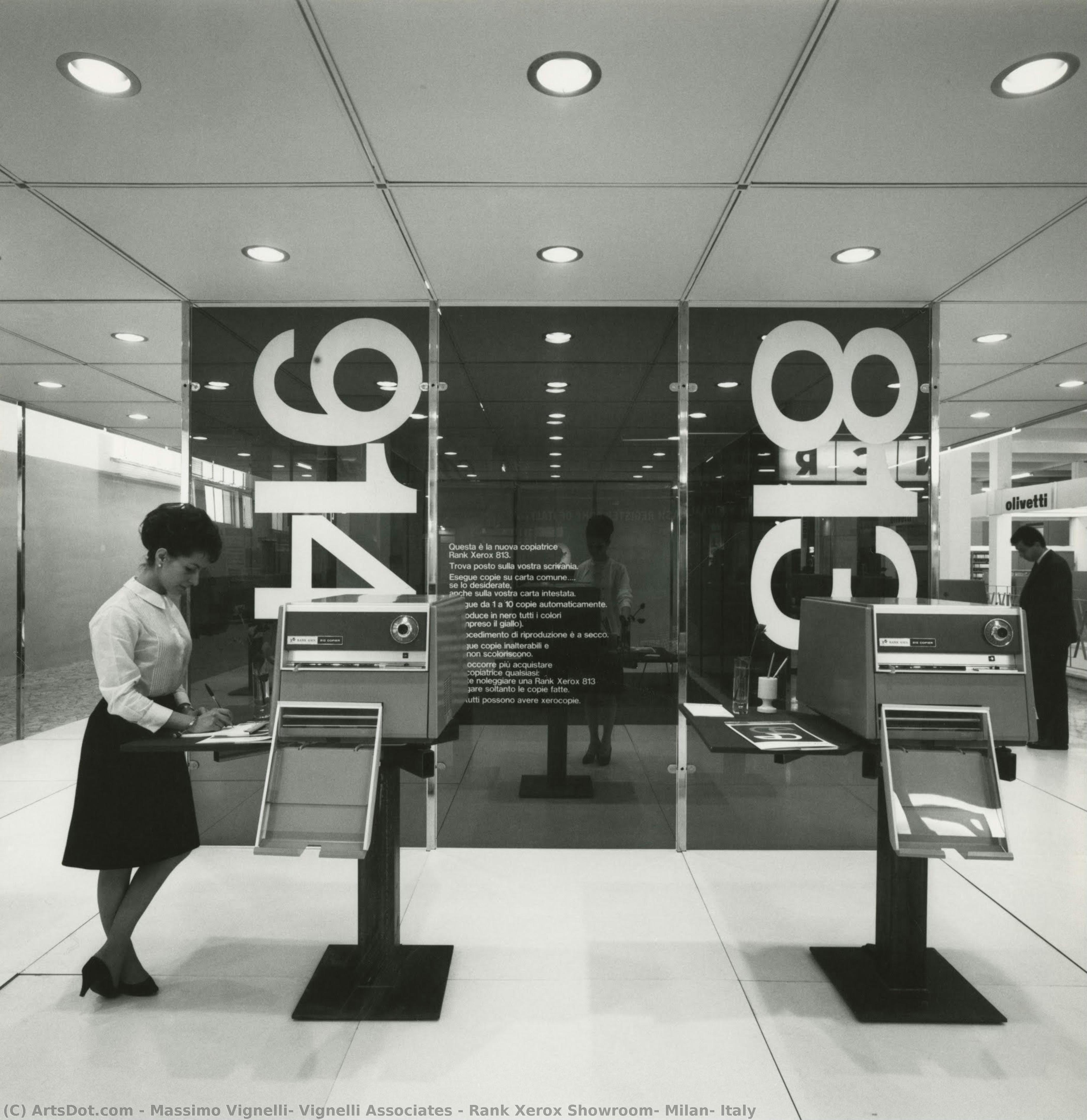
Rank Xerox Showroom, Milan, Italy


 Read More
Purchase a high-resolution, enhanced digital image, far superior to the online preview.
Each file is meticulously prepared by our in-house specialists using advanced tools and expert manual retouching. We ensure every image has exceptional clarity, precise color accuracy, and fine detail.
The final file is delivered via email within 72 hours, optimized for immediate use in professional, editorial, and print environments. This is the same quality trusted by top-tier design studios, publishers, and galleries.
Digital Image
Download a high-resolution file for personal display, printing, and creative projects. ( Buy Print Buy Hand Made Painting)
Included in Every Digital Image Order
Expert Digital Delivery, Guaranteed
When you choose ArtsDot.com, you're not just getting an image - you're receiving a professionally enhanced digital artwork, crafted with precision and backed by a satisfaction guarantee. Here's everything that comes with your order, automatically:

Fast Email Delivery
Your high-resolution digital image file will be emailed to you within 72 hours of ordering - ready for immediate use.

AI-Enhanced Digital File
Your artwork is professionally optimized using advanced AI tools and manual editing, ensuring maximum detail, clarity, and color accuracy.

Free Lifetime Re-Delivery
Accidentally deleted or lost your file? No worries - we'll resend it to you anytime, free of charge.

No Import Fees - Ever
Enjoy your artwork instantly with zero customs, duties, or delivery fees - digital downloads are always tax-free.

Color Accuracy Guarantee
We ensure your digital image reflects the original colors as closely as possible using professional tools and color management.

60-Day Satisfaction Guarantee
If you're not satisfied with your digital image, we'll revise it or refund 100% within 60 days - no questions asked.

100% Money-Back Guarantee
Not satisfied? Get a full refund within 60 days of receiving your digital file - no questions asked.

Bulk Order Discounts
Buy 3 images, save 10% - Buy 5, save 15% - Buy 10+, save 20%. Great for creative projects, galleries, and agencies.
Collectible Description
The Genesis of Information: Massimo Vignelli’s ‘Rank Xerox Showroom’
Massimo Vignelli's 1964 photograph, “Rank Xerox Showroom, Milan, Italy,” isn’t merely a snapshot; it’s a meticulously constructed dialogue between geometry, light, and the nascent promise of digital communication. Captured within the cool, restrained space of a Milan showroom, the image presents a carefully orchestrated tableau of modernity – a testament to Vignelli's profound understanding of how visual systems could shape perception and influence experience. The scene unfolds with a deliberate simplicity: a large glass window dominates the frame, its surface reflecting a complex arrangement of text and geometric forms, while two display stands, laden with documents, anchor the foreground. A solitary figure, a woman in a business suit, is seated at one of these stands, engaged in an activity that suggests both contemplation and purposeful action – reading, perhaps, or reviewing plans. The perspective, subtly elevated, offers a clear, almost clinical view into this carefully curated environment, inviting the viewer to dissect its components and decipher its underlying logic.
The photograph’s power lies not in overt drama but in its quiet confidence. Vignelli masterfully employs negative space, using the expansive window as a visual anchor and drawing the eye towards the intricate patterns within. The stark black and white palette amplifies the sense of order and control, highlighting the clean lines of the architecture and the precise arrangement of objects. The lighting is even and diffused, casting subtle shadows that define the forms without overwhelming them. It’s a deliberate choice, reflecting Vignelli's commitment to clarity and functionality – a philosophy deeply rooted in modernist design principles.
A Reflection of Corporate Identity: The Context of Rank Xerox
To fully appreciate “Rank Xerox Showroom,” it’s crucial to understand the historical context surrounding its creation. In 1964, Rank Xerox, a joint venture between the American Xerox Corporation and the British Rank Organisation, was rapidly establishing itself as a global leader in photographic reproduction technology. This wasn't simply about selling copiers; it was about redefining how information was disseminated and consumed. The showroom represented a deliberate attempt to showcase this new paradigm – a visual embodiment of the company’s commitment to efficiency, precision, and technological advancement. Rank Xerox recognized early on that branding was paramount, and Vignelli’s design played a critical role in shaping their corporate identity.
The photograph itself is inextricably linked to this narrative. It's not just an advertisement; it’s a carefully considered visual statement about the future of communication. The geometric patterns reflected in the window – reminiscent of early computer graphics and circuit boards – foreshadowed the rise of digital technology, while the organized arrangement of documents symbolized the streamlining of processes facilitated by Xerox’s machines. The woman seated at the display stand represents the professional world being transformed by this new technology, a symbol of productivity and engagement.
Vignelli's Signature: Geometry, Light, and Controlled Chaos
Examining the photographic technique reveals further insights into Vignelli’s artistic vision. The image is executed with a classic approach to black and white photography – high contrast, sharp detail, and a focus on form. The composition is remarkably balanced, utilizing geometric shapes—rectangles, circles, and lines—to create a sense of order and stability. However, within this controlled environment, there’s also an element of carefully orchestrated “chaos.” The complexity of the patterns reflected in the window suggests a vast network of information, hinting at the potential for limitless possibilities. The subtle variations in lighting and shadow add depth and dimension to the scene, preventing it from feeling static or sterile.
Vignelli’s mastery lies in his ability to combine these seemingly disparate elements—geometric precision and controlled chaos—to create a visually compelling and intellectually stimulating image. It's a testament to his understanding of how visual systems can communicate complex ideas with remarkable clarity and elegance.
A Legacy of Clarity: Reproductions and Inspiration
“Rank Xerox Showroom, Milan, Italy” remains a powerfully evocative image today, offering a fascinating glimpse into the world of mid-20th century design and technology. Reproductions of this photograph are readily available, providing an opportunity to experience Vignelli’s vision firsthand. Beyond its aesthetic appeal, the image serves as a valuable reminder of the enduring principles of modernist design—clarity, functionality, and a commitment to shaping positive human experiences. It's a timeless study in visual communication, inviting us to consider how we perceive and interact with information in an increasingly complex world.
Related Artworks


![Milano\n\n[cover View, Folded] — Massimo Vignelli, Vignelli Associates, Contemporary Digital Art](/media/artworks/images-thumb/d9/d4/d9d4b14c78e469c5d339069b4321c34b.jpg)
![Fort Worth Art Museum The Italian Film: Neorealism And Beyond Poster And Event Calendar\n\n[front View] — Massimo Vignelli, Vignelli Associates, Contemporary Realism](/media/artworks/images-thumb/9a/f3/9af3622e1fac840c383fbfca8217073b.jpg)






Artist Biography
A Life Dedicated to Form: The World of Massimo Vignelli
Born in Milan, Italy, in 1931, Massimo Vignelli’s journey was one of unwavering dedication to the principles of modernist design. From a young age, he demonstrated an innate understanding of visual communication, beginning his formal training in architecture at the Politecnico di Milano and later continuing at the Università Iuav di Venezia. However, it was an apprenticeship with the esteemed Castiglioni brothers – pioneers in Italian industrial design – that truly ignited his passion for shaping the world through thoughtful creation. This early exposure instilled in him a belief in functionality, simplicity, and the power of elegant solutions to everyday problems. He wasn’t merely designing objects; he was crafting experiences, streamlining interactions, and elevating the mundane into the memorable. This formative period laid the groundwork for a career that would redefine visual culture across continents.From Italy to New York: A Transatlantic Vision
Vignelli's path led him to America in 1966, where he became instrumental in establishing the New York office of Unimark International. This marked a pivotal moment, not only for his career but also for the landscape of American design. Unimark quickly rose to prominence, and Vignelli’s contributions – most notably the enduring logo for American Airlines – solidified his reputation as a master of corporate identity. However, a growing divergence in creative philosophy prompted him to embark on an independent venture. In 1971, alongside his wife and lifelong collaborator, Lella Vignelli, he founded Vignelli Associates. This partnership proved extraordinarily fruitful, becoming synonymous with sophisticated design solutions that spanned graphic design, interior design, product design, and architecture. The firm’s ethos was rooted in a belief that good design should be accessible, timeless, and profoundly useful – principles they consistently championed throughout their careers.Iconic Creations: A Legacy of Clarity
Massimo Vignelli's influence is woven into the fabric of modern life. Perhaps his most recognizable achievement is the redesign of the New York City Subway map in 1972. While initially controversial for its departure from strict geographical accuracy, it was a bold statement in clarity and usability. Vignelli prioritized legibility and intuitive navigation over literal representation, creating a diagrammatic map that continues to guide millions of commuters daily. This project exemplifies his core design philosophy: prioritizing communication above all else. Beyond the subway map, Vignelli Associates left an indelible mark on countless brands and institutions. Their work for Bloomingdale’s – including the iconic brown paper bag with its simple white logo – transformed a shopping experience into a statement of style. They designed furniture for Knoll, packaging for Heller, and corporate identities that became instantly recognizable symbols of quality and innovation. His *Heller Rainbow Dinnerware* stands as a testament to his minimalist aesthetic, showcasing vibrant color within clean geometric forms. The *Tredicesima Triennale di Milano* poster exemplifies his bold use of color and shape, while the *Knoll Design* cover demonstrates his ability to create striking visuals for renowned brands.A Lasting Impact: Beyond Aesthetics
Massimo Vignelli’s impact extends far beyond individual projects; he fundamentally reshaped how we perceive design itself. He was a staunch advocate for typographic discipline, famously advocating for a limited palette of typefaces – believing that true creativity lies not in endless options but in masterful execution with carefully chosen tools. His book, *The Vignelli Canon*, became a manifesto for designers, outlining his principles of clarity, simplicity, and enduring elegance. He wasn’t simply creating visually pleasing objects; he was striving to create order out of chaos, to communicate effectively, and to elevate the human experience through thoughtful design. His work continues to inspire generations of designers, reminding them that true innovation lies in stripping away the unnecessary and focusing on the essential. The Vignelli Center for Design Studies at the Rochester Institute of Technology serves as a lasting tribute to his legacy, preserving an extensive archive of his work and fostering continued exploration of his groundbreaking ideas. He passed away in 2014, but his designs remain powerfully present, shaping our world with their enduring elegance and unwavering commitment to clarity.
massimo vignelli, vignelli associates
1931 - 2014 , Italy
Quick Facts
- Artistic Movement Or Style: Modernism, Minimalism
- Date Of Birth: January 10, 1931
- Date Of Death: May 27, 2014
- Full Name: Massimo Vignelli
- Nationality: Italian
- Notable Artworks:
- Heller Rainbow Dinnerware
- Tredicesima Triennale di Milano
- Knoll Design (cover)
- Place Of Birth: Milan, Italy

