

 Preview
 Send
Send Share
Share
 Details

 Download
 Similars
 X-Ray
X-Ray Diaporama
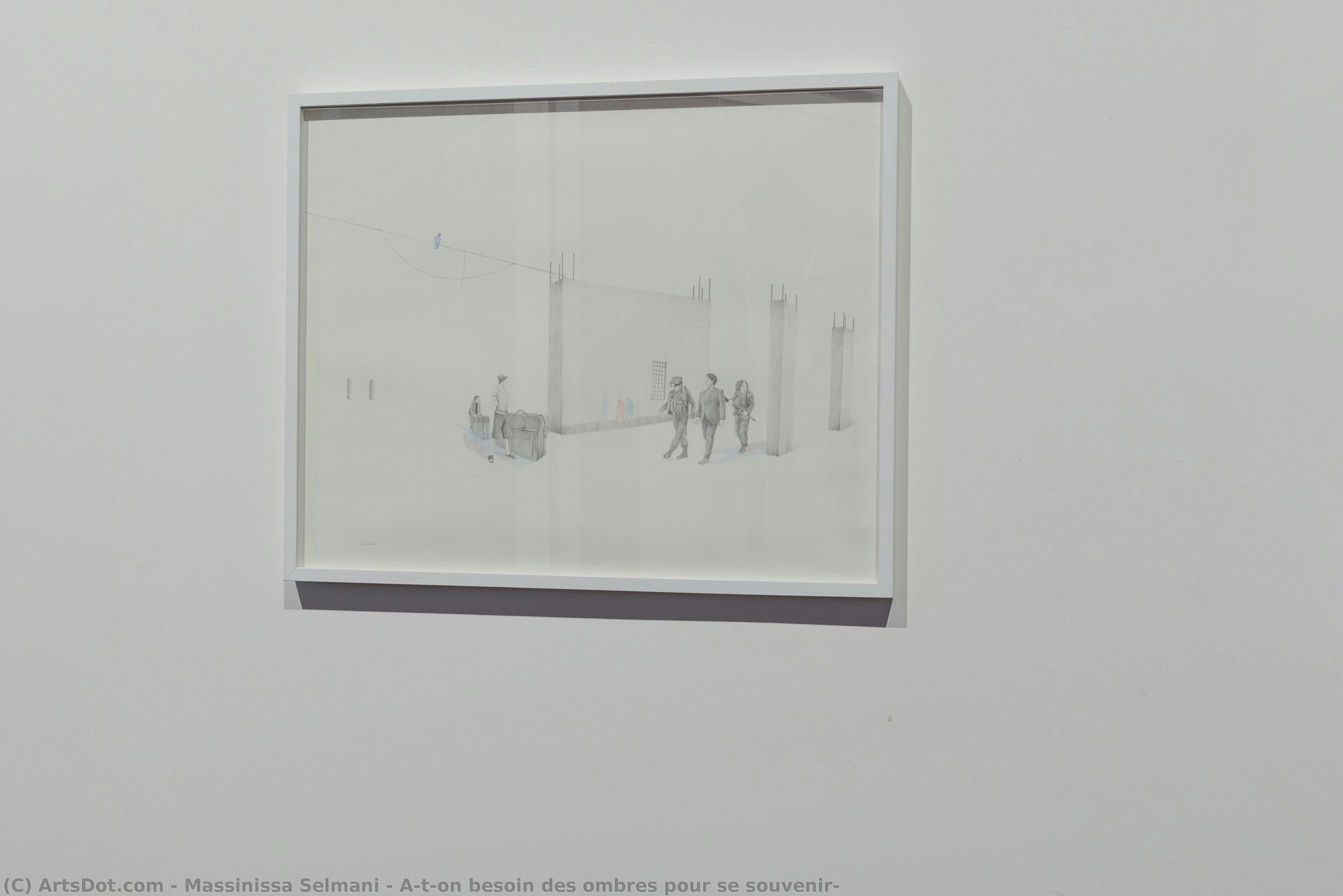
A-t-on besoin des ombres pour se souvenir?


 Read More
Purchase a high-resolution, enhanced digital image, far superior to the online preview.
Each file is meticulously prepared by our in-house specialists using advanced tools and expert manual retouching. We ensure every image has exceptional clarity, precise color accuracy, and fine detail.
The final file is delivered via email within 72 hours, optimized for immediate use in professional, editorial, and print environments. This is the same quality trusted by top-tier design studios, publishers, and galleries.
Digital Image
Download a high-resolution file for personal display, printing, and creative projects. ( Buy Print Buy Hand Made Painting)
Included in Every Digital Image Order
Expert Digital Delivery, Guaranteed
When you choose ArtsDot.com, you're not just getting an image - you're receiving a professionally enhanced digital artwork, crafted with precision and backed by a satisfaction guarantee. Here's everything that comes with your order, automatically:

Fast Email Delivery
Your high-resolution digital image file will be emailed to you within 72 hours of ordering - ready for immediate use.

AI-Enhanced Digital File
Your artwork is professionally optimized using advanced AI tools and manual editing, ensuring maximum detail, clarity, and color accuracy.

Free Lifetime Re-Delivery
Accidentally deleted or lost your file? No worries - we'll resend it to you anytime, free of charge.

No Import Fees - Ever
Enjoy your artwork instantly with zero customs, duties, or delivery fees - digital downloads are always tax-free.

Color Accuracy Guarantee
We ensure your digital image reflects the original colors as closely as possible using professional tools and color management.

60-Day Satisfaction Guarantee
If you're not satisfied with your digital image, we'll revise it or refund 100% within 60 days - no questions asked.

100% Money-Back Guarantee
Not satisfied? Get a full refund within 60 days of receiving your digital file - no questions asked.

Bulk Order Discounts
Buy 3 images, save 10% - Buy 5, save 15% - Buy 10+, save 20%. Great for creative projects, galleries, and agencies.
Related Artworks
Artist Biography
Massinissa Selmani: A Cartographer of Memory and Political Echoes
Born in Constantine, Algeria, in 1980, Massinissa Selmani’s artistic journey is deeply rooted in the landscapes and histories of his homeland. Initially pursuing a degree in computer science – a seemingly disparate path that would later inform his unique approach to image-making – he found himself drawn to the power of visual representation as a means of confronting complex social and political realities. His work isn't simply about depicting scenes; it’s an intricate process of excavation, layering fragments of information—photographs from newspapers, architectural blueprints, handwritten texts—to construct narratives that resonate with both personal memory and broader historical currents.
Selmani’s artistic development is marked by a deliberate rejection of traditional representational techniques. He eschews polished surfaces and idealized forms, favoring instead the raw materiality of found images and the inherent ambiguity of collage. This approach reflects a critical engagement with the mechanisms of media dissemination and the ways in which history is constructed through selective imagery. Early influences include the work of artists who utilized archival materials – particularly those exploring themes of memory and documentation—as well as the socio-political context of Algeria’s post-colonial era, where questions of identity, displacement, and national narrative remain profoundly relevant.
The Language of Disruption: Drawings, Installations, and Found Objects
Selmani's practice is characterized by a fascinating interplay between seemingly disparate elements. His work frequently combines drawings—often rendered in meticulous detail—with collaged photographs and textual fragments. These aren’t simply juxtaposed; they are interwoven, creating layered compositions that invite the viewer to actively participate in constructing meaning. Architectural diagrams, for instance, might be overlaid with images of rural landscapes or political slogans, generating a sense of disorientation and challenging conventional modes of perception.
The use of found objects—particularly architectural blueprints and maps—is central to his process. These documents, representing both the tangible and the abstract, serve as points of departure for exploring themes of power, control, and the construction of space. Selmani’s installations often transform these materials into evocative environments that blur the boundaries between reality and representation, inviting viewers to contemplate the fragility of memory and the complexities of historical interpretation.
Venice Biennale and Beyond: Recognition and Critical Acclaim
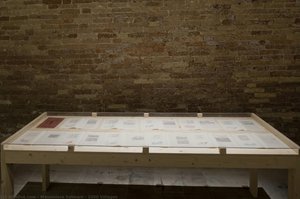
Selmani's international recognition began with his inclusion in the 2015 Venice Biennale, where he presented “*A-t-on besoin des ombres pour se souvenir?*” (Does one need shadows to remember?) and “*1000 villages*.” The latter work, a poignant meditation on the failed agrarian experiment of 1973 in Algeria, garnered particular attention for its meticulous reconstruction of a lost history through fragmented images and handwritten notes. This selection marked a significant turning point in his career, bringing him to the forefront of contemporary art discourse.
Since Venice, Selmani’s work has been exhibited extensively across Europe and beyond, including at Palais de Tokyo (Paris), Centre Pompidou (Paris), Frac Centre Val de Loire (Orléans), and numerous other prestigious institutions. He has received several awards and accolades, including the Marcel Duchamp Prize in 2023 and a special mention at the 56th Venice Biennale for his “modest medium’s capacity to act beyond its scale.” His work is now held in significant collections, reflecting its growing recognition within the international art world.
Exploring Memory, History, and Identity
At the core of Selmani's artistic practice lies a profound engagement with themes of memory, history, and identity. He doesn’t offer simple narratives or definitive answers; instead, he presents viewers with a series of fragmented images and ambiguous symbols that prompt reflection on the complexities of the past and its ongoing influence on the present. His work often explores the ways in which collective memory is shaped by political forces, media representations, and personal experiences.
Furthermore, Selmani’s Algerian heritage—his birth in Constantine and his upbringing within a context marked by both colonial legacies and post-independence struggles—is inextricably linked to his artistic vision. His work serves as a critical examination of national identity, displacement, and the enduring impact of historical events on individual lives. Through his distinctive visual language, Selmani invites us to confront uncomfortable truths about the past while simultaneously questioning our own understanding of history and memory.
Current Projects & Legacy
Currently, Massinissa Selmani is engaged in a solo exhibition at Aranya Center North in China, titled “*Distances*,” exploring themes of ambiguity and fragility. His work continues to be exhibited internationally, solidifying his position as a leading voice in contemporary art. Selmani’s legacy lies not only in the evocative imagery he creates but also in his innovative approach to combining archival materials with drawing and collage—a method that challenges traditional notions of representation and invites viewers to actively participate in constructing meaning.
Massinissa Selmani
1980 - , Algeria
Quick Facts
- Artistic Movement Or Style: Contemporary art
- Artists Who Influenced This Artist: ['None],\n "Artists or movements influenced by this artist": [None']
- Date Of Birth: 1980
- Full Name: Massinissa Selmani
- Nationality: Algerian
- Notable Artworks:
- On a Rock, a Brief Circle of sun
- Untitled
- Le vent ne veut jamais rester dehors
- Place Of Birth: Constantine, Algeria

