 Preview
 Send
Send Share
Share
 Details

 Download
 Similars
 X-Ray
X-Ray Diaporama
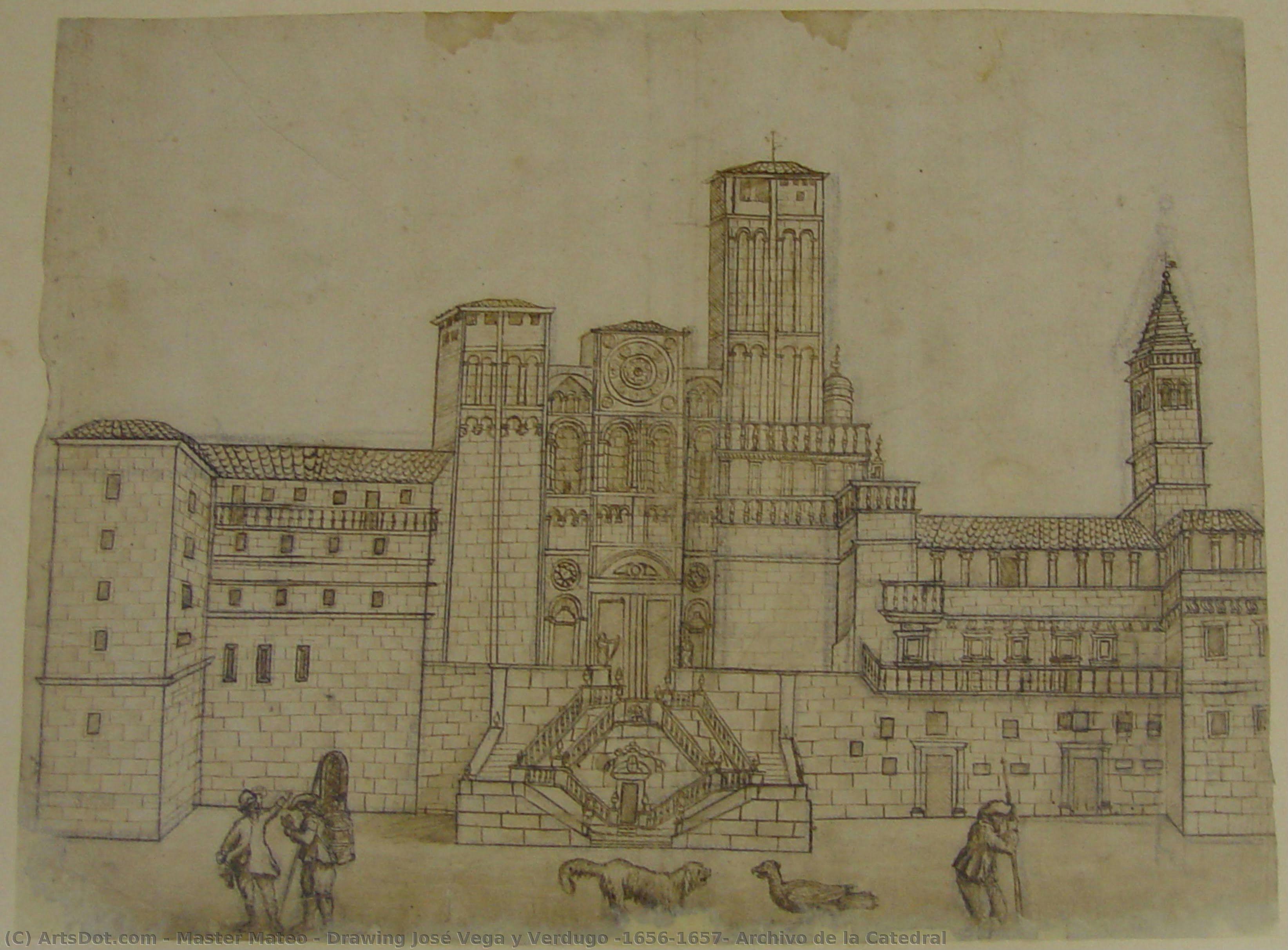
Drawing José Vega y Verdugo (1656-1657) Archivo de la Catedral


 Read More
Giclée / Art Print
Museum-quality giclée or canvas print with fast production and flexible finish options. ( Buy Hand Made Painting Buy Image)




P118B $10

P118H $10

P118W $10

P438Z $10

P508JH $12

P508YH $12

P805H $10

P805Z $10

P919BZ $10

P919G $10

P919XJ $10

P959ZH $10

P968JZ $12

W106C $8

W218G $10

W218JH $8

W218Y $10

W307PJ $10

W316G $10

W316PJ $8

W316Y $10

W398PJ $8

W4111J $10

W500HY $15

W500JH $15

W692G $12

W849H $8

W940BG $15

W953PJ $8




Pick from our preset sizes that match the artwork's original proportions.

You may enter your own dimensions to fit a specific frame or space. If your selected size does not match the original image's proportions, we will either crop the artwork or extend the image with a mirrored or solid-fill edge. A digital mockup will be sent for your approval before production begins.
Please note that the on-screen preview does not reflect the actual cropping or extension. Only the mockup will accurately show the final composition.
While custom sizes are available, we recommend selecting a dimension from the predefined list to preserve the original proportions.
Worldwide Delivery () in 2 weeks instead of standard 4/5 weeks. (26 August)

Free Worldwide Express Shipping

High-Quality Linen Canvas

Full Shipping Insurance

Customs Tax Refund Guarantee

True Color Matching Guarantee

60-Day Return Policy (Defects Only)

100% Money-Back Guarantee

Bulk Discount Offer
 Glass option is only available in size under 110 CM

Drawing José Vega y Verdugo (1656-1657) Archivo de la Catedral
Giclée / Art Print
Reproduction Size
-


Total Price
$ 63
Collectible Description
A Glimpse Through the Veils of Time
In the delicate, monochromatic strokes of the drawing Drawing José Vega y Verdugo (1656-1657) Archivo de la Catedral, we are invited to step into a vanished era of architectural grandeur and daily life. This evocative work serves as a profound historical window, capturing a moment where the structural evolution of the Santiago Cathedral meets the lived reality of a bygone century. The scene unfolds within the courtyard of a formidable castle, where the stark contrast of light and shadow breathes life into a world of stone and spirit. As the eye wanders through the composition, it encounters a bustling microcosm of activity; figures move with purpose across the grounds, their presence lending a human heartbeat to the imposing architecture. A solitary animal, perhaps a faithful hound or a sturdy horse, rests near the center, grounding the historical grandeur in the tangible, everyday rhythms of the seventeenth century.
The technical mastery of this piece lies in its ability to evoke atmosphere through the limited medium of black and white ink or graphite. There is a haunting beauty in the way the artist utilizes line weight to define the massive tower that looms in the background, suggesting both protection and permanence. The interplay of light suggests an era before the modern glow, where shadows held secrets and the sun dictated the movement of all living things. For the discerning collector or interior designer, this drawing offers more than mere decoration; it provides a sophisticated focal point that commands attention through its understated elegance and historical depth. It is a piece that speaks of legacy, inviting contemplation on the layers of history that reside within the very stones of Spain's most sacred sites.
Beyond its aesthetic allure, the artwork carries a heavy weight of symbolism and historical continuity. While the drawing itself dates to the mid-1650s, it captures a period of transition for the Cathedral, reflecting on the architectural shifts that occurred between the era of Master Mateo and the later Baroque interventions. The composition acts as a silent witness to the disappearance of great arches and the emergence of new facades, preserving the memory of what once was. To possess a reproduction of such a work is to hold a fragment of the soul of Santiago. It brings an air of academic prestige and timelessness to any space, making it an ideal selection for those who curate environments defined by intellectual curiosity, reverence for heritage, and a profound appreciation for the enduring power of classical European art.
Related Artworks



Artist Biography
The Soul of Santiago’s Glory
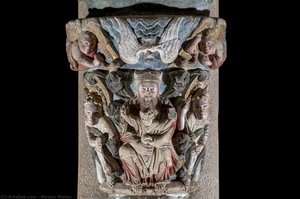
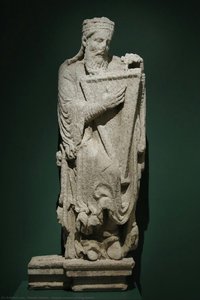
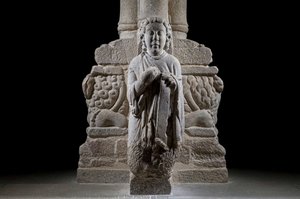
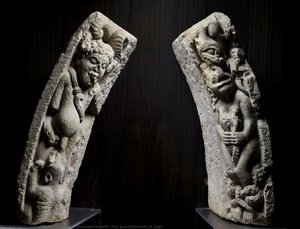
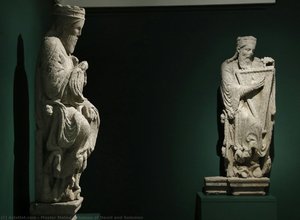
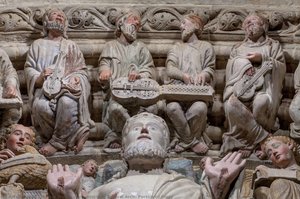
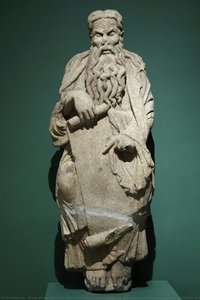
Master Mateo, a sculptor whose name remains shrouded in mystery despite his monumental contribution to the Catedral de Santiago de Compostela Cathedral, stands as one of the most revered figures of Romanesque art in Spain. Born around 1161 in Galicia, though precise details about his life are scarce, Mateo’s legacy rests primarily on his unparalleled achievement: the Portico de la Gloria. This breathtaking architectural marvel dominates the cathedral’s façade and embodies the spiritual fervor of the twelfth century. He emerged as a sculptor during a period marked by fervent religious devotion and artistic innovation, stepping into a world where the pilgrimage route to Santiago was already a transformative journey for thousands of souls.
The genesis of his greatest work began around 1188, when he was tasked with overseeing the creation of the triple doorway that would become his magnum opus. The Cathedral project itself had been conceived decades earlier, driven by King Alfonso VIII and fueled by the immense religious significance of the site. Within this sacred context, Mateo did not merely carve stone; he breathed life into it. His involvement in the Portico de la Adamant was a divine undertaking, transforming a structural necessity into a theological narrative that continues to captivate pilgrims and art historians alike.
A Symphony in Stone: Technique and Style
Mateo's sculptural style is characterized by a remarkable realism that represented a profound departure from earlier, more rigid Romanesque conventions. While his contemporaries often relied on stylized, flat figures, Mateo meticulously studied human anatomy and the complex behavior of drapery, achieving an astonishing accuracy in his depictions. His mastery of limestone carving was unparalleled, particularly through his use of a technique known as trabajo vivo. This method involved layering stone slabs to create textured surfaces that mimicked the appearance of flesh and fabric, lending a sense of movement and vitality to the static medium.
This innovative approach allowed him to bridge the gap between the earthly and the divine. When observing his work, one can see how he skillfully employed light and shadow to enhance the depth of his reliefs. His ability to manipulate stone to suggest the softness of a saint's robe or the muscular tension of a biblical figure elevated his craftsmanship to a level of sophistication rarely seen in the Middle Ages. This technical brilliance ensured that his figures were not merely symbols, but palpable presences within the cathedral's entrance.
The Portico de la Gloria: A Testament to Faith
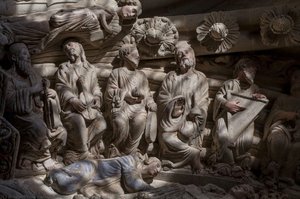
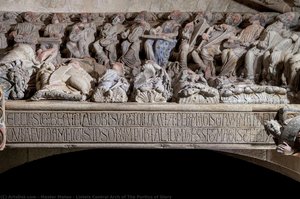
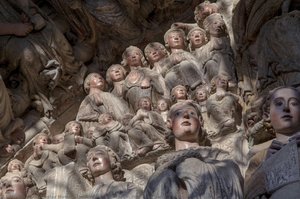
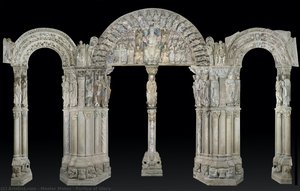
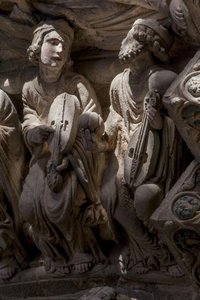
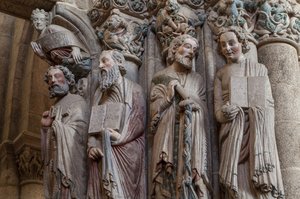
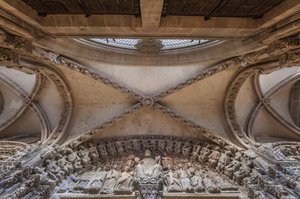
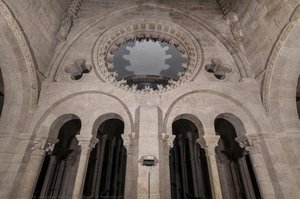
The Portico de la Gloria serves as the ultimate testament to Mateo’s artistic and spiritual vision. Its central panels depict profound scenes from the Gospels—including the Nativity, Annunciation, and the Crucifixion—arranged in a way that guides the viewer through a sacred history. The iconography is vast and complex, featuring:
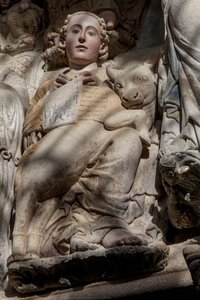
- The Central Arch: Featuring iconic figures such as Saint Luke, where the intricate Romanesque sculpture displays profound religious symbolism.
- The Left Arch: A masterclass in 12th-century Spanish relief carving, showcasing detailed biblical narratives.
- The Right Arch: An exhibition of intricate beauty that demonstrates his ability to manage complex architectural and sculptural integration.
Through these works, Mateo achieved a level of historical significance that transcends the era of his birth. He transitioned the Romanesque style toward the burgeoning elegance of the Gothic, leaving behind a legacy that remains the heartbeat of Santiago de Compostela. His work stands as a permanent bridge between the medieval mind and the eternal, ensuring that even centuries after his death in 1217, the glory of his stone symphony continues to inspire awe.
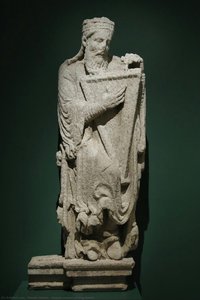
master mateo
1161 - 1217 , Spain
Quick Facts
- Artistic Movement Or Style: Romanesque Sculpture
- Date Of Birth: c. 1150
- Date Of Death: c. 1217
- Full Name: Mateo de Compostela
- Nationality: Spanish
- Notable Artworks: ['Portico de la Gloria']
- Place Of Birth: Spain
Related Articles

White on Canvas: 10 Masterpieces & Timeless Elegance for Your Home Decor
Explore 10 iconic white paintings by Monet, Whistler & Rothko! Discover the stories behind these serene masterpieces and their impact on art history. Find museum-quality reproductions for your home decor at .

Monochrome Visions: Exploring the Aesthetic & Historical Significance of Black & White Photography
Explore the rich history & artistic power of black and white photography. From early techniques to iconic masters like Ansel Adams, discover why monochrome continues to captivate art lovers today. Expert insights for collectors.

Dark Masterpieces: 10 Iconic Paintings Dominated by Black Tones |
Explore 10 iconic paintings dominated by black tones, from Rembrandt’s chiaroscuro to Goya's dark expressions. Discover the stories behind these masterpieces & find museum-quality art reproductions for your home at .

Chromatic Absence: Exploring the Aesthetic Power of Black & White Art
Explore the captivating world of monochrome art! Discover its rich history, influential artists like Malevich & Klein, and profound emotional impact. Expert insights for collectors & design enthusiasts.
The Subtleties of White: Exploring Absence, Light & Symbolism in Art History
Explore the profound symbolism & history of white in art! From ancient purity to modern abstraction, discover how artists have used absence & light. Expert insights from ArtsDot.