

 Preview
 Send
Send Share
Share
 Details

 Download
 Similars
 X-Ray
X-Ray Diaporama
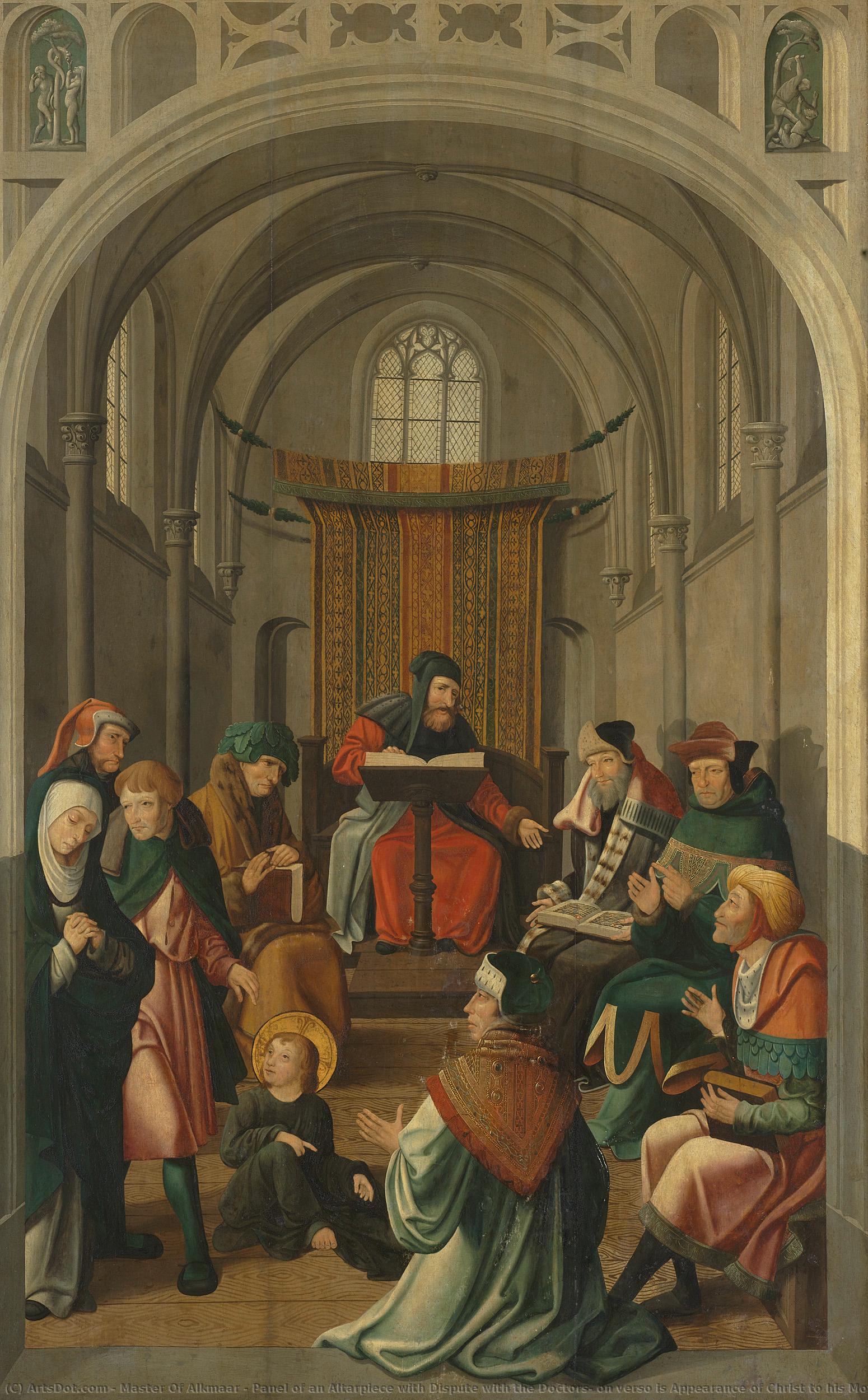
Panel of an Altarpiece with Dispute with the Doctors, on verso is Appearance of Christ to his Mother, Master of Alkmaar (attributed to), c. 1520 - c. 1535
 1535
1535 134.0 x 83.0 cm
 Read More
Purchase a high-resolution, enhanced digital image, far superior to the online preview.
Each file is meticulously prepared by our in-house specialists using advanced tools and expert manual retouching. We ensure every image has exceptional clarity, precise color accuracy, and fine detail.
The final file is delivered via email within 72 hours, optimized for immediate use in professional, editorial, and print environments. This is the same quality trusted by top-tier design studios, publishers, and galleries.
Digital Image
Download a high-resolution file for personal display, printing, and creative projects. ( Buy Print Buy Hand Made Painting)
Included in Every Digital Image Order
Expert Digital Delivery, Guaranteed
When you choose ArtsDot.com, you're not just getting an image - you're receiving a professionally enhanced digital artwork, crafted with precision and backed by a satisfaction guarantee. Here's everything that comes with your order, automatically:

Fast Email Delivery
Your high-resolution digital image file will be emailed to you within 72 hours of ordering - ready for immediate use.

AI-Enhanced Digital File
Your artwork is professionally optimized using advanced AI tools and manual editing, ensuring maximum detail, clarity, and color accuracy.

Free Lifetime Re-Delivery
Accidentally deleted or lost your file? No worries - we'll resend it to you anytime, free of charge.

No Import Fees - Ever
Enjoy your artwork instantly with zero customs, duties, or delivery fees - digital downloads are always tax-free.

Color Accuracy Guarantee
We ensure your digital image reflects the original colors as closely as possible using professional tools and color management.

60-Day Satisfaction Guarantee
If you're not satisfied with your digital image, we'll revise it or refund 100% within 60 days - no questions asked.

100% Money-Back Guarantee
Not satisfied? Get a full refund within 60 days of receiving your digital file - no questions asked.

Bulk Order Discounts
Buy 3 images, save 10% - Buy 5, save 15% - Buy 10+, save 20%. Great for creative projects, galleries, and agencies.
Related Artworks








Artist Biography
The Enigmatic Master of Alkmaar: A Portrait in Faith and Form
The identity of the Master of Alkmaar remains one of art history's most enduring mysteries, a phantom presence etched into the very fabric of Northern Netherlandish tradition. Active primarily during the early sixteenth century, this Dutch painter produced a remarkable body of work characterized by exquisitely detailed religious scenes and meticulously crafted book illustrations. While his name survives only as an artistic pseudonym, his legacy is anchored in the historic heart of Alkmaar, with much of his surviving oeuvre linked to The Regional Archive and the sacred spaces of the church of Saint Lawrence. Despite the lack of biographical certainties, scholars have painstakingly reconstructed a life through stylistic analysis, revealing a figure deeply rooted in the transition from Gothic piety to the burgeoning humanism of the Renaissance.
Little is known of the Master’s formative years, yet traces of his existence suggest a man born around 1480, likely within the thriving maritime atmosphere of Alkmaar itself. His artistic training appears to have been shaped under the tutelage of Jacob Cornelisz van Oosts, a prominent painter of the Alkmaarschool who championed stylistic innovations flowing from Florence and Rome. This profound influence is palpable throughout the Master’s canvases; one can observe a masterful use of perspective and chiaroscuro—techniques borrowed from the giants of the Italian Renaissance, such as Leonardo da Vinci and Michelangelo. Through this synthesis, the artist demonstrated an impressive grasp of humanist principles, blending established Northern conventions with the sophisticated light and shadow of the South.
A Symphony of Color and Devotional Detail
The Master's distinctive style is immediately recognizable by its remarkable precision and a luminous color palette that seems to glow from within. He eschewed the flattened, stylized depictions favored by some of his contemporaries, opting instead for a painstakingly rendered realism. His brush captured the subtle nuances of heavy drapery folds, the delicate textures of skin, and the profound depth of facial expressions. His compositions are often dominated by serene landscapes—frequently viewed through arched windows—which serve to create an atmosphere of contemplative piety, inviting the viewer into a world where the divine and the earthly intersect.
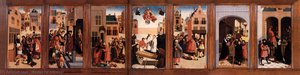
His technical achievements are perhaps most evident in his celebrated religious panels, such as The Seven Works of Mercy (1504). In these works, the artist displays a unique ability to balance narrative complexity with emotional clarity. While some scholars note that certain figures bear the stylistic stamp of Geertgen tot Sint Jans—characterized by bright colors and occasionally exaggerated, caricatured features—the Master’s ability to weave these elements into a cohesive theological message is unparalleled. His work often functions as a visual sermon, where every detail, from a palm frond held by a pilgrim to the specific crest of a donor family, serves a higher narrative purpose.
Legacy and Historical Significance
The historical significance of the Master of Alkmaar lies in his role as a bridge between eras. He stood at the crossroads of the late Middle Ages and the dawn of the modern age, capturing the spiritual intensity of the Gothic period while embracing the structural innovations of the Renaissance. His contributions to the art of North Holland are monumental, leaving behind a trail of altarpieces and memorial panels that continue to fascinate historians and devotees alike.
To understand his impact is to look at the breadth of his surviving influence:
- Iconographic Richness: His ability to translate complex biblical narratives, such as the Dispute with the Doctors, into accessible visual storytelling.
- Regional Identity: His role in establishing Alkmaar as a significant center for artistic production during the early sixteenth century.
- Technical Mastery: The integration of Italianate light and shadow with the meticulous, textural realism characteristic of the Netherlandish tradition.
Though his true name may remain lost to the archives, the Master of Alkmaar lives on through the vibrant, breathing landscapes and the soulful, prayerful faces that populate his panels. He remains a silent witness to a transformative era in European history, an artist whose work continues to illuminate the intersection of faith, form, and human emotion.
master of alkmaar
Netherlands
Quick Facts
- Artistic Movement Or Style: Proto-Renaissance
- Artists Or Movements Influenced By This Artist: ['Northern Netherlandish']
- Artists Who Influenced This Artist: ['Giotto']
- Nationality: Dutch
- Notable Artworks: ['The Seven Works of Mercy']
- Place Of Birth: Alkmaar, Netherlands

