 Preview
 Send
Send Share
Share
 Details

 Download
 Similars
 X-Ray
X-Ray Diaporama
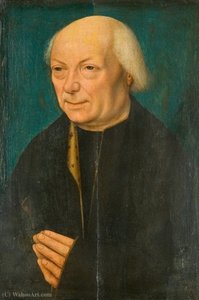
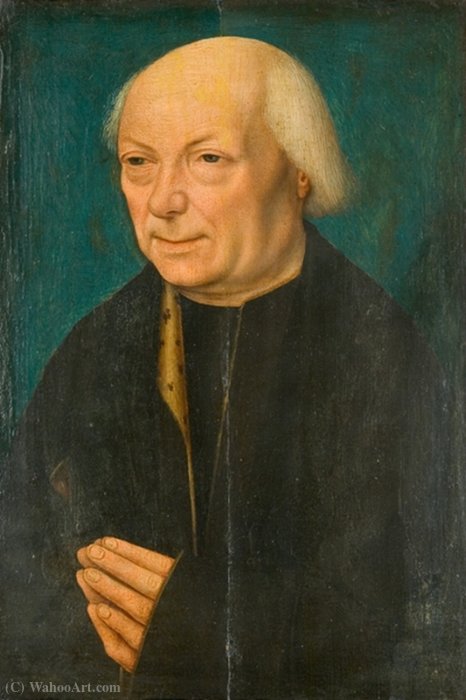
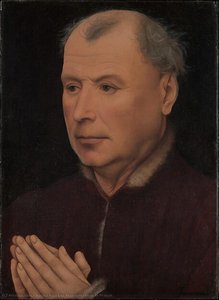
Portrait of an old men
 Read More
Hand Made Oil Reproduction
Hand-painted oil on canvas in your size and frame, made to order by our artists. ( Buy Print Buy Image)




































Pick from our preset sizes that match the artwork's original proportions.

You may enter your own dimensions to fit a specific frame or space. If your selected size does not match the original image's proportions, we will either crop the artwork or extend the painting with additional hand-painted elements. A digital mockup will be sent for your approval before production begins.
Please note that the on-screen preview does not reflect the actual cropping or extension. Only the mockup will accurately show the final composition.
While custom sizes are available, we recommend selecting a dimension from the predefined list to preserve the original proportions.
After order, ArtsDot.com team will email client for instructions and provide a mockup preview
Worldwide Delivery () in 3/4 weeks instead of standard 5 weeks. (28 August). No compromise on quality.

Free Worldwide Express Shipping

High-Quality Linen Canvas

Full Shipping Insurance

Customs Tax Refund Guarantee

True Color Matching Guarantee

60-Day Return Policy (Defects Only)

100% Money-Back Guarantee

Bulk Discount Offer
 Glass option is only available in size under 110 CM

Portrait of an old men
Reproduction Medium
Reproduction Size
-


Total Price
$ 263
Related Artworks




Artist Biography
The Enigmatic Master of the Magdalen: A Florentine Pioneer
The identity of the Master of the Magdalen remains one of the most enduring mysteries in the annals of Italian art history. An unnamed painter active during the second half of the 13th century, this artist represents a crucial, yet shadowy, bridge between the rigid Byzantine traditions that once dominated European iconography and the nascent, breathing innovations of the Early Renaissance. To study his work is to witness a pivotal moment in Florence, where the static elegance of the East began to yield to a new, profound humanism. While his personal biography remains lost to time, his presence is felt through a legacy of profoundly moving depictions that capture a soul in transition.
Though much about his early life is shrouded in mystery, scholars believe he was active primarily between 1265 and 1290. His studio served as a vital crucible for artistic development in Florence; notably, the renowned artist Grifo di Tancredi is believed to have trained under his guidance. This connection suggests that the Master was not merely an isolated creator but a foundational figure in a lineage of painters who would eventually lead the Florentine school toward its golden age. His work carries the weight of tradition while simultaneously whispering of the stylistic revolutions to come.
A Synthesis of Tradition and Innovation
The artistic language of the Master is characterized by a remarkable, delicate balance between the old world and the new. He possessed a deep, foundational understanding of Byzantine principles—evident in his use of rich, saturated colors, hierarchical compositions, and the stylized, iconic figures that commanded spiritual reverence. Yet, he was far from a mere copyist of established models. There is a discernible evolution within his oeuvre, a subtle movement toward a more expressive realism that sought to imbende sacred subjects with emotional depth.
His technique involved the masterful application of tempera and gold on wooden panels, achieving a luminous quality that seemed to radiate from within the art itself. This brilliance was not merely decorative; it served a narrative purpose, illuminating the spiritual gravity of his subjects. In his hands, the flat, symbolic planes of the Byzantine style began to acquire a sense of volume and psychological nuance, paving the way for the more naturalistic approaches later perfected by masters like Giotto.
Legacy in Gold and Color
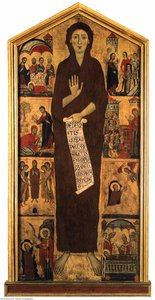
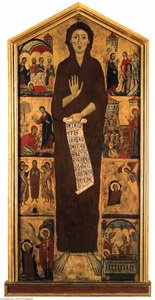
The Master’s most celebrated achievement is undoubtedly the Mary Magdalene with Eight Scenes from her Life. This masterpiece serves as the very namesake of his identity and stands as a testament to his ability to weave complex, multi-layered narratives into a single, cohesive visual experience. Through this work, he demonstrates an unparalleled ability to depict human emotion—particularly the penitent, transformative state of the Magdalene—with a clarity that resonates across centuries.
Beyond this singular triumph, his contributions to the Florentine landscape are significant and varied:
- Triptych of the Madonna with Scenes from the Life of Christ: A stunning example of his ability to utilize gold and tempera to create a sacred, immersive atmosphere.
- St Luke: A powerful work housed in the Galleria degli Uffizi that showcases his command over monumental form.
- The Florence Baptistery: His influential designs for some of the iconic mosaics within the Baptistery, which helped define the visual splendor of one of the world's most important religious sites.
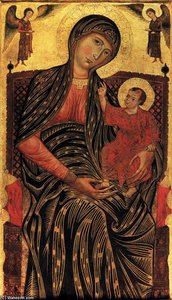
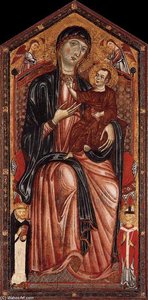
- Enthroned Madonna and Child: A work found in the San Fedele church in Poppi, illustrating his enduring influence throughout the region.
Ultimately, the Master of the Magdalen stands as a silent architect of the Renaissance. Though he left no signature and no written record of his life, his brushstrokes helped dismantle the boundaries of the medieval mind, inviting the viewer to look upon the divine through a lens of newfound humanity.
Quick Facts
- Artistic Movement Or Style: Proto-Renaissance
- Artists Or Movements Influenced By This Artist: ['Bernard van Orley']
- Artists Who Influenced This Artist:
- Cimabue
- Rogier van der Weyden
- Full Name: Master of the Magdalen
- Nationality: Italian
- Notable Artworks:
- Mary Magdalene with Eight Scenes from her Life
- Virgin and Child Enthroned
- Saint Luke
- Place Of Birth: Florence