 Preview
 Send
Send Share
Share
 Details

 Download
 Similars
 X-Ray
X-Ray Diaporama
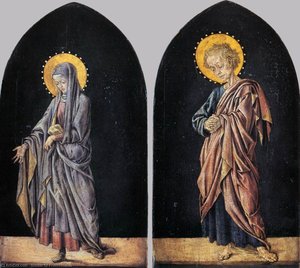
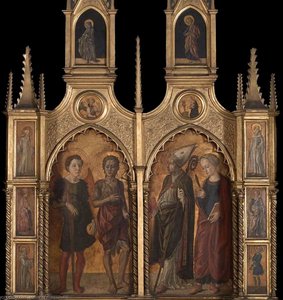
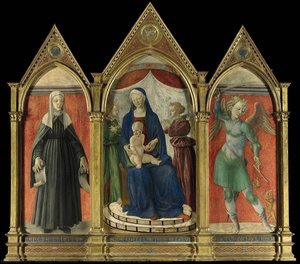
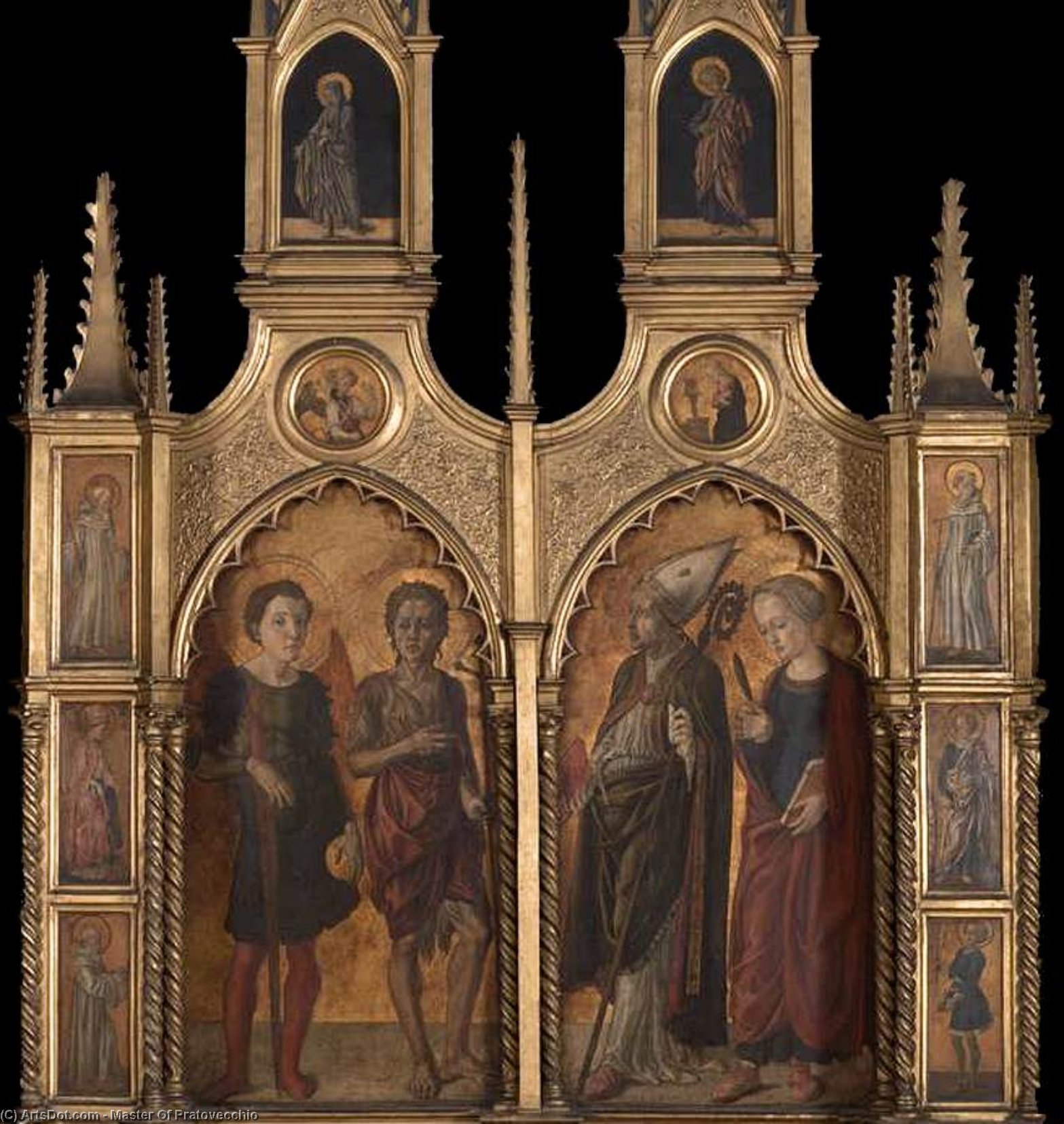
Pratovecchio Altarpiece (lateral panels)


 Read More
Giclée / Art Print
Museum-quality giclée or canvas print with fast production and flexible finish options. ( Buy Hand Made Painting Buy Image)




































Pick from our preset sizes that match the artwork's original proportions.

You may enter your own dimensions to fit a specific frame or space. If your selected size does not match the original image's proportions, we will either crop the artwork or extend the image with a mirrored or solid-fill edge. A digital mockup will be sent for your approval before production begins.
Please note that the on-screen preview does not reflect the actual cropping or extension. Only the mockup will accurately show the final composition.
While custom sizes are available, we recommend selecting a dimension from the predefined list to preserve the original proportions.
Worldwide Delivery () in 2 weeks instead of standard 4/5 weeks. (23 August)

Free Worldwide Express Shipping

High-Quality Linen Canvas

Full Shipping Insurance

Customs Tax Refund Guarantee

True Color Matching Guarantee

60-Day Return Policy (Defects Only)

100% Money-Back Guarantee

Bulk Discount Offer
 Glass option is only available in size under 110 CM

Pratovecchio Altarpiece (lateral panels)
Giclée / Art Print
Reproduction Size
-


Total Price
$ 63
Related Artworks








Artist Biography
The Enigmatic Master of Pratovecchio: A Renaissance Echo
The identity of the “Master of Pratovecchio” remains one of art history’s most persistent and fascinating puzzles. Active in Florence during the mid-15th century, this artist—often attributed to Andrea del Castagno or Giovanni di Francesco—left behind a legacy of exquisitely devotional paintings, primarily altarpieces and panel paintings depicting the Virgin Mary and Child alongside associated saints and angels. His work, characterized by a serene elegance and a subtle emotional depth, reflects the artistic currents of the early Renaissance while simultaneously hinting at influences from earlier masters like Domenico Veneziano and, perhaps surprisingly, the sculptor Donatello.
The earliest references to this artist emerged in 1952 through an article by Roberto Longhi, who noted stylistic similarities between several works—most notably a magnificent altarpiece housed in the San Giovanni Evangelista monastery in Pratovecchio. This foundational attribution sparked decades of scholarly debate and investigation. The central panel of the triptych, depicting the Assumption of the Virgin, became a cornerstone for understanding his style, yet its precise origins and authorship continue to be debated. The artist’s name, “Master of Pratovecchio,” stuck, despite ongoing uncertainty about his true identity.
Early works attributed to the Master demonstrate a clear debt to Domenico Veneziano, particularly in their use of luminous color palettes, delicate modeling, and a focus on narrative clarity. However, there are also noticeable influences from Donatello’s sculptural dynamism—a sense of volume and movement that is often absent in more traditional panel paintings of the period. The artist's compositions are carefully balanced, employing linear perspective to create an illusion of depth and space, a technique increasingly prevalent during this era. His figures possess a remarkable serenity, conveying a profound sense of piety and devotion—a hallmark of Renaissance devotional art.
Key Works and Artistic Style
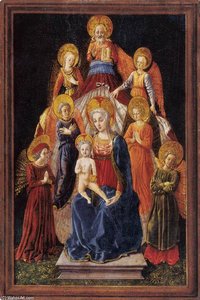
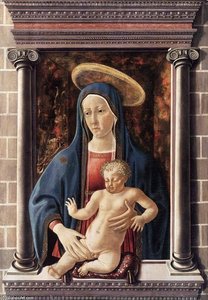
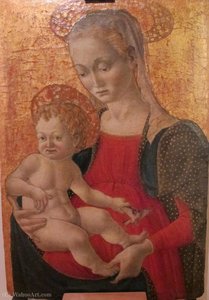
Among the Master’s most celebrated works are the altarpiece from San Giovanni Evangelista in Pratovecchio, featuring the Assumption of the Virgin; a Madonna and Child panel in the Fogg Art Museum, Cambridge, Massachusetts; and another Madonna with six angels in the Pinacoteca di Brera, Milan. The “Pratovecchio Altarpiece,” with its intricate details and harmonious composition, stands as perhaps his most significant achievement. The side panels depicting St. Michael and St. John the Evangelist are equally compelling, showcasing the artist’s mastery of drapery and figure portrayal.
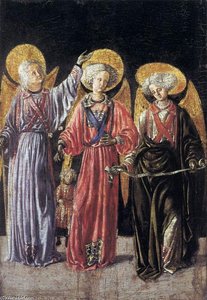
A particularly intriguing piece is “Three Archangels” in the Gemäldegalerie, Berlin. This work, along with the Madonna in Cambridge, reveals a distinctive stylistic evolution—a shift towards greater naturalism and a more expressive use of color. The artist’s palette tends to be restrained, favoring muted tones of blue, brown, and gold, creating an atmosphere of quiet contemplation. The figures are rendered with remarkable sensitivity, capturing subtle nuances of emotion and gesture.
The Mystery of Identity: Giovanni di Francesco or Andrea del Castagno?
For years, scholars have wrestled with the question of who truly lies behind the “Master of Pratovecchio” moniker. Roberto Longhi initially suggested a connection to Andrea del Castagno, one of Florence’s most renowned painters, citing stylistic similarities. However, subsequent research has cast doubt on this attribution, revealing significant differences in technique and composition. The prevailing theory now centers around Giovanni di Francesco, a cousin of Paolo Uccello—the father of another prominent Florentine artist.
The evidence for Giovanni’s authorship is compelling, bolstered by correspondence from the time period and stylistic parallels with works attributed to him. However, some scholars argue that the “Pratovecchio Altarpiece” was created later by a follower or apprentice, suggesting a complex artistic lineage. The debate continues, highlighting the challenges of definitively identifying anonymous artists in the early Renaissance.
Legacy and Historical Significance
Despite the lingering questions surrounding his identity, the Master of Pratovecchio’s work holds considerable historical significance. His paintings exemplify the burgeoning devotional art movement of the 15th century—a period marked by a renewed interest in religious iconography and a desire to evoke spiritual emotion through visual representation. His influence can be seen in the works of later Renaissance artists, particularly those working in Tuscany.
The Master’s legacy lies not only in his individual paintings but also in the ongoing scholarly debate surrounding his identity—a testament to the enduring fascination with art history's most enigmatic figures. His work serves as a valuable window into the artistic and intellectual landscape of early Renaissance Florence, reminding us that even in the absence of definitive answers, the pursuit of knowledge can be profoundly rewarding.
master of pratovecchio
Italy
Quick Facts
- Artistic Movement Or Style: Early Renaissance
- Artists Or Movements Influenced By This Artist:
- Donatello
- Renaissance art
- Artists Who Influenced This Artist:
- Domenico Veneziano
- Andrea del Castagno
- Full Name: Master of Pratovecchio
- Nationality: Italian
- Notable Artworks:
- Assumption of the Virgin
- Madonna and Child
- St. John the Evangelist
- Place Of Birth: Pratovecchio, Italy