 Preview
 Send
Send Share
Share
 Details

 Download
 Similars
 X-Ray
X-Ray Diaporama
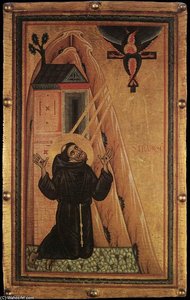
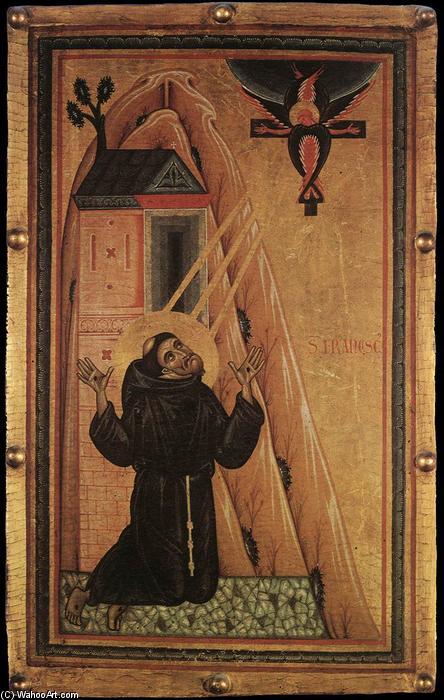
St Francis Receiving the Stigmata
 Acrylic On Canvas
- WallArt
- Gothic
 1240
1240 81.0 x 51.0 cm
 Galleria degli Uffizi
 Read More
Hand Made Oil Reproduction
Hand-painted oil on canvas in your size and frame, made to order by our artists. ( Buy Print Buy Image)




P118B $10

P118H $10

P118W $10

P438Z $10

P508JH $12

P508YH $12

P805H $10

P805Z $10

P919BZ $10

P919G $10

P919XJ $10

P959ZH $10

P968JZ $12

W106C $8

W218G $10

W218JH $8

W218Y $10

W307PJ $10

W316G $10

W316PJ $8

W316Y $10

W398PJ $8

W4111J $10

W500HY $15

W500JH $15

W692G $12

W849H $8

W940BG $15

W953PJ $8




Pick from our preset sizes that match the artwork's original proportions.

You may enter your own dimensions to fit a specific frame or space. If your selected size does not match the original image's proportions, we will either crop the artwork or extend the painting with additional hand-painted elements. A digital mockup will be sent for your approval before production begins.
Please note that the on-screen preview does not reflect the actual cropping or extension. Only the mockup will accurately show the final composition.
While custom sizes are available, we recommend selecting a dimension from the predefined list to preserve the original proportions.
After order, ArtsDot.com team will email client for instructions and provide a mockup preview
Worldwide Delivery () in 3/4 weeks instead of standard 5 weeks. (25 August). No compromise on quality.

Free Worldwide Express Shipping

High-Quality Linen Canvas

Full Shipping Insurance

Customs Tax Refund Guarantee

True Color Matching Guarantee

60-Day Return Policy (Defects Only)

100% Money-Back Guarantee

Bulk Discount Offer
 Glass option is only available in size under 110 CM

St Francis Receiving the Stigmata
Reproduction Medium
Reproduction Size
-


Total Price
$ 263
Artwork Description
Saint Francis Receiving the Stigmata: A Florentine Masterpiece
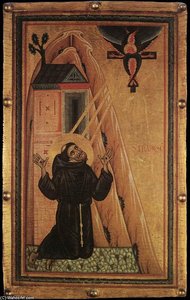
The painting Saint Francis Receiving the Stigmata stands as a testament to the artistic fervor of medieval Florence, executed around 1240 by Maestro di San Francesco Bardi—a figure whose identity remains shrouded in scholarly debate. This tempera panel, measuring 81 x 51 cm and housed within the Galleria degli Uffizi, transcends mere visual representation; it embodies a profound spiritual quest encapsulated in exquisitely crafted artistry.Stylistic Influences: Byzantine Echoes
The Maestro’s vision was undeniably rooted in the monumental mosaics of Constantinople and Thessalonica—a stylistic inheritance that profoundly shaped his approach to composition and iconography. Like many artists of his time, he embraced the flattened perspective characteristic of Byzantine art, prioritizing symbolic resonance over realistic depiction. Linear contours define figures and architectural elements with precision, while geometric shapes – rectangular buildings and triangles representing the cross – contribute to a serene atmosphere imbued with divine significance. The painting’s texture is achieved through layering brushstrokes that mimic fabric folds and subtly roughening the wood panel surface—a deliberate choice reflecting the prevailing artistic conventions of the era.Compositional Harmony: Symbolism at Its Core
At the heart of the artwork lies Saint Francis, kneeling humbly on a bed of pebbles, symbolizing humility and connection to the earth. Above him radiates a luminous beam of light emanating from a stylized cross—a visual manifestation of divine grace and arguably representing the stigmata—the wounds of Christ received by St. Francis as recounted in Christian tradition. The landscape backdrop is rendered in muted tones, emphasizing the contemplative mood and reinforcing the spiritual narrative. A small chapel-like structure dominates the scene, symbolizing sacred space and highlighting Saint Francis’s devotion. The dove carrying a cross above Saint Francis underscores the Holy Spirit's role in conveying divine revelation—a central motif within Gothic art.Technique: Tempera Paint on Wood Panel
The Maestro skillfully employed tempera paint—a durable medium favored by medieval artists—on a wood panel treated with gold leaf accents. This technique ensured vibrancy and luminosity, capturing the ethereal quality of Saint Francis’s spiritual experience. The meticulous application of pigment combined with careful attention to detail exemplifies the mastery demanded by Florentine art during this period. As Vasari noted, Cimabue—a contemporary artist—was credited with similar stylistic achievements, cementing Saint Francis Receiving the Stigmata's place as a cornerstone of early Florentine painting.Historical Context: The Luccan School and Artistic Innovation
Saint Francis Receiving the Stigmata belongs to the Luccan School, which flourished in Florence during the mid-13th century—a period marked by unprecedented artistic innovation driven by influences from Byzantine art and the burgeoning vernacular style of Tuscany. Critics have debated whether Saint Francis Receiving the Stigmata was created by Cimabue or another artist associated with the Luccan School—a discussion fueled by stylistic similarities between the two works. Nevertheless, it stands as a remarkable achievement of its time, embodying the spiritual fervor and artistic sophistication that defined Florentine art during the formative years of the Gothic tradition.- Artist: Maestro di San Francesco Bardi
- Date: 1240
- Location: Galleria degli Uffizi, Florence
- Medium: Tempera on Wood Panel with Gold Leaf
Related Artworks
![Legend Of St Francis - [23] - St Francis Mourned By St Clare — Giotto Di Bondone, Gothic](/media/artworks/images-thumb/17/1c/171c284c41dc3ef8bca83e51c1e1e531.jpg)
![Legend Of St Francis - [08] - Vision Of The Flaming Chariot — Giotto Di Bondone, Gothic And Proto-renaissance](/media/artworks/images-thumb/65/6e/656e345ff55e49ce2e4377a050b85aa1.jpg)
![Legend Of St Francis - [21] - Apparition To Fra Agostino And To Bishop Guido Of Arezzo — Giotto Di Bondone, Proto-renaissance](/media/artworks/images-thumb/8a/06/8a0632ef03ba49f12919faa78718a88b.jpg)
![Legend Of St Francis - [11] - St Francis Before The Sultan (trial By Fire) — Giotto Di Bondone, Proto-renaissance](/media/artworks/images-thumb/0d/32/0d328acfb6c90f7ef32707586e86044b.jpg)

![Legend Of St Francis - [24] - Canonization Of St Francis — Giotto Di Bondone, Gothic](/media/artworks/images-thumb/81/9b/819b5f0656848eb5cb3fcd40fd5756aa.jpg)
Artist Biography
Master of Saint Francis
The Master of Saint Francis, also known as Maestro di S. Francesco, remains an enigmatic figure in the history of Italian Gothic art. Despite extensive scholarly research and meticulous stylistic analysis, his identity has stubbornly resisted definitive attribution—a puzzle that continues to fascinate art historians today. Born sometime around 1250–1280, likely in Pisa or possibly trained in Umbria, he emerged during a period of profound artistic innovation, blending Byzantine traditions with the burgeoning vernacular style of Tuscany and Florence. His oeuvre consists primarily of frescoes adorning churches throughout Italy, notably the Basilica di Santa Croce in Florence and the Cappella Bardi—works that exemplify the stylistic convergence characteristic of his era.- Early Influences: The Master’s artistic vision was undeniably shaped by Byzantine iconography, particularly the monumental mosaics of Constantinople and Thessalonica. This influence is evident in the meticulous detail, luminous coloration, and stylized drapery found throughout his paintings—elements that hark back to the grandeur and spiritual solemnity of Eastern Orthodox art.
- Stylistic Characteristics: His frescoes are distinguished by a remarkable fusion of Byzantine and Florentine techniques. The use of tempera paint on plaster is typical of Umbrian painting, yet it’s combined with innovative compositional strategies reminiscent of Giotto—specifically the depiction of figures in three-dimensional space and the incorporation of naturalistic elements into religious narratives.
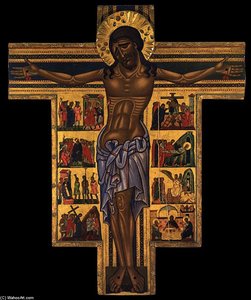
- Notable Works: Among his most celebrated achievements are the frescoes depicting Saint Francis Receiving the Stigmata in Santa Croce and The Crucifix with Eight Scenes from Calvary, both masterpieces that showcase his mastery of color, perspective, and expressive gesture. These paintings stand as testaments to his artistic skill and contribute significantly to our understanding of Gothic art’s stylistic evolution.
- The Cappella Bardi Frescoes: The Cappella Bardi frescoes represent a pinnacle of Florentine Gothic style—a collaborative effort involving several artists, including Piero della Francesca and Andrea Pisano. However, the Master's contribution is paramount in establishing the chapel as one of the most influential spaces for artistic innovation during the fourteenth century.
The Legacy of Byzantine Influence
Despite the stylistic blending with Florentine traditions, the Master’s work retains a palpable connection to Byzantine art—a testament to the interconnectedness of European artistic culture during the medieval period. His meticulous attention to detail and his masterful use of color—particularly gold leaf—echo the splendor and spiritual depth of Byzantine mosaics and icons. This stylistic convergence underscores the importance of recognizing broader cultural exchanges in shaping artistic developments.
Critical Reception & Attribution Challenges
Art historians have debated extensively over the attribution of the Master’s paintings for decades. While some scholars contend that he was a student of Cimabue—a prominent Florentine painter who predated Giotto—others propose connections to Lucca or even to workshops associated with Simone Martini and Maestro Giovannino da Fabriano. The difficulty in definitively identifying him stems from the anonymity of his artistic practice—a characteristic feature of many Gothic artists whose names remain lost to history.
Historical Significance
Regardless of his precise identity, the Master of Saint Francis occupies a crucial position within the broader narrative of Gothic art. His frescoes exemplify the stylistic dynamism of the period and contribute significantly to our understanding of how artistic traditions interacted across geographical boundaries. Moreover, they serve as enduring symbols of Florentine piety and artistic excellence—works that continue to inspire admiration and scholarly inquiry centuries after their creation.
Quick Facts
- Artistic Movement Or Style: Gothic
- Artists Or Movements Influenced By This Artist: ['Saint Francis']
- Artists Who Influenced This Artist: ['Simone Martini']
- Full Name: Maestro of Saint Francis Bardi
- Nationality: Italian
- Notable Artworks:
- St Francis Receiving the Stigmata
- Crucifix With Scenes From Calvary
- Place Of Birth: Florence, Italy
Related Articles
Francis Bacon's Masterpieces: Exploring 25 Iconic Paintings | ArtsDot
Delve into the haunting world of Francis Bacon with ArtsDot. Explore 25 iconic paintings, from his visceral portraits to powerful triptychs. Discover the stories behind these masterpieces & find museum-quality art reproductions for your home. Explore the full collection online!
High Medieval Art: 10 Masterpieces That Shaped an Era | ArtsDot
Journey through High Medieval Art! Explore 10 iconic masterpieces – from Giotto's frescoes to stunning Gothic cathedrals. Discover the stories behind these timeless paintings, sculptures & illuminated manuscripts. Find museum-quality art reproductions at ArtsDot.com.

El Greco's Masterpieces: Explore 25 Iconic Paintings & Spiritual Visions | ArtsDot
Journey through El Greco's 25 most iconic paintings! Explore the spiritual depth & dramatic beauty of this Spanish Renaissance master. Discover art history, techniques & find museum-quality reproductions for your home at ArtsDot.com.

Late Medieval Masterpieces: 10 Artworks That Defined an Era | ArtsDot
Journey through 10 defining Late Medieval masterpieces – from Giotto's frescoes to Jan van Eyck’s realism. Explore the stories, techniques & vibrant colors of Gothic art. Find museum-quality reproductions and elevate your home decor with ArtsDot.com! Discover all masterpieces on ArtsDot.com

Giotto's Masterpieces: 25 Renaissance Artworks for Your Home | ArtsDot
Explore 25 breathtaking artworks by Giotto di Bondone, a Renaissance master. Discover the stories behind iconic frescoes & paintings like the Scrovegni Chapel cycle. Find museum-quality Giotto reproductions and elevate your home decor with ArtsDot.com.