 Preview
 Send
Send Share
Share
 Details

 Download
 Similars
 X-Ray
X-Ray Diaporama
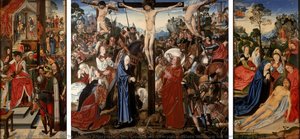
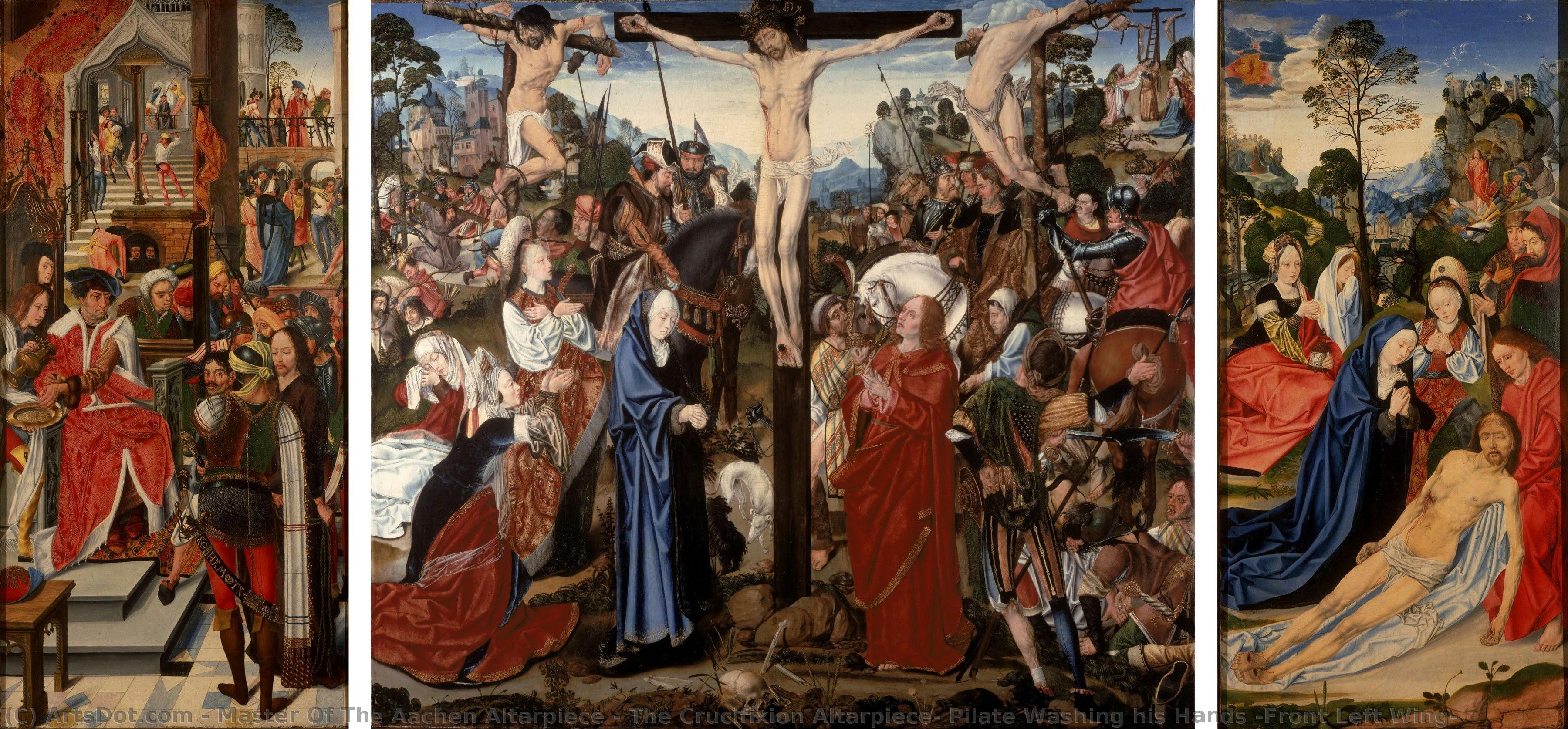
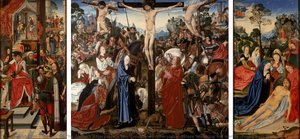
The Crucifixion Altarpiece: Pilate Washing his Hands (Front Left Wing)
 1495
1495 109.0 x 54.0 cm
 National Museums Liverpool
 Read More
Giclée / Art Print
Museum-quality giclée or canvas print with fast production and flexible finish options. ( Buy Hand Made Painting Buy Image)




































Pick from our preset sizes that match the artwork's original proportions.

You may enter your own dimensions to fit a specific frame or space. If your selected size does not match the original image's proportions, we will either crop the artwork or extend the image with a mirrored or solid-fill edge. A digital mockup will be sent for your approval before production begins.
Please note that the on-screen preview does not reflect the actual cropping or extension. Only the mockup will accurately show the final composition.
While custom sizes are available, we recommend selecting a dimension from the predefined list to preserve the original proportions.
Worldwide Delivery () in 2 weeks instead of standard 4/5 weeks. (1 September)

Free Worldwide Express Shipping

High-Quality Linen Canvas

Full Shipping Insurance

Customs Tax Refund Guarantee

True Color Matching Guarantee

60-Day Return Policy (Defects Only)

100% Money-Back Guarantee

Bulk Discount Offer
 Glass option is only available in size under 110 CM

The Crucifixion Altarpiece: Pilate Washing his Hands (Front Left Wing)
Giclée / Art Print
Reproduction Size
-


Total Price
$ 63
Related Artworks








Artist Biography
The Enigmatic Master of the Aachen Altarpiece
The identity of the Master of the Aachen Altarpiece remains one of art history’s most enduring mysteries, a phantom presence haunting the corridors of the late Gothic era. Active primarily in Cologne between 1495 and 1520, this artist—whose true name has vanished into the annals of time—produced a monumental triptych housed within the Aachen Cathedral treasury, cementing his place as arguably the last bastion of late Gothic painting in Germany. To study his work is to encounter a ghost; we know him not by a signature or a birth certificate, but through the profound spiritual resonance and technical brilliance left behind on wood and pigment.
While biographical details regarding his early life and formative years are scarce, scholars have painstakingly reconstructed his artistic soul through stylistic analysis. There is a palpable sense that he honed his skills under the prestigious tutelage of Stefan Lochner, the legendary Cologne painter whose workshop was a sanctuary for meticulous detail and sacred narrative. This lineage is evident in the Master's devotion to established artistic conventions, yet there is an unmistakable evolution at play. He did not merely replicate the past; he breathed a new, subtle vitality into it, standing at the threshold where the heavy symbolism of the Middle Ages began to yield to the emerging naturalism of the Renaissance.
A Masterwork of Light and Devotion
The cornerstone of this artist's reputation is, without question, the Aachen Altarpiece. Commissioned by Archbishop Hermann von Fürsebberg, this triptych serves as a breathtaking testament to the pinnacle of the Cologne Gothic style. The central panel, featuring a majestic depiction of Christ Pantocrator flanked by Mary and John the Evangelist, commands the viewer's attention with an almost celestial authority. When the side wings are opened, they reveal scenes from the Annunciation and the Nativity, each rendered with a luminous quality that seems to emanate from within the paint itself.
This breathtaking luminosity was achieved through innovative glazing techniques, a hallmark of his mastery. By layering translucent pigments, the artist captured a sense of divine light that dances across the surfaces, creating a depth that feels both physical and metaphysical. His work is characterized by:
- Intricate Detail: A profound commitment to the minute textures of fabric, gold leaf, and sacred objects.
- Theological Symbolism: The use of complex iconography to convey deep spiritual truths to the faithful.
- Luminous Glazing: An advanced technique that allowed for a radiant, jewel-like finish on the painted panels.
Legacy in the Twilight of an Era
As the sixteenth century dawned, the artistic landscape of Europe was shifting toward the humanism of the Renaissance, yet the Master of the Aachen Altarpiece remained a steadfast guardian of the Gothic tradition. Alongside contemporaries such as the Master of St. Severin and the Master of the Legend of St. Ursula, he represented the final, glorious wave of Cologne's significant Gothic practitioners. His ability to balance the rigid, intimidating iconography of earlier centuries with a newfound sense of elegance and emotional nuance marks him as a transitional figure of immense importance.
Though his name is lost to history, his impact remains etched in the cultural fabric of Germany. He stands as a bridge between two worlds—a painter who mastered the shadows of the medieval mind only to illuminate them with the first light of a new age. Through his hands, the spiritual ambitions of the Gothic era found their most refined and enduring expression, ensuring that even without a name, his vision would never be forgotten.
master of the aachen altarpiece
Germany
Quick Facts
- Artistic Movement Or Style: Late Gothic
- Artists Or Movements Influenced By This Artist: ['']
- Artists Who Influenced This Artist: ['']
- Full Name: Master of the Aachen Altarpiece
- Nationality: German
- Notable Artworks:
- The Crucifixion Altarpiece: Pilate Washing his Hands (Front Left Wing)
- Strossmayer Gallery
- Place Of Birth: Germany