 Preview
 Send
Send Share
Share
 Details

 Download
 Similars
 X-Ray
X-Ray Diaporama
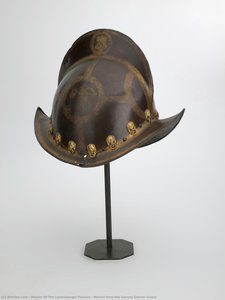
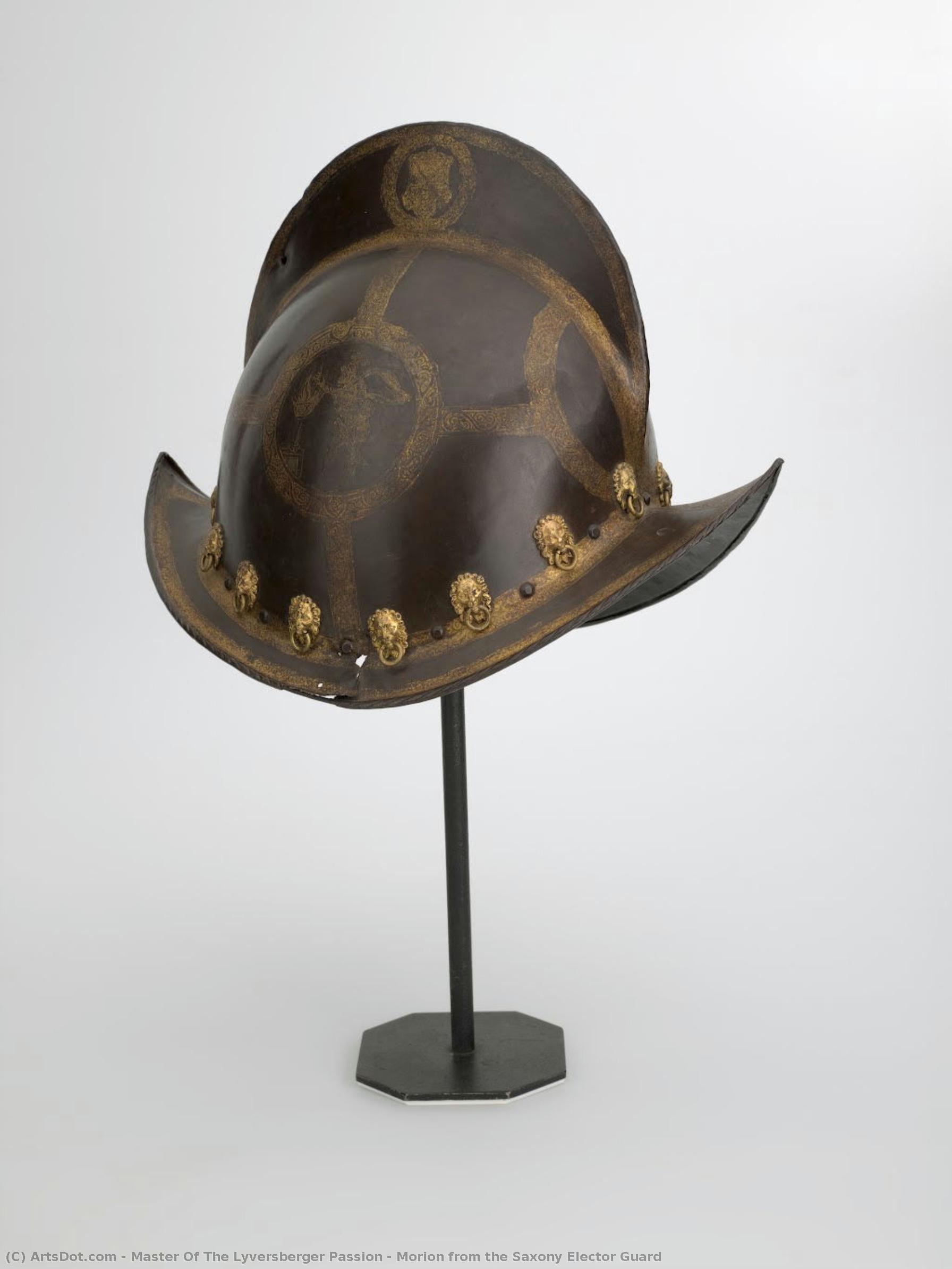
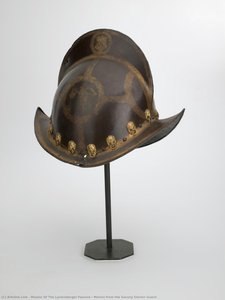
Morion from the Saxony Elector Guard
 1580
1580 26.0 x 34.0 cm
 Wawel Royal Castle
 Read More
Giclée / Art Print
Museum-quality giclée or canvas print with fast production and flexible finish options. ( Buy Hand Made Painting Buy Image)




































Pick from our preset sizes that match the artwork's original proportions.

You may enter your own dimensions to fit a specific frame or space. If your selected size does not match the original image's proportions, we will either crop the artwork or extend the image with a mirrored or solid-fill edge. A digital mockup will be sent for your approval before production begins.
Please note that the on-screen preview does not reflect the actual cropping or extension. Only the mockup will accurately show the final composition.
While custom sizes are available, we recommend selecting a dimension from the predefined list to preserve the original proportions.
Worldwide Delivery () in 2 weeks instead of standard 4/5 weeks. (29 August)

Free Worldwide Express Shipping

High-Quality Linen Canvas

Full Shipping Insurance

Customs Tax Refund Guarantee

True Color Matching Guarantee

60-Day Return Policy (Defects Only)

100% Money-Back Guarantee

Bulk Discount Offer
 Glass option is only available in size under 110 CM

Morion from the Saxony Elector Guard
Giclée / Art Print
Reproduction Size
-


Total Price
$ 63
Related Artworks





Artist Biography
The Enigmatic Shadow of the Rhine
In the vast, often crowded annals of art history, few figures possess a mystique as profound and haunting as the Master of the Lyversberg Passion. To speak his name is to invoke a phantom, an anonymous hand that emerged from the shadows of the late medieval and early Renaissance periods to leave behind works of startling emotional depth. While his true identity remains one of the great unsolved mysteries of German art, his presence is felt through the visceral power of his surviving panels. Scholars often place him within the vibrant tradition of the Cologne School of Painting, a movement that flourished in the lower-Rhine region, yet his work suggests a spirit that transcended local boundaries, absorbing the profound spiritual anxieties and technical innovations of a changing Europe.
The Master’s life remains shrouded behind a veil of anonymity, yet we can trace his heartbeat through the dates of his most significant contributions. Active between 1460 and 1490 in Cologne, Germany, he navigated a period of immense religious and social upheaval. His era was defined by the transition from late Gothic sensibilities to the burgeoning humanism of the Renaissance—a time when the very nature of devotion was being interrogated. In this turbulent landscape, his art served as a bridge, connecting the traditional piety of the Middle Ages with a new, more grounded realism that sought to find the divine within the tangible suffering of the human condition.
A Synthesis of Flemish Precision and German Emotion
The hallmark of the Master’s oeuvre is an unparalleled ability to marry technical precision with raw, psychological intensity. His distinctive style represents a compelling synthesis of Flemish innovation and traditional German artistic conventions. Like many artists of his time, he drew heavily upon the stylistic precepts established by Flemish masters such as Dirk Bouts, Rogier van der Weyden, and Hans Memling—artists who championed realism, dramatic composition, and a masterful use of color. However, unlike many of his contemporaries who leaned toward purely decorative tendencies, the Master prioritized psychological depth, conveying profound emotion through expressive, deeply human figures.
His palette was a study in contrast, favoring vibrant hues—particularly rich reds and deep blues—which stood in sharp relief against more muted, somber backgrounds. This technique, characteristic of the Flemish tradition, was skillfully adapted to suit German artistic sensibilities, creating a sense of drama that is both visually arresting and spiritually moving. Through his brush, the physical world becomes a stage for the metaphysical, where every fold of fabric and every glint of light serves to heighten the narrative's spiritual weight.
The Legacy of the Lyversberg Passion
The surviving paintings attributed to the Master are primarily monumental panels depicting scenes from Christ’s suffering during Holy Week. The Lyversberg Passion, housed in the Dresden and Kassel Museums, stands as arguably his most celebrated achievement. This work, which once graced the high altar of the Carthusian church of St. Barbara, does not merely depict a biblical event; it invites the viewer into a state of profound empathy. These canvases showcase a breathtaking level of detail—from the intricate folds of Christ’s garments to the painstakingly rendered musculature of His body—demonstrating an unparalleled command of anatomical accuracy.
Beyond his religious panels, the Master's legacy is also preserved in his meticulous armor studies, which continue to fascinate scholars and collectors with their technical brilliance. His mastery of chiaroscuro—the dramatic interplay of light and shadow—allowed him to breathe life into metal and flesh alike. Ultimately, the historical significance of the Master of the Lyversberg Passion lies in his ability to capture the transition of an age; he remains a vital link between the medieval devotion to the symbolic and the Renaissance pursuit of the real, leaving behind a body of work that continues to resonate with the universal language of human suffering and resilience.
Quick Facts
- Artistic Movement Or Style: Late Gothic / Cologne School Painting
- Artists Or Movements Influenced By This Artist: ['Flemish Masters']
- Artists Who Influenced This Artist:
- Dirk Bouts
- Rogier van der Weyden
- Hans Memling
- Full Name: Master of the Lyversberg Passion
- Nationality: German
- Notable Artworks: ['Lyversberg Passion']
- Place Of Birth: Cologne, Germany