 Preview
 Send
Send Share
Share
 Details

 Download
 Similars
 X-Ray
X-Ray Diaporama
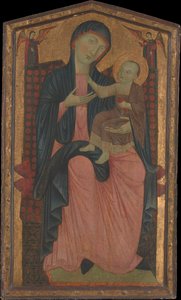
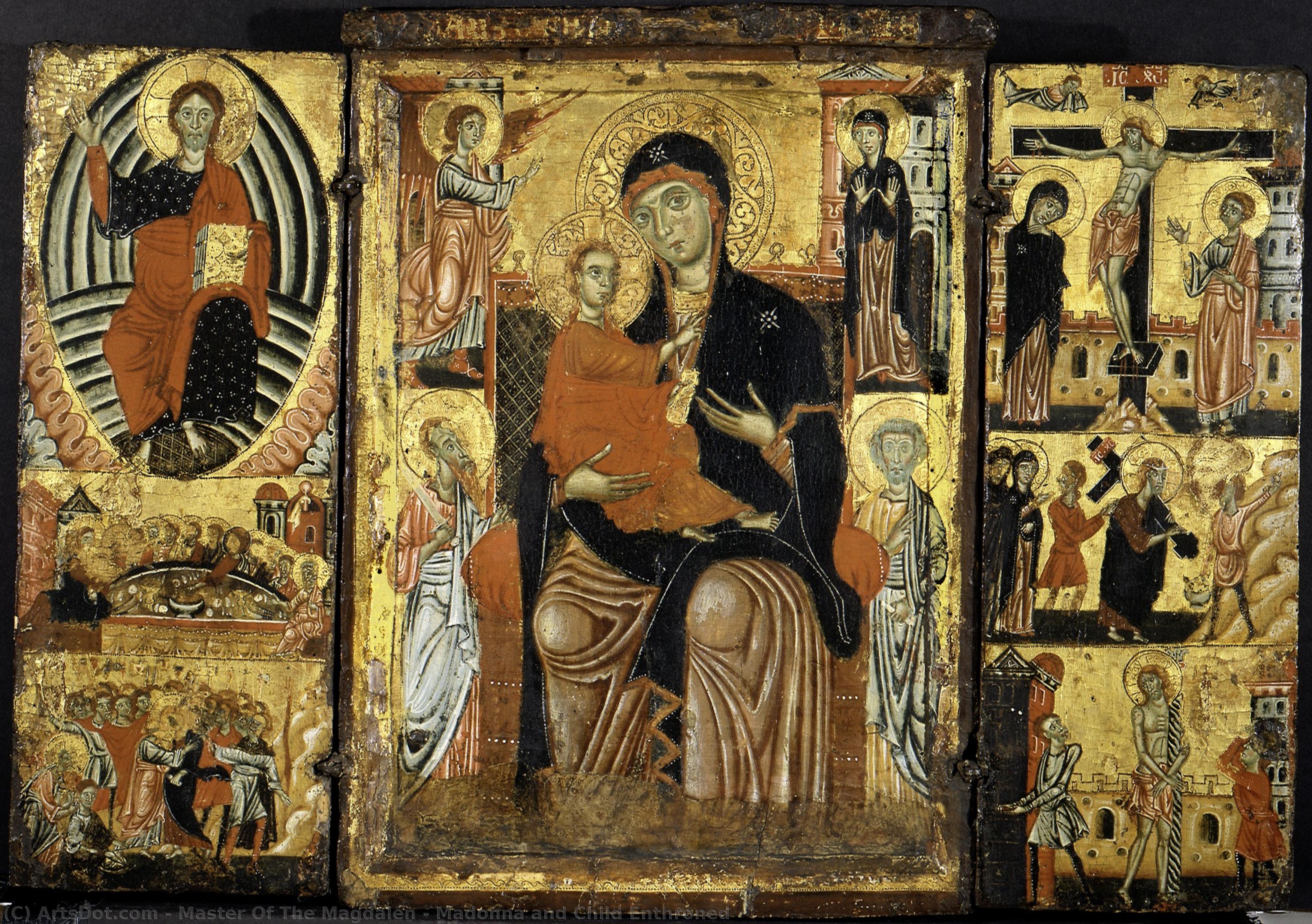
Madonna and Child Enthroned
 41.0 x 28.0 cm
 Metropolitan Museum of Art
 Read More
Giclée / Art Print
Museum-quality giclée or canvas print with fast production and flexible finish options. ( Buy Hand Made Painting Buy Image)




































Pick from our preset sizes that match the artwork's original proportions.

You may enter your own dimensions to fit a specific frame or space. If your selected size does not match the original image's proportions, we will either crop the artwork or extend the image with a mirrored or solid-fill edge. A digital mockup will be sent for your approval before production begins.
Please note that the on-screen preview does not reflect the actual cropping or extension. Only the mockup will accurately show the final composition.
While custom sizes are available, we recommend selecting a dimension from the predefined list to preserve the original proportions.
Worldwide Delivery () in 2 weeks instead of standard 4/5 weeks. (24 August)

Free Worldwide Express Shipping

High-Quality Linen Canvas

Full Shipping Insurance

Customs Tax Refund Guarantee

True Color Matching Guarantee

60-Day Return Policy (Defects Only)

100% Money-Back Guarantee

Bulk Discount Offer
 Glass option is only available in size under 110 CM

Madonna and Child Enthroned
Giclée / Art Print
Reproduction Size
-


Total Price
$ 63
Collectible Description
Related Artworks








Artist Biography
The Enigmatic Master of the Magdalen: A Florentine Pioneer
The identity of the “Master of the Magdalen,” a pivotal figure in 13th-century Florentine painting, remains tantalizingly elusive. More than just an artist, he represents a crucial bridge between the Byzantine traditions that dominated European art and the nascent innovations of the Early Renaissance. Active primarily between 1265 and 1290, this unnamed painter left behind a legacy of profoundly moving depictions of Mary Magdalene, alongside significant contributions to the decoration of Florence’s iconic Baptistery – works that continue to captivate viewers centuries later. His art is characterized by a remarkable blend of emotional intensity, narrative clarity, and a subtle yet discernible stylistic evolution.
Early Life and Training: Echoes of Byzantium
Born in Florence around 1265, the Master’s early training remains shrouded in mystery. While he undoubtedly possessed a deep understanding of Byzantine artistic principles – evident in his use of rich colors, hierarchical composition, and stylized figures – he wasn't simply a copyist of established models. Miklos Boskovits, a leading scholar on Florentine painting, identified Grifo di Tancredi as having trained within the Master’s studio, suggesting a direct lineage of artistic influence. This connection highlights the importance of Florence as a center for artistic exchange during this period, absorbing and adapting Byzantine techniques while simultaneously forging its own distinctive path.
A Flourishing Career: Major Works and Artistic Development
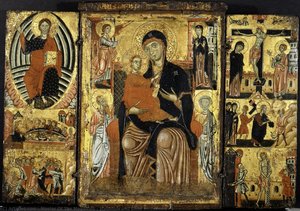
The Master’s oeuvre is relatively small but remarkably significant. His most celebrated work, the “Mary Magdalene with Eight Scenes from her Life” (Accademia Gallery, Florence), exemplifies his artistic strengths. This panel painting showcases a profound understanding of human emotion – particularly in the depiction of Mary Magdalene's penitent state – and a masterful ability to narrate complex stories through visual imagery. The scenes themselves are rendered with meticulous detail, capturing key moments from her life with dramatic intensity. Further notable works include a Triptych of the Madonna with Scenes from Christ’s Life (Metropolitan Museum of Art), a “St Luke” panel (Uffizi Gallery), and several altarpieces featuring the Virgin and Child Enthroned – including one in San Fedele church, Poppi. These pieces demonstrate a growing sophistication in his technique, marked by increased naturalism, more dynamic compositions, and a greater attention to detail.
The Baptistery Mosaic: A Civic Commission
Perhaps the Master’s most enduring contribution to Florentine art lies in his designs for the mosaics adorning the Florence Baptistery. Commissioned around 1270-1330, these monumental panels depict scenes from the life of Mary Magdalene alongside other religious subjects. The mosaics are a testament to the artist's ability to translate complex narratives into visually compelling forms and demonstrate his understanding of color and light. Notably, the Master’s work was influenced by Venetian mosaicists who had been summoned to Rome by Pope Honorius III in 1218, bringing with them new techniques and styles. The mosaics are a remarkable achievement of medieval art, reflecting the civic pride and artistic ambition of Florence during this period.
Legacy and Influence
Despite the lack of a definitive identification, the Master of the Magdalen remains a crucial figure in understanding the transition from Byzantine to Early Renaissance painting. His work demonstrates a remarkable synthesis of stylistic influences – incorporating elements of Byzantine iconography while simultaneously embracing emerging naturalistic tendencies. His emphasis on emotional expression and narrative clarity foreshadowed developments that would characterize the High Renaissance. The Master’s legacy is preserved through his surviving works, which continue to inspire admiration for their beauty, expressiveness, and historical significance. His influence can be seen in the work of later Florentine painters, solidifying his place as a pivotal artist in the development of Italian art.
master of the magdalen
Italy
Quick Facts
- Artistic Movement Or Style: Early Renaissance
- Artists Or Movements Influenced By This Artist: ['Netherlandish Painting']
- Artists Who Influenced This Artist:
- Coppo di Marcovaldo
- Giotto
- Date Of Birth: c. 1265-1290 Florence
- Full Name: Master of the Magdalen
- Nationality: Italian
- Notable Artworks:
- Mary Magdalene & 8 Scenes
- Madonna & Child Enthroned
- Triptych Madonna Christ
- Place Of Birth: Florence, Italy