 Preview
 Send
Send Share
Share
 Details

 Download
 Similars
 X-Ray
X-Ray Diaporama
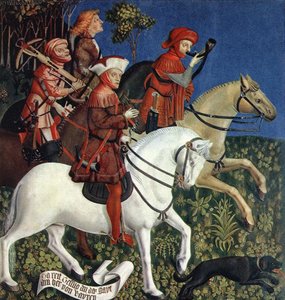
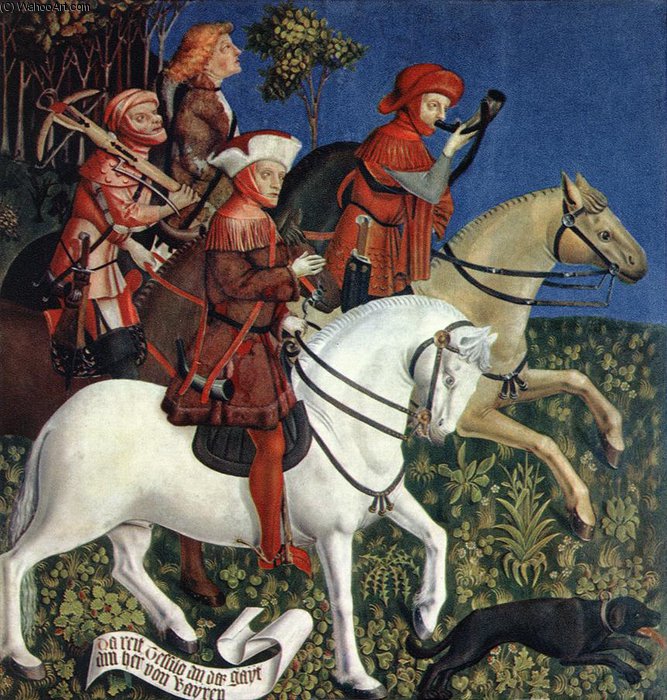
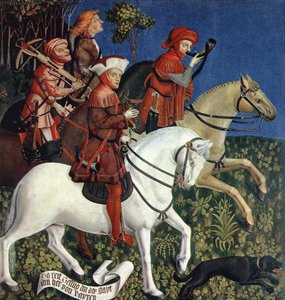
Prince Tassilo Rides To Hunting
 Read More
Giclée / Art Print
Museum-quality giclée or canvas print with fast production and flexible finish options. ( Buy Hand Made Painting Buy Image)




































Pick from our preset sizes that match the artwork's original proportions.

You may enter your own dimensions to fit a specific frame or space. If your selected size does not match the original image's proportions, we will either crop the artwork or extend the image with a mirrored or solid-fill edge. A digital mockup will be sent for your approval before production begins.
Please note that the on-screen preview does not reflect the actual cropping or extension. Only the mockup will accurately show the final composition.
While custom sizes are available, we recommend selecting a dimension from the predefined list to preserve the original proportions.
Worldwide Delivery () in 2 weeks instead of standard 4/5 weeks. (27 August)

Free Worldwide Express Shipping

High-Quality Linen Canvas

Full Shipping Insurance

Customs Tax Refund Guarantee

True Color Matching Guarantee

60-Day Return Policy (Defects Only)

100% Money-Back Guarantee

Bulk Discount Offer
 Glass option is only available in size under 110 CM

Prince Tassilo Rides To Hunting
Giclée / Art Print
Reproduction Size
-


Total Price
$ 63
Related Artworks
Artist Biography
The Enigmatic Master of the Polling Panels: A Chronicle of Bavarian Political Art
The identity of the “Master of the Polling Panels” remains one of the most enduring mysteries in early German art. Active primarily during the mid-15th century in Upper Bavaria, this artist—often referred to as Meister der Pollinger Tafeln – left behind a remarkably consistent body of work centered around meticulously rendered political illustrations and strikingly direct portraits, predominantly executed on wooden panels. His output, though relatively small, offers an invaluable window into the turbulent political landscape of the Holy Roman Empire during a period marked by shifting alliances, dynastic struggles, and burgeoning civic pride. While his precise biographical details remain elusive, art historical analysis suggests he was deeply embedded within the courtly circles of Munich, serving as a visual chronicler for powerful figures like Prince Tassilo II, Duke of Bavaria.
The origins of this artist’s distinctive style are rooted in the traditions of German panel painting, particularly the influence of the International Gothic movement. However, he quickly developed a unique approach, characterized by an almost obsessive attention to detail and a remarkable ability to capture the psychological intensity of his subjects. His works frequently depict scenes of political intrigue – negotiations, military campaigns, and courtly ceremonies – rendered with a stark realism that belied the idealized conventions of much contemporary art. The panels themselves were often used as visual records, documenting important events and decisions for posterity. This practice reflects a growing awareness of the importance of image-making in shaping public opinion and reinforcing political authority.
The Polling Panels: A Unique Artistic Form
The term “Polling Panels” refers to a specific type of wooden panel painting that flourished in Germany during the 15th century. These panels were typically rectangular, often with a slightly convex shape, and were constructed from poplar wood, meticulously prepared and joined together using dowels and glue. The artist’s skill lay not only in his artistic rendering but also in his mastery of this complex panel construction technique. The surfaces were then primed with gesso and prepared for painting, typically utilizing tempera pigments mixed with egg yolk – a medium known for its luminosity and durability.
What distinguishes the Polling Panels is their inherent function: they served as visual records, often commissioned by rulers or powerful officials to document significant events. The Master of the Polling Panels was exceptionally adept at translating complex political narratives into compelling visual form. His compositions are typically dynamic and crowded, filled with figures engaged in various activities – diplomatic exchanges, military maneuvers, and courtly celebrations. He employed a limited but carefully chosen palette of colors—primarily reds, blues, greens, and browns—to create a sense of depth and realism. The use of perspective, though rudimentary by later standards, was skillfully applied to convey spatial relationships within the scenes.
Key Works and Recurring Motifs
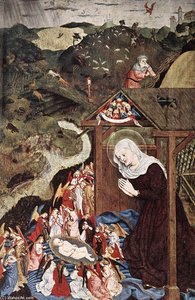
Among his most celebrated works are “Prince Tassilo Rides to Hunting” and “Adoration of the Child.” “Prince Tassilo Rides to Hunting,” a particularly striking example, depicts Prince Tassilo II leading a hunting party through a dense forest. The scene is rendered with remarkable detail, capturing not only the prince’s regal bearing but also the rugged beauty of the landscape. The composition is carefully balanced, creating a sense of movement and drama. “Adoration of the Child,” another significant work, portrays a religious scene—likely commissioned for a private chapel—featuring the Virgin Mary presenting the infant Jesus to a group of kneeling figures. The painting showcases the artist’s ability to convey both piety and psychological depth.
Recurring motifs in the Master's oeuvre include depictions of heraldic symbols – coats of arms, banners, and flags – which served as visual identifiers for various noble families and political factions. He frequently included portraits of prominent figures—rulers, diplomats, and military leaders—often capturing their expressions with uncanny accuracy. These portraits were not merely likenesses; they conveyed the subjects’ personalities, ambitions, and social status. The artist's ability to capture the nuances of human expression was a hallmark of his style.
Legacy and Historical Significance
Despite the enduring mystery surrounding his identity, the Master of the Polling Panels remains a pivotal figure in the history of German art. His work provides invaluable insights into the political and social dynamics of 15th-century Bavaria. His panels served as visual propaganda, reinforcing the authority of the ruling elite and shaping public perceptions. Furthermore, they offer a rare glimpse into the artistic practices of the period, demonstrating the sophisticated techniques employed in panel painting.
The artist’s influence can be seen in the work of subsequent German artists who followed in his footsteps. His meticulous attention to detail, his ability to capture psychological depth, and his innovative use of the Polling Panel format all contributed to the development of German art during this crucial period. Today, his paintings are housed in prestigious museums around the world—testaments to their enduring artistic merit and historical significance. The ongoing research into these panels continues to shed light on the life and work of this enigmatic artist, solidifying his place as a key figure in the history of European painting.
master of the polling panels
Germany
Quick Facts
- Artistic Movement Or Style: Early Bavarian painting
- Date Of Death: 1450s
- Full Name: Master of the Polling Panels
- Nationality: German
- Notable Artworks:
- Prince Tassilo Rides To Hunting
- Adoration Of The Child
- Place Of Birth: Upper Bavaria