

 Preview
 Send
Send Share
Share
 Details

 Download
 Similars
 X-Ray
X-Ray Diaporama
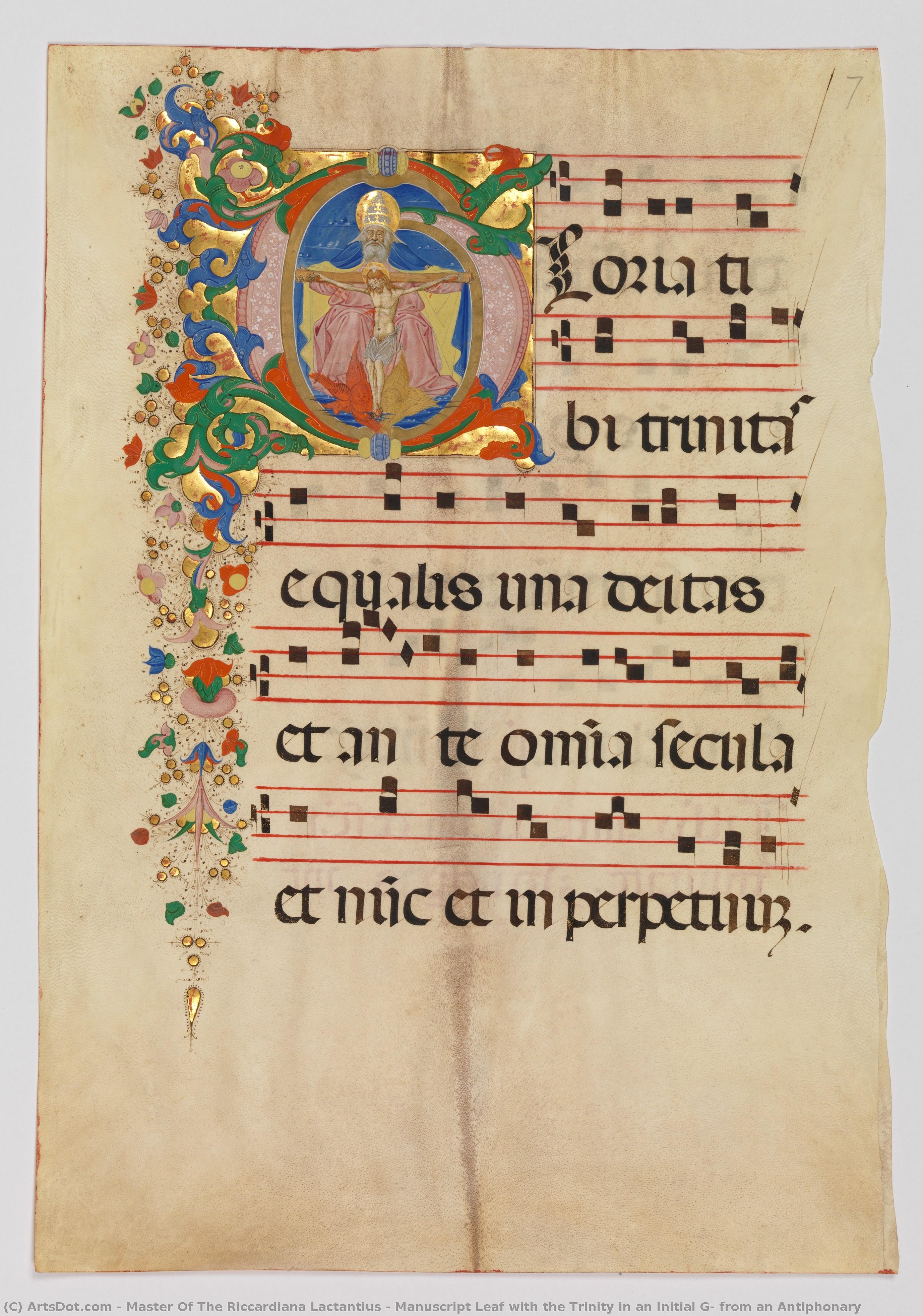
Manuscript Leaf with the Trinity in an Initial G, from an Antiphonary
 401
401 57.0cm x 40.0cm
 Read More
Hand Made Oil Reproduction
Hand-painted oil on canvas in your size and frame, made to order by our artists. ( Buy Print Buy Image)




































Pick from our preset sizes that match the artwork's original proportions.

You may enter your own dimensions to fit a specific frame or space. If your selected size does not match the original image's proportions, we will either crop the artwork or extend the painting with additional hand-painted elements. A digital mockup will be sent for your approval before production begins.
Please note that the on-screen preview does not reflect the actual cropping or extension. Only the mockup will accurately show the final composition.
While custom sizes are available, we recommend selecting a dimension from the predefined list to preserve the original proportions.
After order, ArtsDot.com team will email client for instructions and provide a mockup preview
Worldwide Delivery () in 3/4 weeks instead of standard 5 weeks. (31 August). No compromise on quality.

Free Worldwide Express Shipping

High-Quality Linen Canvas

Full Shipping Insurance

Customs Tax Refund Guarantee

True Color Matching Guarantee

60-Day Return Policy (Defects Only)

100% Money-Back Guarantee

Bulk Discount Offer
 Glass option is only available in size under 110 CM

Manuscript Leaf with the Trinity in an Initial G, from an Antiphonary
Reproduction Medium
Reproduction Size
-


Total Price
$ 263
Related Artworks









Artist Biography
The Enigmatic Shadow of Florence
In the golden age of the Florentine Renaissance, where the names of giants like Botticelli and Da Vinci illuminate every corner of art history, there exists a more mysterious presence—a figure known only by the legacy of his creations. The Master of the Riccardiana Lactantius remains one of the most captivating enigmas of the fifteenth century. Operating within the vibrant, intellectually charged atmosphere of Florence around 1470, this artist left behind no signature, no personal letters, and no definitive biographical record. We are left only with the luminous traces of his hand upon parchment, a ghostly silhouette that emerges through the exquisite detail of his illuminated manuscripts.
While his personal life remains shrouded in the mists of time, his existence is undeniably anchored to the prestigious workshops of Florence. It is highly probable that he was shaped by the rigorous traditions of the Scuola Grande di San Luca, absorbing the sophisticated techniques of his contemporaries. He lived and worked during a period of profound transformation, where the humanist movement began to reshape the very fabric of European thought. This era of intense intellectual curiosity likely provided the fertile ground necessary for his unique brand of storytelling, allowing him to blend sacred tradition with an emerging interest in naturalistic precision.
A Legacy Written in Gold and Pigment
The true essence of this master is found not in a biography, but in the breathtaking pages of the De Vita Sancti Jacobi. His fame rests almost entirely upon his meticulous illustrations of these writings by Lactantius Firmianus, a text dedicated to the veneration of Saint James the Apostle. In these manuscripts, we witness the birth of what scholars now call the Riccardiana style. This is an art form defined by an extraordinary level of virtuosity, where every stroke serves to elevate the spiritual narrative into a visual spectacle of light and devotion.
To behold his work is to experience a masterclass in Renaissance technique. The artist employed a sophisticated, layered approach, applying delicate washes of pigment over meticulously prepared parchment. This method allowed for a translucent quality that captured the light, creating a sense of depth and vitality rarely seen in manuscript illumination of the period. His palette was both vibrant and controlled, often enriched by the heavy application of gold leaf gilding, which lent a celestial radiance to the sacred scenes. The interplay between the matte textures of tempera and the brilliant shimmer of gold creates a sensory experience that transcends the mere recording of text.
Artistic Significance and Enduring Mystery
The historical significance of the Master of the Riccardiana Lactantius lies in his ability to bridge the gap between the medieval tradition of illumination and the burgeoning Renaissance interest in texture, light, and human emotion. His work represents a pinnacle of the Florentine manuscript tradition, showcasing an astonishing sensitivity to detail that suggests a deep connection to the evolving aesthetic values of his time. Even without a name, his artistic voice is unmistakable—a voice characterized by:
- Exceptional Precision: A meticulous attention to the smallest anatomical and decorative details.
- Luminous Coloration: The use of thin pigment washes to achieve maximum visual impact and brilliance.
- Material Mastery: The seamless integration of gold leaf to create a sense of divine presence within the page.
- Narrative Depth: An ability to transform theological texts into evocative, visually engaging dramas.
Though his life was brief—with his career estimated to have spanned only a short window in the late fifteenth century—the Master’s impact remains etched in the annals of art history. He stands as a reminder that some of the most profound contributions to human culture come from those who remain anonymous, leaving behind nothing but the enduring beauty of their vision to speak for them across the centuries.
master of the riccardiana lactantius
1470 - 1480 , Italy
Quick Facts
- Artistic Movement Or Style: Renaissance illustration
- Artists Or Movements Influenced By This Artist: ["Francesco d'Antonio del Cherico"]
- Date Of Birth: Florence, Italy (1470)
- Full Name: Master of the Riccardiana Lactantius
- Nationality: Italian
- Notable Artworks: ['Manuscript Leaf with the Trinity']
- Place Of Birth: Florence

