 Preview
 Send
Send Share
Share
 Details

 Download
 Similars
 X-Ray
X-Ray Diaporama
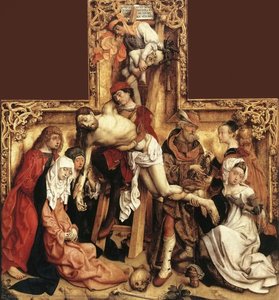
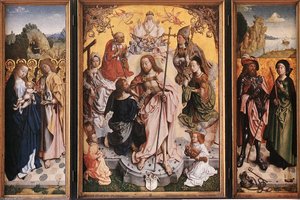
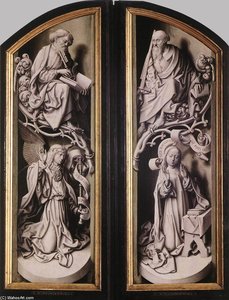
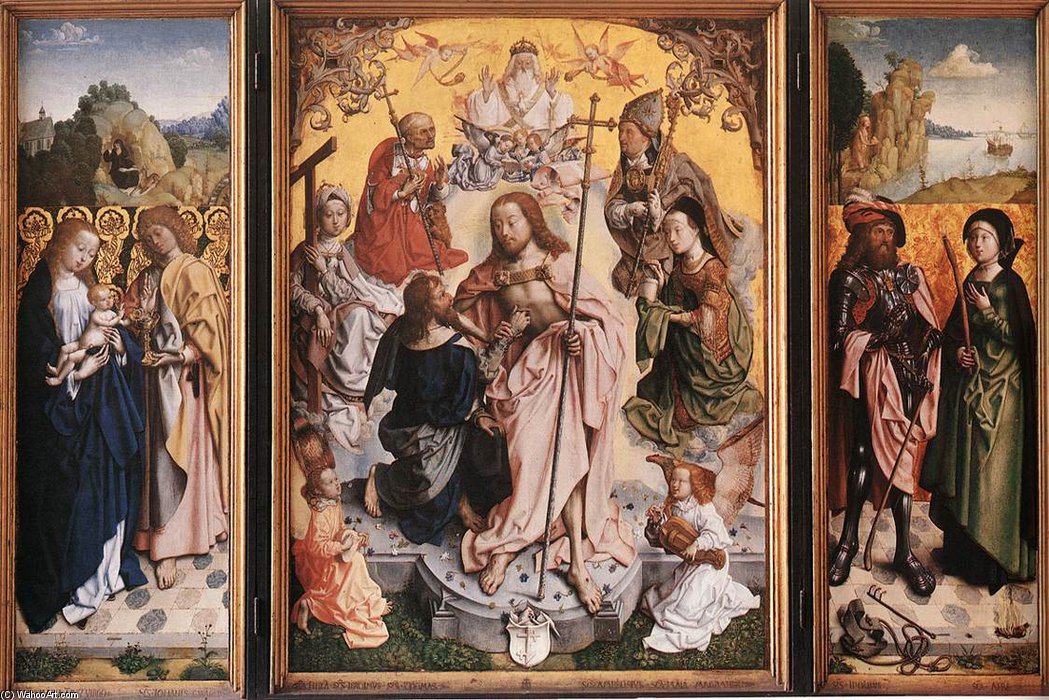
Thomas Altarpiece
 Read More
Hand Made Oil Reproduction
Hand-painted oil on canvas in your size and frame, made to order by our artists. ( Buy Print Buy Image)




































Pick from our preset sizes that match the artwork's original proportions.

You may enter your own dimensions to fit a specific frame or space. If your selected size does not match the original image's proportions, we will either crop the artwork or extend the painting with additional hand-painted elements. A digital mockup will be sent for your approval before production begins.
Please note that the on-screen preview does not reflect the actual cropping or extension. Only the mockup will accurately show the final composition.
While custom sizes are available, we recommend selecting a dimension from the predefined list to preserve the original proportions.
After order, ArtsDot.com team will email client for instructions and provide a mockup preview
Worldwide Delivery () in 3/4 weeks instead of standard 5 weeks. (16 August). No compromise on quality.

Free Worldwide Express Shipping

High-Quality Linen Canvas

Full Shipping Insurance

Customs Tax Refund Guarantee

True Color Matching Guarantee

60-Day Return Policy (Defects Only)

100% Money-Back Guarantee

Bulk Discount Offer
 Glass option is only available in size under 110 CM

Thomas Altarpiece
Reproduction Medium
Reproduction Size
-


Total Price
$ 263
Related Artworks

Artist Biography
The Master of Saint Bartholomew Altar: A Life in Shadow
The Master of Saint Bartholomew Altar remains one of the most intriguing figures of the Early Renaissance in Germany. Active between approximately 1475/1480 and 1510, this anonymous painter is celebrated for a distinctive style that blends Netherlandish precision with emerging German artistic sensibilities. Despite the mystery surrounding his personal life – his true name remains unknown – his artistry has secured him a significant place in art history.
Life and Origins
Almost nothing concrete is known about the Master’s biography. He was likely born around 1450, possibly in Germany, though compelling evidence suggests he received his initial artistic training in the Netherlands. Scholars posit a possible origin in Utrecht or the Gelderland region. It's speculated that he may have emigrated to Cologne around 1480. A potential connection to the Carthusian monastery in Cologne exists, given the inclusion of a Carthusian monk in his most famous work and the number of commissions received from the order; some believe he might even have been a member himself.
Artistic Development & Influences
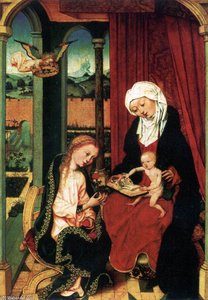
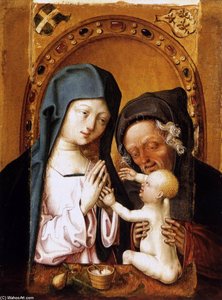
The Master’s early style is evident in miniatures painted for the book of hours of Sophia van Bylant, dated to 1475. These works demonstrate an initial adherence to Netherlandish conventions. Throughout his career, he absorbed influences from prominent Netherlandish masters such as Dirck Bouts and Rogier van der Weyden. The influence of Van der Weyden is particularly noticeable in the Munich Madonna and Child with Saint Anne. However, he didn’t merely imitate; he developed a unique visual language characterized by bright colors and a lingering Gothic sensibility.
Major Works & Style
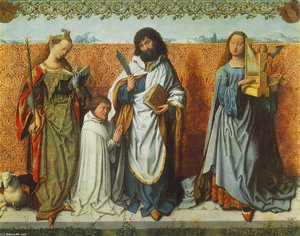
The artist derives his name from the Saint Bartholomew Altarpiece, created between 1505 and 1510. This altarpiece, depicting Saint Bartholomew flanked by Saints Agnes and Cecilia, originally hung in the church of Saint Columba in Cologne. Other significant works include:
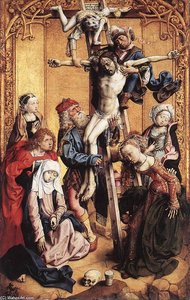
- Deposition: Now housed at the Musée du Louvre, commissioned for the hospital of the Antonite brothers in Paris.
- Thomas Altarpiece
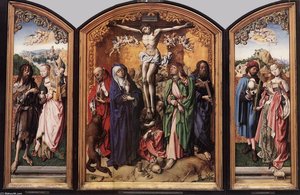
- Crucifixion Altarpiece
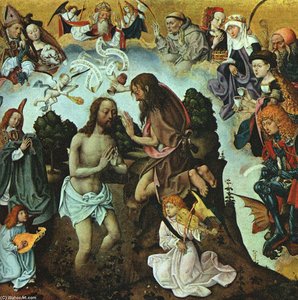
- Baptism of Christ: Located in the National Gallery of Art, Washington D.C.
His style is marked by:
- Bright, enamel-like colors
- A refined attention to detail
- An affinity for the International Gothic style
- A distinctive use of light and shadow
Historical Significance & Legacy
The Master of Saint Bartholomew Altar occupies a unique position in German art history. He is considered by some to be the last “Gothic” painter active in Cologne, bridging the gap between the late medieval tradition and the emerging Renaissance style. Despite his prominence during his lifetime – he was arguably the leading painter in Cologne at the time – no documented school or followers emerged after him. Approximately twenty-five paintings are attributed to him based on his highly individual style. His works can be found in major museum collections worldwide, including the Alte Pinakothek (Munich), Musée du Louvre (Paris), National Gallery (London), and J. Paul Getty Museum (Los Angeles). He remains a compelling subject of study for art historians seeking to understand the complex interplay between Netherlandish and German artistic traditions during the late 15th and early 16th centuries.
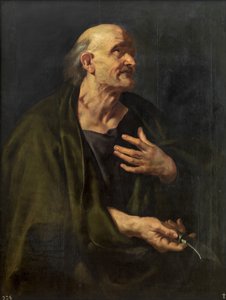
master of the st bartholomew altar
1450 - 1510 , Germany
Quick Facts
- Birth_Date: c. 1450
- Birth_Place: Germany
- Death_Date: 1510
- Influenced_By:
- Dirck Bouts
- Rogier van der Weyden
- Movement:
- Early Netherlandish painting
- German Renaissance
- Name: Master of Saint Bartholomew Altar
- Nationality: German
- Notable_Works:
- Saint Bartholomew Altarpiece
- Deposition