 Preview
 Send
Send Share
Share
 Details

 Download
 Similars
 X-Ray
X-Ray Diaporama
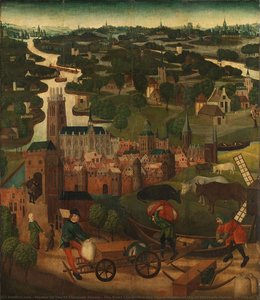
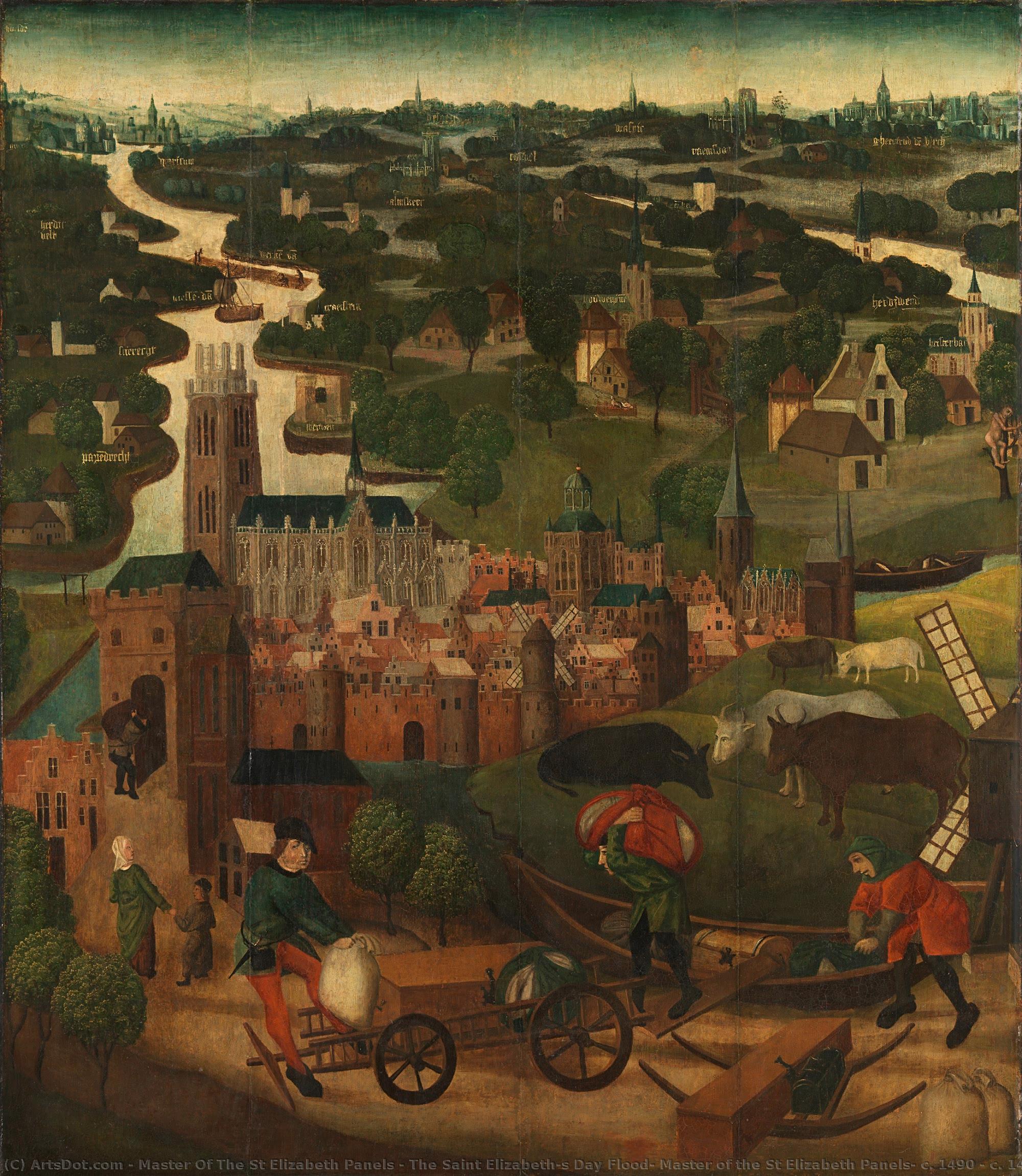
The Saint Elizabeth’s Day Flood, Master of the St Elizabeth Panels, c. 1490 - c. 1495
 1495
1495 127.0 x 110.0 cm
 Read More
Giclée / Art Print
Museum-quality giclée or canvas print with fast production and flexible finish options. ( Buy Hand Made Painting Buy Image)




































Pick from our preset sizes that match the artwork's original proportions.

You may enter your own dimensions to fit a specific frame or space. If your selected size does not match the original image's proportions, we will either crop the artwork or extend the image with a mirrored or solid-fill edge. A digital mockup will be sent for your approval before production begins.
Please note that the on-screen preview does not reflect the actual cropping or extension. Only the mockup will accurately show the final composition.
While custom sizes are available, we recommend selecting a dimension from the predefined list to preserve the original proportions.
Worldwide Delivery () in 2 weeks instead of standard 4/5 weeks. (4 September)

Free Worldwide Express Shipping

High-Quality Linen Canvas

Full Shipping Insurance

Customs Tax Refund Guarantee

True Color Matching Guarantee

60-Day Return Policy (Defects Only)

100% Money-Back Guarantee

Bulk Discount Offer
 Glass option is only available in size under 110 CM

The Saint Elizabeth’s Day Flood, Master of the St Elizabeth Panels, c. 1490 - c. 1495
Giclée / Art Print
Reproduction Size
-


Total Price
$ 63
Related Artworks





Artist Biography
The Enigma of Delft: A Legacy in Shadow
The identity of the artist known as the Master of the St Elizabeth Panels remains one of the most captivating mysteries of the early Renaissance. Shrouded in the mists of the late 15th century, this unnamed craftsman operated primarily within the vibrant artistic hub of Delft, Netherlands. While his personal biography is largely lost to time, the traces of his existence are etched into the very grain of his surviving masterpieces. Historians can only reconstruct a silhouette of a man—a disciplined painter likely born between 1460 and 1470, whose life was anchored by his membership in the Sint Jansgilde, Delft’s prestigious guild for painters and sculptors. This affiliation suggests an artist deeply rooted in the rigorous traditions of his community, yet possessed of a visionary spirit that allowed him to transcend the rigid boundaries of his era.
Though no portraits of the Master survive, his stylistic fingerprints reveal a profound connection to the burgeoning humanist movement sweeping across Europe. His work hints at a sophisticated dialogue with Flemish artistic circles, reflecting the dynamic cultural exchanges that defined the Low Countries during this period. He was an artist of the transition, standing at the crossroads where medieval devotion met the dawn of a more observational, naturalistic approach to the world.
A Monumental Vision: The Saint Elizabeth’s Day Flood
The true magnitude of this artist's genius is captured in a single, monumental achievement: The Saint Elizabeth’s Day Flood. Executed approximately between 1490 and 1495, this altarpiece—originally commissioned for St James Church in Levoča, Slovakia—serves as both a historical chronicle and a profound theological statement. The work is far more than a mere religious decoration; it is a dramatic narrative of survival and divine intervention. Through his brush, the devastating flood that threatened the city of Dordrecht becomes a stage for the interplay between human terror and celestial protection.
In the outer panels, the Master demonstrates an extraordinary command over atmosphere and tension. On one side, the viewer is confronted with the visceral horror of a breached dike, where the relentless power of water threatens to consume the land. The meticulous detail used to render the churning waves and the palpable sense of chaos showcases a painter capable of profound emotional resonance. Yet, in a striking stylistic contrast, the opposing panel presents a vision of Dordrecht bathed in an ethereal, tranquil light. This juxtaposition creates a powerful symbolic narrative: while the physical world may succumb to disaster, the city remains untouched under the watchful eye of God, illustrating the concept of divine providence through a masterful use of light and composition.
Innovation Through Technique and Style
What truly elevates the Master of the St Elizabeth Panels above his contemporaries is a distinctive, painterly approach that broke away from the era's more rigid conventions. While many artists of the late 15th century adhered to a strict, almost clinical precision, this Master embraced a looser, more expressive brushwork that breathed life into his subjects. His ability to manipulate light and shadow—a precursor to the dramatic chiaroscuro seen in later centuries—allowed him to imbue even the most static scenes with a sense of movement and spiritual weight.
His technical mastery is evident in several key areas:
- Narrative Depth: The ability to weave complex historical events, such as the Dordrecht flood, into a cohesive theological allegory.
- Atmospheric Realism: A sophisticated use of light to differentiate between the chaos of natural disaster and the serenity of divine grace.
- Textural Detail: An incredible attention to the physical elements of his environment, from the destructive force of water to the architectural stability of the city.
Ultimately, the historical significance of the Master of the St Elizabeth Panels lies in his role as a bridge between eras. He took the established traditions of the Netherlandish school and infused them with an innovative energy that anticipated the shifts of the coming century. Though his name remains unrecorded in the annals of history, his vision continues to command reverence, reminding us that true artistry often speaks loudest when the artist themselves remains silent.
Master of the St Elizabeth Panels
Netherlands
Quick Facts
- Artistic Movement Or Style: Renaissance Dutch Art
- Full Name: Master of the St Elizabeth Panels
- Nationality: Dutch
- Notable Artworks:
- The Saint Elizabeth’s Day Flood
- Saint Elizabeth of Hungary Tending the Sick
- Place Of Birth: Netherlands