 Preview
 Send
Send Share
Share
 Details

 Download
 Similars
 X-Ray
X-Ray Diaporama
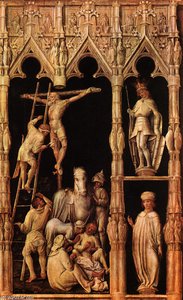
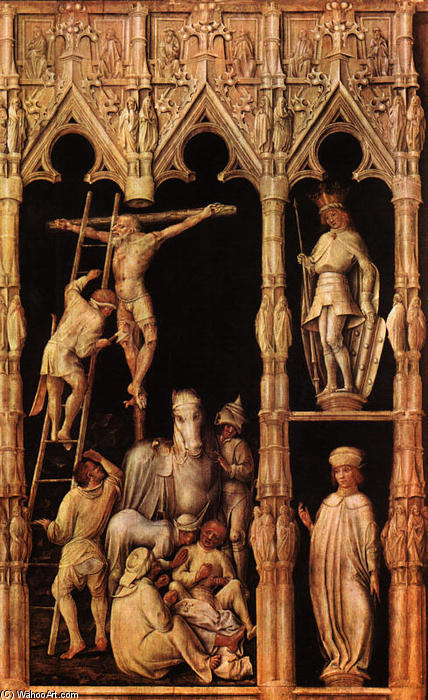
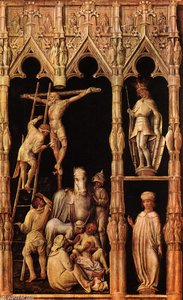
Crucifixion, detail from right side


 Read More
Hand Made Oil Reproduction
Hand-painted oil on canvas in your size and frame, made to order by our artists. ( Buy Print Buy Image)




































Pick from our preset sizes that match the artwork's original proportions.

You may enter your own dimensions to fit a specific frame or space. If your selected size does not match the original image's proportions, we will either crop the artwork or extend the painting with additional hand-painted elements. A digital mockup will be sent for your approval before production begins.
Please note that the on-screen preview does not reflect the actual cropping or extension. Only the mockup will accurately show the final composition.
While custom sizes are available, we recommend selecting a dimension from the predefined list to preserve the original proportions.
After order, ArtsDot.com team will email client for instructions and provide a mockup preview
Worldwide Delivery () in 3/4 weeks instead of standard 5 weeks. (29 August). No compromise on quality.

Free Worldwide Express Shipping

High-Quality Linen Canvas

Full Shipping Insurance

Customs Tax Refund Guarantee

True Color Matching Guarantee

60-Day Return Policy (Defects Only)

100% Money-Back Guarantee

Bulk Discount Offer
 Glass option is only available in size under 110 CM

Crucifixion, detail from right side
Reproduction Medium
Reproduction Size
-


Total Price
$ 263
Related Artworks


Artist Biography
An Enigmatic Visionary of the German Renaissance
The identity of the Master of the Tegernsee Passion remains one of the most captivating mysteries in the annals of German Renaissance art. Active between 1430 and 1450, this painter exists more as a stylistic presence than a documented individual, leaving behind a legacy defined not by a name, but by the profound emotional resonance of his religious compositions. Emerging from the artistic heart of Bavaria, he is inextricably linked to the Benedictine monastery of St. Quirinus at Tegernsee. It was here, through the creation of a monumental altarpiece known as the Tabula Magna, that his name became etched into history. While some scholars have historically speculated on connections to Munich painters such as Gabriel, the artist remains an enigmatic figure, a phantom of the fifteenth century whose brushstrokes speak with more clarity than any written record.
His formative years were likely shaped by the monastic environment of Tegernsee Abbey, where he served as an illuminator. This early immersion in manuscript illumination undoubtedly bestowed upon him a meticulous sensitivity to detail and a sophisticated understanding of visual storytelling. The transition from the delicate, miniature world of manuscripts to the grand scale of altarpieces allowed him to refine a unique language of devotion. His work reflects the burgeoning humanist movement of his era, moving away from the rigid, stylized dogmas of the Middle Ages toward a more visceral, human-centric exploration of faith. In his hands, the divine was not merely a distant concept but a palpable, suffering, and deeply felt reality.
The Mastery of Expression and Realism
What distinguishes the Master from his contemporaries is his rejection of polished idealism in favor of an unvarnished, expressive realism. His figures are often characterized by a certain ruggedness—unidealized, bulky, and profoundly human. This stylistic choice serves to heighten the psychological depth of his narratives, particularly within his Passion scenes. He possessed an extraordinary ability to utilize chiaroscuro, employing the dramatic interplay of light and shadow to sculpt form and evoke atmosphere. In his celebrated Crucifixion panel, currently housed in the Nuremberg Germanic National Museum, one can witness this mastery; the light does not merely illuminate the scene but seems to emerge from the very agony and compassion etched into the physical presence of Christ.
The technical brilliance of his work is further evidenced by several key artistic elements:
- Emotional Intensity: A profound ability to convey the psychological weight of religious suffering through facial expressions and bodily tension.
- Narrative Depth: The use of complex compositions that guide the viewer's eye through the sacred drama of the Passion.
- Materiality and Texture: An exceptional command over the depiction of physical forms, creating a sense of palpable weight and presence on pine panels.
- Symbolic Complexity: The integration of intricate religious symbolism that invites deep meditation and theological reflection.
Legacy and Historical Significance
Though his original works are often fragmented—the Tabula Magna having been dismembered over the centuries—the impact of the Master of the Tegernsee Passion continues to resonate. His contribution to the development of German Renaissance painting is significant, as he helped bridge the gap between medieval tradition and the more naturalistic, humanistic approaches that would define later centuries. By prioritizing the emotional truth of the human experience within a sacred context, he paved the way for the expressive power seen in the works of subsequent masters in Munich and Nuremberg.
Today, his surviving panels, such as Christ Carrying the Cross in the Bayerisches Nationalmuseum, serve as vital windows into the spiritual landscape of fifteenth-century Bavaria. He remains a testament to the power of art to transcend the loss of biographical identity, proving that an artist's true essence lives on through the enduring, evocative strength of their vision. His work continues to haunt and inspire, reminding us of a period when the boundaries between the earthly and the divine were rendered with breathtaking, raw precision.
master of the tegernsee passion
Germany
Quick Facts
- Artistic Movement Or Style: Renaissance Painting
- Artists Or Movements Influenced By This Artist: ['Medieval Religious Art']
- Artists Who Influenced This Artist: ['Rembrandt van Rijn']
- Full Name: Master of the Tegernsee Passion
- Nationality: German
- Notable Artworks: ['Crucifixion, detail from right side']
- Place Of Birth: Germany