- Home

- Oil Painting Reproduction
- master of the view of ste gudule (meester van het gezicht op sint goedele)
 Preview
 Send
Send Share
Share
 Details

 Download
 Similars
 X-Ray
X-Ray Diaporama
 Stats
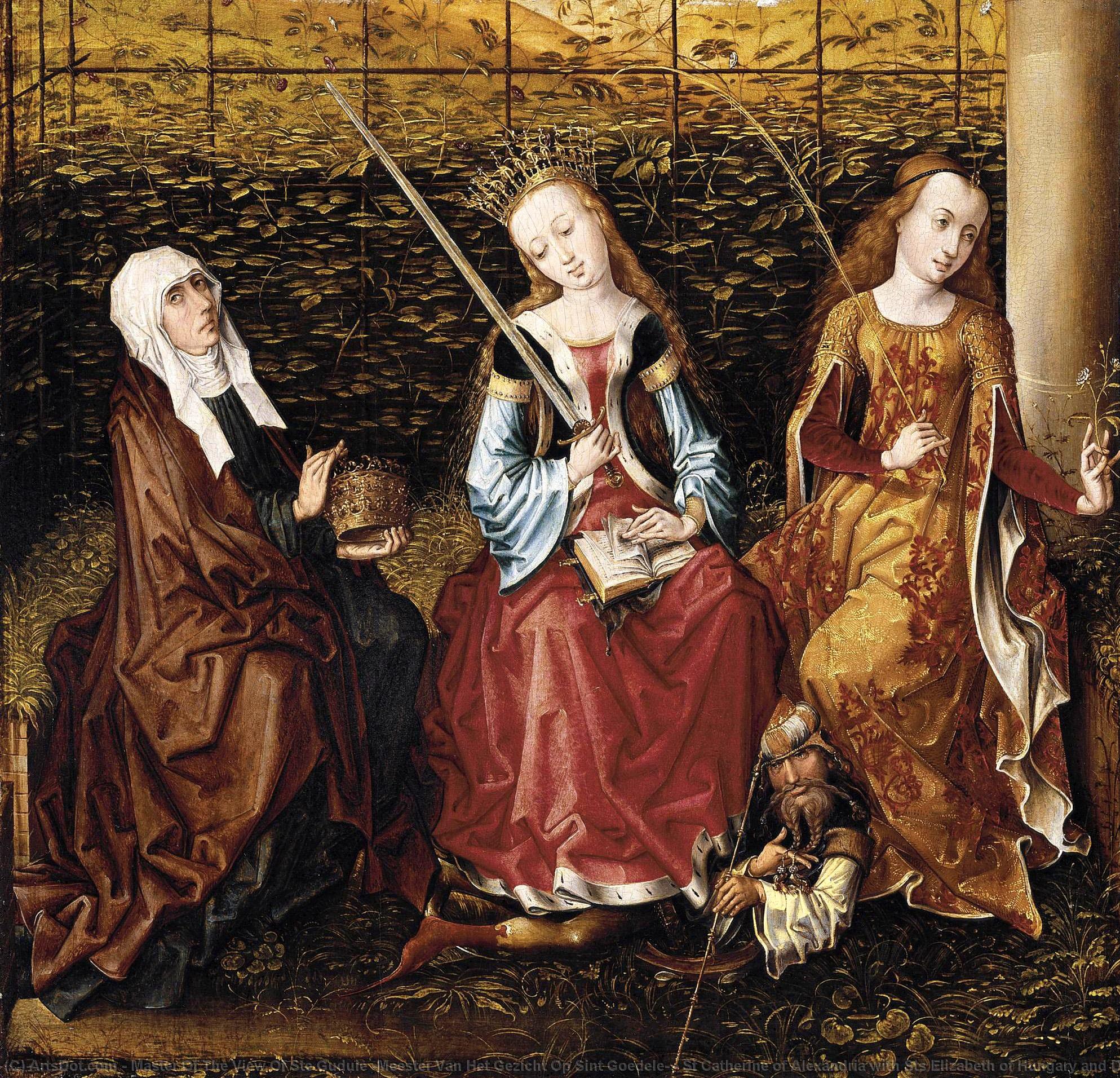
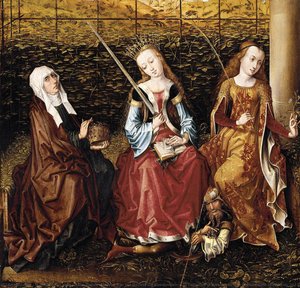
StatsSt Catherine of Alexandria with Sts Elizabeth of Hungary and Dorothy
 1480
1480 45.0 x 47.0 cm
 Read More
Hand Made Oil Reproduction
Hand-painted oil on canvas in your size and frame, made to order by our artists. ( Switch to Print Switch to Digital Image)




































Pick from our preset sizes that match the artwork's original proportions.

You may enter your own dimensions to fit a specific frame or space. If your selected size does not match the original image's proportions, we will either crop the artwork or extend the painting with additional hand-painted elements. A digital mockup will be sent for your approval before production begins.
Please note that the on-screen preview does not reflect the actual cropping or extension. Only the mockup will accurately show the final composition.
While custom sizes are available, we recommend selecting a dimension from the predefined list to preserve the original proportions.
After order, ArtsDot.com team will email client for instructions and provide a mockup preview
Worldwide Delivery () in 3/4 weeks instead of standard 5 weeks. (9 September). No compromise on quality.

Free Worldwide Express Shipping

High-Quality Linen Canvas

Full Shipping Insurance

Customs Tax Refund Guarantee

True Color Matching Guarantee

100-Day Return Policy (Defects Only)

100% Money-Back Guarantee

Bulk Discount Offer
 Glass option is only available in size under 110 CM

St Catherine of Alexandria with Sts Elizabeth of Hungary and Dorothy
Reproduction Medium
Reproduction Size
-


Total Price
$ 263
Related Artworks
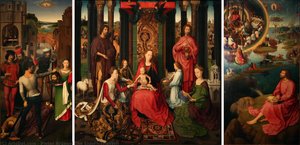
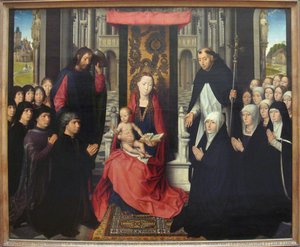
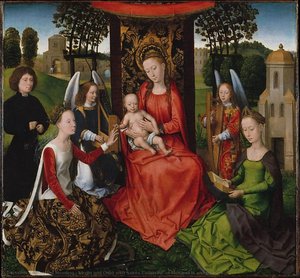
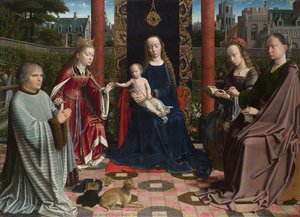
Artist Biography
The Enigmatic Master of Saint Gudula
In the twilight of the fifteenth century, amidst the bustling streets and burgeoning religious fervor of Brussels, there worked an artist whose name has become synonymous with a beautiful mystery. Known to art historians as the Master of the View of Saint Gudula, this elusive figure remains one of the most captivating enigmas of the Early Netherlandish period. While his personal identity remains shrouded in the mists of time, his presence is felt through a body of work that breathes with a quiet, luminous intensity. Active primarily between 1480 and 1499, he emerged from the vibrant artistic landscape of Brussels, leaving behind a legacy defined by an unparalleled ability to marry the sacred with the terrestrial.
To look upon his work is to step into a world where every brushstroke serves a higher purpose. The Master was a practitioner of the Flemish Primitive tradition, a style that demanded an almost obsessive devotion to detail and a profound understanding of light. He mastered the delicate art of glazing, applying translucent layers of oil paint to create a depth of color that seems to glow from within. This technique allowed him to capture the soft, atmospheric perspective of the Low Countries, making his landscapes feel as though they were breathing under a heavy, northern sky. His most famous namesake—the breathtaking depictions of the Saint Gudula Cathedral—demonstrate a structural precision and an architectural reverence that suggest he was not merely a painter, but a chronicler of his city's spiritual heart.
A Legacy of Devotion and Portraiture
The repertoire of this mysterious master is characterized by a striking duality: the intimate psychological depth of his portraits and the monumental grandeur of his religious altarpieces. He possessed a rare sensitivity for capturing the human soul, rendering faces that are not merely likenesses but windows into character. In works such as his portrait of Jean Broeder Jansz., Bishop of Ghent, one can sense the weight of office and the quiet dignity of the subject through subtle modeling and expressive gestures. His ability to convey emotion through the slight tilt of a head or the soft light falling across a brow distinguishes him from the more rigid styles of his contemporaries.
Beyond the individual, his most profound achievements lie in his large-scale devotional compositions. The monumental altarpiece featuring Saint Catherine of Alexandria alongside Saints Elizabeth of Hungary and Dorothy stands as a testament to his mastery of narrative and sacred iconography. In these works, the Master weaves together complex theological themes with a tangible, earthly realism. He does not merely depict saints; he places them within a world that feels physically present, where the textures of heavy brocade, the coldness of stone, and the warmth of candlelight are all rendered with breathtaking accuracy.
Artistic Lineage and Historical Significance
While the exact origins of his training remain a subject of scholarly debate, the Master’s style clearly vibrates with the influences of the great masters who preceded him. One can trace the echoes of Rogier van der Weyden in his emotional restraint and the meticulous realism of Hugo van der Goes in his handling of complex compositions. There is even speculation regarding connections to the artistic circles of Antwerp, suggesting a painter who was deeply integrated into the wider, sophisticated trade networks of the Burgundian Netherlands.
The historical significance of the Master of the View of Saint Gudula lies in his role as a bridge between the intense, symbolic world of the early fifteenth century and the more naturalistic, human-centric approach that would eventually define the Northern Renaissance. He captured a moment in history when the divine was being brought down to earth, rendered with such exquisite detail that the viewer could almost reach out and touch the sacred. Though his name may be lost to the archives of biography, his vision remains eternally preserved in the luminous, silent beauty of his canvases, reminding us of a time when art was the ultimate vessel for both faith and observation.
Quick Facts
- Artistic Movement Or Style: Early Netherlandish Art
- Full Name: Master of the View of Saint Gudula
- Nationality: Dutch
- Notable Artworks: ['St Catherine of Alexandria with Sts Elizabeth of Hungary and Dorothy']
- Place Of Birth: Brussels