 Preview
 Send
Send Share
Share
 Details

 Download
 Similars
 X-Ray
X-Ray Diaporama
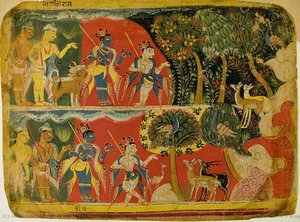
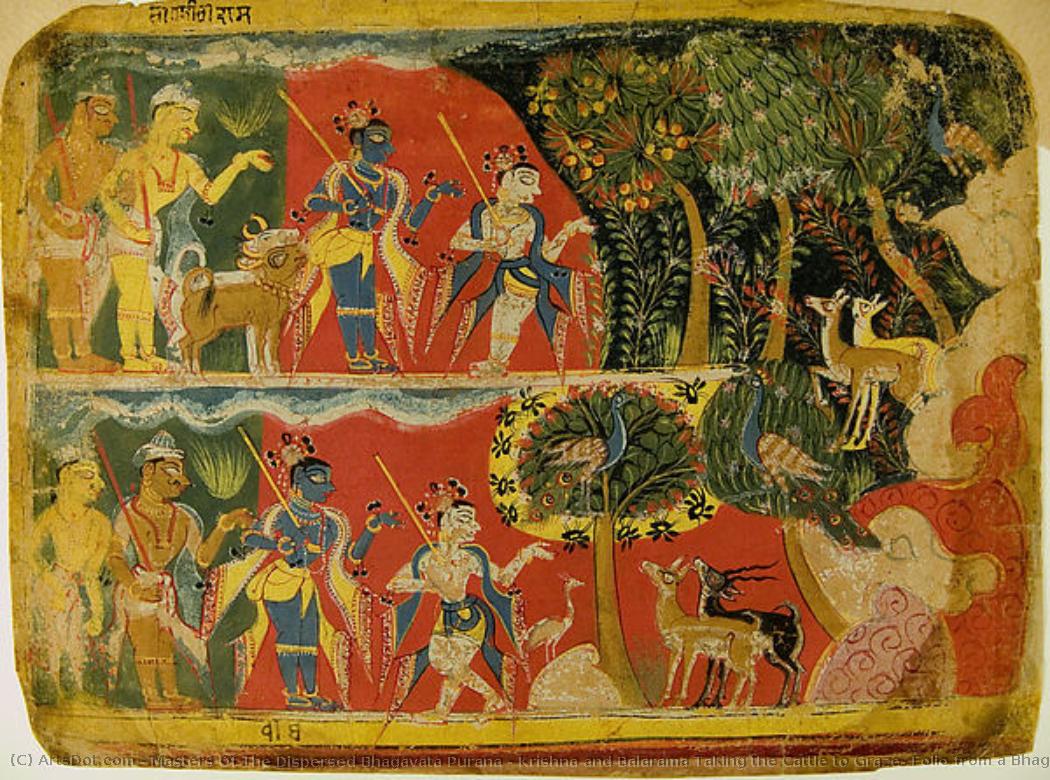
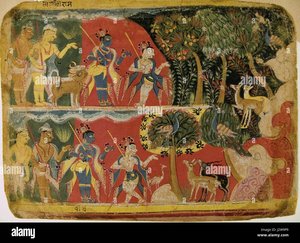
Krishna and Balarama Taking the Cattle to Graze: Folio from a Bhagavata Purana Manuscript
 1520
1520 18.0 x 24.0 cm
 Read More
Giclée / Art Print
Museum-quality giclée or canvas print with fast production and flexible finish options. ( Buy Hand Made Painting Buy Image)




































Pick from our preset sizes that match the artwork's original proportions.

You may enter your own dimensions to fit a specific frame or space. If your selected size does not match the original image's proportions, we will either crop the artwork or extend the image with a mirrored or solid-fill edge. A digital mockup will be sent for your approval before production begins.
Please note that the on-screen preview does not reflect the actual cropping or extension. Only the mockup will accurately show the final composition.
While custom sizes are available, we recommend selecting a dimension from the predefined list to preserve the original proportions.
Worldwide Delivery () in 2 weeks instead of standard 4/5 weeks. (5 September)

Free Worldwide Express Shipping

High-Quality Linen Canvas

Full Shipping Insurance

Customs Tax Refund Guarantee

True Color Matching Guarantee

60-Day Return Policy (Defects Only)

100% Money-Back Guarantee

Bulk Discount Offer
 Glass option is only available in size under 110 CM

Krishna and Balarama Taking the Cattle to Graze: Folio from a Bhagavata Purana Manuscript
Giclée / Art Print
Reproduction Size
-


Total Price
$ 63
Related Artworks



Artist Biography
The Masters of the Dispersed Bhagavata Purana: Guardians of Krishna’s Narrative
The Masters of the Dispersed Bhagavata Purana represent a singular flowering of artistic talent in Gujarat, India, emerging during the vibrant cultural window of circa 1520–1540. This group of artists—whether a collective workshop or a lineage of skilled craftsmen—achieved remarkable renown for their exquisitely detailed illustrations that breathed life into the epic tales of Krishna’s divine exploits. Their work serves as a luminous bridge in the history of Indian miniature painting, marking a crucial juncture where indigenous traditions began to merge with broader stylistic currents, creating a visual language that was both deeply spiritual and technically sophisticated.
The origins of these masters are rooted in the rich cultural landscape of 16th-century India, specifically within the traditions that would later be identified with the early Rajput-Chaurapanchasika style. While scholarly debate continues regarding their exact geographic center, much of their influence is linked to the Delhi-Agra area and the flourishing trade routes of Gujarat. This was an era of profound artistic convergence; as the Mughal influence began to permeate the subcontinent, these artists skillfully integrated elements of Persian miniature painting—such as refined linework and complex spatial arrangements—with the robust, emotive energy of local Hindu traditions. Their work does not merely illustrate text; it creates a sacred space where the divine and the earthly intersect through color and form.
A Symphony of Line and Color
The distinctive artistic style of the Masters is characterized by an unwavering confidence in silhouette and a mastery of rhythmic patterning. They possessed a unique ability to delineate figures with bold, assertive lines that captured the very essence of their subjects, from the blue-skinned Krishna to the powerful Balarama. Their technique relied heavily on the use of ink and opaque watercolor on paper, a medium they employed to achieve breathtaking textural effects and luminous tonal gradations. Unlike later styles that might favor soft atmospheric blurring, the Masters embraced a certain clarity and geometric precision, often utilizing a strong but limited palette to direct the viewer's eye through complex narrative compositions.
In their hands, color became a tool for both storytelling and temporal division. The use of deep, saturated hues—such as indigo, crimson, and ochre—was punctuated by strategic highlights that brought movement to the page. Their compositions often featured:
- Dynamic Silhouetting: Figures were rendered with sharp contours that allowed them to stand out against intricate backgrounds.
- Robust Patterning: The use of repetitive, decorative motifs in clothing and landscapes to create a sense of rhythmic vitality.
- Compartmentalized Narratives: A sophisticated method of organizing space where different moments in time or different locations within a single scene are framed by landscape elements like rivers or palace walls.
Legacy and Historical Significance
The historical significance of the Masters of the Dispersed Bhagavata Purana lies in their role as the architects of one of the earliest surviving illustrated versions of the Tenth Book of the Bhagavata Purana. Their folios, though now dispersed across prestigious institutions like the Metropolitan Museum of Art and the Museum Rietberg, remain a cohesive testament to a period of intense creative evolution. They laid the groundwork for the later, more famous Mewari and Rajput schools by demonstrating how manuscript illumination could transcend simple decoration to become a profound medium for theological expression.
Through their meticulous devotion to detail and their ability to capture the divine drama of Krishna's life, these artists ensured that the sacred narratives would endure. Their work remains a vital subject of study for art historians seeking to understand the transition from early medieval Indian painting to the highly refined imperial styles of the Mughal era. In every bold stroke and vibrant wash of color, the Masters of the Dispersed Bhagavata Purana continue to invite the viewer into a world of eternal myth and unparalleled beauty.
masters of the dispersed bhagavata purana
1520 - , India
Quick Facts
- Artistic Movement Or Style: Robust patterning; Watercolor technique
- Artists Or Movements Influenced By This Artist: ['Hindu Art']
- Artists Who Influenced This Artist: ['Precisionist Movement']
- Date Of Birth: Gujarat, India (1520)
- Date Of Death: Living
- Full Name: Masters of the Dispersed Bhagavata Purana
- Nationality: Indian
- Notable Artworks:
- Krishna and Balarama Taking the Cattle to Graze
- Nanda and Vasudeva
- Place Of Birth: Gujarat