 Preview
 Send
Send Share
Share
 Details

 Download
 Similars
 X-Ray
X-Ray Diaporama
 Stats
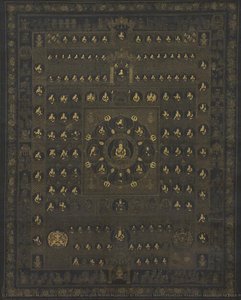
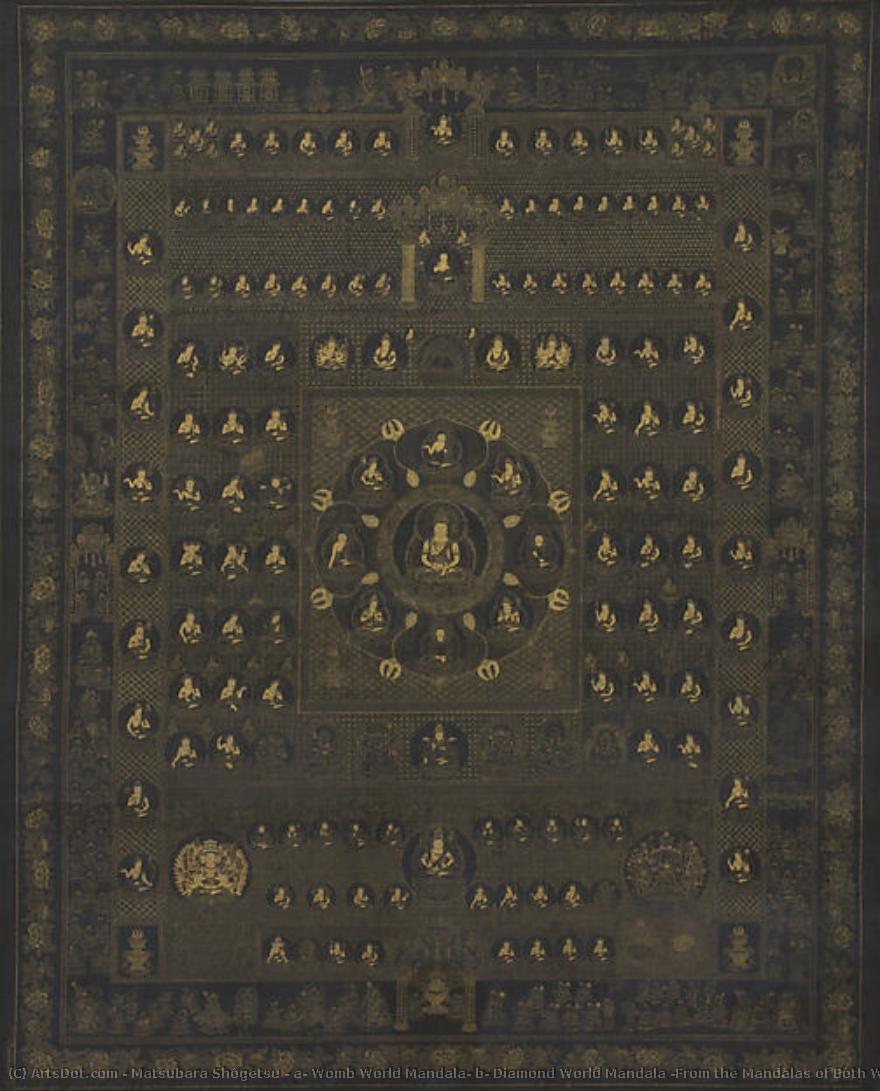
Statsa) Womb World Mandala; b) Diamond World Mandala (From the Mandalas of Both Worlds)
 145.0 x 118.0 cm
 Read More
Giclée / Art Print
Museum-quality giclée or canvas print with fast production and flexible finish options. ( Buy Hand Made Painting Switch to Digital Image)




































Pick from our preset sizes that match the artwork's original proportions.

You may enter your own dimensions to fit a specific frame or space. If your selected size does not match the original image's proportions, we will either crop the artwork or extend the image with a mirrored or solid-fill edge. A digital mockup will be sent for your approval before production begins.
Please note that the on-screen preview does not reflect the actual cropping or extension. Only the mockup will accurately show the final composition.
While custom sizes are available, we recommend selecting a dimension from the predefined list to preserve the original proportions.
Worldwide Delivery () in 2 weeks instead of standard 4/5 weeks. (8 September)

Free Worldwide Express Shipping

High-Quality Linen Canvas

Full Shipping Insurance

Customs Tax Refund Guarantee

True Color Matching Guarantee

100-Day Return Policy (Defects Only)

100% Money-Back Guarantee

Bulk Discount Offer
 Glass option is only available in size under 110 CM

a) Womb World Mandala; b) Diamond World Mandala (From the Mandalas of Both Worlds)
Giclée / Art Print
Reproduction Size
-


Total Price
$ 63
Related Artworks

Artist Biography
Matsubara Shogetsu: Weaver of Cosmic Visions
Matsubara Shogetsu (Japanese, Japan) emerged as a prominent figure in Edo period Japanese art, leaving an indelible mark on the realm of mandala painting. Born into a family steeped in artistic tradition, Shogetsu’s dedication to Buddhist iconography and meditative practice fueled his extraordinary talent for crafting breathtakingly detailed mandalas – intricate geometric patterns imbued with profound spiritual symbolism. His work stands as testament to the aesthetic sensibilities of his time and continues to inspire admiration for its beauty and complexity.- Early Life & Artistic Training:
- Notable Works: The Womb World Mandala and Diamond World Mandala
- Symbolism and Technique:
- Influence of Zen Buddhism:
- Legacy and Historical Significance:
Early Life & Artistic Training
Information regarding Shogetsu’s formative years remains somewhat sparse, reflecting the customary privacy prevalent during the Edo era. However, it is understood that he was born into a family known for its involvement in calligraphy and painting—a lineage that undoubtedly instilled within him an appreciation for meticulous craftsmanship and artistic expression. While biographical details are limited, his unwavering commitment to mastering Buddhist art forms speaks volumes about his personal convictions and intellectual curiosity.- Family Background:
- Formal Artistic Education:
Notable Works: The Womb World Mandala and Diamond World Mandala
Shogetsu’s artistic reputation rests primarily upon his masterful execution of two monumental mandalas – ‘Womb World Mandala’ and ‘Diamond World Mandala,’ collectively known as ‘Mandalas of Both Worlds.’ These works exemplify the pinnacle of Edo period mandala painting, showcasing unparalleled precision and artistry. The Womb World Mandala depicts a stylized representation of creation—a swirling vortex of colors and geometric shapes symbolizing the genesis of existence—while the Diamond World Mandala portrays enlightenment—a radiant sphere embodying purity and transcendence.- Description of ‘Womb World Mandala’:
- Description of ‘Diamond World Mandala’:
Symbolism and Technique
Shogetsu's technique was characterized by an astonishing level of detail, achieved through painstaking layering of pigments onto silk or paper. He employed a meticulous process involving multiple coats of lacquer and pigment, resulting in surfaces that shimmered with luminosity and captured the subtle nuances of color. Beyond mere visual splendor, Shogetsu’s work embodies profound symbolic meaning rooted in Zen Buddhism—a philosophy emphasizing mindfulness and intuitive understanding. The mandala's geometric patterns are believed to represent the cosmos itself, guiding practitioners toward inner peace and spiritual realization.- Painting Medium:
- Detailed Painting Process:
- Zen Buddhist Symbolism:
Influence of Zen Buddhism
Shogetsu’s artistic vision was deeply informed by Zen Buddhism, which profoundly shaped his worldview and aesthetic sensibilities. The principles of mindfulness, contemplation, and striving for enlightenment permeated his creative endeavors—evident in the serene beauty and meditative quality of his mandalas. He sought to capture not just visual representation but also the essence of Buddhist cosmology and spiritual aspiration.- Zen Philosophy:
- Impact on Artistic Style:
Legacy and Historical Significance
Matsubara Shogetsu’s contribution to Edo period art transcends mere stylistic innovation; he represents a conduit for spiritual contemplation. His mandalas continue to resonate with audiences today, serving as reminders of the enduring power of Buddhist iconography and artistic excellence. As a symbol of Japan's cultural heritage, Shogetsu’s work stands as testament to the pursuit of beauty and enlightenment—a legacy that secures his place among the most revered artists of his era.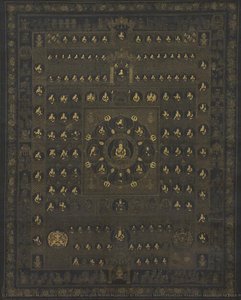
matsubara shôgetsu
Japan
Quick Facts
- Artistic Movement Or Style: Mandalas
- Date Of Birth: Living
- Full Name: Matsubara Shogetsu
- Nationality: Japanese
- Notable Artworks:
- Womb World Mandala
- Diamond World Mandala
- Place Of Birth: Japan