

 Preview
 Send
Send Share
Share
 Details

 Download
 Similars
 X-Ray
X-Ray Diaporama
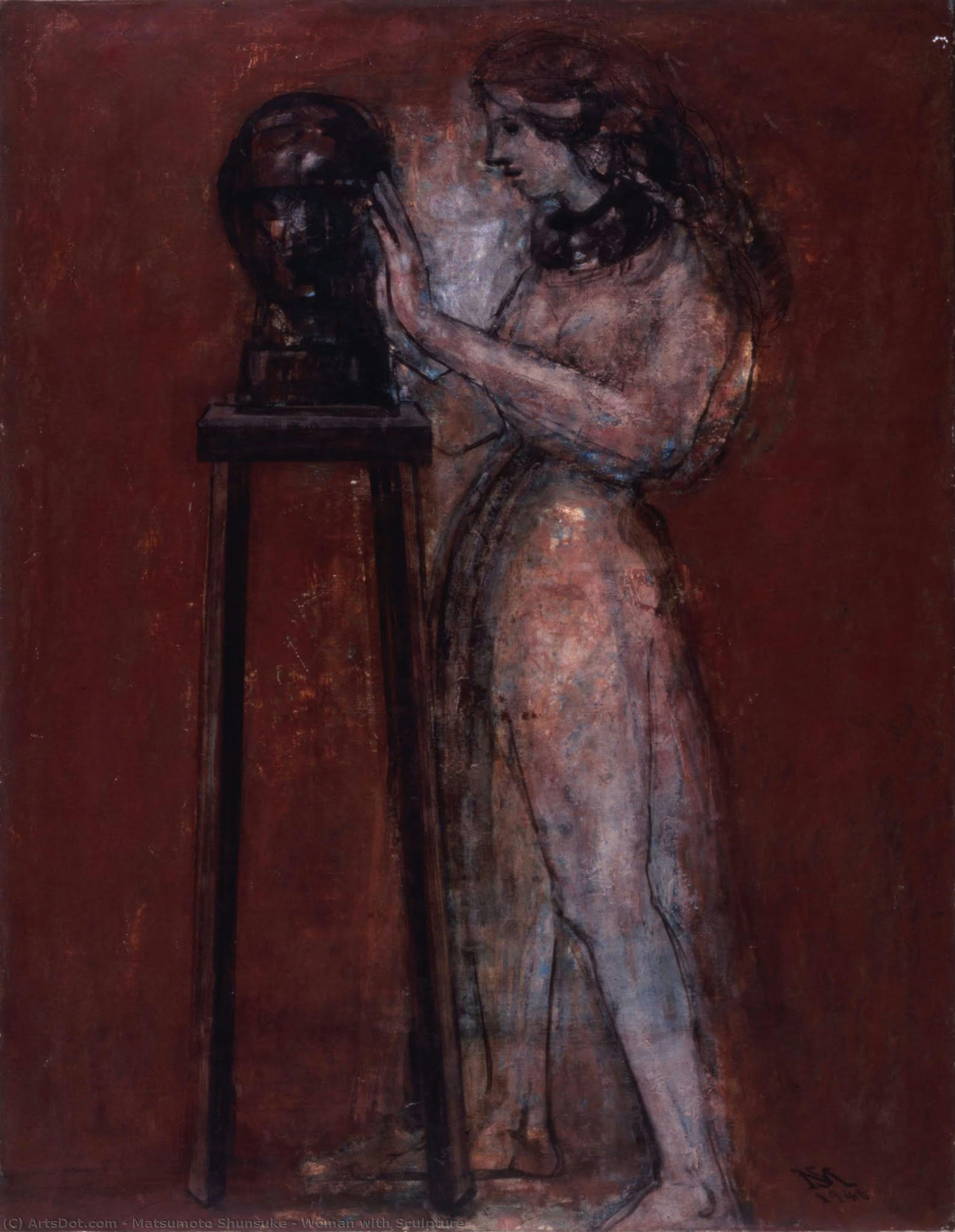
Woman with Sculpture
 Symbolism
 91.0 x 117.0 cm
 Fukuoka Art Museum
 Read More
Purchase a high-resolution, enhanced digital image, far superior to the online preview.
Each file is meticulously prepared by our in-house specialists using advanced tools and expert manual retouching. We ensure every image has exceptional clarity, precise color accuracy, and fine detail.
The final file is delivered via email within 72 hours, optimized for immediate use in professional, editorial, and print environments. This is the same quality trusted by top-tier design studios, publishers, and galleries.
Digital Image
Download a high-resolution file for personal display, printing, and creative projects. ( Buy Print Buy Hand Made Painting)
Included in Every Digital Image Order
Expert Digital Delivery, Guaranteed
When you choose ArtsDot.com, you're not just getting an image - you're receiving a professionally enhanced digital artwork, crafted with precision and backed by a satisfaction guarantee. Here's everything that comes with your order, automatically:

Fast Email Delivery
Your high-resolution digital image file will be emailed to you within 72 hours of ordering - ready for immediate use.

AI-Enhanced Digital File
Your artwork is professionally optimized using advanced AI tools and manual editing, ensuring maximum detail, clarity, and color accuracy.

Free Lifetime Re-Delivery
Accidentally deleted or lost your file? No worries - we'll resend it to you anytime, free of charge.

No Import Fees - Ever
Enjoy your artwork instantly with zero customs, duties, or delivery fees - digital downloads are always tax-free.

Color Accuracy Guarantee
We ensure your digital image reflects the original colors as closely as possible using professional tools and color management.

60-Day Satisfaction Guarantee
If you're not satisfied with your digital image, we'll revise it or refund 100% within 60 days - no questions asked.

100% Money-Back Guarantee
Not satisfied? Get a full refund within 60 days of receiving your digital file - no questions asked.

Bulk Order Discounts
Buy 3 images, save 10% - Buy 5, save 15% - Buy 10+, save 20%. Great for creative projects, galleries, and agencies.
Collectible Description
Related Artworks

Artist Biography
The Silent Visionary: The Life and Legacy of Matsumoto Shunsuke
In the brief, luminous span of his thirty-six years, Matsumoto Shunsuke (1912–1948) managed to capture the profound psychological weight of a Japan in transition. Born Satō Shunsuke in the vibrant Shibuya district of Tokyo, his early life was marked by a transformative hardship that would ultimately shape his unique sensory perception of the world. At the age of thirteen, a bout of epidemic cerebral meningitis left him profoundly deaf, a silence that many believe deepened his visual acuity and allowed him to observe the nuances of light and form with an unparalleled intensity. This inward-looking perspective became the cornerstone of his artistic identity, as he learned to translate the rhythms of a changing society into the silent language of oil on canvas.
His journey into the heart of the Yōga tradition—the Western-style painting movement in Japan—began with a profound moment of familial support. It was a gift of oil painting tools from his elder brother, Akira, that ignited a lifelong passion. Moving to Tokyo as a young man, Matsumoto immersed himself in the rigorous academic environment of the era, eventually finding his voice through the study of both Western compositional principles and the subtle expressive qualities inherent in Japanese aesthetics. His early works began to gain recognition in prestigious venues like the Nika Art Exhibition, signaling the arrival of a talent capable of bridging the gap between traditional sensibilities and modern, globalized artistic movements.
Urban Melancholy and the Montage of Modernity
The true brilliance of Matsumoto’s oeuvre lies in his ability to evoke the atmosphere of an era grappling with rapid industrialization. His work is often categorized into two distinct yet emotionally resonant series that reflect the duality of the Japanese urban experience. In one, he explored "Anonymous Urban Landscapes," utilizing a palette of muted browns and earthy tones to depict the gritty, unadorned reality of Tokyo and Yokohama. These canvases are not mere topographical records; they are meditations on the encroaching shadows of modernity, where the textures of brick, iron, and stone serve as witnesses to the relentless march of progress.
In stark contrast to these somber cityscapes are his celebrated works featuring "People in Cold Blue Tones." Here, Matsumoto employed a sophisticated montage technique, layering perspectives and textures to create scenes that feel both surreal and deeply intimate. These compositions often feature solitary figures or architectural fragments set against chillingly beautiful blue hues, evoking a sense of profound isolation and quiet contemplation. Through this interplay of color and structure, he captured the alienation that often accompanies urban expansion, turning the cityscape into a psychological landscape where the boundaries between the external world and the internal spirit begin to blur.
A Final Evolution Toward Abstraction
As his career progressed toward its tragic conclusion, Matsumoto’s artistic language underwent a fascinating metamorphosis. In the final years of his life, particularly between 1947 and 1948, he began to move away from the concrete motifs of his earlier landscapes toward more experimental, Cubist-inspired forms. This period saw the emergence of his "Composition" series, where the heavy textures of his urban scenes gave way to a more streamlined, graphic approach. Using bold black lines atop freely applied layers of paint, he began to deconstruct buildings, tracks, and human figures into essential geometric elements.
This evolution toward abstraction suggests an artist who was constantly pushing against the limits of representation, seeking a more primal truth beneath the surface of reality. Though his life was cut short by illness, leaving much of his potential unfulfilled, the impact of his work remains indelible. Matsumoto Shunsuke stands as a pivotal figure in 20th-century Japanese art, a painter who transformed the silence of his own world into a powerful, visual symphony of urban transformation, memory, and enduring human emotion.
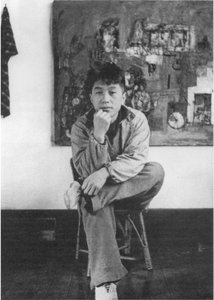
matsumoto shunsuke
1912 - 1948 , Japan
Quick Facts
- Artistic Movement Or Style: Yōga (Western painting)
- Artists Who Influenced This Artist: ['Okada Saburōsuke']
- Date Of Birth: April 19, 1912
- Date Of Death: June 8, 1948
- Full Name: Matsumoto Shunsuke
- Nationality: Japanese
- Notable Artworks:
- Machi 1936
- Woman with Sculpture
- Title Name(Japanese): 並木道
- Title Name(Japanese): Y市の橋
- Place Of Birth: Tokyo, Japan

