 Preview
 Send
Send Share
Share
 Details

 Download
 Similars
 X-Ray
X-Ray Diaporama
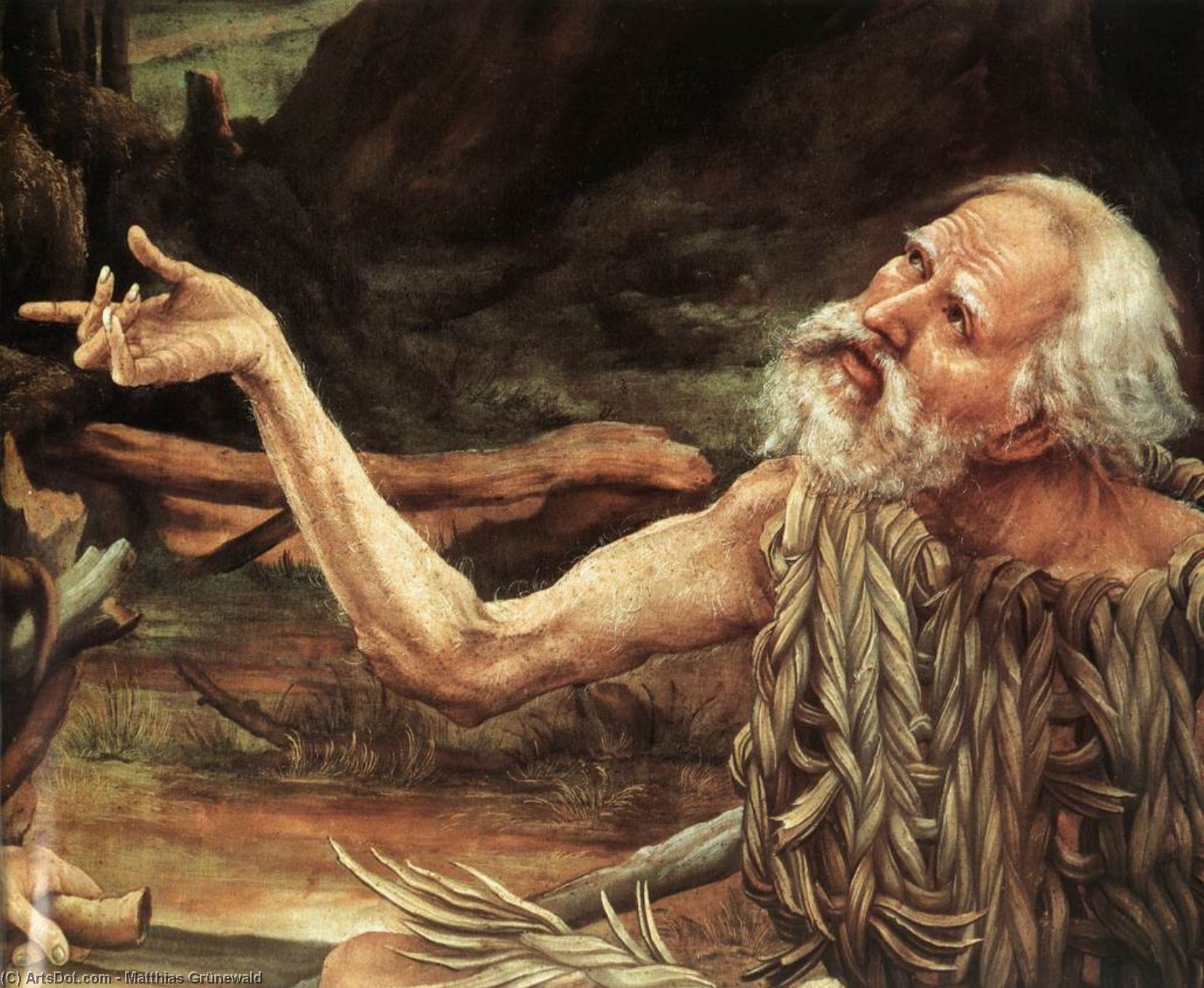
St Paul (detail)


 Read More
Hand Made Oil Reproduction
Hand-painted oil on canvas in your size and frame, made to order by our artists. ( Buy Print Buy Image)




P118B $10

P118H $10

P118W $10

P438Z $10

P508JH $12

P508YH $12

P805H $10

P805Z $10

P919BZ $10

P919G $10

P919XJ $10

P959ZH $10

P968JZ $12

W106C $8

W218G $10

W218JH $8

W218Y $10

W307PJ $10

W316G $10

W316PJ $8

W316Y $10

W398PJ $8

W4111J $10

W500HY $15

W500JH $15

W692G $12

W849H $8

W940BG $15

W953PJ $8




Pick from our preset sizes that match the artwork's original proportions.

You may enter your own dimensions to fit a specific frame or space. If your selected size does not match the original image's proportions, we will either crop the artwork or extend the painting with additional hand-painted elements. A digital mockup will be sent for your approval before production begins.
Please note that the on-screen preview does not reflect the actual cropping or extension. Only the mockup will accurately show the final composition.
While custom sizes are available, we recommend selecting a dimension from the predefined list to preserve the original proportions.
After order, ArtsDot.com team will email client for instructions and provide a mockup preview
Worldwide Delivery () in 3/4 weeks instead of standard 5 weeks. (22 August). No compromise on quality.

Free Worldwide Express Shipping

High-Quality Linen Canvas

Full Shipping Insurance

Customs Tax Refund Guarantee

True Color Matching Guarantee

60-Day Return Policy (Defects Only)

100% Money-Back Guarantee

Bulk Discount Offer
 Glass option is only available in size under 110 CM

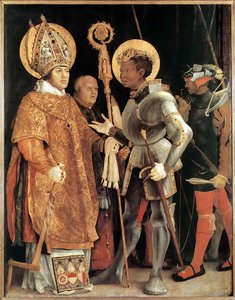
St Paul (detail)
Reproduction Medium
Reproduction Size
-


Total Price
$ 263
Artwork Description
A Window into the Soul: Matthias Grünewald's 'St Paul (detail)'
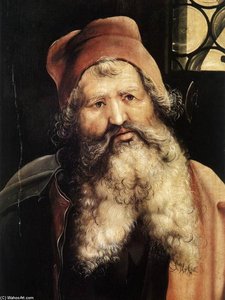
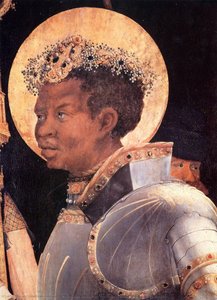
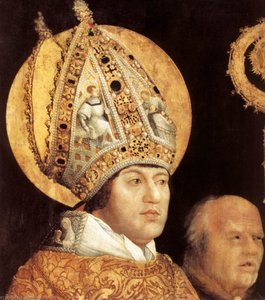
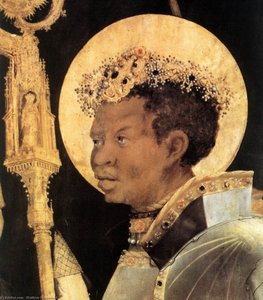
The image before us is not merely a portrait; it’s a profound distillation of faith, struggle, and spiritual yearning. Matthias Grünewald’s ‘St Paul (detail)’ – a fragment from his monumental Isenheim Altarpiece – offers an intimate glimpse into the heart of a man wrestling with divine purpose amidst earthly trials. Painted around 1512-1516, this section captures a pivotal moment in St. Paul's life: his visit to St. Paul the Hermit, a figure representing the ascetic ideal and a symbol of enduring faith. The painting immediately commands attention through its dramatic use of light and shadow, a hallmark of Grünewald’s distinctive style – one that deliberately eschewed the polished elegance of the Italian Renaissance in favor of a raw, emotionally charged realism deeply rooted in Northern European tradition.
Grünewald's technique is both meticulous and intensely expressive. He employs oil paints with remarkable skill, layering them to create textures that are almost tactile – the rough folds of Paul’s garment, the weathered lines etched onto his face, the rugged contours of the desert landscape. Notice the impasto, particularly in the depiction of the skin; thick applications of paint build up a sense of volume and physicality, conveying not just appearance but also the weight of experience. The color palette is deliberately restrained – earthy browns, ochres, and deep blues dominate, punctuated by flashes of crimson and gold that draw the eye to key details like Paul’s hand gesture and the halo surrounding his head. This careful control of color contributes significantly to the painting's solemn and contemplative mood.
The Weight of Witness: Symbolism and Context
Beyond its technical brilliance, ‘St Paul (detail)’ is rich in symbolic meaning. St. Paul himself represents a crucial turning point in Christian history – his conversion on the road to Damascus marked a shift from persecutor to apostle, transforming him into a tireless missionary spreading the Gospel throughout the Roman Empire. The setting—a desolate desert landscape—underscores the arduous nature of Paul’s journey and the sacrifices he endured for his faith. The figure of St. Paul the Hermit, depicted in the background, embodies the monastic ideal: solitude, prayer, and detachment from worldly possessions. His presence serves as a reminder of the ascetic path that Paul himself embraced.
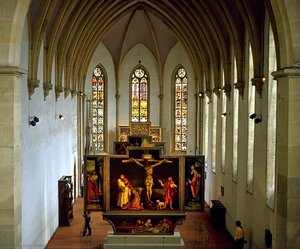
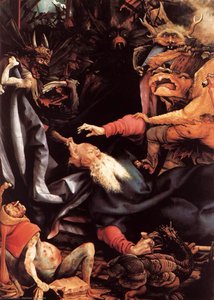
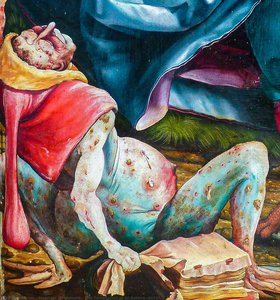
The painting’s inclusion within the larger Isenheim Altarpiece adds another layer of complexity. The altarpiece was originally intended for the Hospital of St. Anthony in Alsace, a facility dedicated to treating skin diseases – particularly ergotism (St. Anthony's Fire), a debilitating illness characterized by hallucinations and delirium. The imagery within the altarpiece reflects this context; scenes depicting demonic torment are juxtaposed with representations of Christ’s suffering and resurrection, offering both comfort and hope to patients battling physical and spiritual affliction. ‘St Paul (detail)’ serves as a poignant reminder of the enduring power of faith in the face of adversity.
A Masterpiece of Emotional Intensity
What truly elevates ‘St Paul (detail)’ is its ability to evoke a profound sense of empathy and contemplation. Grünewald doesn’t offer a heroic portrait; instead, he presents us with a vulnerable man grappling with his faith, his past, and the challenges that lie ahead. Paul's gesture—a hand raised in supplication or perhaps offering— invites us to share in his struggle, prompting reflection on our own beliefs and values. The painting’s somber atmosphere and masterful execution combine to create an experience that is both deeply moving and intellectually stimulating. It’s a testament to Grünewald’s genius – a window into the soul of a man who profoundly shaped the course of Christian history.
Additional Research:
Related Artworks
Artist Biography
Matthias Grünewald: Life and Legacy
Early Life and Artistic Beginnings
Matthias Grünewald, born Mathis Gothart Neithardt around 1470-1475 in Würzburg, Germany, was a pivotal figure of the German Renaissance. Despite living during a period increasingly influenced by Italian Renaissance ideals, Grünewald remained deeply rooted in the artistic traditions of late medieval Central Europe. Details about his early life are scarce, but it’s known he received training as an artist, likely within local workshops.
Artistic Development and Influences
Grünewald's artistic development was shaped by the prevailing Northern European traditions of realism, emotional intensity, and detailed observation. His work shows influences from artists like Albrecht Dürer and Martin Schongauer, but he forged a unique path characterized by dramatic expression and vivid color. He wasn’t directly involved with the humanist circles prevalent in Italy; instead, his art served primarily religious purposes, reflecting the spiritual anxieties of his time.
Major Works and Artistic Style
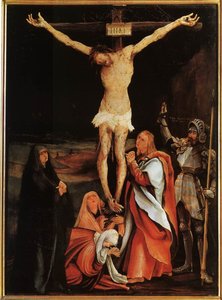
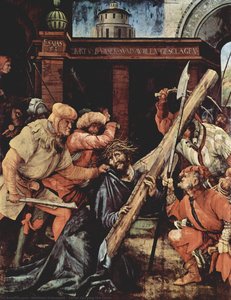
- The Isenheim Altarpiece (1512-1516): This masterpiece, housed at the Musée d'Unterlinden in Colmar, is considered Grünewald’s magnum opus. It depicts scenes from the life of Christ with harrowing realism, particularly focusing on suffering and redemption.
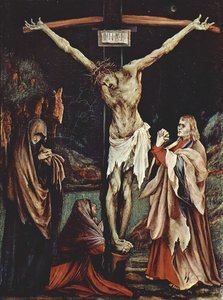
- The Crucifixion (c. 1502-1503): An early work demonstrating his developing style, showcasing intense emotion and anatomical detail.
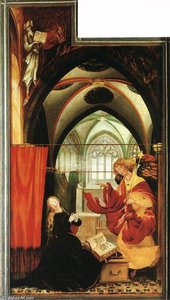
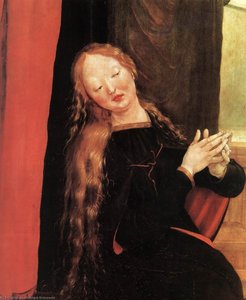
- Virgin of the Annunciation (1512-14): A study for the Isenheim Altarpiece, revealing his meticulous planning process.
- Moses (1511): A drawing highlighting Grünewald’s skill in capturing expressive figures and dramatic poses.
Grünewald's style is distinguished by:
- Dramatic Composition: He employed dynamic arrangements to heighten emotional impact.
- Vivid Color Palette: His use of intense, often contrasting colors created a powerful visual experience.
- Realistic Depiction of Suffering: Grünewald didn’t shy away from portraying the physical and emotional pain associated with religious narratives.
- Expressive Figures: His figures are imbued with strong emotions and psychological depth.
Historical Significance and Legacy
Grünewald's work stands as a testament to the enduring power of medieval artistic traditions in Germany during the Renaissance. He bridged the gap between the late Gothic style and the emerging Renaissance, creating a unique visual language that resonated with his contemporaries. His influence can be seen in later German artists who continued to explore themes of religious fervor and emotional intensity. While largely forgotten for centuries after his death in 1528, Grünewald experienced a revival in the 19th century, and today he is recognized as one of the most important painters of the German Renaissance. His art continues to captivate viewers with its raw emotion, technical brilliance, and profound spiritual depth.
Further Exploration
Discover more about Matthias Grünewald’s life and works at: ArtsDot
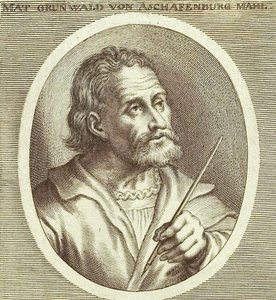
matthias grünewald
1480 - 1528 , Germany
Quick Facts
- Birth Date: c. 1470–1475
- Birth Place: Würzburg, Germany
- Death Date: 1528
- Movement: German Renaissance, Late Medieval
- Name: Matthias Grünewald
- Nationality: German
- Notable Works: Isenheim Altarpiece, The Crucifixion
Related Articles
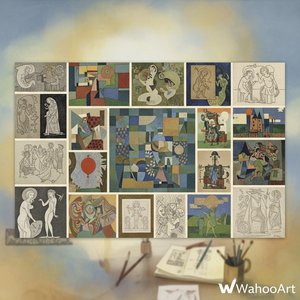
Paul Klee's Masterpieces: Explore 25 Iconic Paintings & Prints | ArtsDot
Journey through Paul Klee's 25 most iconic paintings & prints. Explore his abstract style, Bauhaus influence, and vibrant color palettes. Find museum-quality art reproductions & decor ideas at ArtsDot.com. Discover all masterpieces online.

Cézanne's Masterpieces: 25 Iconic Artworks to Transform Your Space
Journey through 25 iconic artworks by Paul Cézanne – a master of Impressionism and Post-Impressionism. Explore his landscapes, still lifes, and the stories behind these timeless masterpieces. Discover museum-quality reproductions & curated decor at ArtsDot.com.

Oil on Canvas: A Historical & Technical Exploration of a Timeless Artistic Medium
Explore the rich history & enduring techniques of oil painting on canvas. Discover the science behind its longevity, conservation practices, and contemporary relevance. Expert insights for art enthusiasts.

El Greco's Masterpieces: Explore 25 Iconic Paintings & Spiritual Visions | ArtsDot
Journey through El Greco's 25 most iconic paintings! Explore the spiritual depth & dramatic beauty of this Spanish Renaissance master. Discover art history, techniques & find museum-quality reproductions for your home at ArtsDot.com.

The Enduring Legacy of Oil on Canvas: Technique, History & Aesthetic Impact
Explore the rich history & techniques of oil painting – from Renaissance masters to Impressionism. Discover pigments, layering methods, and why this timeless medium endures. Expert insights for artists & art enthusiasts.