 Preview
 Send
Send Share
Share
 Details

 Download
 Similars
 X-Ray
X-Ray Diaporama
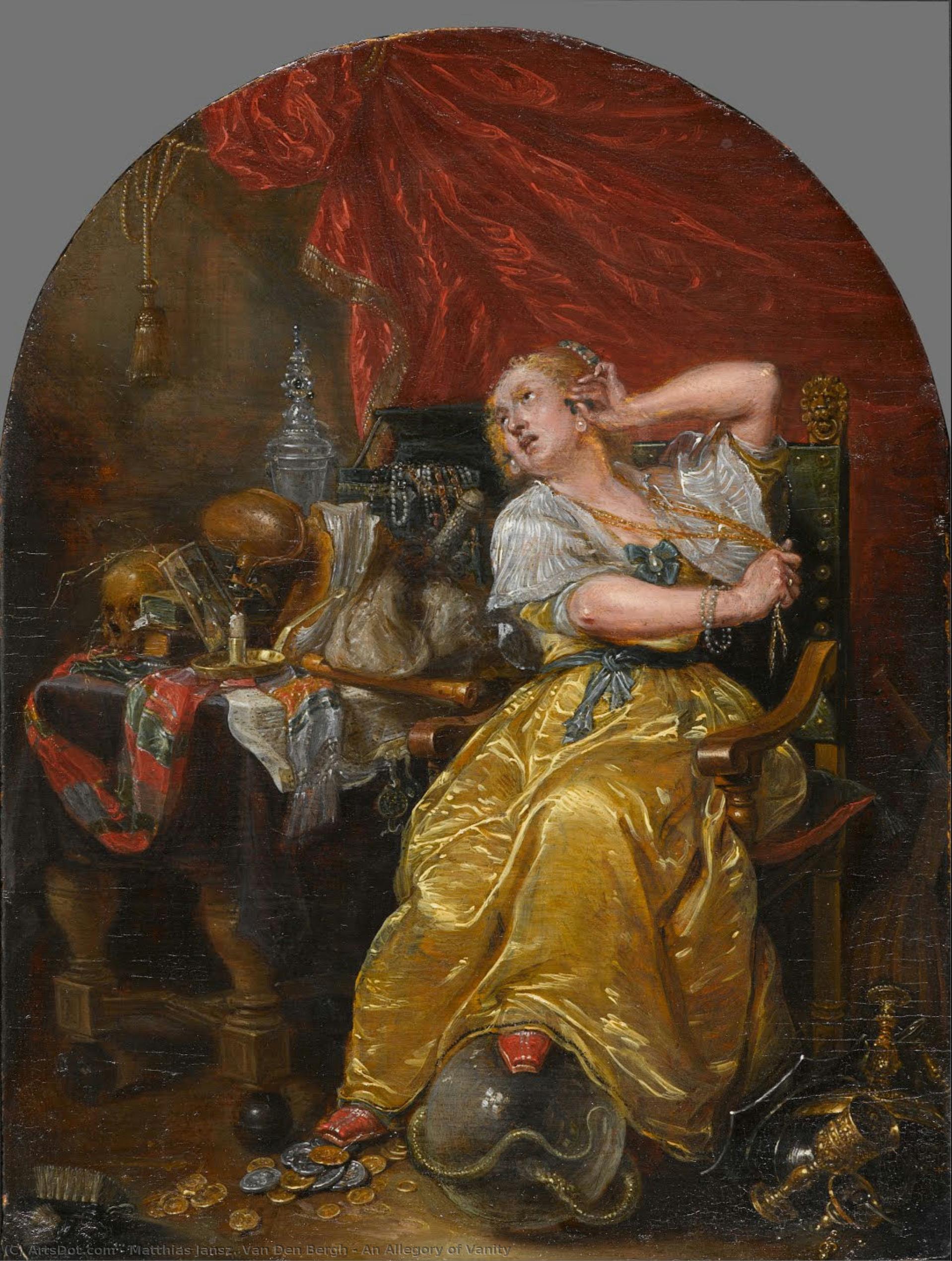
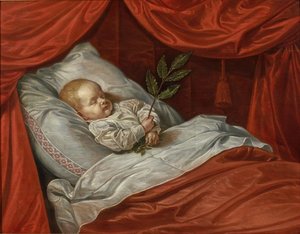
An Allegory of Vanity
 15.0 x 20.0 cm
 Read More
Hand Made Oil Reproduction
Hand-painted oil on canvas in your size and frame, made to order by our artists. ( Buy Print Buy Image)




































Pick from our preset sizes that match the artwork's original proportions.

You may enter your own dimensions to fit a specific frame or space. If your selected size does not match the original image's proportions, we will either crop the artwork or extend the painting with additional hand-painted elements. A digital mockup will be sent for your approval before production begins.
Please note that the on-screen preview does not reflect the actual cropping or extension. Only the mockup will accurately show the final composition.
While custom sizes are available, we recommend selecting a dimension from the predefined list to preserve the original proportions.
After order, ArtsDot.com team will email client for instructions and provide a mockup preview
Worldwide Delivery () in 3/4 weeks instead of standard 5 weeks. (26 August). No compromise on quality.

Free Worldwide Express Shipping

High-Quality Linen Canvas

Full Shipping Insurance

Customs Tax Refund Guarantee

True Color Matching Guarantee

60-Day Return Policy (Defects Only)

100% Money-Back Guarantee

Bulk Discount Offer
 Glass option is only available in size under 110 CM

An Allegory of Vanity
Reproduction Medium
Reproduction Size
-


Total Price
$ 263
Related Artworks








Artist Biography
Matthias Jansz. van den Bergh: A Pupil of Rubens and a Master of the Dutch Golden Age
Born in Ypres, Belgium, in 1618, Matthias Jansz. van den Bergh emerged as a significant figure within the vibrant artistic landscape of the Dutch Golden Age. His early life was deeply intertwined with the legacy of his father, Jan van den Bergh, a painter serving under the renowned Rubens in Ypres – an environment that undoubtedly shaped young Matthias’s nascent talent and instilled a profound appreciation for classical composition and dramatic lighting. This familial connection to a prominent artist provided him with an invaluable foundation, setting him on a trajectory toward a distinguished career.
Van den Bergh's formative years were spent largely within the workshop of Peter Paul Rubens in Antwerp from 1630 to 1640. This period proved transformative, exposing him to the master’s dynamic style – characterized by exuberant color palettes, theatrical poses, and a masterful command of anatomy. The influence of Rubens is undeniably pervasive throughout van den Bergh's oeuvre, particularly evident in his use of vibrant hues, dramatic diagonals, and a penchant for depicting figures within complex, layered compositions. It was during this time that he honed his skills, learning not just technique but also the very philosophy behind creating compelling visual narratives.
Early Works and Guild Membership
Following his apprenticeship with Rubens, van den Bergh established himself as an independent artist in Leiden from 1648 to 1651. This period saw him producing a diverse range of works, including portraits, military scenes, and allegorical compositions – subjects that were highly sought after by the burgeoning merchant class of the Dutch Republic. His early paintings demonstrate a growing confidence and stylistic maturity, reflecting both his inherited artistic heritage and the lessons learned from Rubens.
In 1646, van den Bergh joined the Alkmaar Guild of St. Luke, a significant milestone signifying his acceptance as a professional artist within the established artistic community. This membership provided him with legitimacy and access to commissions, further solidifying his position in the art market. His work during this time is characterized by a refined technique and an increasingly sophisticated understanding of perspective and spatial relationships.
A Style Defined by Rubensian Influence and Dutch Realism
Van den Bergh’s artistic style is a compelling synthesis of Flemish Baroque principles – particularly those championed by Rubens – and the emerging realism that defined much of Dutch painting. He skillfully employed oil on panel, a common medium during the Dutch Golden Age, to achieve rich textures and luminous colors. His compositions are often dynamic and theatrical, mirroring Rubens' penchant for dramatic gestures and expressive figures. However, unlike Rubens’s idealized forms, van den Bergh’s subjects retain a palpable sense of humanity – their faces bearing subtle expressions of emotion and their bodies rendered with meticulous anatomical detail.
A key element of his style is the use of historical allegories, a popular theme during the Dutch Golden Age. These works frequently depicted moral or philosophical concepts through carefully constructed scenes featuring mythological figures, biblical narratives, or representations of virtue and vice. Van den Bergh’s allegorical paintings are not merely decorative; they serve as visual treatises on human values and societal ideals.
Notable Works and Legacy
Among van den Bergh's most celebrated works are portraits capturing the likenesses of prominent figures, dynamic scenes depicting soldiers in battle, and elaborate historical allegories that offer insights into the intellectual currents of his time. His paintings are held in prestigious collections such as the Stedelijk Museum Amsterdam and the Kremer Collection, providing enduring access to his artistic vision.
Matthias Jansz. van den Bergh died in Alkmaar in 1687, leaving behind a substantial body of work that continues to be admired for its technical skill, expressive power, and engagement with the cultural values of the Dutch Golden Age. His legacy as a talented artist who skillfully blended Flemish Baroque influences with Dutch realism ensures his place among the most significant figures of this pivotal period in art history.
matthias jansz. van den bergh
1618 - 1687 , Belgium
Quick Facts
- Artistic Movement Or Style: Dutch Golden Age
- Artists Or Movements Influenced By This Artist: ['Rubens']
- Artists Who Influenced This Artist: ['Rubens']
- Date Of Birth: 1618, Ypres, Belgium
- Date Of Death: 1687
- Full Name: Matthias Jansz van den Bergh
- Nationality: Dutch
- Notable Artworks:
- Portraits
- Soldiers
- Allegories
- Place Of Birth: Ypres, Belgium