

 Preview
 Send
Send Share
Share
 Details

 Download
 Similars
 X-Ray
X-Ray Diaporama
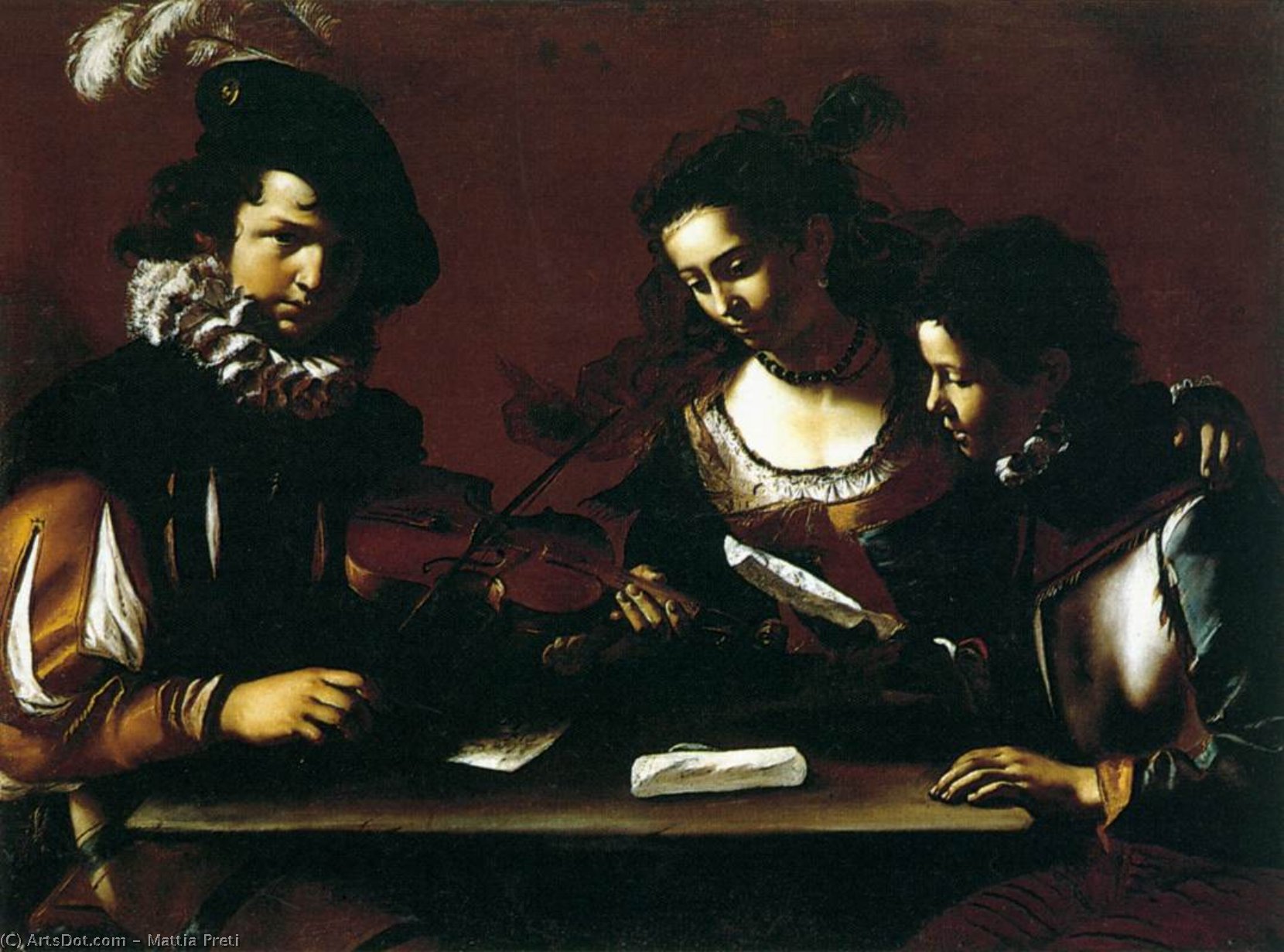
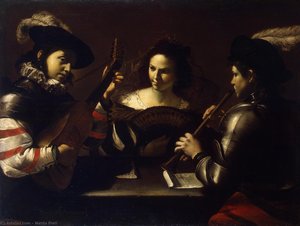
The Concert
 Oil On Canvas
- WallArt
- Baroque
 1630
1630 107.0 x 145.0 cm
 Museo Thyssen-Bornemisza
 Read More
Purchase a high-resolution, enhanced digital image, far superior to the online preview.
Each file is meticulously prepared by our in-house specialists using advanced tools and expert manual retouching. We ensure every image has exceptional clarity, precise color accuracy, and fine detail.
The final file is delivered via email within 72 hours, optimized for immediate use in professional, editorial, and print environments. This is the same quality trusted by top-tier design studios, publishers, and galleries.
Digital Image
Download a high-resolution file for personal display, printing, and creative projects. ( Buy Print Buy Hand Made Painting)
Included in Every Digital Image Order
Expert Digital Delivery, Guaranteed
When you choose ArtsDot.com, you're not just getting an image - you're receiving a professionally enhanced digital artwork, crafted with precision and backed by a satisfaction guarantee. Here's everything that comes with your order, automatically:

Fast Email Delivery
Your high-resolution digital image file will be emailed to you within 72 hours of ordering - ready for immediate use.

AI-Enhanced Digital File
Your artwork is professionally optimized using advanced AI tools and manual editing, ensuring maximum detail, clarity, and color accuracy.

Free Lifetime Re-Delivery
Accidentally deleted or lost your file? No worries - we'll resend it to you anytime, free of charge.

No Import Fees - Ever
Enjoy your artwork instantly with zero customs, duties, or delivery fees - digital downloads are always tax-free.

Color Accuracy Guarantee
We ensure your digital image reflects the original colors as closely as possible using professional tools and color management.

60-Day Satisfaction Guarantee
If you're not satisfied with your digital image, we'll revise it or refund 100% within 60 days - no questions asked.

100% Money-Back Guarantee
Not satisfied? Get a full refund within 60 days of receiving your digital file - no questions asked.

Bulk Order Discounts
Buy 3 images, save 10% - Buy 5, save 15% - Buy 10+, save 20%. Great for creative projects, galleries, and agencies.
Collectible Description
Mattia Preti’s “The Concert”: A Baroque Drama of Youth and Sound
Mattia Preti’s “The Concert,” painted in 1630, isn't merely a depiction of musicians; it’s a meticulously crafted tableau brimming with the drama, intensity, and opulent color characteristic of the High Renaissance and early Baroque periods. This oil painting, now residing within the Hermitage Museum in Saint Petersburg, offers a captivating glimpse into the aristocratic life of 17th-century Malta, where Preti spent much of his prolific career. The scene unfolds within a richly appointed interior – dark walls, heavy drapery, and an abundance of decorative elements—creating a space that feels both intimate and grand, mirroring the importance placed on music and social gatherings during this era.
At the heart of the composition stands a young man, likely a student or aspiring musician, passionately playing the violin. His posture is animated, his face alight with concentration, and his gestures convey an intense engagement with his instrument. Around him gather other figures: a woman seated at a table, seemingly providing refreshments; a young boy attentively listening; and a gentleman observing from a corner. Each figure possesses a distinct personality and contributes to the overall dynamism of the scene. Preti masterfully uses gesture and expression to communicate not just what is happening but also *how* it’s being felt – the joy of music, the anticipation of performance, and perhaps even a touch of youthful exuberance.
The Tenebrist Technique: Light and Shadow as Dramatic Tools
Preti's signature style—often described as “tenebrism”—is powerfully evident in "The Concert." This technique, heavily influenced by Caravaggio, relies on stark contrasts between intensely illuminated areas and deep shadows. The figures are bathed in a dramatic light source, likely originating from an unseen window or lantern, which highlights their faces, clothing, and instruments with remarkable clarity. This strong contrast not only creates a sense of theatricality but also draws the viewer’s eye directly to the focal point – the violinist – while simultaneously enveloping the entire scene in a mood of mystery and intrigue.
The artist's skillful manipulation of light and shadow isn’t simply an aesthetic choice; it serves to heighten the emotional impact of the painting. The deep shadows suggest hidden depths, secrets, and perhaps even a hint of melancholy, while the bright highlights emphasize the vitality and energy of the musicians. Notice how Preti uses chiaroscuro to sculpt the forms of the figures, giving them a palpable sense of volume and presence. The meticulous rendering of textures—the velvet upholstery, the polished wood of the table, the shimmering strings of the violin—further enhances the realism and immersive quality of the scene.
Symbolism and Social Context
"The Concert" is more than just a portrait; it’s a carefully constructed symbol reflecting the values and social dynamics of 17th-century Malta. Music held a prominent place in aristocratic society, serving as a means of entertainment, diplomacy, and demonstrating wealth and status. The gathering depicted here represents a refined social occasion—a celebration of youth, talent, and artistic appreciation. The presence of the young musicians suggests an investment in the future, while the attentive gentleman hints at the patronage that supported their endeavors.
Furthermore, the painting’s setting – a richly decorated interior – speaks to the importance of material possessions and luxury within this social class. The abundance of furniture, fabrics, and decorative elements underscores the wealth and power of those who hosted such gatherings. The overall composition can be interpreted as an allegory for harmony—the harmonious blend of music, youth, and social interaction—a concept highly valued during the Baroque period.
A Masterpiece in Reproduction: Bringing Preti’s Vision to Life
ArtsDot offers meticulously crafted hand-painted reproductions of “The Concert,” allowing art lovers to experience the full beauty and drama of this iconic masterpiece. Our skilled artisans replicate Preti's signature tenebrist technique, capturing the nuances of light, shadow, and color with exceptional precision. Each reproduction is created using archival-quality materials, ensuring its longevity and preserving the vibrant details of the original painting for generations to come. Whether you’re seeking a stunning addition to your home or office décor or a unique gift for an art enthusiast, a ArtsDot reproduction of “The Concert” provides a faithful and captivating representation of this Baroque gem.
Related Artworks
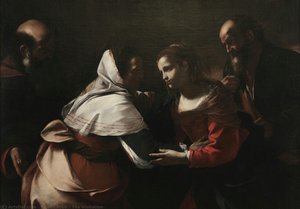
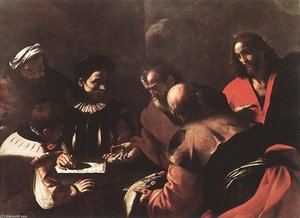
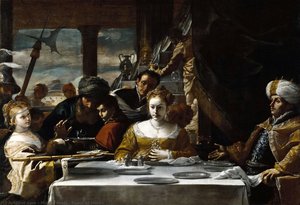
Artist Biography
A Calabrian Knight of the Baroque
Mattia Preti, known as Il Cavalier Calabrese – the Calabrian Knight – stands as a pivotal figure in 17th-century Italian Baroque painting. Born in Taverna, Calabria, on February 24, 1613, his artistic journey was one of dynamic evolution, absorbing diverse influences and culminating in a uniquely expressive style that left an indelible mark on the art world, particularly in Malta where he would spend much of his later life. Preti’s early training began under Giovanni Battista Caracciolo, a painter deeply rooted in the Caravaggist movement. This foundational exposure instilled within him a profound understanding of dramatic chiaroscuro – the intense interplay of light and shadow – and a commitment to realistic depiction that would remain hallmarks of his work throughout his career. Before 1630, he joined his brother Gregorio in Rome, immersing himself in the artistic ferment of the city and studying the masters who defined the era: Caravaggio, Guercino, Rubens, Guido Reni, and Giovanni Lanfranco. This period was crucial, shaping not only his technical skills but also his aesthetic sensibilities.Forging a Dynamic Style
Preti’s artistic development wasn't merely imitation; it was a synthesis of influences, skillfully woven into a style distinctly his own. While initially steeped in Caravaggism, he gradually moved beyond its strict confines, embracing the dynamism and emotional intensity that characterized the High Baroque. His time in Naples further refined this evolution, exposing him to the vibrant work of Luca Giordano. This period saw Preti’s canvases swell with energetic movement, complex compositions, and a heightened sense of drama. He masterfully employed dramatic contrasts of light and shadow, inherited from Caravaggio, not simply as a technical device but as a means of intensifying emotional impact and guiding the viewer's eye. His figures are imbued with palpable emotion, conveyed through expressive faces and dynamic body language. This ability to evoke powerful feelings – piety, anguish, ecstasy – became a defining characteristic of his oeuvre. He wasn’t content merely to depict scenes; he sought to *animate* them, breathing life into biblical narratives and religious iconography.Commissions and Masterpieces Across Italy
Mattia Preti's talent quickly garnered recognition, leading to a series of significant commissions throughout Italy. Early in his career, he created impressive fresco cycles for Roman churches like Sant’Andrea della Valle and San Carlo ai Catinari, demonstrating an aptitude for large-scale decorative painting. His work at the church of San Biagio in Modena showcased his ability to adapt his style to different architectural settings. However, some of his most ambitious – though sadly lost – works were the frescoes he painted on seven city gates in Naples depicting the Virgin or saints delivering people from the plague. Though only sketches remain today, they testify to the scale and impact of these monumental creations. These commissions weren’t simply about fulfilling a patron's request; they were opportunities for Preti to engage with the religious and cultural life of the communities he served, imbuing his art with meaning and purpose.The Maltese Zenith: St. John’s Co-Cathedral
It was in Malta, however, that Mattia Preti reached the pinnacle of his artistic achievement. Appointed a Knight of the Order of St. John in 1660, he embarked on a transformative project: the complete redecoration of the interior of St. John’s Co-Cathedral in Valletta. This undertaking – arguably his most significant legacy – involved an astonishing series of paintings depicting the life and martyrdom of Saint John the Baptist. The sheer scale of the project is breathtaking; Preti essentially created a visual narrative that enveloped the viewer, immersing them in the story of the saint. The opulent Baroque setting provided the perfect canvas for his dramatic style, and the resulting artwork cemented his reputation as one of Europe’s leading painters. His work at St. John's wasn't merely decorative; it was an act of devotion, a testament to his faith, and a powerful expression of the Order’s religious identity.A Lasting Legacy
Mattia Preti continued to receive commissions from across Europe following his success in Malta, solidifying his position as a leading figure in Italian Baroque art. He died in 1699, leaving behind a rich artistic legacy that continues to inspire and captivate audiences today. His masterful use of light and shadow, dynamic compositions, and ability to convey intense emotion remain hallmarks of his style. His contributions are preserved in museums such as the Capodimonte Museum in Naples, and through reproductions made available by platforms like ArtsDot.com, ensuring that his art continues to reach new generations. The enduring impact of Preti’s work is perhaps most vividly felt within the walls of St. John's Co-Cathedral, a breathtaking testament to his artistic genius and unwavering dedication to the Baroque aesthetic. Il Cavalier Calabrese truly earned his title, not only as a knight but as a master painter who illuminated the world with his vision.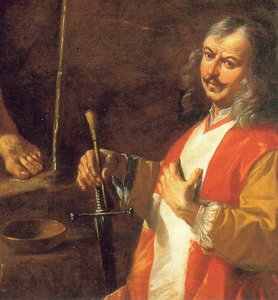
Mattia Preti
1613 - 1699 , Italy
Quick Facts
- Artistic Movement Or Style: Baroque
- Artists Or Movements Influenced By This Artist:
- Stringa
- Mola
- Artists Who Influenced This Artist:
- Caravaggio
- Guercino
- Rubens
- Reni
- Lanfranco
- Giordano
- Date Of Birth: Feb 24, 1613
- Date Of Death: 1699
- Full Name: Mattia Preti
- Nationality: Italian
- Notable Artworks:
- Tribute Money
- Absalom's Feast
- St John Reproaching Herod
- Place Of Birth: Taverna, Italy

