 Preview
 Send
Send Share
Share
 Details

 Download
 Similars
 X-Ray
X-Ray Diaporama
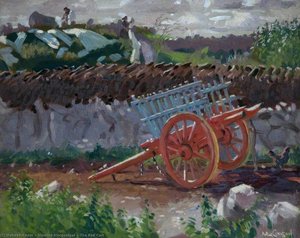
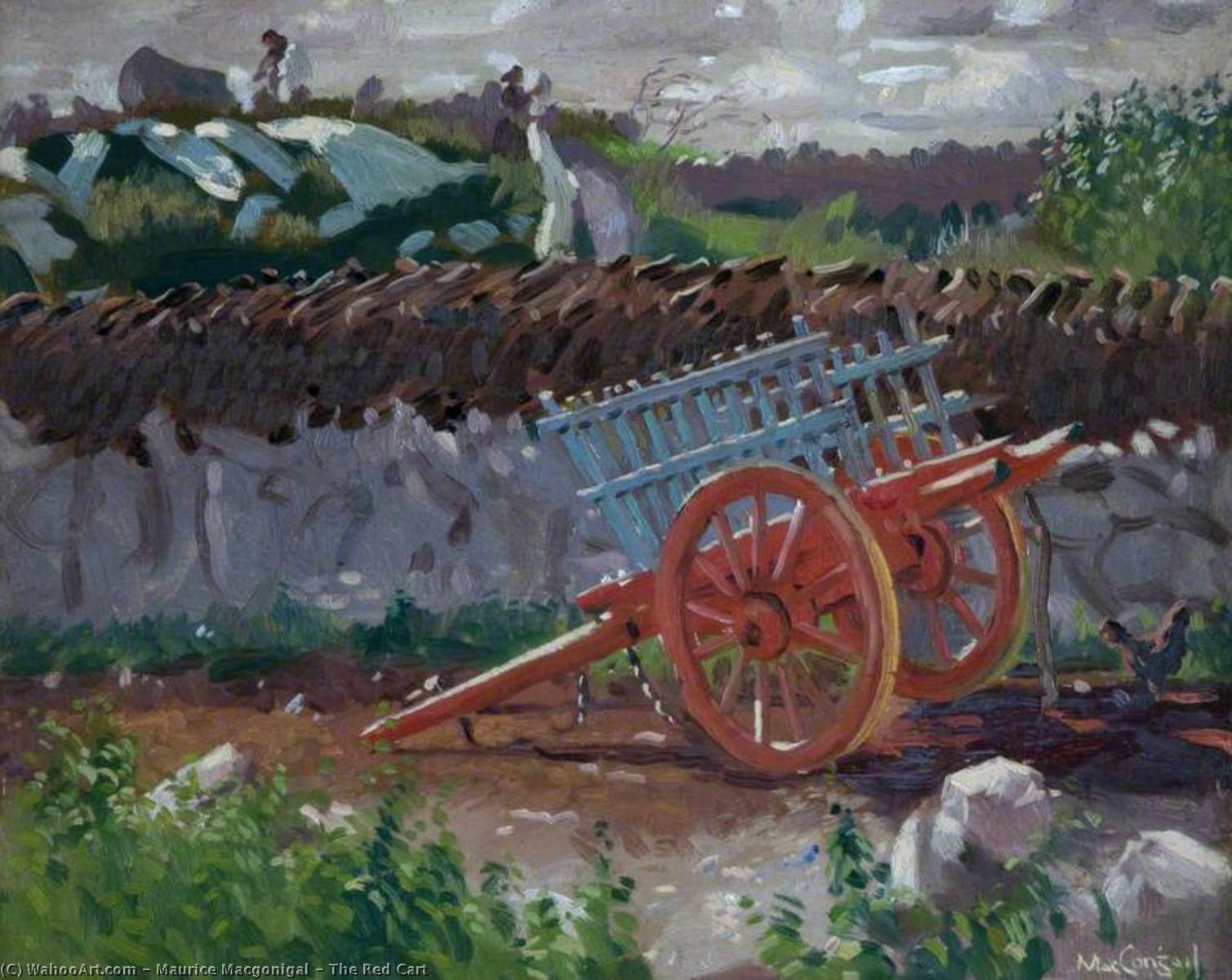
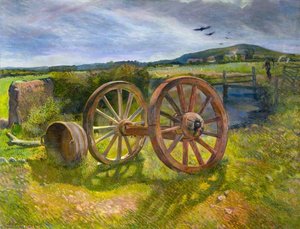
The Red Cart
 1947
1947 31.0 x 40.0 cm
 Read More
Giclée / Art Print
Museum-quality giclée or canvas print with fast production and flexible finish options. ( Buy Hand Made Painting Buy Image)




































Pick from our preset sizes that match the artwork's original proportions.

You may enter your own dimensions to fit a specific frame or space. If your selected size does not match the original image's proportions, we will either crop the artwork or extend the image with a mirrored or solid-fill edge. A digital mockup will be sent for your approval before production begins.
Please note that the on-screen preview does not reflect the actual cropping or extension. Only the mockup will accurately show the final composition.
While custom sizes are available, we recommend selecting a dimension from the predefined list to preserve the original proportions.
Worldwide Delivery () in 2 weeks instead of standard 4/5 weeks. (18 August)

Free Worldwide Express Shipping

High-Quality Linen Canvas

Full Shipping Insurance

Customs Tax Refund Guarantee

True Color Matching Guarantee

60-Day Return Policy (Defects Only)

100% Money-Back Guarantee

Bulk Discount Offer
 Glass option is only available in size under 110 CM

The Red Cart
Giclée / Art Print
Reproduction Size
-


Total Price
$ 63
Collectible Description
Composition and Style
The composition of The Red Cart is characterized by its use of earthy tones, with the exception of the bold red cart that stands out against the natural backdrop. The presence of the stone wall adds an element of architectural interest to the scene, while the people scattered around the area create a sense of movement and energy. Macgonigal's use of color and light is reminiscent of other notable Irish artists, such as Jack Butler Yeats and Paul Henry.Similar Works
Other notable works by Irish artists can be found at the Ulster Museum, including Jack Butler Yeats' Untitled (Two Jockeys on Horses, Leaping a Stone Wall) and Paul Henry's A Man of the Hills. These pieces showcase the unique style and perspective of Irish artists during this period.- Gilbert Spencer's Little Milton near Garsington is another example of rural Irish life, available at ArtsDot.com
- For more information on Maurice Macgonigal and his works, visit ArtsDot.com
The Castle Ward Museum in Ireland is another notable destination for art lovers, with its unique architecture and stunning natural surroundings. For more information on the museum and its collections, visit ArtsDot.com.
Related Artworks
Artist Biography
A Life Etched in Landscape: The Story of Maurice MacGonigal
Maurice MacGonigal, a name perhaps less immediately recognizable than some of his contemporaries, nevertheless occupies a vital and compelling space within the narrative of 20th-century Irish art. Born in Ireland (the precise details of which remain somewhat elusive, contributing to the intriguing mystique surrounding the artist), MacGonigal’s life was one deeply interwoven with the political and social currents of his time, a fact that profoundly shaped both his subject matter and his artistic approach. He wasn't merely *recording* Ireland; he was actively engaging with its struggles, its beauty, and its evolving identity. His journey began within the vibrant, though often turbulent, Dublin art scene, where he received formal training and quickly established himself as a gifted landscape and portrait painter. Early influences included the Impressionistic tendencies filtering into Europe, but MacGonigal never fully succumbed to any single stylistic dogma. Instead, he forged his own path, blending realism with an expressive use of color and light that captured the very *essence* of the Irish countryside and urban life.From Studio Walls to Revolutionary Roads
MacGonigal’s artistic development wasn't confined to the quiet contemplation of studio work. A fascinating, often overlooked aspect of his biography reveals a period of intense political involvement during the Irish War of Independence. He became deeply committed to the cause of Irish freedom and served as an IRA dispatch rider, a role that placed him directly in harm’s way and undoubtedly informed his later artistic vision. This experience imbued his work with a sense of urgency and authenticity rarely found in more detached depictions of the era. It's impossible to view his landscapes – particularly those depicting rural Ireland – without sensing a deep connection to the land itself, a reverence for its people, and an understanding of their hardships. He was also associated with the Radical Club, a hub of intellectual and artistic ferment that fostered a spirit of rebellion and national consciousness. His time within this circle further solidified his commitment to using art as a vehicle for social commentary and political expression. This period wasn’t simply a detour from his artistic pursuits; it became inextricably linked to them, adding layers of meaning and symbolism to his canvases.The Aran Islands and the Spirit of Place
While MacGonigal painted scenes throughout Ireland, he developed a particularly strong affinity for the Aran Islands. These starkly beautiful islands, with their rugged coastlines, ancient stone forts, and resilient communities, became a recurring motif in his work. He wasn’t interested in romanticizing the islands; instead, he sought to capture the raw beauty of the landscape *and* the dignity and hardship of island life. His depictions of Aran fishermen, farmers, and families are imbued with a quiet empathy and respect. The influence of Harry Clarke's studio is also notable during this period, suggesting a shared interest in narrative detail and expressive figuration. MacGonigal’s approach to portraiture, even within his landscapes, reveals a keen understanding of human psychology and the power of gesture. He wasn’t merely painting *people* in a landscape; he was painting people *of* the landscape, inextricably connected to their environment and their history.A Legacy Forged in Realism and Resistance
MacGonigal's artistic achievements lie not in groundbreaking stylistic innovation but in his masterful execution of realism combined with a deeply felt emotional connection to his subject matter. He was a skilled technician, capable of capturing the nuances of light and shadow, the texture of stone and earth, and the subtle expressions on human faces. However, it’s his ability to imbue these technical skills with meaning that truly sets him apart. His Dublin cityscapes offer a fascinating glimpse into the urban life of early 20th-century Ireland, capturing both its vibrancy and its social inequalities. He was a member of the Royal Hibernian Academy (RHA), a testament to his standing within the Irish art establishment, but he remained fiercely independent in his artistic vision.- Key Characteristics: Realistic depictions with expressive use of color and light.
- Subject Matter: Irish landscapes, cityscapes, portraits, scenes of rural life.
- Influences: Impressionism, Harry Clarke studio, the social and political climate of Ireland.