

 Preview
 Send
Send Share
Share
 Details

 Download
 Similars
 X-Ray
X-Ray Diaporama
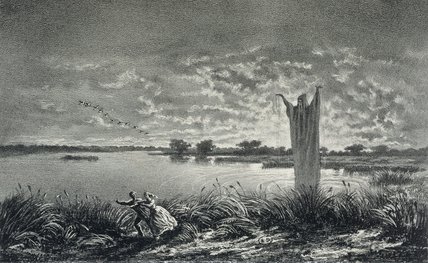
The Monk Of The Etangs-brisses
 Read More
Purchase a high-resolution, enhanced digital image, far superior to the online preview.
Each file is meticulously prepared by our in-house specialists using advanced tools and expert manual retouching. We ensure every image has exceptional clarity, precise color accuracy, and fine detail.
The final file is delivered via email within 72 hours, optimized for immediate use in professional, editorial, and print environments. This is the same quality trusted by top-tier design studios, publishers, and galleries.
Digital Image
Download a high-resolution file for personal display, printing, and creative projects. ( Buy Print Buy Hand Made Painting)
Included in Every Digital Image Order
Expert Digital Delivery, Guaranteed
When you choose ArtsDot.com, you're not just getting an image - you're receiving a professionally enhanced digital artwork, crafted with precision and backed by a satisfaction guarantee. Here's everything that comes with your order, automatically:

Fast Email Delivery
Your high-resolution digital image file will be emailed to you within 72 hours of ordering - ready for immediate use.

AI-Enhanced Digital File
Your artwork is professionally optimized using advanced AI tools and manual editing, ensuring maximum detail, clarity, and color accuracy.

Free Lifetime Re-Delivery
Accidentally deleted or lost your file? No worries - we'll resend it to you anytime, free of charge.

No Import Fees - Ever
Enjoy your artwork instantly with zero customs, duties, or delivery fees - digital downloads are always tax-free.

Color Accuracy Guarantee
We ensure your digital image reflects the original colors as closely as possible using professional tools and color management.

60-Day Satisfaction Guarantee
If you're not satisfied with your digital image, we'll revise it or refund 100% within 60 days - no questions asked.

100% Money-Back Guarantee
Not satisfied? Get a full refund within 60 days of receiving your digital file - no questions asked.

Bulk Order Discounts
Buy 3 images, save 10% - Buy 5, save 15% - Buy 10+, save 20%. Great for creative projects, galleries, and agencies.
Related Artworks




Artist Biography
Sanford Robinson Gifford: A Master of Light and the Hudson
Sanford Robinson Gifford (1823–1880) stands as a pivotal figure in American art, often considered the second-generation leader of the Hudson River School. His legacy rests not on revolutionary innovation but rather on a profound understanding of light, atmosphere, and the evocative power of the natural world—qualities he honed through meticulous observation and a deep connection to the landscapes of upstate New York. Born in Greenfield, Saratoga County, New York, Gifford’s early life was marked by a shift from his family's iron foundry business to a burgeoning artistic passion. This transition led him to study under Henry Ary, a local artist who instilled in him an appreciation for capturing the subtleties of light and shadow—a foundation that would shape his entire career. Gifford’s formal training began at Brown University, but he soon recognized that his true calling lay in pursuing art independently. He moved to Hudson, New York, immersing himself in the artistic community already established by Thomas Cole and Asher B. Durand, the movement's founding fathers. This environment proved crucial; Gifford absorbed the principles of the Hudson River School—a focus on depicting American landscapes with a romantic sensibility, emphasizing sublime beauty and spiritual connection—while simultaneously developing his own distinctive style. Unlike Cole’s dramatic compositions and emphasis on grand vistas, Gifford favored quieter, more intimate scenes, often featuring smaller woodlands, streams, and glimpses of distant mountains. His paintings are characterized by a remarkable sensitivity to light, particularly the way it filters through foliage, creating dappled patterns and shimmering effects. A defining moment in Gifford's artistic development occurred during his extended travels throughout Europe between 1855 and 1857. Inspired by the works of J.M.W. Turner, particularly his atmospheric landscapes, Gifford sought to emulate Turner’s mastery of light and color. He spent time studying in Düsseldorf, Germany, where he encountered a community of American artists pursuing their artistic education—a network that included William Trost Richards and Frederic Church. This European sojourn profoundly influenced Gifford's technique, leading him to experiment with looser brushwork and brighter palettes. He returned to America with a renewed sense of purpose and a commitment to capturing the essence of the Hudson Valley’s light in his paintings. Gifford’s artistic output during the Civil War years is particularly noteworthy. He served as a private in the 29th New York Volunteer Infantry, and this experience profoundly shaped his perspective on the American landscape. His wartime sketches and paintings—such as *Gorge in the Mountains (Kauterskill Clove)* (1862)—reflect a heightened awareness of nature’s power and beauty amidst the turmoil of conflict. These works demonstrate a remarkable ability to convey both the grandeur and vulnerability of the natural world, often juxtaposing scenes of devastation with glimpses of serene landscapes. Throughout his career, Gifford produced an extensive body of work—over 600 paintings—that showcase his mastery of landscape painting. His subjects ranged from grand vistas to intimate woodland scenes, but he consistently prioritized capturing the fleeting effects of light and atmosphere. His works are held in prestigious collections across the United States, including the Metropolitan Museum of Art, the Smithsonian American Art Museum, and the Toledo Museum of Art. Sanford Robinson Gifford’s legacy endures as a testament to the power of observation, sensitivity, and artistic vision—a true master of capturing the soul of the Hudson Valley.William Oliver: A London-Based Genre Painter
William Oliver Williams (1823–1901) was an English figurative and genre artist based in London who specialized in paintings of young women. He is often mistakenly referred to as ‘William Oliver the Younger’ or ‘William Oliver II’, despite not being related to another artist with the same name, William Oliver (1804–1853). Born in Worcester, England, in 1823, he was the son of surgeon William Williams and Jane Williams. He married Jane Elizabeth Hughes in St Pancras, London, in 1852. Oliver’s artistic journey began with an apprenticeship as a goldsmith before transitioning to painting. He enrolled at the Royal Academy Schools of the Royal Academy of Arts on July 18, 1848, recommended by Thomas Clark from Birmingham. He later served as an assistant master and headmaster at the Government School of Design in Birmingham under Thomas Clarke (1846–1851). His artistic training encompassed a range of techniques and styles, reflecting the diverse influences prevalent within the British art scene during this period. Oliver’s primary subject matter revolved around depictions of young women, often portrayed in domestic settings or engaged in everyday activities. These paintings are characterized by a delicate realism and an attention to detail that captures the innocence and beauty of his subjects. His works frequently feature intricate costumes, carefully rendered interiors, and subtle expressions—elements that contribute to their overall charm and appeal. Throughout his career, Oliver exhibited his work at various London art associations, including the Pennsylvania Academy of the Fine Arts, the National Academy of Design, the Brooklyn Art Association, and the Boston Athenaeum. He also participated in international exhibitions, showcasing his talent on a wider stage. His paintings are held in collections across England and America, offering valuable insights into Victorian-era artistic trends and social customs. William Oliver’s legacy is that of a skilled genre painter who captured the essence of domestic life through his intimate portraits of young women. His works provide a fascinating glimpse into the art world of 19th-century London and offer a testament to his dedication, talent, and artistic vision.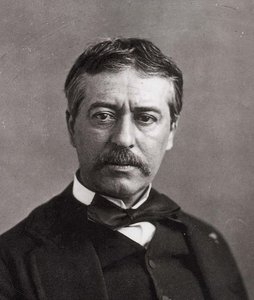
maurice sand
1823 - 1889 , France
Quick Facts
- Artistic Movement Or Style: Figurative/Genre art
- Artists Or Movements Influenced By This Artist: ['Birmingham School of Art']
- Artists Who Influenced This Artist: ['William Oliver (1804–1853)']
- Date Of Birth: 1823
- Date Of Death: 1901
- Full Name: William Oliver Williams
- Nationality: English
- Notable Artworks:
- Portrait of a Young Woman
- Various genre scenes
- Place Of Birth: Worcester, England

