

 Preview
 Send
Send Share
Share
 Details

 Download
 Similars
 X-Ray
X-Ray Diaporama
Church of Notre-Dame de Bonne-Espérance

 Read More
Purchase a high-resolution, enhanced digital image, far superior to the online preview.
Each file is meticulously prepared by our in-house specialists using advanced tools and expert manual retouching. We ensure every image has exceptional clarity, precise color accuracy, and fine detail.
The final file is delivered via email within 72 hours, optimized for immediate use in professional, editorial, and print environments. This is the same quality trusted by top-tier design studios, publishers, and galleries.
Digital Image
Download a high-resolution file for personal display, printing, and creative projects. ( Buy Print Buy Hand Made Painting)
Included in Every Digital Image Order
Expert Digital Delivery, Guaranteed
When you choose ArtsDot.com, you're not just getting an image - you're receiving a professionally enhanced digital artwork, crafted with precision and backed by a satisfaction guarantee. Here's everything that comes with your order, automatically:

Fast Email Delivery
Your high-resolution digital image file will be emailed to you within 72 hours of ordering - ready for immediate use.

AI-Enhanced Digital File
Your artwork is professionally optimized using advanced AI tools and manual editing, ensuring maximum detail, clarity, and color accuracy.

Free Lifetime Re-Delivery
Accidentally deleted or lost your file? No worries - we'll resend it to you anytime, free of charge.

No Import Fees - Ever
Enjoy your artwork instantly with zero customs, duties, or delivery fees - digital downloads are always tax-free.

Color Accuracy Guarantee
We ensure your digital image reflects the original colors as closely as possible using professional tools and color management.

60-Day Satisfaction Guarantee
If you're not satisfied with your digital image, we'll revise it or refund 100% within 60 days - no questions asked.

100% Money-Back Guarantee
Not satisfied? Get a full refund within 60 days of receiving your digital file - no questions asked.

Bulk Order Discounts
Buy 3 images, save 10% - Buy 5, save 15% - Buy 10+, save 20%. Great for creative projects, galleries, and agencies.
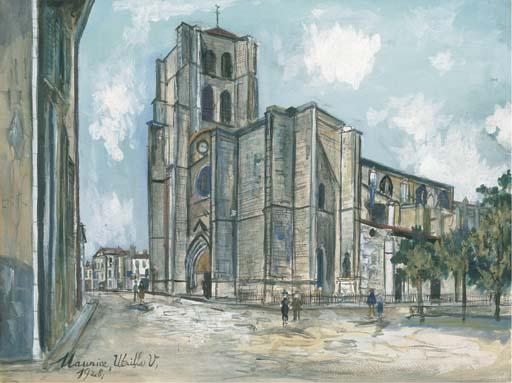
A Poignant Glimpse of Parisian Faith: Church of Notre-Dame de Bonne-Espérance
This evocative artwork presents a captivating view of the Church of Notre-Dame de Bonne-Espérance, likely nestled within a quiet provincial French town. Rendered in the distinctive style of Maurice Utrillo, renowned for his melancholic depictions of urban landscapes and sacred architecture, this piece transports viewers to a world steeped in subtle beauty and quiet contemplation. The church facade dominates the composition, its presence both imposing and serene against the backdrop of everyday life. A partially obscured building on the left adds depth while maintaining the painting’s characteristic flattened perspective, typical of Utrillo's unique vision.Style & Technique: Post-Impressionism with a Personal Touch
The artwork firmly resides within the realm of Post-Impressionism, echoing the movement's focus on subjective interpretation and emotional expression rather than strict realism. Utrillo’s style, however, possesses a distinct personality – a detached observation that borders on dreamlike quality. The technique is characterized by layered applications of oil paint, creating visible brushstrokes and subtle tonal variations achieved through hatching and cross-hatching. Lines are used extensively to define the architectural details, lending a somewhat sketchy or unfinished appearance which contributes to the overall impressionistic feel. The muted color palette – predominantly grays, blues, and whites with touches of green and brown – reinforces this subdued atmosphere, avoiding vibrant hues in favor of a more introspective mood.Historical Context & Symbolism
Created during the early 20th century, this painting reflects a period of significant social and artistic change in France. Utrillo’s focus on ordinary urban scenes, particularly churches, offers a glimpse into the everyday lives of Parisians and provincial townsfolk. The church itself serves as a powerful symbol of faith, stability, and enduring tradition within an evolving world. The somewhat melancholic atmosphere, achieved through the muted colors and simplified perspective, evokes a sense of quiet contemplation, perhaps even hinting at a feeling of loneliness or resilience in the face of change. The presence of figures on the street suggests a community quietly going about its daily routines, further grounding the scene in reality while maintaining an ethereal quality.Emotional Impact & Artistic Legacy
"Church of Notre-Dame de Bonne-Espérance" is more than just a depiction of a building; it's an exploration of mood and atmosphere. The painting’s emotional impact lies in its ability to evoke a sense of quiet introspection and gentle melancholy. Utrillo masterfully captures the essence of a moment, inviting viewers to pause and reflect on themes of faith, community, and the passage of time. This piece exemplifies Utrillo's enduring legacy as a painter who found beauty and poignancy in the seemingly mundane aspects of urban life, making it an ideal addition for art lovers seeking a touch of Parisian charm and contemplative artistry.Related Artworks
Artist Biography
A Life Etched in Parisian Stone
Maurice Utrillo, born Maurice Valadon in the heart of Montmartre in 1883, was a painter inextricably linked to the spirit of Paris itself. His life, marked by both profound artistic talent and personal struggle, unfolded against the backdrop of a rapidly changing city, a world he captured with an almost melancholic tenderness. Unlike many artists who sought inspiration *in* Montmartre, Utrillo was born *of* it – one of the few prominent painters to actually originate within its bohemian boundaries. His story is not simply that of an artist, but a reflection of the district’s own evolving identity at the turn of the 20th century. The question of his paternity remained shrouded in speculation for years; theories ranged from Pierre-Cécile Puvis de Chavannes to Renoir, though Miguel Utrillo eventually legally acknowledged him. This ambiguity perhaps foreshadowed a life lived on the fringes, observing rather than fully participating, and translating those observations into canvases imbued with quiet introspection.From Troubled Youth to Artistic Awakening
Utrillo’s early years were far from idyllic. Marked by truancy and a growing struggle with alcoholism, his path seemed destined for hardship. In 1904, he received a diagnosis of schizophrenia, leading to periods of institutionalization that would continue throughout his life. It was during these times, however, that art began to emerge as a lifeline. Encouraged by his mother, Suzanne Valadon – herself a remarkable figure who transitioned from model to respected artist – Utrillo discovered an innate talent for painting. Valadon’s influence was pivotal; she provided not formal training, but rather a foundational understanding of artistic principles and unwavering encouragement during periods of immense personal difficulty. He began by depicting the familiar streets and buildings around Montmartre, quickly developing a distinctive style characterized by its delicate brushwork and muted palette. These early works weren't merely representations of place, they were emotional landscapes reflecting his own internal world.The White Period and Beyond: A Unique Artistic Vision
Utrillo’s artistic development culminated in what is known as his “White Period” (approximately 1909-1914). This phase saw him employ a distinctive technique involving the generous use of zinc white, often mixed with plaster, to create textured surfaces that evoked the weathered walls and timeworn facades of Montmartre. The resulting paintings possess a unique luminosity and a sense of quiet decay, capturing the essence of a neighborhood undergoing transformation. His palette favored ochres, browns, and grays, lending his cityscapes a melancholic atmosphere that resonated with the spirit of the time. He wasn’t interested in grand narratives or heroic figures; instead, he focused on the everyday – the humble streets, the corner cafes, the solitary buildings standing sentinel against the Parisian sky. Later works, even those created from memory or postcards due to declining health, retained this signature style, demonstrating a remarkable consistency of vision. Notable pieces like “Rue du Mont-Cenis Under The Snow” and "Montmartre Street Corner or Lapin Agile" exemplify his ability to transform ordinary scenes into evocative meditations on urban life.Recognition, Legacy, and Enduring Influence
By the 1920s, Utrillo’s work had gained significant recognition. He was awarded the Cross of the Légion d'honneur in 1928, a testament to his growing reputation within the French art world. Despite ongoing battles with illness and institutionalization, he continued to paint prolifically, leaving behind a vast body of work that provides invaluable insight into early 20th-century Paris. His paintings are now held in numerous museums worldwide, including the Musée Maurice Denis and Galerie Paul Pétridès, ensuring his legacy for generations to come. Utrillo’s influence can be seen in subsequent artists who sought to capture the atmosphere and emotion of urban environments. He wasn't simply documenting a place; he was conveying a feeling – a sense of solitude, nostalgia, and quiet beauty that continues to resonate with viewers today. His work serves as a poignant reminder of a Paris lost, yet forever preserved on canvas, etched in stone and memory. He remains a master of capturing the soul of a city.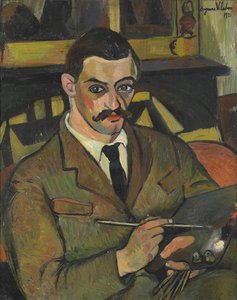
Maurice Utrillo
1883 - 1955 , France
Quick Facts
- Artistic Movement Or Style: Post-Impressionism
- Artists Or Movements Influenced By This Artist: ['Urban landscape artists']
- Artists Who Influenced This Artist: ['Suzanne Valadon']
- Date Of Birth: Dec 26, 1883
- Date Of Death: Nov 5, 1955
- Full Name: Maurice Utrillo
- Nationality: French
- Notable Artworks:
- Rouen Cathedral Study
- Water Lilies & Willow
- Walk in Argenteuil
- Montmartre Street Corner
- Place Of Birth: Montmartre, France

