 Preview
 Send
Send Share
Share
 Details

 Download
 Similars
 X-Ray
X-Ray Diaporama
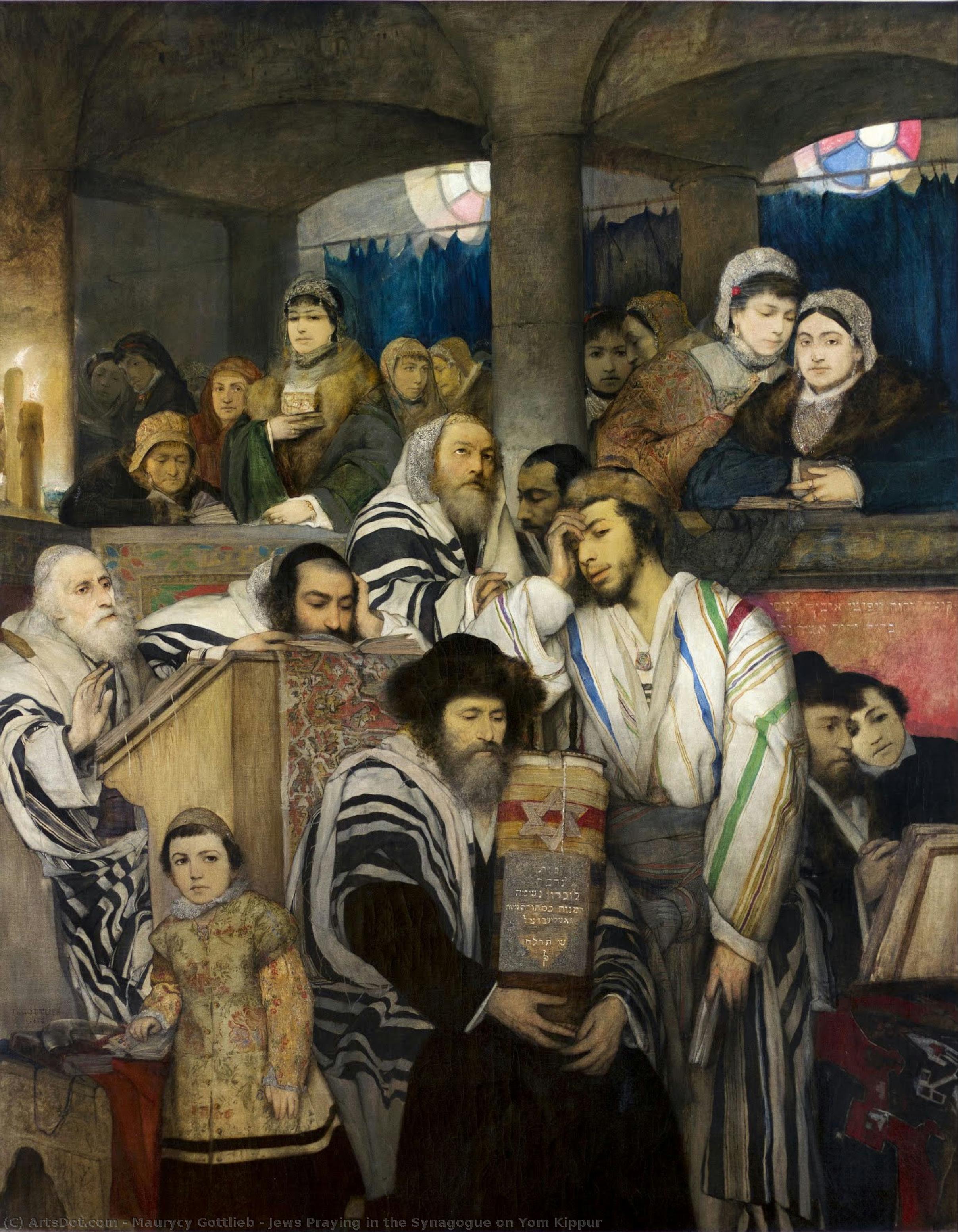
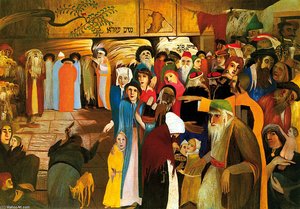
Jews Praying in the Synagogue on Yom Kippur
 1878
1878 243.0 x 190.0 cm
 Tel Aviv Museum of Art
 Read More
Hand Made Oil Reproduction
Hand-painted oil on canvas in your size and frame, made to order by our artists. ( Buy Print Buy Image)




































Pick from our preset sizes that match the artwork's original proportions.

You may enter your own dimensions to fit a specific frame or space. If your selected size does not match the original image's proportions, we will either crop the artwork or extend the painting with additional hand-painted elements. A digital mockup will be sent for your approval before production begins.
Please note that the on-screen preview does not reflect the actual cropping or extension. Only the mockup will accurately show the final composition.
While custom sizes are available, we recommend selecting a dimension from the predefined list to preserve the original proportions.
After order, ArtsDot.com team will email client for instructions and provide a mockup preview
Worldwide Delivery () in 3/4 weeks instead of standard 5 weeks. (27 August). No compromise on quality.

Free Worldwide Express Shipping

High-Quality Linen Canvas

Full Shipping Insurance

Customs Tax Refund Guarantee

True Color Matching Guarantee

60-Day Return Policy (Defects Only)

100% Money-Back Guarantee

Bulk Discount Offer
 Glass option is only available in size under 110 CM

Jews Praying in the Synagogue on Yom Kippur
Reproduction Medium
Reproduction Size
-


Total Price
$ 263
Related Artworks







Artist Biography
Maurycy Gottlieb: A Fleeting Flame in Polish Romanticism
The history of art is often written in the shadows of lives cut tragically short, and few figures embody this poignant reality more profoundly than Maurycy Gottlieb. Born in 1856 in Drohobych, Ukraine, within the vibrant yet turbulent landscape of the Austro-Hungarian Empire, Gottlieb emerged as a brilliant light in the Polish-Jewish artistic tradition. His life, which spanned a mere twenty-three years, was a whirlwind of intense creativity, wandering through the great art capitals of Europe—Vienna, Kraków, and Munich—before his untimely death in 1879. To look upon his work is to witness a soul attempting to bridge two worlds: the deep, historical roots of Polish identity and the spiritual, ancestral echoes of his Jewish heritage.
Gottlieb’s artistic DNA was indelibly marked by his mentorship under Jan Matejko, the titan of Polish historical painting. From Matejko, Gottlieb inherited a mastery of dramatic composition and a profound respect for narrative weight. Yet, while he embraced the academic realism and grand scale championed by his mentor, Gottlieb infused his canvases with a psychological intimacy that transcende mere historical documentation. He possessed an uncanny ability to capture the fleeting nuances of human emotion, moving beyond the monumental to explore the delicate, often melancholic, interiority of his subjects. This tension between the epic and the intimate became the hallmark of his developing style.
The Synthesis of Identity and Spirit
As Gottlieb matured, his work began to reflect a complex negotiation of identity. He was an artist who aspired to be both Polish and Jewish, navigating the complexities of a secular upbringing and a deep-seated cultural connection. This duality is most breathtakingly realized in his monumental canvases, which serve as spiritual landmarks. In "Christ Teaching at Capernaum," one observes a masterful command of light and color, where biblical solemnity meets a humanist warmth that feels remarkably modern. The painting does not merely recount a scripture; it invites the viewer into a moment of profound, palpable compassion.
However, it is perhaps in his depiction of Jewish life that Gottlieb’s genius reaches its most evocative heights. His masterpiece, "Jews Praying in the Synagogue on Yom Kippur," is much more than a religious tableau; it is a deeply personal mosaic of memory and loss. Within this vast, atmospheric scene, Gottlieb subtly wove the faces of his own life—his father, his family members, and even the woman whose rejection of his proposal left him heartbroken. Through these hidden self-portraits, the painting becomes an autobiographical pilgrimage, capturing the fervent devotion of a community while simultaneously mourning the fragility of individual existence.
A Legacy Written in Light and Shadow
Though his career was a brief flicker, the impact of Maurycy Gottlieb remains enduringly bright. He pioneered a form of psychological portraiture that hinted at post-impressionist sensibilities long before they became an international standard. His ability to imbue even the most traditional subjects with a sense of movement and emotional depth allowed him to transcend the rigid boundaries of 19th-century academicism. Even in his more orientalist works or his explorations of Shakespearean themes, such as his award-winning depiction of Shylock and Jessica, there is an unmistakable preoccupation with the human condition and the weight of destiny.
The tragedy of Gottlieb’s death—believed to be a result of exposure following a period of profound personal grief—only serves to sanctify his artistic legacy. He left behind more than three hundred works that continue to resonate in the halls of the National Museum in Kraków and various international collections. Today, he is remembered not merely as a talented student of Matejko, but as a foundational figure of modern Jewish art and a vital voice in Polish Romanticism. His life remains a testament to the power of art to capture the eternal within the ephemeral, leaving an indelible mark on the cultural tapestry of Europe.
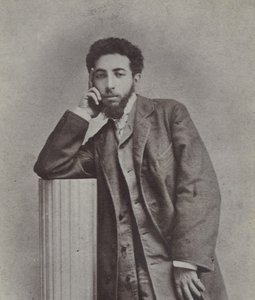
Maurycy Gottlieb
1856 - 1879 , Ukraine
Quick Facts
- Artistic Movement Or Style: Realism
- Artists Who Influenced This Artist: ['Jan Matejko']
- Date Of Birth: 1856
- Date Of Death: 1879
- Full Name: Maurycy Gottlieb
- Nationality: Polish-Jewish
- Notable Artworks:
- Christ Teaching at Capernaum
- Jews Praying in the Synagogue on Yom Kippur
- Place Of Birth: Drohobych, Ukraine