 Preview
 Send
Send Share
Share
 Details

 Download
 Similars
 X-Ray
X-Ray Diaporama
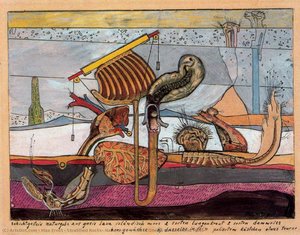
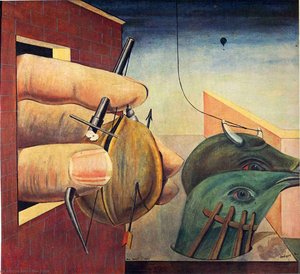
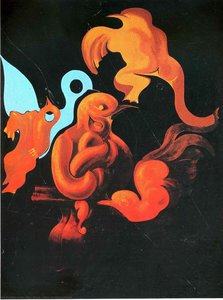
Vision Induced by the Nocturnal Aspect of the Porte St. Denis


 Read More
Giclée / Art Print
Museum-quality giclée or canvas print with fast production and flexible finish options. ( Buy Hand Made Painting Buy Image)




P118B $10

P118H $10

P118W $10

P438Z $10

P508JH $12

P508YH $12

P805H $10

P805Z $10

P919BZ $10

P919G $10

P919XJ $10

P959ZH $10

P968JZ $12

W106C $8

W218G $10

W218JH $8

W218Y $10

W307PJ $10

W316G $10

W316PJ $8

W316Y $10

W398PJ $8

W4111J $10

W500HY $15

W500JH $15

W692G $12

W849H $8

W940BG $15

W953PJ $8




Pick from our preset sizes that match the artwork's original proportions.

You may enter your own dimensions to fit a specific frame or space. If your selected size does not match the original image's proportions, we will either crop the artwork or extend the image with a mirrored or solid-fill edge. A digital mockup will be sent for your approval before production begins.
Please note that the on-screen preview does not reflect the actual cropping or extension. Only the mockup will accurately show the final composition.
While custom sizes are available, we recommend selecting a dimension from the predefined list to preserve the original proportions.
Worldwide Delivery () in 2 weeks instead of standard 4/5 weeks. (23 August)

Free Worldwide Express Shipping

High-Quality Linen Canvas

Full Shipping Insurance

Customs Tax Refund Guarantee

True Color Matching Guarantee

60-Day Return Policy (Defects Only)

100% Money-Back Guarantee

Bulk Discount Offer
 Glass option is only available in size under 110 CM

Vision Induced by the Nocturnal Aspect of the Porte St. Denis
Giclée / Art Print
Reproduction Size
-


Total Price
$ 63
Collectible Description
A Dreamscape in Paris: Unpacking Max Ernst’s “Vision Induced by the Nocturnal Aspect of the Porte St. Denis”
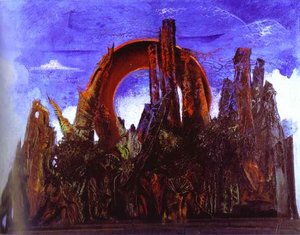
Max Ernst's 1924 painting, "Vision Induced by the Nocturnal Aspect of the Porte St. Denis," isn’t merely a depiction of a Parisian landmark; it’s a plunge into the subconscious, a meticulously crafted exploration of memory, anxiety, and the unsettling beauty of the surreal. This oil on canvas, measuring 73 x 54 cm, transcends its subject – the historic Porte St. Denis gate – to become a potent emblem of the Dada movement's challenge to conventional reality and an intimate window into Ernst’s uniquely fractured artistic vision. The painting immediately arrests the eye with its unsettling juxtaposition of recognizable elements rendered in a dreamlike distortion, inviting viewers to question what they see and, more importantly, what they *feel*.
The genesis of this work lies firmly within the turbulent landscape of post-World War I Europe. Ernst, a key figure in the Dada movement, was deeply influenced by the disillusionment and chaos that followed the war. Dadaism rejected logic, reason, and traditional artistic values, embracing chance, absurdity, and the irrational as tools for critique and innovation. “Vision Induced by the Nocturnal Aspect of the Porte St. Denis” embodies this spirit perfectly. It’s not a faithful representation of Paris; rather, it's a carefully constructed assemblage of fragmented memories, anxieties, and symbolic imagery—a deliberate attempt to bypass rational thought and tap into the realm of the unconscious.
Deconstructing the Surreal: Form, Texture, and Technique
The painting’s power resides in its masterful manipulation of form and texture. Ernst employed a range of techniques that contribute significantly to its unsettling effect. He utilized impasto – applying thick layers of paint directly from the tube – creating a tactile surface riddled with ridges and valleys, mirroring the uneven terrain of the dreamscape. This technique isn’t simply decorative; it actively engages the viewer's sense of touch, drawing them into the painting’s unsettling depths. Furthermore, Ernst employed distorted forms, exaggerating the proportions of the Porte St. Denis and surrounding elements to create a sense of unease and disorientation. The gate itself is rendered with bold, almost aggressive brushstrokes, its familiar shape warped and fragmented.
Crucially, Ernst’s process involved techniques like frottage (rubbing a pencil over textured surfaces) and grattage (scraping paint across the canvas), methods he developed to access his subconscious. These processes introduced accidental marks and textures into the painting, adding layers of complexity and suggesting that the image emerged not from conscious design but from a more primal, intuitive source. The resulting biomorphic shapes—resembling rocks, roots, or even embryonic forms—evoke a sense of hidden life beneath the surface, hinting at the latent anxieties and desires simmering within the artist’s psyche.
The Porte St. Denis as Symbolic Threshold
The inclusion of the Porte St. Denis itself is particularly significant. This historic gate, located in the 16th arrondissement of Paris, served as a boundary between the city's central districts and the more residential areas. In Ernst’s painting, it becomes a symbolic threshold—a portal to an unknown realm, representing both entry into the unconscious and the anxieties associated with transition and uncertainty. The gate is not depicted realistically; instead, it’s fragmented, distorted, and partially obscured by swirling patterns of color, suggesting that it represents a barrier between reality and illusion.
The surrounding landscape—a collection of jagged rocks and amorphous shapes—further reinforces this sense of disorientation. These elements aren't merely decorative; they function as visual metaphors for the fragmented nature of memory and the instability of perception. The use of earthy tones – reds, oranges, browns – contributes to a feeling of primal earthiness, grounding the surreal imagery in a tangible, albeit unsettling, reality.
A Legacy of Dada and Beyond
"Vision Induced by the Nocturnal Aspect of the Porte St. Denis" stands as a quintessential example of Dadaism’s radical experimentation and Ernst's profound exploration of the subconscious. It demonstrates his willingness to challenge conventional artistic norms and embrace techniques that prioritized intuition and chance over rational control. The painting’s enduring appeal lies in its ability to evoke a powerful emotional response, prompting viewers to confront their own anxieties, memories, and perceptions of reality. It remains a testament to Ernst's pioneering spirit and his lasting contribution to the development of 20th-century art.
For those seeking a high-quality reproduction of this captivating artwork, please visit ArtsDot.com.
Related Artworks
Artist Biography
A Life Immersed in the Surreal
Max Ernst, born Maximilian Maria Ernst on April 1st, 1891, in Brühl, Germany, was a restless spirit destined to become one of the most pivotal figures in 20th-century art. His journey wasn’t one of conventional artistic training; rather, it was a self-directed exploration fueled by philosophical inquiry, psychological fascination, and a profound disillusionment with societal norms. Ernst's father, a teacher of the deaf and an amateur painter, instilled in him both a sensitivity to the world and a rebellious streak against established authority. This early duality would become a defining characteristic of his artistic vision.
Ernst’s academic pursuits at the University of Bonn – encompassing philosophy, art history, literature, psychology, and psychiatry – were not merely diversions but foundational elements that deeply informed his later work. He wasn't simply interested in *how* to paint; he was grappling with *why*. This intellectual curiosity led him to encounter the groundbreaking works of Picasso, Van Gogh, and Gauguin at the Sonderbund exhibition in Cologne in 1912, a moment that irrevocably altered his artistic trajectory. The seeds of modernism had been sown.
Dada’s Disruption and the Birth of Surrealist Visions
The cataclysm of World War I proved to be a watershed moment for Ernst. His experiences as a soldier on both the Eastern and Western fronts left him profoundly shaken, fostering a deep skepticism towards established order and a yearning for new modes of expression. This disillusionment found fertile ground in the burgeoning Dada movement, which he embraced wholeheartedly after returning to Cologne in 1918. Alongside Hans Arp – a lifelong friend and collaborator – Ernst became a central figure in the Cologne Dada group, rejecting traditional artistic conventions and embracing absurdity, chance, and anti-rationality.
However, Dada was merely a stepping stone. In the early 1920s, Ernst migrated to Paris and joined the ranks of the Surrealists, led by André Breton. This marked a shift towards exploring the realm of dreams, the unconscious mind, and the irrational. Influenced by the psychoanalytic theories of Sigmund Freud, Ernst sought to unlock the hidden depths of human experience through his art. He wasn’t interested in depicting reality as it appeared but rather in revealing the underlying psychological forces that shaped it.
Pioneering Techniques: Frottage, Grattage, and Collage
Ernst's artistic innovation extended beyond subject matter; he was a relentless experimenter with technique. He didn’t simply adopt existing methods—he invented new ones. Perhaps his most famous contribution is frottage, a process of rubbing pencil or charcoal over textured surfaces to create unexpected and evocative images. This technique, born from a moment of boredom while observing wood grain, allowed Ernst to tap into the subconscious and generate forms that defied conscious control. Closely related was grattage, where paint is scraped across canvas revealing underlying layers.
He also masterfully employed collage, assembling disparate elements – images from magazines, scientific illustrations, photographs – into surreal compositions that challenged conventional notions of representation. These techniques weren’t merely stylistic choices; they were integral to his exploration of the unconscious and his desire to disrupt traditional artistic boundaries. His paintings often feature recurring symbolic imagery: birds (particularly his alter ego Loplop), desolate landscapes, unsettling juxtapositions, and a pervasive sense of mystery.
A Legacy of Innovation and Influence
The outbreak of World War II forced Ernst to flee Europe, finding refuge in the United States. He continued to paint and experiment with new techniques throughout his exile, eventually returning to France after the war where he remained active until his death on April 1st, 1976, in Paris. His influence on subsequent generations of artists is immeasurable.
Max Ernst’s contributions to Dada and Surrealism were nothing short of groundbreaking. He challenged artistic norms, delved into the depths of the subconscious mind, and invented innovative techniques that continue to inspire artists today. He wasn't merely a painter; he was an explorer, a provocateur, and a visionary who expanded the boundaries of art itself. His work remains a testament to the power of imagination, the allure of the irrational, and the enduring quest to understand the complexities of the human psyche.
- Major Works: The Entire City, Euclides, Of This Men Shall Know Nothing, Forest and Dove
- Influences: Pablo Picasso, Vincent van Gogh, Paul Gauguin, Sigmund Freud, Giorgio de Chirico
- Movements: Dada, Surrealism
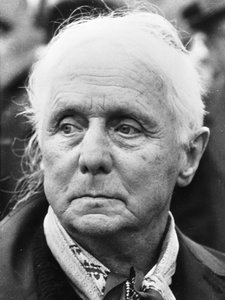
Max Ernst
1891 - 1976 , Germany
Quick Facts
- Artistic Movement Or Style: Dada, Surrealism
- Artists Or Movements Influenced By This Artist:
- Surrealism
- Dada
- Artists Who Influenced This Artist:
- Pablo Picasso
- Vincent van Gogh
- Paul Gauguin
- Giorgio de Chirico
- Date Of Birth: April 1, 1891
- Date Of Death: April 1, 1976
- Full Name: Max Ernst
- Nationality: German-American, French
- Notable Artworks:
- Ofrenda funeraria
- The Equivocal Woman
- L'Ange du foyer
- Place Of Birth: Brühl, Germany
Related Articles
Max Ernst's Masterpieces: 25 Surreal Visions for Art Lovers & Home Decor
Journey into the surreal world of Max Ernst! Explore 25 iconic paintings, from Dada to abstract expressionism. Discover the stories behind his masterpieces & find museum-quality art reproductions for your home decor at ArtsDot.com.

Dreamscapes & Disrupted Realities: Exploring Surrealism's Enduring Influence
Explore the fascinating world of Surrealism! Discover its origins, key artists like Dalí & Magritte, and enduring influence on art & culture. Expert insights & high-quality reproductions at ArtsDot.

El Greco's Masterpieces: Explore 25 Iconic Paintings & Spiritual Visions | ArtsDot
Journey through El Greco's 25 most iconic paintings! Explore the spiritual depth & dramatic beauty of this Spanish Renaissance master. Discover art history, techniques & find museum-quality reproductions for your home at ArtsDot.com.
Beyond Reality's Grasp: Exploring the Philosophical Foundations of Surrealism
Explore the philosophical roots & artistic innovations of Surrealism with ArtsDot. Discover Dalí, Ernst, Delvaux & Freud's influence on this revolutionary movement. High-quality art reproductions available.
Surrealism's Visionaries: 10 Masterpieces for Your Home | ArtsDot
Journey into the dreamlike world of Surrealism! Explore 10 masterpieces by Dali, Magritte & Miró that redefined art. Discover their stories & find museum-quality reproductions to elevate your home decor on ArtsDot.com.