 Preview
 Send
Send Share
Share
 Details

 Download
 Similars
 X-Ray
X-Ray Diaporama
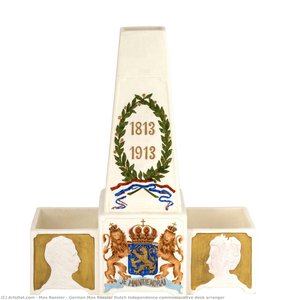
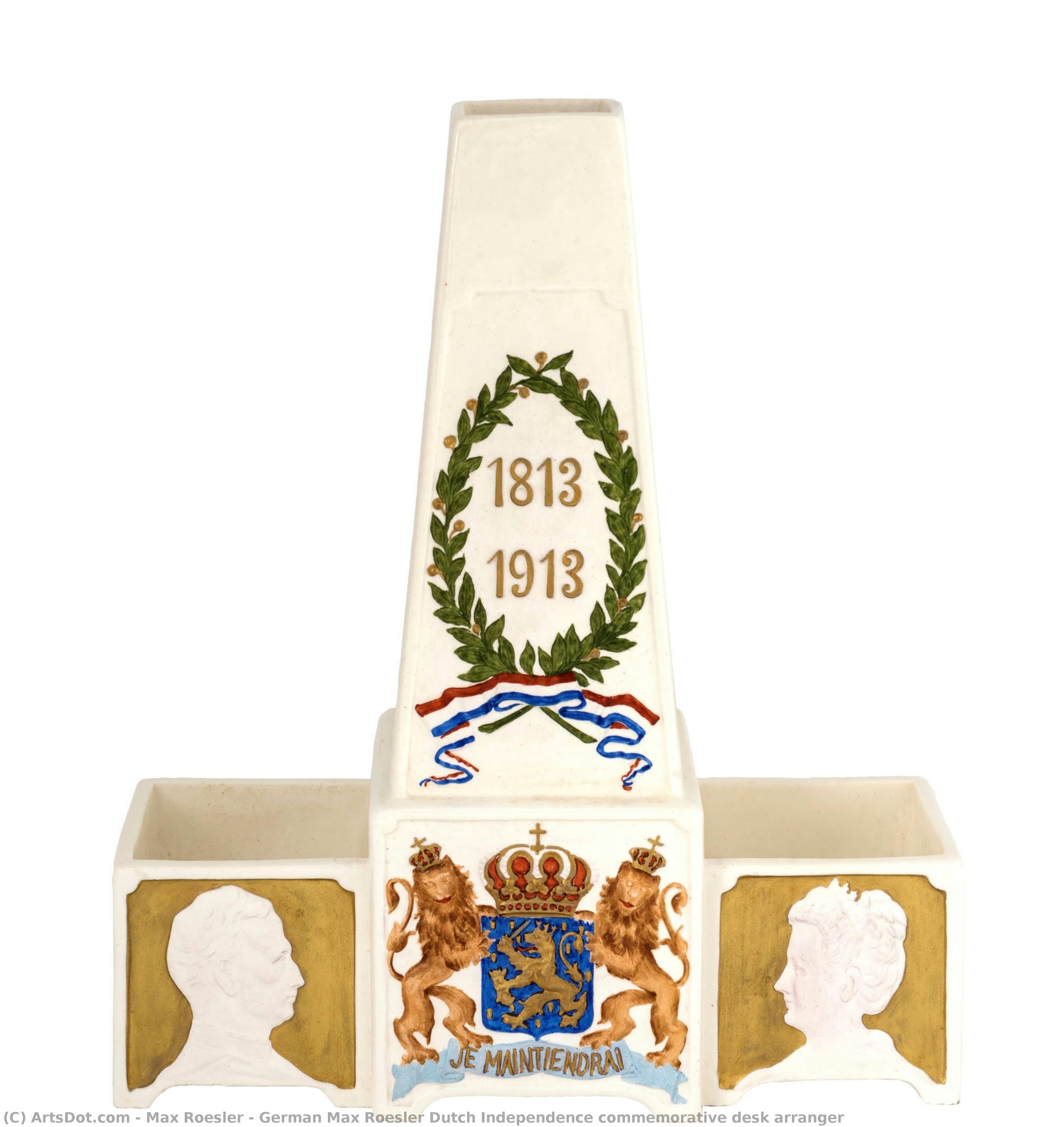
German Max Roesler Dutch Independence commemorative desk arranger
 1913
1913 20.0 x 17.0 cm
 University of Pretoria Museums
 Read More
Hand Made Oil Reproduction
Hand-painted oil on canvas in your size and frame, made to order by our artists. ( Buy Print Buy Image)




































Pick from our preset sizes that match the artwork's original proportions.

You may enter your own dimensions to fit a specific frame or space. If your selected size does not match the original image's proportions, we will either crop the artwork or extend the painting with additional hand-painted elements. A digital mockup will be sent for your approval before production begins.
Please note that the on-screen preview does not reflect the actual cropping or extension. Only the mockup will accurately show the final composition.
While custom sizes are available, we recommend selecting a dimension from the predefined list to preserve the original proportions.
After order, ArtsDot.com team will email client for instructions and provide a mockup preview
Worldwide Delivery () in 3/4 weeks instead of standard 5 weeks. (20 August). No compromise on quality.

Free Worldwide Express Shipping

High-Quality Linen Canvas

Full Shipping Insurance

Customs Tax Refund Guarantee

True Color Matching Guarantee

60-Day Return Policy (Defects Only)

100% Money-Back Guarantee

Bulk Discount Offer
 Glass option is only available in size under 110 CM

German Max Roesler Dutch Independence commemorative desk arranger
Reproduction Medium
Reproduction Size
-


Total Price
$ 288
Artwork Description
Related Artworks








Artist Biography
The Enduring Legacy of Max Roesler: A German Ceramic Pioneer
Max Roesler, a name perhaps less familiar to the general public than some of his contemporaries, stands as a significant figure in the history of German ceramics. Born in 1840 in Regensburg, Germany, Roesler’s journey from chemistry to artistry reveals a restless intellect and an unwavering dedication to craft. His career spanned several decades, marked by innovation, social consciousness, and a distinctive aesthetic that continues to resonate within the world of porcelain.
Roesler's early life was steeped in scientific pursuits. Initially studying chemistry in Dresden, he later transitioned to Munich, completing his education there. This foundation in science would prove surprisingly influential in his subsequent work, informing his understanding of materials and processes. He gained valuable experience as a chemist and technical director for various chemical plants, honing his skills in observation, analysis, and problem-solving – qualities that translated seamlessly into the demanding world of ceramic production. A pivotal shift occurred in 1873 when he took on the role of technical manager at the Franz Anton Mehlem stoneware factory in Bonn, a stepping stone that ultimately led him to the mosaic tile industry in Sinzig.
It was in 1874 that Roesler found his true calling. He accepted the position of technical and commercial director for the Wächtersbach stoneware factory, a move that would define his career trajectory. Here, he implemented significant changes, demonstrating an entrepreneurial spirit and a keen eye for efficiency. Notably, he championed social responsibility within the workforce, establishing a factory savings bank in 1877 to aid workers’ homeownership aspirations. Further initiatives included a manual labor school for young girls, a workers' music association, and a company newspaper – all reflecting his commitment to improving the lives of those involved in his enterprise. His tenure at Wächtersbach (1874-1889) witnessed a remarkable transformation, establishing a reputation for both productivity and progressive social policies.
In 1890, Roesler moved to the Springer porcelain factories in Elbogen, Bohemia, before relocating to Rodach near Coburg in 1893. It was here that he established his own earthenware factory, officially registered on July 24th, 1894. The factory’s emblem – a stylized hedge rose derived from the Roesler family crest – became instantly recognizable and remains a hallmark of his work. The strategic location adjacent to the newly constructed railroad line between Rodach and Suhl facilitated efficient transportation and bolstered the factory's growth. This period saw the flourishing of a distinctive style characterized by intricate decoration, refined forms, and a subtle elegance.
Roesler’s artistic vision extended beyond mere functionality; he embraced decorative elements with remarkable skill. His most celebrated work, the “German Max Roesler Dutch Independence Commemorative Desk Arranger” (1913), exemplifies this approach. This intricate porcelain piece, featuring portraits of Queen Wilhelmina and King Willem I alongside the Royal Coat of Arms, served as a poignant tribute to the centenary of the Dutch Royal House. The piece’s meticulous detailing and symbolic representation demonstrate Roesler's mastery of his craft and his ability to imbue objects with historical significance.
Following Max Roesler’s death in 1922, the factory continued under the leadership of his son, eventually becoming a public limited company – Max Roesler Feinsteingutfabrik AG. In 1938, the business was acquired by Siemens, marking a significant shift in its ownership and direction. Despite these changes, the legacy of Max Roesler endures through his innovative techniques, his commitment to social responsibility, and the exquisite beauty of his ceramic creations – a testament to a German artist who profoundly shaped the landscape of 20th-century ceramics.
Marks and Influences
Roesler’s marks are distinctive, typically featuring an “R-M-R” over a shield with a rose. These marks provide valuable clues for collectors and enthusiasts seeking to identify his pieces. The porcelain marks database at The Old Stuff offers a comprehensive overview of these markings and their historical context.
Roesler’s work was influenced by several factors, including his scientific background, the prevailing artistic trends of the late 19th and early 20th centuries, and the social concerns of his time. The establishment of the factory savings bank and other initiatives demonstrate a commitment to improving the lives of his workers – a characteristic that reflects the broader Progressive movement in Germany during this period.
Notable Works
Several notable pieces showcase Roesler’s artistic talent and technical skill. These include:
- The “German Max Roesler Dutch Independence Commemorative Desk Arranger” (1913) – a complex and symbolic porcelain desk arranger.
- Various decorative plates and figurines, often featuring floral motifs and intricate designs.
- Candelabras and other tableware items demonstrating his mastery of form and decoration.
Images of these works can be found on platforms like ArtsDot and MutualArt.
Historical Significance
Max Roesler’s contribution to the field of ceramics is often understated, yet his impact is undeniable. He was a pioneer in integrating social responsibility into the operations of a manufacturing enterprise and demonstrated a remarkable ability to blend artistic vision with practical considerations. His work reflects the broader cultural shifts of the late 19th and early 20th centuries – a period marked by industrialization, urbanization, and growing concerns about labor conditions. Roesler’s legacy serves as an inspiration for artists and entrepreneurs alike, demonstrating that creativity and social consciousness can coexist harmoniously.

max roesler
Germany
Quick Facts
- Artistic Movement Or Style: Ceramics
- Date Of Death: 1922
- Full Name: Max Roesler
- Nationality: German
- Notable Artworks: ['Dutch Independence desk arranger']
- Place Of Birth: Regensburg, Germany