

 Preview
 Send
Send Share
Share
 Details

 Download
 Similars
 X-Ray
X-Ray Diaporama
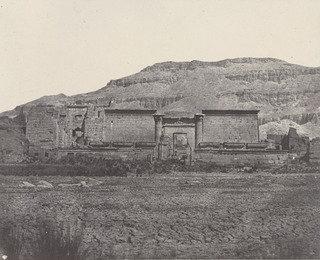
Médinet Habou, Vue Générale des Ruines
 1849
1849 17.0 x 20.0 cm
 Read More
Purchase a high-resolution, enhanced digital image, far superior to the online preview.
Each file is meticulously prepared by our in-house specialists using advanced tools and expert manual retouching. We ensure every image has exceptional clarity, precise color accuracy, and fine detail.
The final file is delivered via email within 72 hours, optimized for immediate use in professional, editorial, and print environments. This is the same quality trusted by top-tier design studios, publishers, and galleries.
Digital Image
Download a high-resolution file for personal display, printing, and creative projects. ( Buy Print Buy Hand Made Painting)
Included in Every Digital Image Order
Expert Digital Delivery, Guaranteed
When you choose ArtsDot.com, you're not just getting an image - you're receiving a professionally enhanced digital artwork, crafted with precision and backed by a satisfaction guarantee. Here's everything that comes with your order, automatically:

Fast Email Delivery
Your high-resolution digital image file will be emailed to you within 72 hours of ordering - ready for immediate use.

AI-Enhanced Digital File
Your artwork is professionally optimized using advanced AI tools and manual editing, ensuring maximum detail, clarity, and color accuracy.

Free Lifetime Re-Delivery
Accidentally deleted or lost your file? No worries - we'll resend it to you anytime, free of charge.

No Import Fees - Ever
Enjoy your artwork instantly with zero customs, duties, or delivery fees - digital downloads are always tax-free.

Color Accuracy Guarantee
We ensure your digital image reflects the original colors as closely as possible using professional tools and color management.

60-Day Satisfaction Guarantee
If you're not satisfied with your digital image, we'll revise it or refund 100% within 60 days - no questions asked.

100% Money-Back Guarantee
Not satisfied? Get a full refund within 60 days of receiving your digital file - no questions asked.

Bulk Order Discounts
Buy 3 images, save 10% - Buy 5, save 15% - Buy 10+, save 20%. Great for creative projects, galleries, and agencies.
Related Artworks
Artist Biography
The Lens and the Pen: The Dual Legacy of Maxime Du Camp
In the vibrant, shifting landscape of nineteenth-century France, few figures bridged the gap between the literary word and the photographic image as seamlessly as Maxime Du Camp. Born in Paris in 1822 to a prosperous family, Du Camp was far more than a mere chronicler of his era; he was a pioneer who utilized both the nib of a pen and the chemical sensitivity of the wet collodion process to capture the soul of a changing world. His life was defined by an insatiable curiosity, a trait nurtured by his early education in philology and history, which provided him with the analytical depth to look beyond the surface of the subjects he encountered during his transformative travels.
The trajectory of Du Camp’s career was irrevocably altered by his profound friendship with the literary giant Gustave Flaubert. Together, they embarked on expeditions that would become legendary in the annals of travel literature, most notably their journeys through Egypt and the Levant between 1849 and 1851. It was during these excursions that Du Camp’s artistic identity began to coalesce. Influenced by the revolutionary photographer Gustave Le Gray, Du Camp embraced the burgeoning medium of photography not merely as a scientific tool for documentation, but as an artistic extension of his journalistic eye. He sought to exploit what he called the uncontestable exactitude of the camera, using it to provide a visual truth that complemented his evocative prose.
A Visionary of Realism and Exploration
Du Camp’s contribution to the movement of Realism was uniquely multifaceted. While his contemporaries in literature were dissecting the social strata of Paris, Du Camp was physically transporting the wonders of the Eastern Mediterranean to the French public. His work on Egypte, Nubie, Palestine et Syrie (1852) stands as a monumental achievement, where he integrated over a hundred carefully selected photographic plates to illustrate his travel narratives. This innovation—the marriage of high-quality photography with scholarly travel writing—set a new standard for the genre and allowed readers to witness the ancient ruins and sun-drenched landscapes of North Africa with unprecedented clarity.
Upon returning to the heart of France, Du Camp turned his gaze toward the pulsing arteries of Paris itself. His monumental series, Paris, ses organes, ses fonctions, sa vie dans la seconde moitié du xixe siècle, serves as a panoramic sociological study. Through his writing, he meticulously documented the economic shifts, cultural trends, and the very mechanics of urban life. He possessed a rare ability to navigate the complexities of the social hierarchy, moving from the grand boulevards to the gritty realities of the working class with an observant, often piercing, intellect. His work during this period acted as a mirror to the Second Empire, capturing a city in the throes of radical transformation.
Historical Significance and Enduring Influence
The historical weight of Maxime Du Camp’s oeuvre lies in its dual role as both art and archive. He was a man caught between two worlds: the romanticism of the explorer and the clinical precision of the realist. His photographic experiments helped pave the way for photography to be recognized as a legitimate medium of fine art, capable of conveying atmosphere and historical gravity. At the same time, his literary contributions remain essential for any scholar seeking to understand the social fabric of nineteenth-century France.
Though he passed away in 1894, leaving behind a legacy that spans both the printed page and the photographic negative, Du Camp’s impact continues to resonate. His ability to synthesize different modes of perception—the eye for detail and the mind for historical context—ensures his place in the pantheon of creators who helped define the modern era. To study Du Camp is to witness the birth of a new way of seeing, where the fleeting moment captured on glass plate meets the enduring narrative of human history.
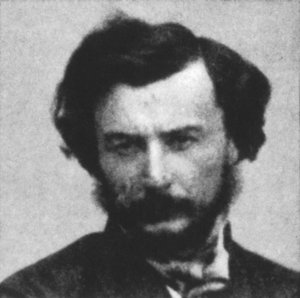
Maxime Du Camp
1893 - 1894 , France
Quick Facts
- Artistic Movement Or Style: Realism
- Artists Or Movements Influenced By This Artist: ['Flaubert']
- Artists Who Influenced This Artist: ['Gustave Le Gray']
- Date Of Birth: Paris, France (1822)
- Date Of Death: 1894
- Full Name: Maxime Du Camp
- Nationality: French
- Notable Artworks:
- Westernmost Collosus of the Temple of Re, Abu Simbel
- Grand Temple de Denderah, Hypètre Construit Sur la Terrasse
- Basilica of St. Augustine in Campo Marzio
- Place Of Birth: Paris

