 Preview
 Send
Send Share
Share
 Details

 Download
 Similars
 X-Ray
X-Ray Diaporama
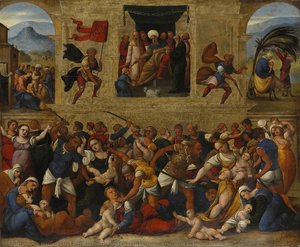
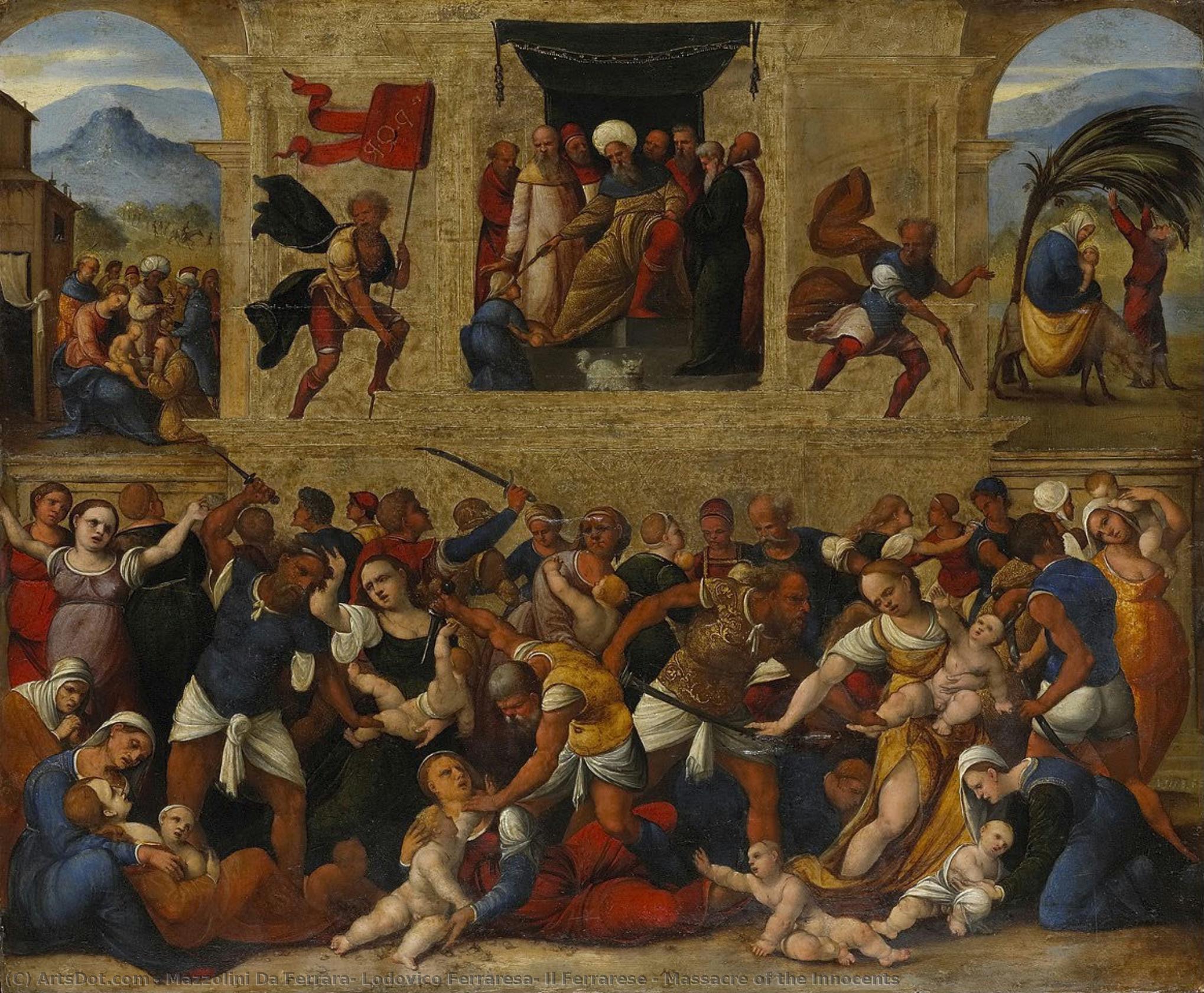
Massacre of the Innocents
 Oil On Canvas
- WallArt
- Renaissance
 1528
1528- Renaissance
 31.0 x 38.0 cm
 Mauritshuis
 Read More
Giclée / Art Print
Museum-quality giclée or canvas print with fast production and flexible finish options. ( Buy Hand Made Painting Buy Image)




P118B $10

P118H $10

P118W $10

P438Z $10

P508JH $12

P508YH $12

P805H $10

P805Z $10

P919BZ $10

P919G $10

P919XJ $10

P959ZH $10

P968JZ $12

W106C $8

W218G $10

W218JH $8

W218Y $10

W307PJ $10

W316G $10

W316PJ $8

W316Y $10

W398PJ $8

W4111J $10

W500HY $15

W500JH $15

W692G $12

W849H $8

W940BG $15

W953PJ $8




Pick from our preset sizes that match the artwork's original proportions.

You may enter your own dimensions to fit a specific frame or space. If your selected size does not match the original image's proportions, we will either crop the artwork or extend the image with a mirrored or solid-fill edge. A digital mockup will be sent for your approval before production begins.
Please note that the on-screen preview does not reflect the actual cropping or extension. Only the mockup will accurately show the final composition.
While custom sizes are available, we recommend selecting a dimension from the predefined list to preserve the original proportions.
Worldwide Delivery () in 2 weeks instead of standard 4/5 weeks. (29 August)

Free Worldwide Express Shipping

High-Quality Linen Canvas

Full Shipping Insurance

Customs Tax Refund Guarantee

True Color Matching Guarantee

60-Day Return Policy (Defects Only)

100% Money-Back Guarantee

Bulk Discount Offer
 Glass option is only available in size under 110 CM

Massacre of the Innocents
Giclée / Art Print
Reproduction Size
-


Total Price
$ 63
A Scene Frozen in Time: Exploring the Massacre of the Innocents
To stand before this depiction of the Massacre of the Innocents is to be drawn into a moment of profound, unsettling drama. The composition immediately arrests the viewer with its gathering of figures, creating an atmosphere that feels both intensely communal and deeply fraught with tension. While the photo description suggests a celebration, the title itself hints at a far more somber narrative weight, inviting us to look beyond the surface gaiety suggested by the grouping of people in this 1528 work. The artist, Mazzolini da Ferrara (Lodovico Ferraresa), masterfully captures the complexity of human interaction—the proximity of bodies, the shared gaze, and the subtle tension held within every gesture.
The Craftsmanship of Il Ferrarese
Mazzolini da Ferrara’s technique speaks to a period where Renaissance art was at its zenith of emotional exploration. The handling of paint suggests a meticulous attention to detail, characteristic of Northern Italian masters who excelled in rendering texture and individual character. Observe the figures; each garment, from the richly draped robes to the simpler attire of those observing from the periphery, is rendered with palpable realism. The inclusion of the two dogs adds an unexpected layer of life—these animals are not mere props but participants in the scene’s emotional ecosystem, grounding the dramatic human tableau with a touch of natural immediacy. This level of skilled execution makes it a compelling piece for any collector who appreciates technical virtuosity.
Symbolism and Emotional Resonance
The subject matter itself—the Massacre of the Innocents—is steeped in potent religious and historical symbolism, lending the painting an immediate gravity that transcends mere portraiture. It forces contemplation on themes of violence, innocence lost, and communal witness. The way the figures are arranged around a central point, perhaps marked by the flag held aloft, suggests a narrative climax or a moment of reckoning. For the modern admirer, this piece offers a powerful conduit to deep human emotion—a meditation on chaos contained within an ordered composition. It is art that does not merely decorate a wall; it prompts dialogue.
Bringing Renaissance Drama Home
For those considering bringing the drama and artistry of the Italian Renaissance into your own space, this reproduction offers an unparalleled opportunity. The size, measuring 31 x 38 cm, makes it a substantial yet manageable focal point for a drawing-room or study. Whether you are curating a gallery wall that speaks to historical gravitas or seeking a single piece imbued with narrative depth, the Massacre of the Innocents by Mazzolini da Ferrara provides both aesthetic beauty and intellectual weight. It is an heirloom quality piece, ready to anchor any sophisticated interior design scheme.
Related Artworks


Artist Biography
Lorenzo Lotto: A Master of Venetian Intimacy
Lorenzo Lotto, a name often whispered in the halls of art history, represents a fascinating paradox – a painter deeply rooted in the Venetian tradition yet possessing an intensely personal and idiosyncratic style. Born around 1480 in Venice, a city renowned for its vibrant artistic scene, Lotto’s life unfolded across numerous northern Italian cities, including Treviso, Marche, Rome, Bergamo, and finally, his adopted home of Loreto. Despite a relatively short career – he died in 1556 or 1557 – Lotto left behind a remarkably consistent body of work characterized by an extraordinary sensitivity to human emotion and a masterful command of detail, particularly evident in his portraits. He wasn’t a flamboyant figure like Titian or Veronese; instead, Lotto cultivated a quiet reputation as a meticulous craftsman, deeply respected for his ability to capture the essence of his subjects with remarkable realism and psychological depth.Early Influences and Training
The precise details of Lotto's early training remain shrouded in mystery, a common predicament for many Renaissance artists. While he undoubtedly benefited from the artistic atmosphere of Venice, a city brimming with talent and innovation, his direct teachers are largely unknown. Giorgio Vasari, in his *Lives of the Most Excellent Painters, Sculptors, and Architects*, credits Lotto to the tutelage of Alessio Baldovinetti, a Florentine painter who had previously worked under Andrea del Castagno. However, this attribution is debated by modern scholars, suggesting that Lotto’s artistic development likely involved a more diverse range of influences. His early works, particularly those from the 1470s, demonstrate a clear debt to the dramatic narratives and meticulous detail characteristic of Castagno's frescoes – a testament to the enduring legacy of this master. Crucially, Lotto also absorbed elements from the burgeoning Flemish artistic tradition, evident in his early attention to minute details and a penchant for rendering fabrics with astonishing realism. This confluence of influences—Venetian classicism, Florentine drama, and Northern precision—formed the foundation upon which Lotto would build his distinctive style.The Development of a Unique Style
Lotto’s artistic journey is marked by a gradual evolution, transitioning from a somewhat detached, classical approach to a more emotionally charged and intensely personal style. His early portraits, such as the *Pietà* in the Church of Ognissanti, showcase a careful observation of his subjects, often incorporating members of prominent Florentine families like the Vespucci clan. These works are notable for their meticulous detail and a sense of formal elegance. However, as Lotto matured, he began to infuse his paintings with a greater degree of psychological complexity and dramatic intensity. His later portraits, particularly those depicting religious figures, reveal a profound understanding of human emotion – sorrow, piety, and contemplation—expressed through subtle gestures, expressive eyes, and carefully rendered facial features. A key example is the *Portrait of an Old Man with a Boy* (c. 1490), considered by many to be his finest work; it’s remarkable for its tenderness, intimacy, and the palpable connection between the subject and his child. This shift reflects Lotto's growing independence as an artist, moving away from simply replicating observed reality towards creating works imbued with personal meaning and emotional resonance.Major Works and Patronage
Lotto’s career spanned numerous cities and involved a diverse range of commissions, reflecting his versatility and adaptability. He spent time in Treviso, where he painted altarpieces for churches and civic buildings; in the Marche, he created devotional panels for private chapels; and in Rome, he worked on frescoes for the Basilica di San Clemente. His most significant works include a series of altarpieces for the church of Santa Maria Gloriosa dei Frari in Venice, featuring scenes from the life of St. Anthony. He also produced numerous portraits for wealthy patrons, including the Duke of Urbino and various members of the Venetian elite. Notably, Lotto’s work was highly sought after by the powerful Medici family in Florence, who commissioned several important paintings from him. His dedication to his patrons is evident in the meticulous attention he paid to their likenesses and the incorporation of their heraldry into his compositions.Legacy and Historical Significance
Despite his considerable talent and artistic achievements, Lotto’s legacy was largely overlooked for centuries after his death. His distinctive style, characterized by its nervous energy and idiosyncratic details, didn't align with the prevailing aesthetic ideals of the High Renaissance or the subsequent Mannerist period. Consequently, his work fell into relative obscurity, only to be rediscovered in the 20th century as art historians began to appreciate the depth and complexity of his oeuvre. Today, Lotto is recognized as a pivotal figure in Venetian painting, bridging the gap between the classical traditions of Bellini and Giorgione and the emerging Mannerist style. His emphasis on psychological realism, combined with his masterful technical skill, makes him one of the most compelling and enduring artists of the 15th and early 16th centuries—a testament to the power of a singular artistic vision.
mazzolini da ferrara, lodovico ferraresa, il ferrarese
1480 - , Italy
Quick Facts
- Artistic Movement Or Style: High Renaissance / Mannerism
- Artists Or Movements Influenced By This Artist:
- Andrea del Verrocchio
- Parma School
- Artists Who Influenced This Artist:
- Giovanni Bellini
- Giorgione
- Date Of Birth: c. 1480
- Date Of Death: 1556/57
- Full Name: Lorenzo Lotto
- Nationality: Italian Renaissance
- Notable Artworks:
- Virgin and Child with St. Jerome
- Allegory of Virtue and Vice
- Portrait of an Old Man with a Boy
- Place Of Birth: Venice, Italy
Related Articles

Giclée Prints: Archival Quality & Aesthetic Nuances for the Discerning Collector
Explore the world of giclée prints with ArtsDot. Learn about archival quality, aesthetic nuances & investment potential. Expert guidance for discerning art collectors seeking museum-quality reproductions and lasting value.

The Visceral Stage: Exploring Dramatic Narratives & Emotional Intensity in Baroque Art
Explore the dramatic world of Baroque art! Discover iconic masters like Caravaggio & Rembrandt, their techniques, and the movement's lasting impact. Expert insights for collectors & enthusiasts at ArtsDot.

Baroque Drama: Bringing Opulence & Emotion into Contemporary Interiors
Explore the opulent world of Baroque interior design! Discover key elements, modern applications & how to bring dramatic elegance into your home with 's authentic reproductions.

Baroque Masterpieces: 10 Paintings That Defined an Era |
Journey through the drama & grandeur of Baroque art! Explore 10 masterpieces by Caravaggio, Rembrandt, Rubens & more. Discover stunning oil paintings, rich colors & timeless stories. Find museum-quality reproductions at .

The Dramatic Flourish: Exploring the Baroque Movement's Enduring Legacy in Art History
Explore the dramatic world of Baroque art! Discover iconic artists like Caravaggio & Rubens, defining techniques, and its lasting impact on art history. Expert insights for collectors & enthusiasts at ArtsDot.