 Preview
 Send
Send Share
Share
 Details

 Download
 Similars
 X-Ray
X-Ray Diaporama
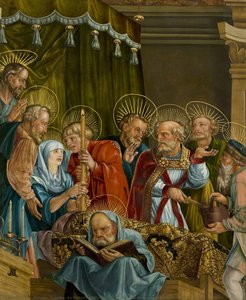
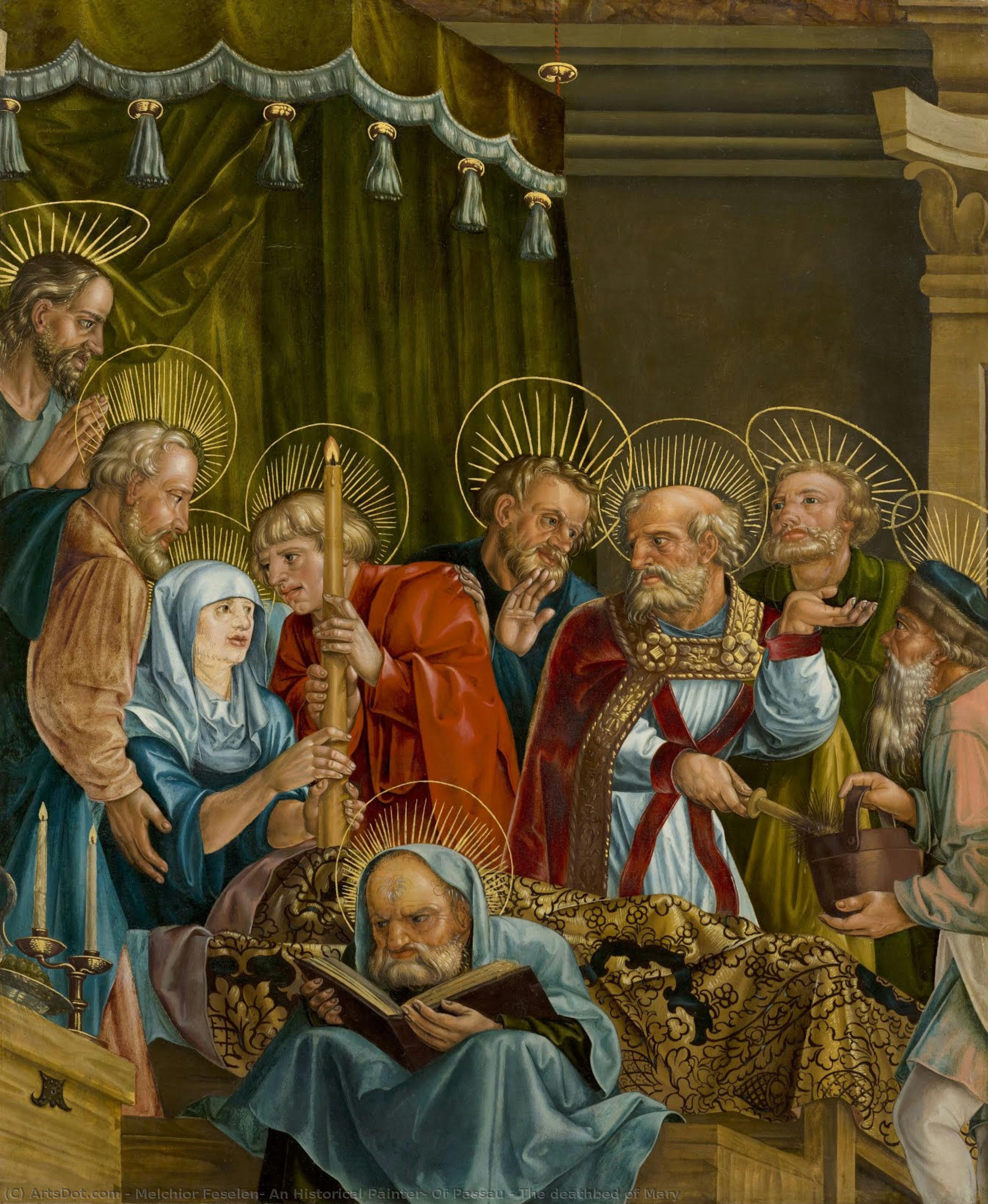
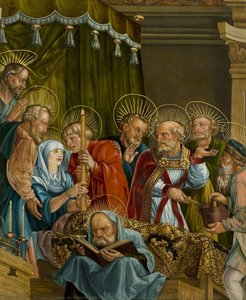
The deathbed of Mary
 5.0 x 79.0 cm
 Bonnefanten Museum
 Read More
Hand Made Oil Reproduction
Hand-painted oil on canvas in your size and frame, made to order by our artists. ( Buy Print Buy Image)




































Pick from our preset sizes that match the artwork's original proportions.

You may enter your own dimensions to fit a specific frame or space. If your selected size does not match the original image's proportions, we will either crop the artwork or extend the painting with additional hand-painted elements. A digital mockup will be sent for your approval before production begins.
Please note that the on-screen preview does not reflect the actual cropping or extension. Only the mockup will accurately show the final composition.
While custom sizes are available, we recommend selecting a dimension from the predefined list to preserve the original proportions.
After order, ArtsDot.com team will email client for instructions and provide a mockup preview
Worldwide Delivery () in 3/4 weeks instead of standard 5 weeks. (6 September). No compromise on quality.

Free Worldwide Express Shipping

High-Quality Linen Canvas

Full Shipping Insurance

Customs Tax Refund Guarantee

True Color Matching Guarantee

100-Day Return Policy (Defects Only)

100% Money-Back Guarantee

Bulk Discount Offer
 Glass option is only available in size under 110 CM

The deathbed of Mary
Reproduction Medium
Reproduction Size
-


Total Price
$ 263
Related Artworks






Artist Biography
The Legacy of Melchior Feselen: A Master of the Passau School
In the vibrant artistic landscape of the sixteenth century, few painters captured the dramatic tension of historical and religious narratives with as much intricate detail as Melchior Feselen. Born in the historic city of Passau, Germany, around 1495, Feselen emerged from a region steeped in spiritual and cultural significance. While history often remembers him in the shadow of his contemporary, the legendary Albrecht Altdorfer, to view Feselen merely as an imitator is to overlook the profound individual spirit that breathes through his canvases. His life, which concluded in Ingolstadt in 1538, was dedicated to a pursuit of excellence that blended the burgeoning ideals of the Renaissance with a meticulous, almost sculptural approach to the human form.
Feselen’s artistic journey was deeply intertwined with the stylistic currents flowing through the Danube School. He studied and worked during an era where the landscape began to take on a psychological depth, yet he chose to focus his mastery on the complexity of the figure. His technique was characterized by an extraordinary ability to render large groups of people with high finish and clarity, ensuring that even within crowded, ambitious compositions, every face and gesture resonated with emotional truth. This dedication to highly finished figures allowed him to create scenes that felt both monumental and intimately human.
Compositional Grandeur and Narrative Depth
The true brilliance of Feselen lies in his ability to orchestrate complex narratives within a single frame. His works are not merely static images but are dynamic stages where history and myth unfold. He possessed a unique talent for compositional richness, often populating his paintings with a great number of figures that move with a choreographed grace. This skill is particularly evident in his historical chronicles, such as:
- The Siege of Rome by Porsena (1529): A work that showcases his ability to capture the chaos and gravity of military confrontation through detailed arrangement.
- Caesar conquering the town Alesia in Gaul (1533): An ambitious depiction of classical triumph that demonstrates his command over large-scale historical storytelling.
- The Adoration of the Magi (1531): A piece found in Nuremberg that highlights his ability to infuse religious devotion with a sense of tangible, earthly presence.
Beyond the grand scale of his historical scenes, Feselen also excelled in the more intimate realms of devotional art. His contributions to altarpieces, such as the fragments related to The Deathbed of Mary, reveal a painter capable of profound tenderness. In these works, the interplay of light and shadow—the subtle use of color to denote sanctity or suffering—serves to connect the viewer directly to the sacred event, bridging the gap between the earthly observer and the divine subject.
Artistic Significance and Historical Footprint
Though Feselen’s career was relatively brief, his impact on the regional identity of German painting remains significant. He occupied a vital space in the transition of artistic styles, acting as a bridge between the structured traditions of the late Middle Ages and the more fluid, expressive possibilities of the later Renaissance and early Baroque periods. His work reflects a period of intense intellectual and religious upheaval in the Holy Roman Empire, and his paintings often serve as windows into the aesthetic values of that turbulent age.
Ultimately, Melchior Feselen stands as a testament to the power of individual vision within a shared stylistic movement. By refining the influences of Altdorfer and infusing them with his own peculiar, highly detailed style, he created an oeuvre that remains a cornerstone for understanding the artistic vitality of Passau. His ability to marry the epic scale of history with the delicate precision of fine detail ensures that his name continues to resonate within the annals of European art history.
melchior feselen, an historical painter, of passau
1538 , Germany
Quick Facts
- Artistic Movement Or Style: Renaissance and Baroque
- Artists Or Movements Influenced By This Artist: ['']
- Artists Who Influenced This Artist: ['Altdorfer']
- Date Of Death: 1538
- Full Name: Melchior Feselen
- Nationality: German
- Notable Artworks:
- The Crucifixion
- The Siege of Rome by Porsena
- Caesar conquering the town Alesia in Gaul
- Place Of Birth: Passau, Germany