

 Preview
 Send
Send Share
Share
 Details

 Download
 Similars
 X-Ray
X-Ray Diaporama
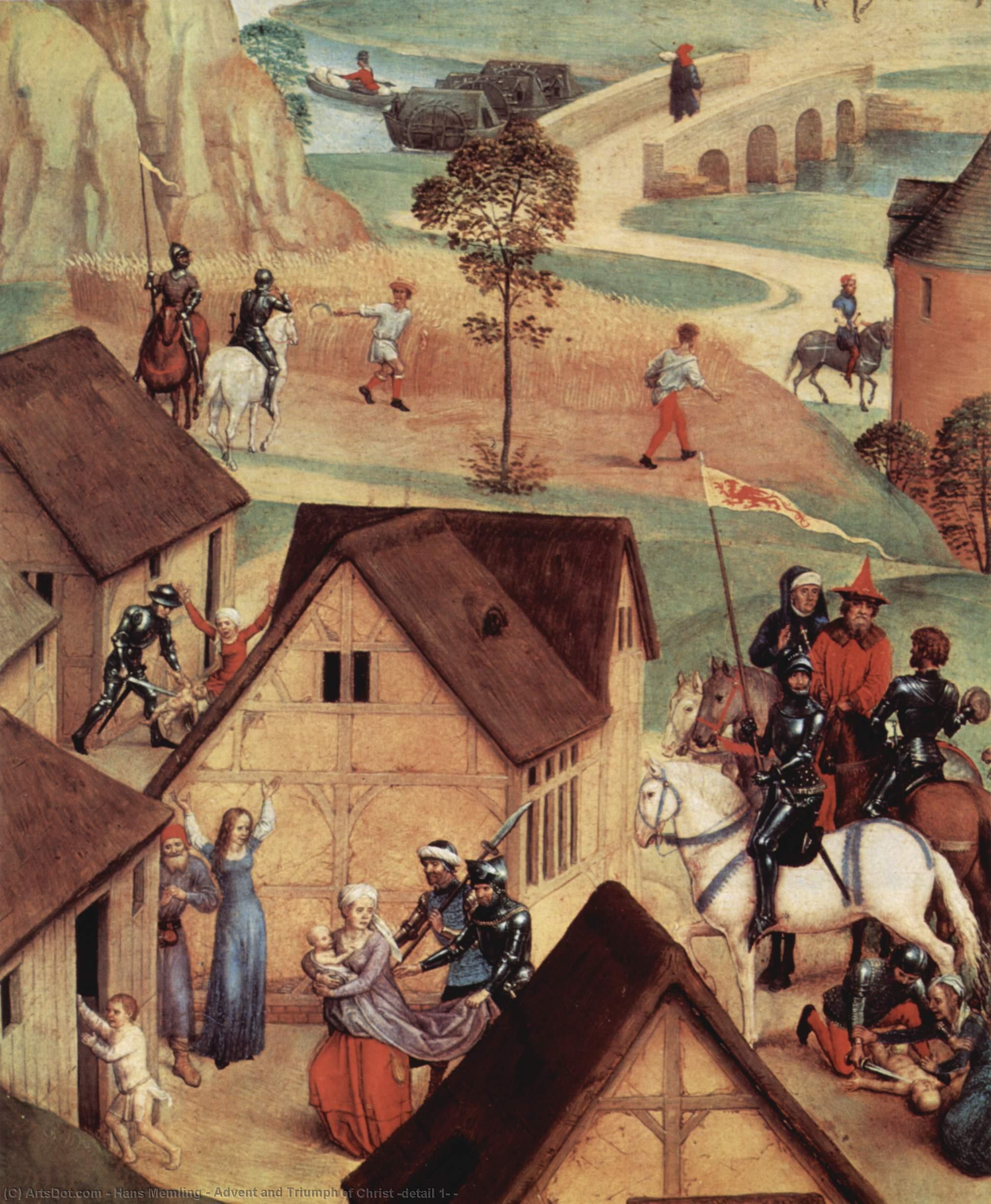
Advent and Triumph of Christ (detail 1) -


 Read More
Purchase a high-resolution, enhanced digital image, far superior to the online preview.
Each file is meticulously prepared by our in-house specialists using advanced tools and expert manual retouching. We ensure every image has exceptional clarity, precise color accuracy, and fine detail.
The final file is delivered via email within 72 hours, optimized for immediate use in professional, editorial, and print environments. This is the same quality trusted by top-tier design studios, publishers, and galleries.
Digital Image
Download a high-resolution file for personal display, printing, and creative projects. ( Buy Print Buy Hand Made Painting)
Included in Every Digital Image Order
Expert Digital Delivery, Guaranteed
When you choose ArtsDot.com, you're not just getting an image - you're receiving a professionally enhanced digital artwork, crafted with precision and backed by a satisfaction guarantee. Here's everything that comes with your order, automatically:

Fast Email Delivery
Your high-resolution digital image file will be emailed to you within 72 hours of ordering - ready for immediate use.

AI-Enhanced Digital File
Your artwork is professionally optimized using advanced AI tools and manual editing, ensuring maximum detail, clarity, and color accuracy.

Free Lifetime Re-Delivery
Accidentally deleted or lost your file? No worries - we'll resend it to you anytime, free of charge.

No Import Fees - Ever
Enjoy your artwork instantly with zero customs, duties, or delivery fees - digital downloads are always tax-free.

Color Accuracy Guarantee
We ensure your digital image reflects the original colors as closely as possible using professional tools and color management.

60-Day Satisfaction Guarantee
If you're not satisfied with your digital image, we'll revise it or refund 100% within 60 days - no questions asked.

100% Money-Back Guarantee
Not satisfied? Get a full refund within 60 days of receiving your digital file - no questions asked.

Bulk Order Discounts
Buy 3 images, save 10% - Buy 5, save 15% - Buy 10+, save 20%. Great for creative projects, galleries, and agencies.
Collectible Description
The Profound Narrative of “Advent and Triumph of Christ” – A Masterpiece by Hans Memling
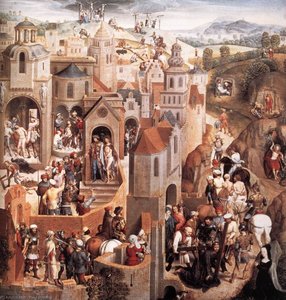
Hans Memling’s “Advent and Triumph of Christ (detail 1)” is more than just a painting; it's a meticulously crafted visual symphony, a vibrant tapestry woven with threads of biblical narrative, devotional piety, and the burgeoning artistic spirit of late medieval Bruges. Completed around 1480, this remarkable work transcends its physical dimensions to offer a profound meditation on Christ’s life – from his birth to his resurrection – all contained within a single, breathtakingly complex composition. Housed in the Memling Museum - Sint Jans Hospital, it stands as a testament to Memling's extraordinary skill and his ability to capture both the grandeur of religious themes and the intimate details of human experience.
The painting’s immediate impact lies in its sheer scale and density. It’s not merely a depiction of individual scenes; rather, Memling has orchestrated a sprawling panorama, a carefully arranged sequence of twenty-five episodes from the life of Christ and Mary. This ambitious design – often referred to as a *Simultanbild* or “simultaneous image” – was revolutionary for its time, demanding that the viewer engage in an active process of interpretation, piecing together the narrative across multiple viewpoints and temporal shifts. The scene unfolds with a remarkable dynamism, populated by soldiers, knights, shepherds, and ordinary people, all caught within the drama of salvation. The inclusion of donor portraits – likely members of Bruges’ prominent merchant families – subtly acknowledges their patronage while simultaneously integrating them into the larger religious story.
A Symphony of Color and Technique
Memling's mastery is immediately evident in his use of color, a hallmark of Early Netherlandish painting. He employs a rich palette of deep blues, vibrant reds, and earthy greens, creating an atmosphere of both solemnity and warmth. The figures are rendered with astonishing realism – the delicate folds of Mary’s robes, the weathered faces of the soldiers, the youthful innocence of the newborn Christ – all brought to life through meticulous attention to detail. His technique is characterized by a layering of thin glazes applied over a gesso ground, allowing light to penetrate and reflect off the surface, creating an illusion of depth and luminosity. The use of oil paints, relatively new at this time, allowed for greater control over color mixing and blending, contributing significantly to the painting’s luminous quality.
The landscape itself is a marvel of observation and artistic skill. It's not merely a backdrop; it actively participates in the narrative, providing context and atmosphere. The rolling hills, the distant buildings, and the carefully rendered trees all contribute to a sense of realism that was unprecedented for its time. Memling’s ability to seamlessly integrate these elements into the complex composition is a testament to his deep understanding of perspective and spatial relationships.
Symbolism and Devotional Significance
Beyond its technical brilliance, “Advent and Triumph of Christ” is rich in symbolism. Each scene within the painting carries layers of meaning, inviting contemplation on themes of faith, hope, and redemption. The presence of horses, for example, often symbolizes royalty and divine power. The stable where Jesus is born represents humility and the incarnation. The crucifixion, depicted towards the right side of the composition, serves as a poignant reminder of Christ’s sacrifice. Furthermore, the inclusion of donor portraits – likely members of Bruges’ prominent merchant families – subtly acknowledges their patronage while simultaneously integrating them into the larger religious story.
The painting's deliberate arrangement—designed to be viewed over multiple days and during different liturgical celebrations—was intended to deepen the viewer’s spiritual experience. It wasn’t meant to be passively observed; it was a dynamic, participatory work of art designed to engage the faithful in a continuous dialogue with the life of Christ. The inclusion of figures like Pieter Bultinc, the tanner who commissioned the piece, underscores this devotional purpose – he and his family were not simply patrons but active participants in the unfolding narrative.
Owning a Piece of History: Reproductions by ArtsDot.com
ArtsDot.com offers exquisite, handmade oil painting reproductions of “Advent and Triumph of Christ (detail 1),” allowing art lovers to bring this masterpiece into their homes. Our skilled artisans meticulously recreate Memling’s intricate details, vibrant colors, and masterful composition, ensuring that your reproduction captures the essence of the original while preserving its historical significance. Whether you are a seasoned collector or simply seeking to add a touch of timeless beauty to your interior space, an ArtsDot.com reproduction is a remarkable way to connect with one of the most compelling works of the Early Netherlandish period. Explore our collection today and experience the enduring power of Hans Memling’s vision.
For more information on Hans Memling and his works, visit /art/list/?Filter=hans+memling,hans,memling or the Memling Museum - Sint Jans Hospital website.
Related Artworks
Artist Biography
Hans Memling: The Bruges Master of Detail and Patronage
Hans Memling (c. 1430 – August 11, 1494), born in Seligenstadt, Germany, stands as a pivotal figure in Early Netherlandish painting—a movement characterized by exquisite realism, meticulous observation of nature, and profound spiritual contemplation. Though his formative years were spent primarily within the Rhineland’s artistic milieu, Memling's trajectory ultimately led him to Bruges, Belgium, where he established himself as one of the foremost artists of his time and cultivated a prolific workshop that disseminated his distinctive style across Europe.- Early Life & Apprenticeship: Precise biographical details surrounding Memling’s birth remain elusive, yet scholarly consensus suggests he emerged from Mainz around 1430. His artistic education commenced under the tutelage of Rogier van der Weyden, a titan of Flemish painting whose mastery of oil paint and sculptural modeling profoundly shaped Memling's technique. This apprenticeship instilled in him an unwavering dedication to detail—a hallmark that would define his oeuvre.
- Bruges & The Workshop: By 1465, Memling secured citizenship in Bruges, a burgeoning commercial hub and artistic epicenter. Recognizing the potential for collaborative creativity, he founded a workshop staffed by numerous assistants, fostering an environment of innovation and stylistic consistency. This workshop became renowned for producing stunning reproductions of masterpieces—a testament to Memling’s skill as both artist and pedagogue.
A Style Defined by Precision & Patronage
Memling's artistic style is instantly recognizable: characterized by luminous color palettes, delicately rendered drapery folds, and an astonishing level of anatomical accuracy. He meticulously studied human anatomy—drawing inspiration from classical sculpture—to achieve unparalleled realism in his portraits and religious scenes alike. Unlike many contemporaries who favored expressive brushstrokes, Memling prioritized meticulous observation and painstaking execution, resulting in images imbued with serene beauty and profound spiritual depth.- Religious Commissions: Memling’s reputation soared thanks to lucrative commissions from wealthy patrons—primarily clergymen and aristocratic families—who sought depictions of saints and biblical narratives that resonated with piety and prestige. Notable examples include “The Last Judgment” at St John's Hospital in Bruges, a monumental fresco showcasing Memling’s masterful compositional skills and dramatic use of color.
- Portraiture: Memling excelled as a portraitist, capturing the likenesses of prominent figures with remarkable sensitivity and psychological insight. His portraits—such as “Portrait of a Man with an Arrow”—demonstrate his ability to convey character through subtle gestures and facial expressions—a skill that cemented his place among the greatest artists of his era.
Influence & Legacy
Memling’s artistic legacy extends far beyond his own lifetime. His workshop produced a vast array of paintings—many bearing stylistic similarities to his original works—that propagated Memling's distinctive aesthetic across Flanders and beyond. Furthermore, Memling’s meticulous technique served as an inspiration for subsequent generations of artists—particularly Quentin Massys, who established the Antwerp School—solidifying Memling’s position as a cornerstone of Flemish Renaissance art.Rediscovery & Enduring Popularity
Memling's artistic achievements were largely forgotten until the 19th century when scholars rediscovered his paintings and championed his genius. Today, Memling’s works—particularly “The Last Judgment”—continue to captivate audiences worldwide, serving as enduring symbols of artistic excellence and spiritual contemplation. His meticulous attention to detail and profound understanding of human psychology remain remarkably relevant in our contemporary appreciation of art history.
memling, hans
Germany
Quick Facts
- Artistic Movement Or Style: Early Netherlandish Painting
- Artists Or Movements Influenced By This Artist: ['Flemish Primitive']
- Artists Who Influenced This Artist: ['Rogier van der Weyden']
- Date Of Birth: c. 1430
- Date Of Death: 11 august 1494
- Full Name: Hans Memling
- Nationality: German-Flemish
- Notable Artworks:
- St Johns Hospital
- The Last Judgement
- Scenes from the Passion
- Place Of Birth: Seligenstadt, Germany

