

 Preview
 Send
Send Share
Share
 Details

 Download
 Similars
 X-Ray
X-Ray Diaporama
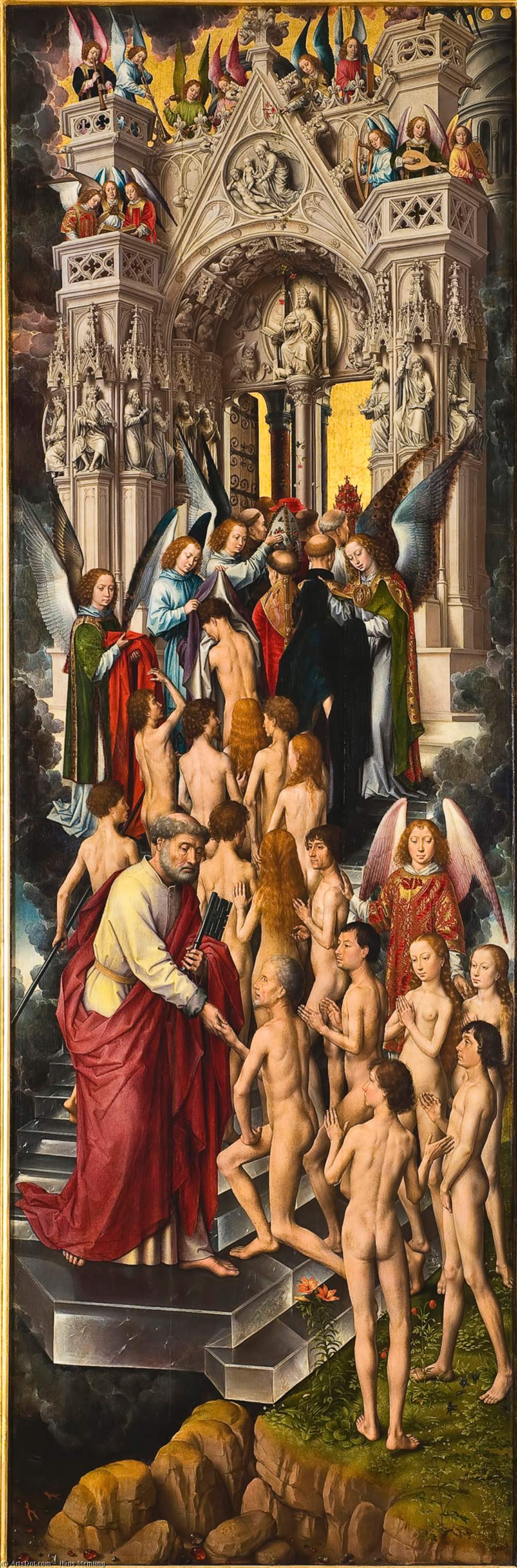
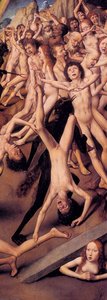
Last Judgment Triptych (left wing)
 Early Netherlandish Painting
 1467
1467 223.0 x 72.0 cm
 Muzeum Narodowe
 Read More
Purchase a high-resolution, enhanced digital image, far superior to the online preview.
Each file is meticulously prepared by our in-house specialists using advanced tools and expert manual retouching. We ensure every image has exceptional clarity, precise color accuracy, and fine detail.
The final file is delivered via email within 72 hours, optimized for immediate use in professional, editorial, and print environments. This is the same quality trusted by top-tier design studios, publishers, and galleries.
Digital Image
Download a high-resolution file for personal display, printing, and creative projects. ( Buy Print Buy Hand Made Painting)
Included in Every Digital Image Order
Expert Digital Delivery, Guaranteed
When you choose ArtsDot.com, you're not just getting an image - you're receiving a professionally enhanced digital artwork, crafted with precision and backed by a satisfaction guarantee. Here's everything that comes with your order, automatically:

Fast Email Delivery
Your high-resolution digital image file will be emailed to you within 72 hours of ordering - ready for immediate use.

AI-Enhanced Digital File
Your artwork is professionally optimized using advanced AI tools and manual editing, ensuring maximum detail, clarity, and color accuracy.

Free Lifetime Re-Delivery
Accidentally deleted or lost your file? No worries - we'll resend it to you anytime, free of charge.

No Import Fees - Ever
Enjoy your artwork instantly with zero customs, duties, or delivery fees - digital downloads are always tax-free.

Color Accuracy Guarantee
We ensure your digital image reflects the original colors as closely as possible using professional tools and color management.

60-Day Satisfaction Guarantee
If you're not satisfied with your digital image, we'll revise it or refund 100% within 60 days - no questions asked.

100% Money-Back Guarantee
Not satisfied? Get a full refund within 60 days of receiving your digital file - no questions asked.

Bulk Order Discounts
Buy 3 images, save 10% - Buy 5, save 15% - Buy 10+, save 20%. Great for creative projects, galleries, and agencies.
Collectible Description
The Last Judgment Triptych (Left Wing): A Window into Divine Justice
Hans Memling’s “Last Judgment Triptych,” specifically its left wing panel housed at the Muzeum Narodowe in Gdańsk, Poland, stands as an unparalleled achievement of Early Netherlandish art—a testament to meticulous observation, profound spiritual contemplation, and breathtaking artistic skill. Measuring 223 x 72 cm and executed in oil on wood between 1467 and 1471, this monumental artwork transcends mere depiction; it embodies the anxieties and aspirations of its era while continuing to resonate powerfully with audiences today.
Commissioned by Angelo Tani, a prominent Medici agent residing in Bruges, Belgium, the triptych’s genesis lies within the burgeoning humanist spirit of the Renaissance, yet firmly rooted in medieval Christian iconography. Memling's workshop meticulously recreated biblical scenes with astonishing realism—a hallmark of his distinctive style—capturing not only visual accuracy but also conveying complex emotional nuances.
Composition and Symbolism: A Pyramid of Judgment
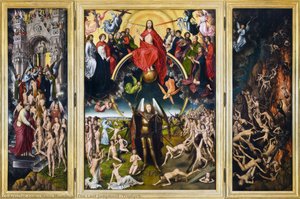
The panel’s composition is strikingly deliberate, mirroring the pyramidal structure favored by artists throughout Europe. At its apex sits Christ Almighty, radiating divine authority as he holds aloft a book—the Evangelium Libri Dei—representing the record of human life and judgment. To his right, St Michael, clad in gleaming armor and wielding a flaming sword, embodies righteous retribution, preparing to cast down those deemed unworthy of salvation into Hell.
- The Staircase Ascending: The prominent staircase leading upwards symbolizes the path to redemption for the righteous souls. Its crystalline texture underscores the purity and sanctity associated with divine grace.
- The Damned Below: Beneath Christ’s throne lies a depiction of the condemned, their faces contorted in anguish as they await their final reckoning. Their postures convey despair and hopelessness—a stark reminder of mortality and the consequences of sin.
- Architectural Detail: Memling's masterful rendering of architectural elements—particularly the building’s façade—adds depth to the scene and reinforces its solemn grandeur.
Historical Context and Artistic Technique
Painted during a period marked by religious fervor and intellectual curiosity, “The Last Judgment” reflects the anxieties surrounding papal authority and the impending apocalypse prevalent in fifteenth-century Europe. Memling’s technique—characterized by layering thin glazes of oil paint to achieve luminous color and subtle tonal variations—demonstrates an unparalleled level of artistic sophistication. He meticulously studied anatomical detail and drapery folds, striving for a level of realism that surpassed anything achieved by his contemporaries.
The inclusion of a donor portrait—that of Angelo Tani himself—further elevates the artwork’s significance as a testament to patronage and humanist ideals. It serves as a poignant reminder that art was not merely decorative but also imbued with moral and spiritual purpose, reflecting the values and beliefs of its time.
"The Last Judgment" continues to inspire artists and collectors alike, offering an enduring glimpse into the profound contemplation of faith and mortality—a masterpiece that transcends temporal boundaries and speaks directly to the human spirit. Its luminous colors and intricate detail invite viewers to contemplate the eternal questions of life and death, cementing Memling’s legacy as one of the greatest painters of his era.
Related Artworks


Artist Biography
Hans Memling: The Bruges Master of Detail and Patronage
Hans Memling (c. 1430 – August 11, 1494), born in Seligenstadt, Germany, stands as a pivotal figure in Early Netherlandish painting—a movement characterized by exquisite realism, meticulous observation of nature, and profound spiritual contemplation. Though his formative years were spent primarily within the Rhineland’s artistic milieu, Memling's trajectory ultimately led him to Bruges, Belgium, where he established himself as one of the foremost artists of his time and cultivated a prolific workshop that disseminated his distinctive style across Europe.- Early Life & Apprenticeship: Precise biographical details surrounding Memling’s birth remain elusive, yet scholarly consensus suggests he emerged from Mainz around 1430. His artistic education commenced under the tutelage of Rogier van der Weyden, a titan of Flemish painting whose mastery of oil paint and sculptural modeling profoundly shaped Memling's technique. This apprenticeship instilled in him an unwavering dedication to detail—a hallmark that would define his oeuvre.
- Bruges & The Workshop: By 1465, Memling secured citizenship in Bruges, a burgeoning commercial hub and artistic epicenter. Recognizing the potential for collaborative creativity, he founded a workshop staffed by numerous assistants, fostering an environment of innovation and stylistic consistency. This workshop became renowned for producing stunning reproductions of masterpieces—a testament to Memling’s skill as both artist and pedagogue.
A Style Defined by Precision & Patronage
Memling's artistic style is instantly recognizable: characterized by luminous color palettes, delicately rendered drapery folds, and an astonishing level of anatomical accuracy. He meticulously studied human anatomy—drawing inspiration from classical sculpture—to achieve unparalleled realism in his portraits and religious scenes alike. Unlike many contemporaries who favored expressive brushstrokes, Memling prioritized meticulous observation and painstaking execution, resulting in images imbued with serene beauty and profound spiritual depth.- Religious Commissions: Memling’s reputation soared thanks to lucrative commissions from wealthy patrons—primarily clergymen and aristocratic families—who sought depictions of saints and biblical narratives that resonated with piety and prestige. Notable examples include “The Last Judgment” at St John's Hospital in Bruges, a monumental fresco showcasing Memling’s masterful compositional skills and dramatic use of color.
- Portraiture: Memling excelled as a portraitist, capturing the likenesses of prominent figures with remarkable sensitivity and psychological insight. His portraits—such as “Portrait of a Man with an Arrow”—demonstrate his ability to convey character through subtle gestures and facial expressions—a skill that cemented his place among the greatest artists of his era.
Influence & Legacy
Memling’s artistic legacy extends far beyond his own lifetime. His workshop produced a vast array of paintings—many bearing stylistic similarities to his original works—that propagated Memling's distinctive aesthetic across Flanders and beyond. Furthermore, Memling’s meticulous technique served as an inspiration for subsequent generations of artists—particularly Quentin Massys, who established the Antwerp School—solidifying Memling’s position as a cornerstone of Flemish Renaissance art.Rediscovery & Enduring Popularity
Memling's artistic achievements were largely forgotten until the 19th century when scholars rediscovered his paintings and championed his genius. Today, Memling’s works—particularly “The Last Judgment”—continue to captivate audiences worldwide, serving as enduring symbols of artistic excellence and spiritual contemplation. His meticulous attention to detail and profound understanding of human psychology remain remarkably relevant in our contemporary appreciation of art history.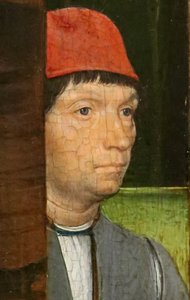
memling, hans
Germany
Quick Facts
- Artistic Movement Or Style: Early Netherlandish Painting
- Artists Or Movements Influenced By This Artist: ['Flemish Primitive']
- Artists Who Influenced This Artist: ['Rogier van der Weyden']
- Date Of Birth: c. 1430
- Date Of Death: 11 august 1494
- Full Name: Hans Memling
- Nationality: German-Flemish
- Notable Artworks:
- St Johns Hospital
- The Last Judgement
- Scenes from the Passion
- Place Of Birth: Seligenstadt, Germany

