 Send
Send Share
Share
 Details

 Download
 Similars
 Diaporama
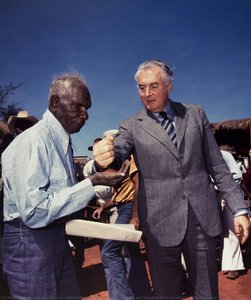
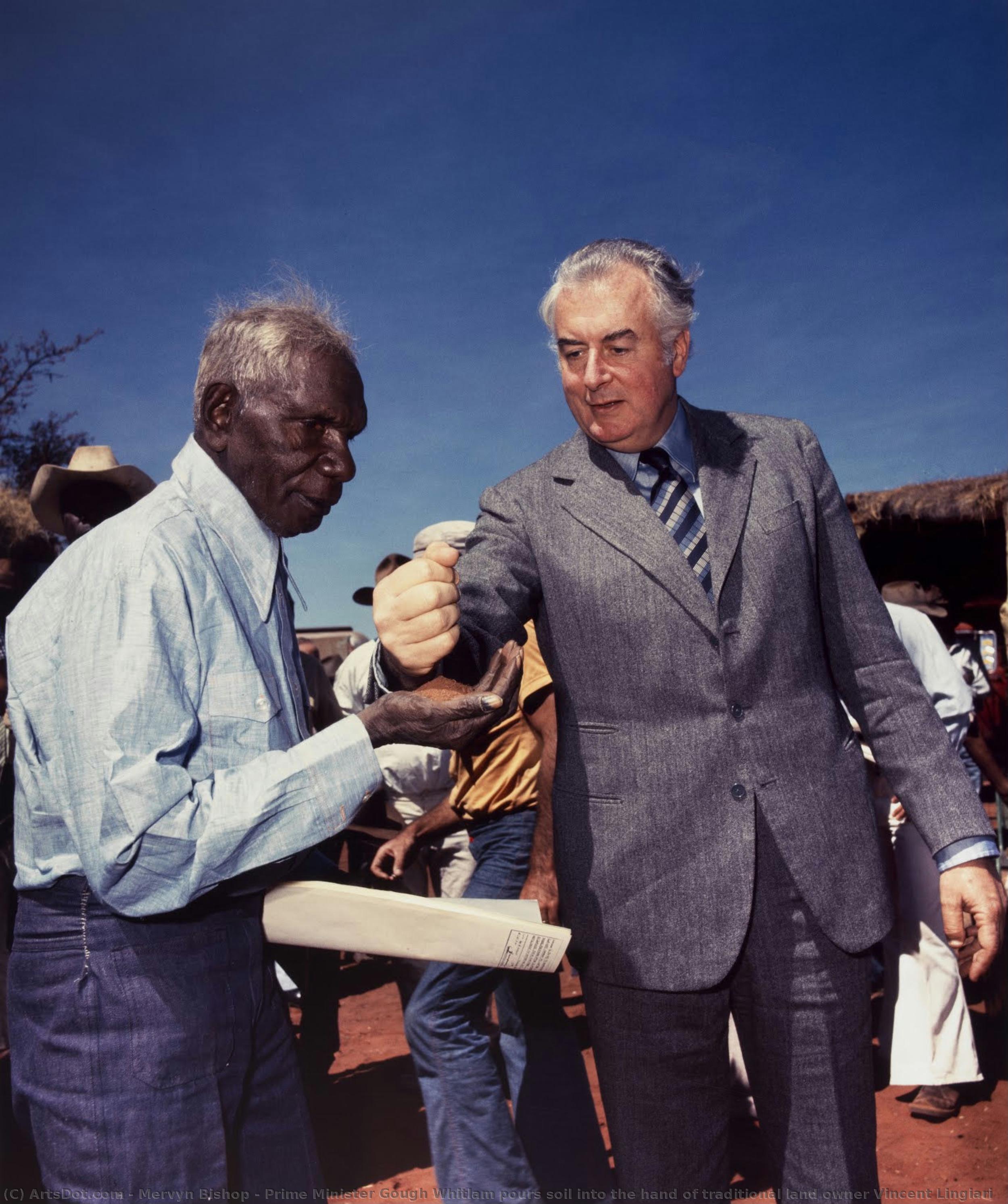
Prime Minister Gough Whitlam pours soil into the hand of traditional land owner Vincent Lingiari
 Black and White Photography
- Photo
- Photojournalism
 1975
1975- Modern
 60.0 x 50.0 cm
 National Portrait Gallery
 Read More
Giclée / Art Print
Museum-quality giclée or canvas print with fast production and flexible finish options. ( Buy Hand Made Painting Buy Image)




































Pick from our preset sizes that match the artwork's original proportions.

You may enter your own dimensions to fit a specific frame or space. If your selected size does not match the original image's proportions, we will either crop the artwork or extend the image with a mirrored or solid-fill edge. A digital mockup will be sent for your approval before production begins.
Please note that the on-screen preview does not reflect the actual cropping or extension. Only the mockup will accurately show the final composition.
While custom sizes are available, we recommend selecting a dimension from the predefined list to preserve the original proportions.
Worldwide Delivery () in 2 weeks instead of standard 4/5 weeks. (25 August)

Free Worldwide Express Shipping

High-Quality Linen Canvas

Full Shipping Insurance

Customs Tax Refund Guarantee

True Color Matching Guarantee

60-Day Return Policy (Defects Only)

100% Money-Back Guarantee

Bulk Discount Offer
 Glass option is only available in size under 110 CM

Prime Minister Gough Whitlam pours soil into the hand of traditional land owner Vincent Lingiari
Giclée / Art Print
Reproduction Size
-


Total Price
$ 63
Collectible Description
A Moment Frozen in Justice
In the quiet, grainy texture of Mervyn Bishop’s 1975 photograph, we witness more than just a political ceremony; we encounter a profound reclamation of identity and sovereignty. The image captures the historic moment when Prime Minister Gough Whitlam pours soil into the hand of Vincent Lingiari, an Elder of the Gurindji people. This is not merely a gesture of administrative procedure, but a visceral, tactile symbol of land rights being returned to their traditional custodians. Through Bishop’s lens, the act of pouring earth becomes a sacred ritual, bridging the gap between the colonial structures of the Australian government and the ancient, unyielding connection of the Gurindji people to their ancestral country.
The composition carries an immense weight, anchored by the physical contact between the two men. As the soil slips through fingers, it represents the literal and metaphorical return of the earth. For collectors and lovers of historical photography, this piece serves as a window into a transformative era of Australian history, capturing the culmination of the Wave Hill walk-off—a struggle for dignity and equity that lasted seven arduous years. The photograph does not just document an event; it breathes life into the spirit of resistance and the eventual triumph of justice.
The Mastery of the Monochrome Lens
Mervyn Bishop, a pioneer who shattered racial barriers as the first Aboriginal photographer for a metropolitan daily newspaper, utilizes the black-and-white medium to strip away distractions, leaving only the raw essence of the encounter. The absence of color forces the viewer to focus on the interplay of light and shadow, the weathered texture of Lingiari’s skin, and the formal, almost stark silhouette of Whitlam. This monochromatic approach lends the photograph a timeless, monumental quality, elevating a news event into the realm of fine art.
The technique employed here is characteristic of high-caliber documentary photography, where the ability to capture "the decisive moment" is paramount. There is a palpable tension in the frame—a sense of gravity that demands silence from the observer. The contrast between the formal attire of the political figure and the grounded, earthy presence of the Elder creates a visual dialogue about power, responsibility, and the weight of history. For those looking to adorn a space with art that provokes thought, this reproduction offers a sophisticated interplay of tonal depth and historical significance.
A Legacy for the Modern Collector
Integrating such a powerful work into an interior space provides more than just aesthetic value; it introduces a narrative of resilience and social evolution. Whether placed in a curated gallery setting or a thoughtful residential study, this photograph acts as a conversation piece that honors the struggle for Indigenous land rights. It is a work that resonates with anyone moved by themes of human rights, social justice, and the enduring strength of cultural heritage.
For interior designers seeking to add depth and intellectual substance to a project, Bishop’s work offers an unparalleled opportunity to blend historical gravity with classic photographic elegance. This reproduction allows the profound emotional impact of the Gurindji struggle to remain present, serving as a constant reminder of the transformative power of truth and the indelible bond between a people and their land.
Related Artworks
Artist Biography
A Pioneering Lens: The Life and Work of Mervyn Bishop
Mervyn Bishop’s journey as a photographer is more than just a career; it's a testament to breaking barriers, documenting history, and giving voice to Indigenous Australia. Born in Brewarrina, New South Wales, in 1945, his early life was shaped by the complexities of post-war Australia and the restrictive policies impacting Aboriginal communities. His father, “Minty” Bishop, a veteran and shearer, navigated a system that demanded assimilation for even those who had served the nation. This context – a family striving for normalcy while subtly resisting cultural erasure – would profoundly influence Bishop’s perspective and ultimately, his art. The spark ignited with his mother's Kodak 620 camera, transforming everyday scenes into cherished memories and laying the foundation for a lifelong passion. He honed his skills through self-teaching, capturing the essence of family life around Brewarrina before embarking on formal studies at Dubbo High School.Breaking Ground: A Career Forged in Journalism
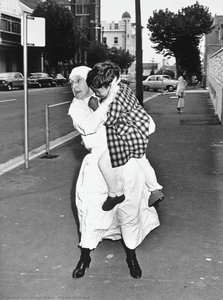
In 1962, Bishop shattered expectations by becoming the first Aboriginal Australian cadet photographer at the *Sydney Morning Herald*. This wasn’t merely a personal achievement; it was a symbolic dismantling of systemic exclusion within mainstream media. For seventeen years, he navigated the world of news photography, covering everything from community events to sporting triumphs. He completed his Photography Certificate Course at Sydney Technical College during this time, solidifying his technical expertise. Bishop's dedication and keen eye quickly earned him recognition, culminating in the prestigious Nikon-Walkley Australian Press Photographer of the Year award in 1971 for *Life and Death Dash*. This powerful image – a nun rushing to aid an Aboriginal child – wasn’t just a news photograph; it was a stark commentary on social inequalities and the often-fraught relationship between Indigenous communities and religious missions. The composition, contrast, and raw emotion resonated deeply, foreshadowing the profound impact his work would have on Australian society. He remained the sole indigenous photographer employed by the *Herald* throughout his tenure, paving the way for future generations of Aboriginal visual storytellers.Documenting a Nation: The Department of Aboriginal Affairs Years
Bishop’s move to the Department of Aboriginal Affairs in 1974 marked a pivotal shift in his career. This role allowed him unprecedented access to Indigenous communities across Australia during a period of significant change and burgeoning self-determination. He became a chronicler of hope, documenting land rights negotiations, cultural revival movements, and the everyday lives of Aboriginal people with sensitivity and respect. It was here that he captured arguably his most iconic photograph: the 1975 image of Prime Minister Gough Whitlam handing soil back to Gurindji elder Vincent Lingiari at Wattie Creek. This moment – a symbolic act of land repatriation – transcended its immediate context, becoming an enduring emblem of the Australian land rights movement and a powerful testament to Indigenous resilience. The photograph wasn’t simply documenting an event; it was capturing the birth of a new era in Aboriginal-government relations.Beyond the Image: Influence, Legacy, and Continued Impact
Mervyn Bishop's influence extends far beyond his individual photographs. He didn’t just document history; he actively shaped its narrative. His work challenged prevailing stereotypes, fostered empathy, and provided a platform for Indigenous voices often marginalized in mainstream media. He returned to the *Sydney Morning Herald* in 1979 before embracing freelance photography in 1986, working with agencies like National Geographic Society. He also dedicated himself to education, lecturing at Tranby Aboriginal College, Eora College, and the Tin Sheds Gallery at the University of Sydney, nurturing a new generation of Indigenous photographers. His retrospective exhibition, *In Dreams: Mervyn Bishop, Thirty Years of Photography 1960–1990*, curated by Tracey Moffatt, toured nationally and internationally for a decade, solidifying his place as a leading figure in Australian art and photojournalism. He further contributed to the cultural landscape as a stills photographer on Phil Noyce’s film *Rabbit Proof Fence* (2002). The Australia Council's Red Ochre Award in 2000 recognized his pioneering work, but perhaps his greatest legacy lies in the enduring power of his images and the inspiration he continues to provide. His recent retrospective at the Art Gallery of New South Wales further cemented his importance, showcasing not only his iconic photojournalism but also intimate family photographs that reveal the personal roots of his artistic vision.- Awards: Nikon-Walkley Australian Press Photographer of the Year (1971), Australia Council’s Red Ochre Award (2000).
- Key Themes: Indigenous identity, social justice, land rights, cultural preservation.
- Influences: His family history and experiences growing up in Brewarrina, the burgeoning Aboriginal rights movement of the 1970s.

mervyn bishop
1945 - , Australia
Quick Facts
- Artistic Movement Or Style: Photojournalism, Documentary
- Date Of Birth: July 1945
- Full Name: Mervyn Bishop
- Nationality: Australian
- Notable Artworks:
- Life and Death Dash (1971)
- Whitlam pouring soil (1975)
- Place Of Birth: Brewarrina, Australia
Related Articles

White on Canvas: 10 Masterpieces & Timeless Elegance for Your Home Decor
Explore 10 iconic white paintings by Monet, Whistler & Rothko! Discover the stories behind these serene masterpieces and their impact on art history. Find museum-quality reproductions for your home decor at .

Dark Masterpieces: 10 Iconic Paintings Dominated by Black Tones |
Explore 10 iconic paintings dominated by black tones, from Rembrandt’s chiaroscuro to Goya's dark expressions. Discover the stories behind these masterpieces & find museum-quality art reproductions for your home at .

Monochrome Visions: Exploring the Aesthetic & Historical Significance of Black & White Photography
Explore the rich history & artistic power of black and white photography. From early techniques to iconic masters like Ansel Adams, discover why monochrome continues to captivate art lovers today. Expert insights for collectors.

Mars Black Masterpieces: 10 Iconic Paintings & Timeless Art Decor Ideas
Delve into the power of 'Mars Black' with 10 iconic paintings by masters like Rembrandt & Caravaggio. Explore dramatic chiaroscuro, gothic art, and timeless beauty. Find museum-quality reproductions & elevate your home decor on .

The Subtleties of White: Exploring Absence, Light & Symbolism in Art History
Explore the profound symbolism & history of white in art! From ancient purity to modern abstraction, discover how artists have used absence & light. Expert insights from ArtsDot.