 Preview
 Send
Send Share
Share
 Details

 Download
 Similars
 X-Ray
X-Ray Diaporama
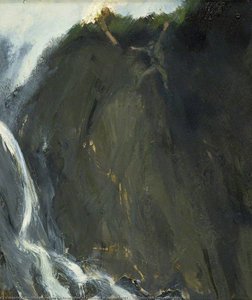
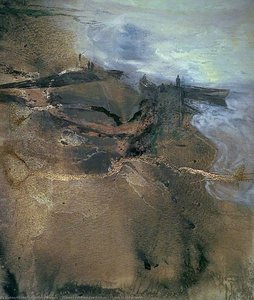
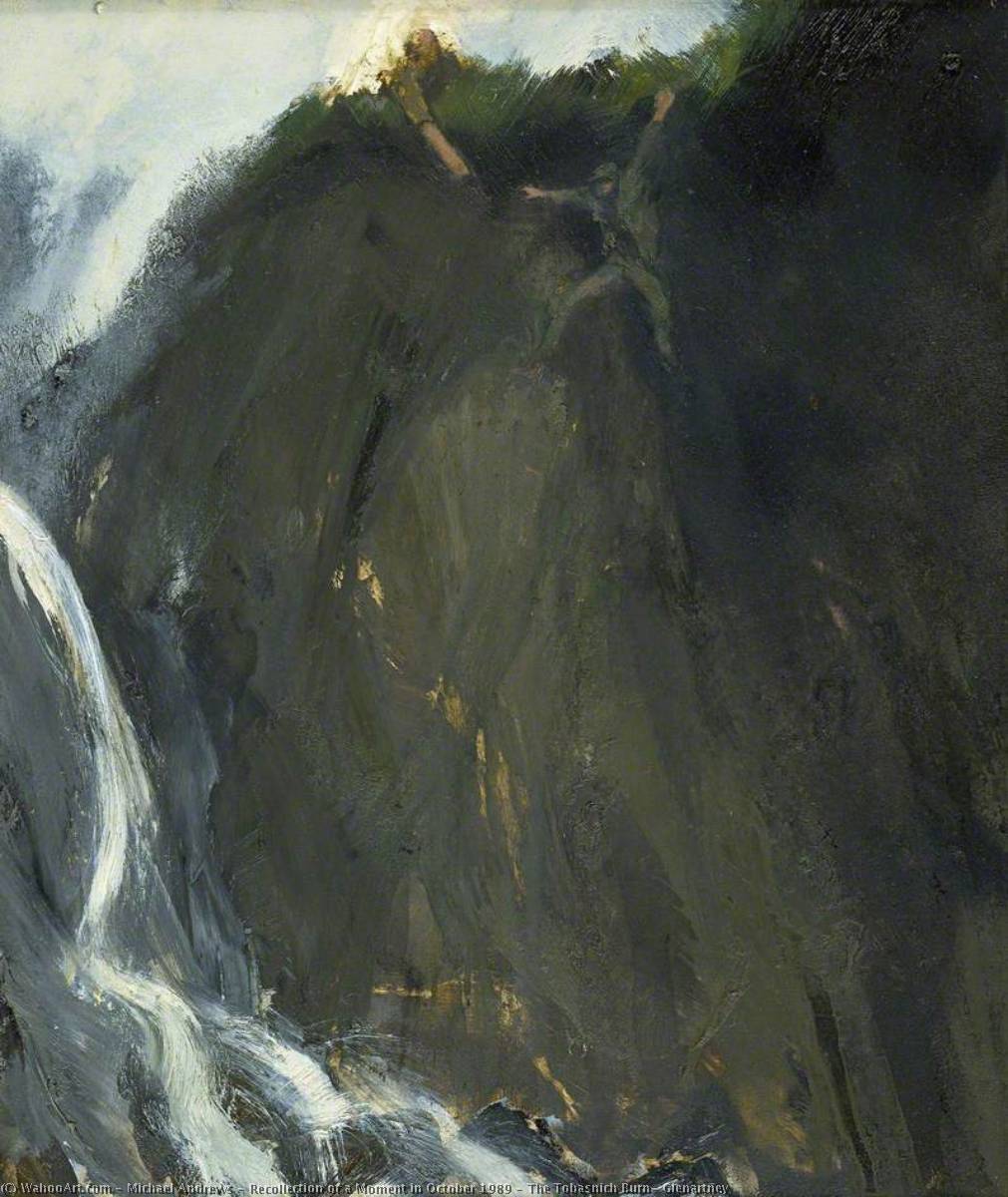
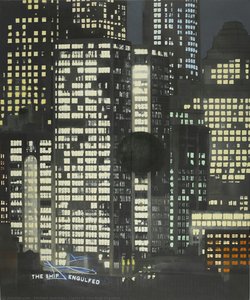
Recollection of a Moment in October 1989 – The Tobasnich Burn, Glenartney
 1992
1992 31.0 x 25.0 cm
 British Council Collection
 Read More
Giclée / Art Print
Museum-quality giclée or canvas print with fast production and flexible finish options. ( Buy Hand Made Painting Buy Image)




































Pick from our preset sizes that match the artwork's original proportions.

You may enter your own dimensions to fit a specific frame or space. If your selected size does not match the original image's proportions, we will either crop the artwork or extend the image with a mirrored or solid-fill edge. A digital mockup will be sent for your approval before production begins.
Please note that the on-screen preview does not reflect the actual cropping or extension. Only the mockup will accurately show the final composition.
While custom sizes are available, we recommend selecting a dimension from the predefined list to preserve the original proportions.
Worldwide Delivery () in 2 weeks instead of standard 4/5 weeks. (31 August)

Free Worldwide Express Shipping

High-Quality Linen Canvas

Full Shipping Insurance

Customs Tax Refund Guarantee

True Color Matching Guarantee

60-Day Return Policy (Defects Only)

100% Money-Back Guarantee

Bulk Discount Offer
 Glass option is only available in size under 110 CM

Recollection of a Moment in October 1989 – The Tobasnich Burn, Glenartney
Giclée / Art Print
Reproduction Size
-


Total Price
$ 63
Related Artworks








Artist Biography
A Visionary of Light and Atmosphere
The art of Michael Andrews (1928–1995) exists in a delicate space between the tangible world and the ethereal realm of thought. A British painter of profound technical mastery, Andrews possessed a rare ability to infuse landscapes and social scenes with a sense of psychological depth and luminous energy. Born in Norwich, England, his early artistic sensibilities were nurtured within the halls of the Norwich School of Fine Art, where a natural talent began to coalesce into a sophisticated modernist vision. His formative years were defined by an engagement with the dynamic rhythms of Vorticism, which he would later soften with a lyrical, almost dreamlike approach to the natural world.
His education at the Slade School of Fine Art served as a crucible for his development, placing him alongside legendary figures such as Lucian Freud and William Coldstream. This period of intense study under masters like Lawrence Gowing and William Townsend provided him with a rigorous foundation in draughtsmanship and observation. However, it was perhaps his time spent in Egypt during his National Service that truly expanded his chromatic palette, introducing him to the vibrant textures and searing light of the desert—elements that would forever haunt the periphery of his compositions.
The Symbology of the Self and the City
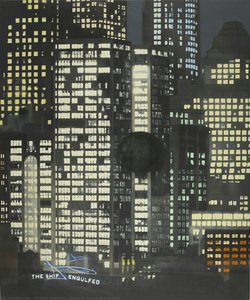
As Andrews’ career progressed, his work moved away from the immediate social observations of London's nightlife toward more profound, symbolic explorations. He became deeply fascinated by the concept of the "skin-encapsulated ego," a psychological notion that found its visual manifestation in his celebrated Lights series. In these works, created between 1970 and 1974, Andrews utilized the motif of a balloon drifting through urban landscapes to represent the fragile, floating nature of human consciousness. Inspired by the Symbolist poetry of Arthur Rimbaud, specifically Les Illuminations, these paintings sought to capture a state of enlightenment and an objective, unselfconscious vision of the world.
The imagery within this series is both haunting and beautiful, often featuring balloons suspended over neon-lit streets or amidst vast, atmospheric vistas. This period of his work demonstrates a remarkable synthesis of realism and fantasy, where the boundaries between the physical environment—such as the bright lights of Toronto or the rural stretches of Gloucestershire—and the internal landscape of the mind begin to dissolve. His ability to manipulate light, making it appear both as a source of external illumination and an internal spiritual glow, remains one of his most enduring legacies.
Legacy and Artistic Significance
Throughout his decades-long career, Andrews remained a figure of immense respect among his peers, moving through various artistic circles including the Norwich Twenty Group and teaching at prestigious institutions like the Slade and Chelsea Schools of Art. His versatility allowed him to navigate diverse subject matters, from formal portraiture and intimate depictions of social gatherings to expansive, surrealist landscapes featuring tropical fish or the iconic Ayers Rock in Australia.
The historical significance of Michael Andrews lies in his refusal to be tethered to a single movement. Instead, he created a personal visual language that bridged the gap between the structured discipline of postwar British realism and a more fluid, emotive modernism. His contributions are preserved in some of the world's most esteemed collections, including the Tate Gallery, ensuring that his unique exploration of light, memory, and the human spirit continues to resonate with viewers long after his passing.
michael andrews
1928 - 1995
Quick Facts
- Artistic Movement Or Style: Vorticism
- Artists Or Movements Influenced By This Artist: ['Eduardo Paolozzi']
- Artists Who Influenced This Artist:
- William Coldstream
- Lucian Freud
- Date Of Birth: October 30, 1928
- Date Of Death: July 19, 1995
- Full Name: Michael James Andrews
- Nationality: British
- Notable Artworks:
- A Man Who Suddenly Fell Over
- Sax Ad 832
- Place Of Birth: Norwich, England