 Preview
 Send
Send Share
Share
 Details

 Download
 Similars
 X-Ray
X-Ray Diaporama
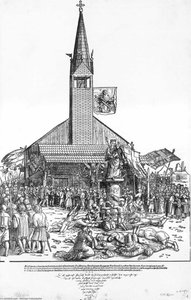
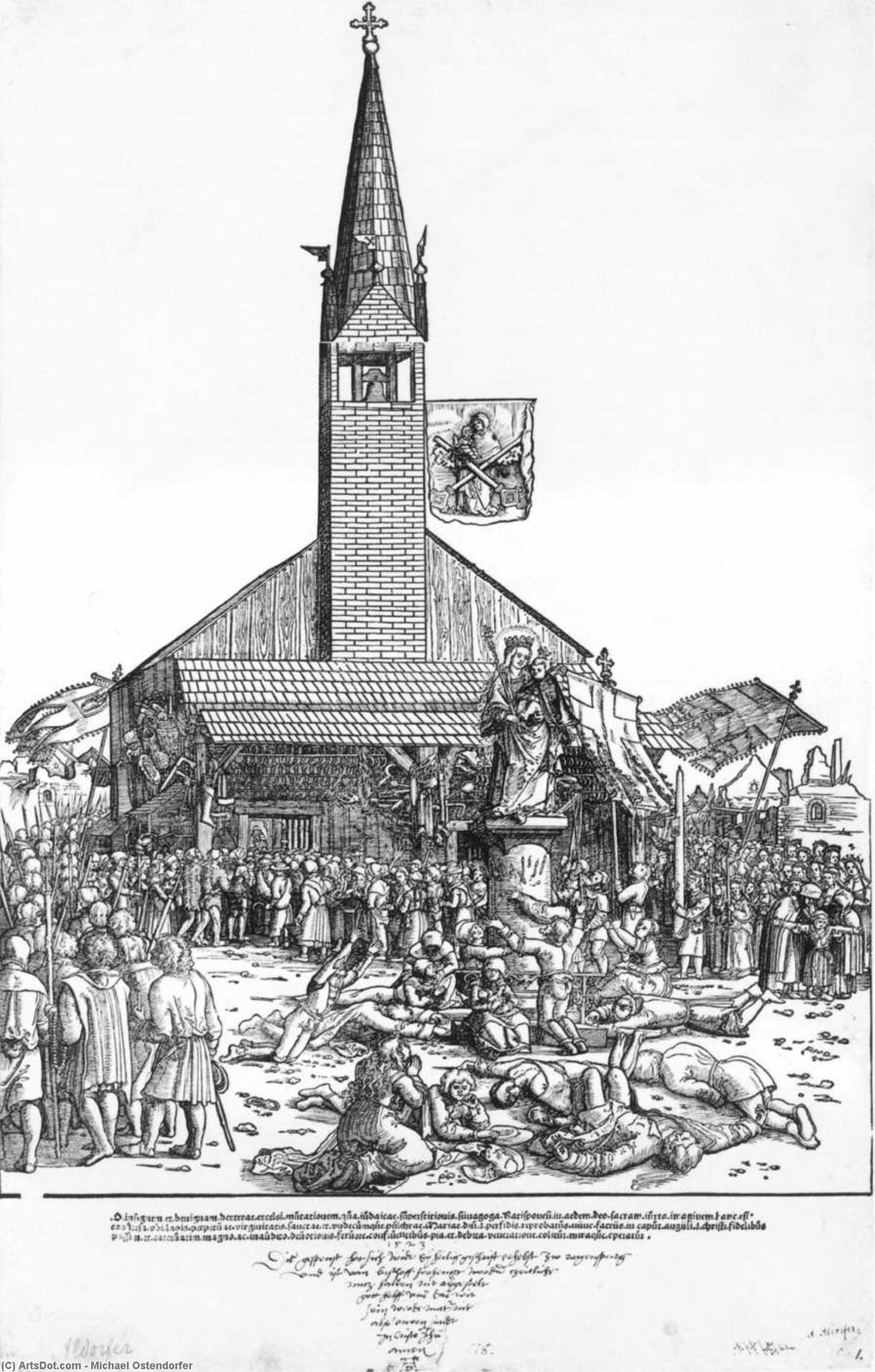
The Pilgrimage to the ''Fair Virgin'' in Regensburg
 1520
1520 555.0 x 390.0 cm
 Kunstsammlung der Veste Coburg
 Read More
Giclée / Art Print
Museum-quality giclée or canvas print with fast production and flexible finish options. ( Buy Hand Made Painting Buy Image)




































Pick from our preset sizes that match the artwork's original proportions.

You may enter your own dimensions to fit a specific frame or space. If your selected size does not match the original image's proportions, we will either crop the artwork or extend the image with a mirrored or solid-fill edge. A digital mockup will be sent for your approval before production begins.
Please note that the on-screen preview does not reflect the actual cropping or extension. Only the mockup will accurately show the final composition.
While custom sizes are available, we recommend selecting a dimension from the predefined list to preserve the original proportions.
Worldwide Delivery () in 2 weeks instead of standard 4/5 weeks. (24 August)

Free Worldwide Express Shipping

High-Quality Linen Canvas

Full Shipping Insurance

Customs Tax Refund Guarantee

True Color Matching Guarantee

60-Day Return Policy (Defects Only)

100% Money-Back Guarantee

Bulk Discount Offer
 Glass option is only available in size under 110 CM

The Pilgrimage to the ''Fair Virgin'' in Regensburg
Giclée / Art Print
Reproduction Size
-


Total Price
$ 63
Collectible Description
Introduction
Michael Ostendorfer was a German painter who lived during the Renaissance period. He is known for his masterful use of oil paint and his ability to capture the essence of his subjects. One of his most famous works, The Pilgrimage to the 'Fair Virgin' in Regensburg, is an excellent example of his skill as a painter.Description
The painting depicts a group of pilgrims making their way to the shrine of the Virgin Mary in Regensburg, Germany. The central figure is the Virgin herself, who is depicted as a beautiful and serene woman. She is surrounded by angels and saints, who are shown in various poses of adoration and supplication. The background of the painting features a detailed landscape, with rolling hills and a distant cityscape. The use of light and shadow creates a sense of depth and realism, while the vibrant colors add to the overall visual impact of the work.Historical Context
During the Renaissance, there was a renewed interest in classical art and culture. This was reflected in the art of the time, which often featured mythological figures and themes. However, religious subjects remained popular, particularly among the Catholic population. The Pilgrimage to the 'Fair Virgin' in Regensburg is an example of this trend. The painting reflects the devotion of the pilgrims who made their way to the shrine of the Virgin Mary, seeking her intercession and protection.Interpretation
The Pilgrimage to the 'Fair Virgin' in Regensburg is a visual representation of the Catholic belief in the power of intercessory prayer. The pilgrims in the painting are shown as humble and reverent, seeking the protection and guidance of the Virgin Mary. At the same time, the painting is also a celebration of beauty and grace. The Virgin Mary is depicted as a beautiful and serene figure, surrounded by angels and saints who add to her majesty and splendor.Conclusion
The Pilgrimage to the 'Fair Virgin' in Regensburg is a masterful work of art that showcases Michael Ostendorfer's skill as a painter. The painting reflects the historical context of the Renaissance period, while also conveying a powerful message about the power of intercessory prayer and the beauty of the Catholic faith. If you are interested in learning more about this painting or other works by Michael Ostendorfer, please visit our website at https://ArtsDot.com. We offer high-quality reproductions of this painting, as well as many others by Michael Ostendorfer and other famous artists. Michael Ostendorfer: The Pilgrimage to the 'Fair Virgin' in Regensburg (555 x 390 cm, Kunstsammlung der Veste Coburg (Coburg, Germany), Wood)Related Artworks
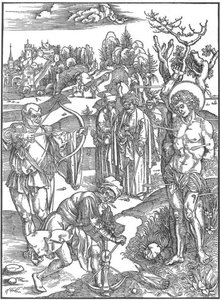
Artist Biography
A Master of the Woodcut: The Life and Legacy of Michael Ostendorfer
In the vibrant, transformative era of the German High Renaissance, few artists captured the spiritual fervor and technical precision of the age quite like Michael Ostendorfer. Born around 1490 or 1494 in the quiet surroundings of Ostendorf near Hemau, Bavaria, his life unfolded against the backdrop of a shifting Europe, where the profound theological debates of the Reformation met the burgeoning humanist ideals of the Renaissance. While the archival footprints of his early years remain somewhat obscured by the mists of time, the brilliance of his surviving works allows us to reconstruct a portrait of a man who was much more than a mere craftsman; he was a pioneer of the xylographic medium, a master of line, and a vital voice in the Danube School of painting.
The trajectory of Ostendorfer’s career was shaped by the prestigious workshops of the Holy Roman Empire. Scholars suggest he may have been influenced by or even trained under the legendary Albrecht Altdorfer, a central figure of the Danube School known for its atmospheric landscapes and emotive compositions. This lineage is evident in the way Ostendorfer approached his subjects, blending a meticulous observation of the natural world with a deep, symbolic resonance. His early professional life saw him navigating the artistic hubs of Augsburg and Regensburg, eventually finding himself in the service of the Elector Palatine, Friedrich II, in Neumarkt. This period as a court painter provided him with the stability and patronage necessary to refine his unique stylistic voice—a voice that balanced the delicate grace of Renaissance aesthetics with the rugged, expressive energy characteristic of German art.
The Art of the Print: Technique and Devotion
While Ostendorfer was a skilled painter capable of working with oil to capture light and texture, his most enduring contribution to the visual lexicon of Europe lies in his mastery of the woodcut. During the 16th century, the woodcut emerged as a revolutionary medium, offering an economical and efficient way to disseminate religious narratives and humanist thought to a burgeoning literate public. Ostendorfer elevated this medium from simple illustration to high art. Through the sophisticated use of hatching and crosshatching, he achieved a remarkable depth of tone and a sense of three-dimensional realism that was rare for the era. His ability to manipulate the stark contrast between black ink and white paper allowed him to evoke atmosphere, shadow, and the very essence of movement.
His thematic focus remained deeply rooted in the sacred, yet his execution breathed life into these ancient stories. One of his most evocative themes involves the depiction of religious pilgrimage, a subject that resonated deeply with the contemporary populace. In works such as The Pilgrimage to the 'Fair Virgin' in Regensburg, we see the artist’s ability to weave together human emotion and divine presence. He does not merely document a procession; he captures the palpable sense of devotion, the exhaustion of the travelers, and the serene majesty of the Virgin Mary herself. Through his prints, the spiritual landscape of the Renaissance became tangible, accessible, and profoundly moving for both the elite and the commoner alike.
Historical Significance and Artistic Heritage
The significance of Michael Ostendorfer extends far beyond the borders of Bavaria. As a xylographer and graphic artist, he participated in one of the most important communications revolutions in human history: the mass production of imagery. His work served as a bridge between the medieval tradition of iconographic storytelling and the modern era of print media. By integrating the stylistic innovations of the Danube School into the reproducible format of the woodcut, he helped create a visual language that could travel across borders, influencing the development of German graphic arts for generations.
Though his life ended in December 1559, leaving behind a legacy etched in wood and ink, Ostendorfer’s impact remains indelible. His career represents the intersection of technical mastery and cultural upheaval. To study his work is to witness the pulse of the Renaissance—a period defined by a relentless search for beauty, a profound reverence for the divine, and an unyielding drive toward artistic innovation. Today, his prints stand as vital historical documents, offering us a window into the soul of the 16th century and the enduring power of the printed image.
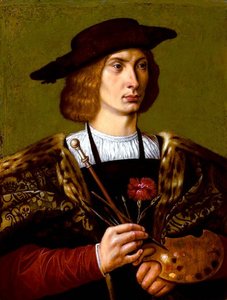
michael ostendorfer
1492 - 1559 , Germany
Quick Facts
- Artistic Movement Or Style: Renaissance Art
- Artists Or Movements Influenced By This Artist: ['Jesuit Architecture']
- Artists Who Influenced This Artist: ['Antonius Pannini']
- Date Of Birth: 1490/1494
- Date Of Death: December 1559
- Full Name: Michael Ostendorfer
- Nationality: German
- Notable Artworks:
- Pilgrims at the Church of the 'Beautiful Virgin' at Regensburg
- Self-Portrait
- Place Of Birth: Ostendorf (Swabia)