 Send
Send Share
Share
 Details

 Download
 Similars
 Diaporama
The English Channel
 Sculpture
- Sculpture
- Contemporary Sculpture
 2015
2015- Contemporary
 257.0 x 166.0 cm
 Art Gallery of New South Wales
 Read More
Hand Made Oil Reproduction
Hand-painted oil on canvas in your size and frame, made to order by our artists. ( Buy Print Buy Image)




































Pick from our preset sizes that match the artwork's original proportions.

You may enter your own dimensions to fit a specific frame or space. If your selected size does not match the original image's proportions, we will either crop the artwork or extend the painting with additional hand-painted elements. A digital mockup will be sent for your approval before production begins.
Please note that the on-screen preview does not reflect the actual cropping or extension. Only the mockup will accurately show the final composition.
While custom sizes are available, we recommend selecting a dimension from the predefined list to preserve the original proportions.
After order, ArtsDot.com team will email client for instructions and provide a mockup preview
Worldwide Delivery () in 3/4 weeks instead of standard 5 weeks. (25 August). No compromise on quality.

Free Worldwide Express Shipping

High-Quality Linen Canvas

Full Shipping Insurance

Customs Tax Refund Guarantee

True Color Matching Guarantee

60-Day Return Policy (Defects Only)

100% Money-Back Guarantee

Bulk Discount Offer
 Glass option is only available in size under 110 CM

The English Channel
Reproduction Medium
Reproduction Size
-


Total Price
$ 263
Artwork Description
A Mirror on the Sea: Michael Parekowhai’s ‘The English Channel’
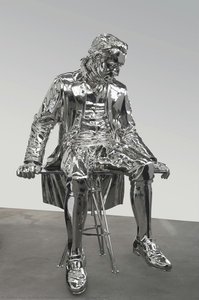
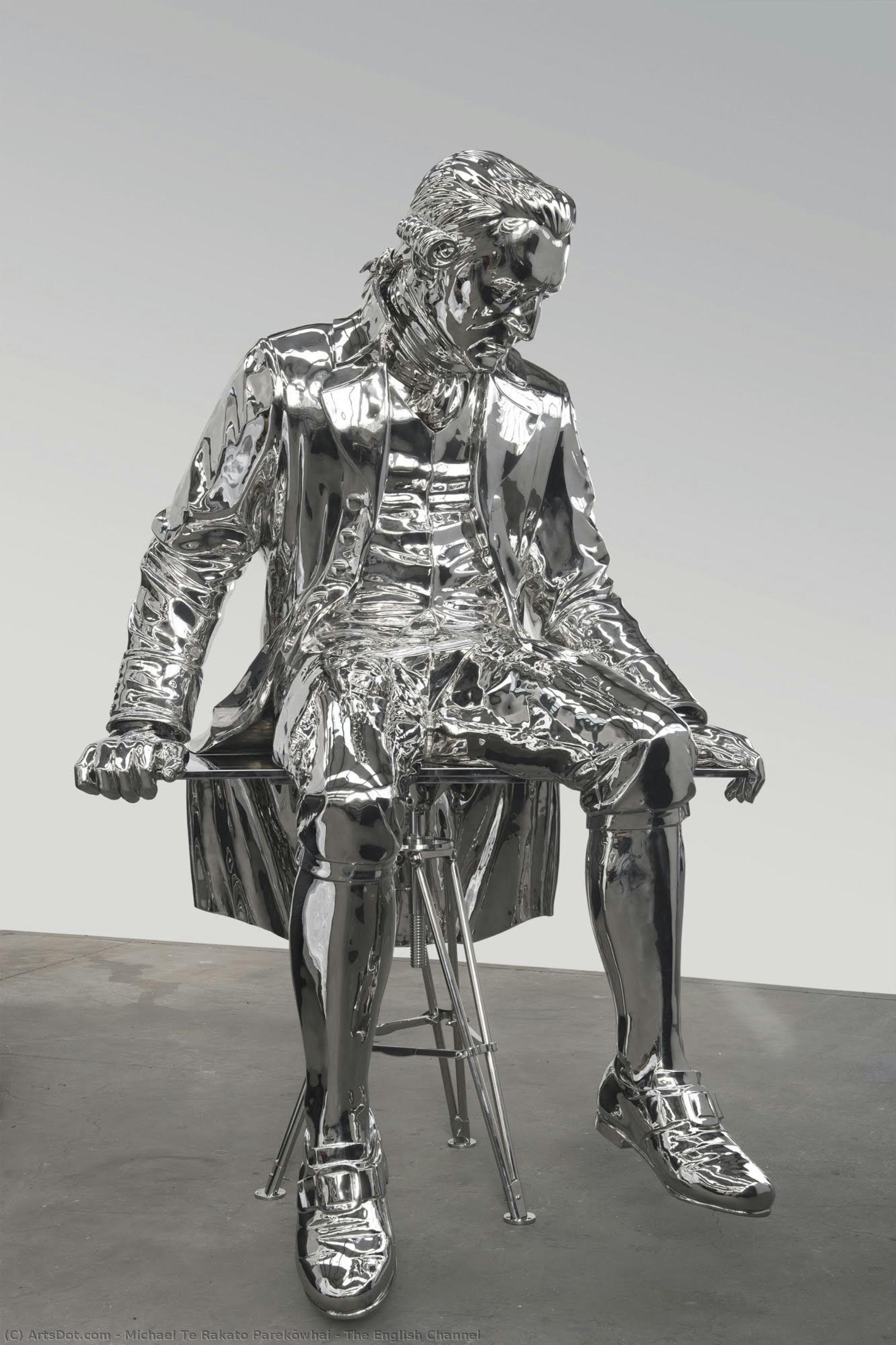
Michael Parekowhai's “The English Channel,” a monumental sculpture crafted from highly polished steel, isn’t merely a representation of Captain James Cook; it’s an invitation to contemplate legacy, perception, and the shifting nature of history itself. Standing nearly three meters tall, this arresting presence dominates any space it occupies, immediately drawing the viewer into its reflective surface – a surface that acts as both a mirror and a portal. The sculpture's genesis lies in Parekowhai’s deep connection to his Māori heritage, interwoven with a fascination for Western art traditions, creating a dialogue between ancestral storytelling and contemporary artistic practice.
The work’s initial presentation in Sydney, positioned within the Gallery facing harbour windows overlooking Cook’s 1770 voyage, amplified its inherent tension. The juxtaposition of the historical figure – a pivotal, yet increasingly complex, symbol of European exploration – with the modern gallery space and the shimmering reflections of the harbor created a powerful sense of displacement. It's as if Cook is not simply observing his past, but actively engaging with the present, questioning the narratives imposed upon him through history.
Form and Technique: A Dance of Reflection
Parekowhai’s masterful manipulation of steel is central to the sculpture’s impact. The material itself – highly polished stainless steel – isn't just a choice of medium; it’s integral to the artwork’s conceptual framework. The surface, flawlessly smooth and intensely reflective, actively participates in the viewing experience. It distorts and refracts light, creating an illusion of movement and blurring the boundaries between the sculpture and its surroundings. The meticulous construction – involving shaping, polishing, and assembling numerous metal sheets – speaks to a dedication to craft and a deliberate control over the material’s inherent qualities.
The seated pose of Cook, reminiscent of a portrait painting by Nathaniel Dance, is deliberately stylized. He's not depicted as a heroic explorer, but rather as a contemplative figure, almost lost in thought. The slightly suspended feet contribute to this sense of detachment and introspection, suggesting a moment of quiet reflection on the weight of his legacy.
Symbolism: Echoes of Exploration and Uncertainty
“The English Channel” is rich with symbolic layers. Cook’s presence immediately evokes the colonial narrative – the arrival of European powers in New Zealand and the subsequent displacement of indigenous populations. However, Parekowhai doesn't offer a simple condemnation; instead, he presents a complex portrait that invites critical engagement. The sculpture’s reflective surface acts as a mirror, reflecting not only the viewer but also the historical context surrounding Cook’s voyage – the harbor he sailed past, the gallery space itself, and ultimately, our own perspectives on history.
The question mark implied by Cook's posture—his feet suspended above the ground—underscores this ambiguity. It suggests that the story of exploration isn’t a closed chapter but an ongoing process of interpretation and re-evaluation. The sculpture doesn’t offer definitive answers, but rather prompts us to consider the multiple perspectives involved and the enduring impact of historical events.
A Contemporary Monument: Beyond History's Endings
Parekowhai deliberately rejects the traditional notion of a monument as a static marker of a completed narrative. “The English Channel” isn’t a full stop, signifying an end to history; it’s a question mark, inviting ongoing dialogue and reflection. This contemporary approach challenges the conventional role of monuments – often intended to celebrate heroic figures and solidify historical narratives – and instead proposes a space for critical engagement and nuanced understanding. The sculpture's height and weight, combined with its slippery, elusive presence, create an experience that is both imposing and subtly unsettling, reminding us of the complexities inherent in interpreting the past.
Related Artworks




Artist Biography
Michael Parekowhai: Bridging Tradition and Innovation
Michael Te Rakato Parekōwhai (born Porirua, New Zealand, 1968) stands as a pivotal figure in contemporary Māori art and sculpture. His artistic journey is marked by a profound engagement with both ancestral heritage and global cultural dialogues—a synthesis that distinguishes his work from many of its peers and cements his place within the broader landscape of New Zealand’s creative vanguard. Descended from Ngāriki rotoawe and Ngāti whakarongo lineages, Parekowhai's upbringing instilled in him a deep connection to Māori culture and spirituality, which subsequently informs his artistic explorations. His mother, a pākehā (European), introduced him to Western art traditions, fostering a multifaceted perspective that fuels his creative process.Early Influences & Artistic Formation
Parekowhai’s formative years were shaped by exposure to Māori storytelling and whakapapa—the genealogical framework underpinning Māori worldview—combined with an immersion in the visual language of pop culture. These seemingly disparate influences converge within his artistic practice, resulting in sculptures that grapple with concepts of translation, appropriation, and the negotiation between indigenous knowledge and global aesthetics. Studying at Elam School of Fine Arts in Auckland provided him with a rigorous grounding in sculptural techniques and conceptual frameworks, equipping him for the ambitious projects that would define his career. The encouragement of mentors like Professor Ian Weddell undoubtedly contributed to his artistic development.Sculptural Technique & Conceptual Vision
Parekowhai’s sculptures are characterized by their distinctive glossy finish—a technique he pioneered and refined—which creates an illusionistic surface that disrupts conventional notions of materiality. This deliberate choice reflects a broader preoccupation with challenging established hierarchies within art history, questioning the distinction between “high” art and vernacular culture. He frequently employs materials such as resin and fiberglass, manipulating them to achieve sculptural forms that are simultaneously monumental and subtly unsettling. His works often incorporate imagery drawn from Māori mythology and folklore, reimagined through contemporary visual vocabularies—a process he describes as "cultural translation."Notable Achievements & Recognition
Parekowhai’s artistic reputation ascended rapidly following his award win at the Arts Foundation of New Zealand Laureate Award in 2001. This accolade acknowledged his commitment to exploring themes of identity and cultural heritage within a global context. His participation in the Venice Biennale in 2011 garnered international acclaim, showcasing “The English Channel”—a striking sculptural installation that utilizes resin to depict the seabed beneath the Thames Estuary—and cementing his status as one of New Zealand’s most prominent artists. The piece powerfully embodies Parekowhai's core artistic vision: a confrontation with history and an interrogation of notions of originality.Legacy & Continuing Relevance
Michael Parekowhai continues to produce innovative sculptural works that engage with pressing social and political concerns, reflecting the ongoing dialogue between Māori culture and contemporary art practice. His work serves as a testament to the transformative potential of artistic experimentation—a willingness to push boundaries and reimagine familiar tropes—and reinforces his enduring contribution to New Zealand’s cultural heritage. He remains an influential voice within the academic realm, fostering critical discussions about representation and artistic responsibility.
michael te rakato parekōwhai
1968 - , New Zealand
Quick Facts
- Artistic Movement Or Style: Contemporary sculpture
- Date Of Birth: 1968
- Full Name: Michael Te Rakato Parekōwhai
- Nationality: New Zealander
- Notable Artworks:
- The English Channel
- Kiss The Baby Goodbye
- Place Of Birth: Porirua, New Zealand
Related Articles

Bronze Sculptures That Defined Art History | ArtsDot
Journey through art history with our Top 10 bronze sculptures! Explore masterpieces by Rodin, Michelangelo & more. Discover stories behind iconic statues and find museum-quality reproductions for your home decor at ArtsDot.com.

The Enduring Form: Exploring Themes & Techniques in Sculpture Across Historical Periods
Explore the rich history of sculpture from ancient masterpieces to contemporary innovations. Discover key techniques, influential artists & investment potential for discerning art collectors.

The Enduring Form: Sculpture Across History, Technique & Emotional Resonance
Explore the rich history of sculpture with ArtsDot. Discover key techniques, influential artists & investment potential for discerning collectors. Expert insights into valuing and collecting timeless masterpieces.

Bronze Age to Modern Masters: 10 Sculptures That Redefined Art | ArtsDot
Journey through art history with 10 legendary bronze sculptures – from Michelangelo's David to Rodin’s Thinker. Explore the stories, techniques & timeless beauty of these masterpieces. Find museum-quality reproductions & elevate your home decor on ArtsDot.com.
The Enduring Legacy of Bronze Sculpture: History, Techniques & Contemporary Interpretations
Explore the rich history & enduring appeal of bronze sculpture. Learn about casting techniques, iconic artists, collecting tips, & contemporary interpretations. Expert insights for discerning art collectors.