 Preview
 Send
Send Share
Share
 Details

 Download
 Similars
 X-Ray
X-Ray Diaporama
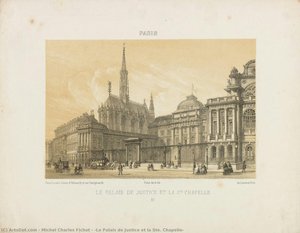
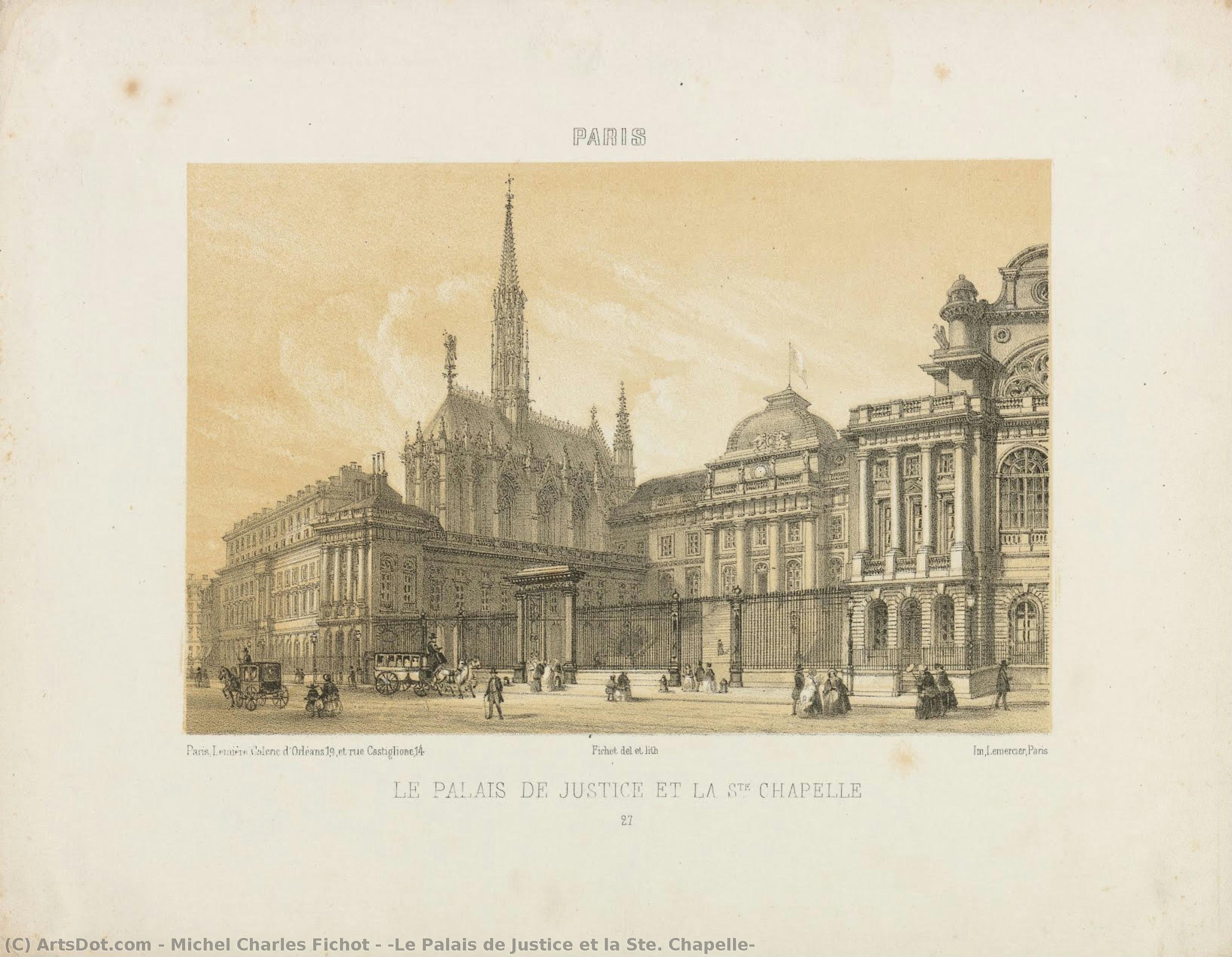
„Le Palais de Justice et la Ste. Chapelle”

 Read More
Hand Made Oil Reproduction
Hand-painted oil on canvas in your size and frame, made to order by our artists. ( Buy Print Buy Image)




































Pick from our preset sizes that match the artwork's original proportions.

You may enter your own dimensions to fit a specific frame or space. If your selected size does not match the original image's proportions, we will either crop the artwork or extend the painting with additional hand-painted elements. A digital mockup will be sent for your approval before production begins.
Please note that the on-screen preview does not reflect the actual cropping or extension. Only the mockup will accurately show the final composition.
While custom sizes are available, we recommend selecting a dimension from the predefined list to preserve the original proportions.
After order, ArtsDot.com team will email client for instructions and provide a mockup preview
Worldwide Delivery () in 3/4 weeks instead of standard 5 weeks. (27 August). No compromise on quality.

Free Worldwide Express Shipping

High-Quality Linen Canvas

Full Shipping Insurance

Customs Tax Refund Guarantee

True Color Matching Guarantee

60-Day Return Policy (Defects Only)

100% Money-Back Guarantee

Bulk Discount Offer
 Glass option is only available in size under 110 CM

„Le Palais de Justice et la Ste. Chapelle”
Reproduction Medium
Reproduction Size
-


Total Price
$ 263
Related Artworks









Artist Biography
The Architect of Parisian Visions
In the heart of nineteenth-century France, a period defined by sweeping urban transformations and a profound reverence for historical grandeur, the work of Michel Charles Fichot emerged as a vital visual record. Born in 1817 in the historic city of Troyes, Fichot possessed an innate sensitivity to the structural elegance of his surroundings. His artistic journey was not merely one of aesthetic pursuit but was deeply rooted in the disciplined study of form and space. By enrolling at the prestigious École des Beaux-Arts, he laid a foundation of architectural rigor that would forever distinguish his oeuvre. This training allowed him to approach the canvas not just as a painter, but as an observer capable of translating the complex geometry of stone, marble, and light into evocative compositions.
Fichot’s early years were marked by a fascinating duality between the technical and the creative. While his formal education focused on the precision of draughtsmanship and sculptural modeling, his professional path saw him navigating the worlds of lithography and journalism. His apprenticeship under the lithographer Etienne Collet provided him with the technical mastery required to capture fine textures, while his role as a press collaborator for publications like La Silhouette sharpened his ability to document the pulse of French society. This unique blend of architectural insight and journalistic observation enabled him to produce works that were both technically accurate and narratively rich, capturing the very soul of the monuments he depicted.
A Legacy in Stone and Light
The true brilliance of Fichot lies in his ability to breathe life into the silent monuments of France. He became a master of the architectural genre, specializing in depictions of iconic Parisian landmarks that remain some of the most poignant visual legacies of his era. When one gazes upon his interpretations of Notre Dame Cathedral, the Sainte Chapelle, or the Louvre Palace, it is impossible to see them as mere static reproductions. Instead, Fichot utilizes a sophisticated understanding of perspective and atmosphere to convey the emotional resonance of these spaces. He captures the way light filters through Gothic tracery and the imposing weight of classical facades, inviting the viewer to experience the grandeur and the quiet sanctity of these historic sites.
His collaborative spirit further expanded his artistic reach, allowing him to document not only the capital but also the rich heritage of the French provinces. Working alongside artists such as Amédée Aufauvre and Karl Fichot, he participated in ambitious projects like the documentation of the monuments of Seine-et-Marne. These endeavors were more than artistic exercises; they were acts of cultural preservation. Through his meticulous lithographs and paintings, Fichot ensured that the architectural splendor of the region was recorded with a precision that honored its historical significance.
The enduring impact of Michel Charles Fichot can be summarized through several key contributions to the art world:
- Architectural Precision: His training at the École des Beaux-Arts allowed him to bridge the gap between technical architectural drawing and fine art painting.
- Cultural Documentation: Through his work in lithography and collaborative publications, he provided a vital visual archive of 19th-century French landmarks.
- Atmospheric Mastery: Beyond mere structural accuracy, Fichot possessed the rare ability to capture the ephemeral qualities of light and shadow within monumental spaces.
- Versatility of Medium: His skill spanned across painting, drawing, illustration, and lithography, making him a multifaceted contributor to the visual culture of his time.
As we look back upon the life of this prolific creator, we see an artist who did not merely paint buildings, but who interpreted the very identity of France through its architecture. His work remains a window into a vanished era, offering a profound sense of continuity and a deep, lasting appreciation for the enduring beauty of the built environment.
michel charles fichot
1817 - 1903 , France
Quick Facts
- Artistic Movement Or Style: Romanticism
- Artists Or Movements Influenced By This Artist: ['École des Beaux-Arts']
- Artists Who Influenced This Artist:
- Karl Fichot
- Amédée Aufauvre
- Date Of Birth: June 6, 1817
- Date Of Death: July 7, 1903
- Full Name: Michel Charles Fichot
- Nationality: French
- Notable Artworks: ['Le Palais de Justice et la Ste. Chapelle']
- Place Of Birth: Troyes, France