 Preview
 Send
Send Share
Share
 Details

 Download
 Similars
 X-Ray
X-Ray Diaporama
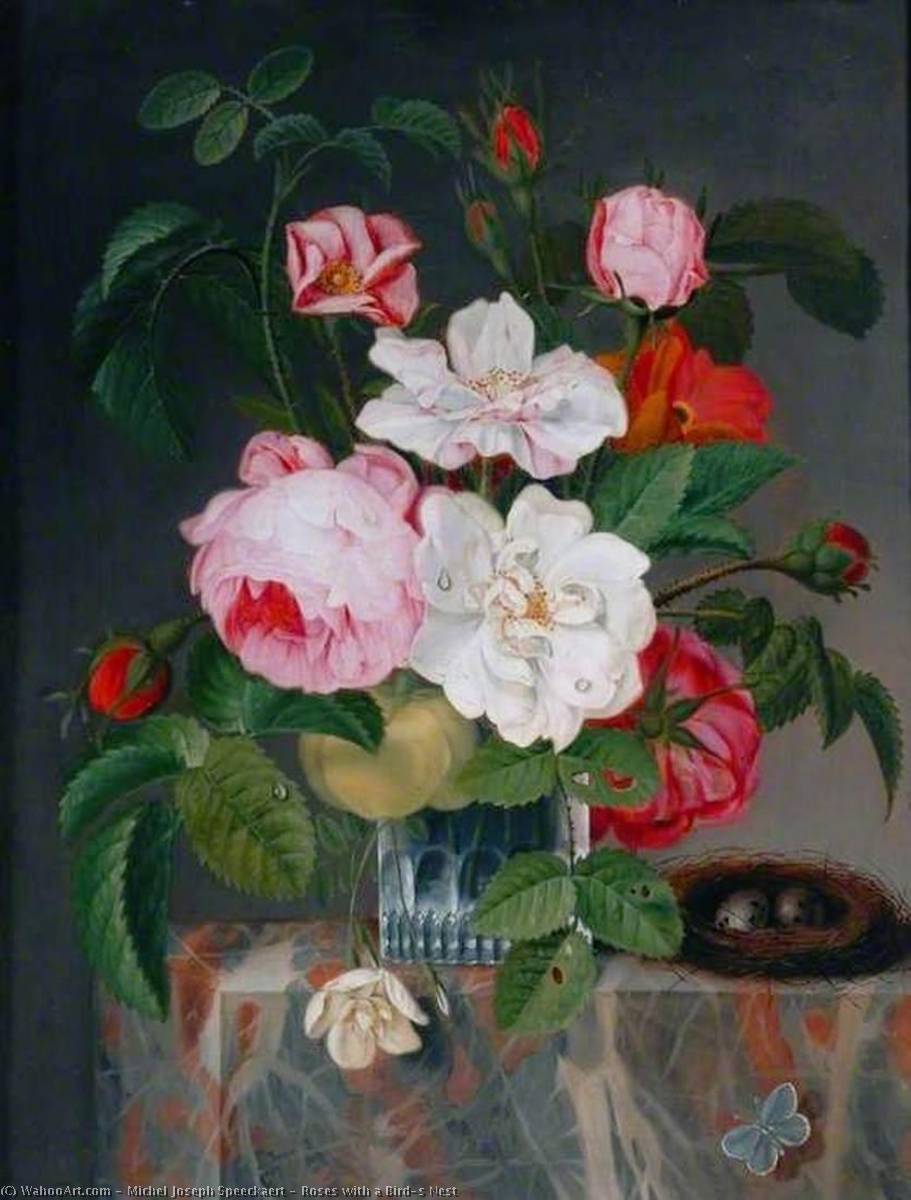
Roses with a Bird's Nest
 Read More
Giclée / Art Print
Museum-quality giclée or canvas print with fast production and flexible finish options. ( Buy Hand Made Painting Buy Image)




































Pick from our preset sizes that match the artwork's original proportions.

You may enter your own dimensions to fit a specific frame or space. If your selected size does not match the original image's proportions, we will either crop the artwork or extend the image with a mirrored or solid-fill edge. A digital mockup will be sent for your approval before production begins.
Please note that the on-screen preview does not reflect the actual cropping or extension. Only the mockup will accurately show the final composition.
While custom sizes are available, we recommend selecting a dimension from the predefined list to preserve the original proportions.
Worldwide Delivery () in 2 weeks instead of standard 4/5 weeks. (22 August)

Free Worldwide Express Shipping

High-Quality Linen Canvas

Full Shipping Insurance

Customs Tax Refund Guarantee

True Color Matching Guarantee

60-Day Return Policy (Defects Only)

100% Money-Back Guarantee

Bulk Discount Offer
 Glass option is only available in size under 110 CM

Roses with a Bird's Nest
Giclée / Art Print
Reproduction Size
-


Total Price
$ 63
Related Artworks









Artist Biography
The Delicate World of Michel Joseph Speeckaert: A Master of Floral Still Life
Michel Joseph Speeckaert (dates currently unavailable, but active in the 17th and early 18th centuries) remains a somewhat enigmatic figure within the pantheon of Flemish still life painters. While not as widely celebrated as his contemporaries like Jan Brueghel the Elder or Rachel Ruysch, Speeckaert’s work possesses a unique charm and technical finesse that continues to captivate art lovers today. His paintings are characterized by an exquisite attention to detail, a subtle yet sophisticated use of light, and a profound appreciation for the ephemeral beauty of flowers. He specialized in lush bouquets and arrangements, often set against dark, neutral backgrounds which serve to heighten the vibrancy of his subjects. Speeckaert’s career unfolded during a period when floral still life painting was experiencing a golden age, fueled by advancements in botanical knowledge and a growing fascination with naturalism. His paintings weren't merely decorative; they were statements about wealth, status, and the fleeting nature of existence – *memento mori* rendered in petals and leaves.Early Life and Artistic Training
Information regarding Speeckaert’s early life is scarce. It is believed he was born and worked primarily in Flanders, likely within the artistic hub of Antwerp or Brussels. The precise details of his training remain unknown, but it's reasonable to assume he apprenticed with a local master specializing in flower painting. The influence of earlier Flemish still life pioneers – artists like Ambrosius Bosschaert the Elder and Jan van Huysum – is evident in his meticulous technique and compositional style. However, Speeckaert quickly developed his own distinct voice, moving away from the more rigidly symmetrical arrangements favored by some of his predecessors towards a looser, more naturalistic approach. He seems to have benefited from the burgeoning interest in botanical illustration during this period, incorporating accurate depictions of various flower species into his work. This dedication to realism wasn’t simply about technical skill; it reflected a broader cultural trend toward scientific observation and a desire to understand the natural world.A Flourishing Career: Style and Subject Matter
Speeckaert's paintings typically feature opulent displays of flowers, often including exotic blooms alongside more common varieties. He was particularly adept at rendering the textures and forms of individual petals, leaves, and stems, creating a sense of almost photographic realism. His color palette is rich and nuanced, employing subtle gradations of tone to convey depth and luminosity. Unlike some still life painters who focused on dramatic contrasts or symbolic arrangements, Speeckaert’s work often emphasizes the sheer beauty and abundance of nature.- Bouquets and Arrangements: The core of his oeuvre consists of meticulously rendered floral bouquets, frequently presented in glass vases or woven baskets.
- Botanical Accuracy: Speeckaert demonstrated a keen eye for botanical detail, accurately depicting the characteristics of various flower species.
- Subtle Lighting: He masterfully employed light to highlight the textures and forms of his subjects, creating a sense of depth and realism.
- Dark Backgrounds: The use of dark, neutral backgrounds served to accentuate the vibrancy of the flowers and create a dramatic effect.
Legacy and Historical Significance
Although Speeckaert’s work hasn't achieved the same level of renown as some of his contemporaries, it remains highly valued by collectors and art historians alike. His paintings offer a fascinating glimpse into the artistic sensibilities of the late Baroque period, showcasing a masterful command of technique and a profound appreciation for the beauty of nature. He represents a bridge between the earlier, more formal traditions of Flemish still life painting and the later, more dynamic styles that would emerge in the 18th century. His influence can be seen in the work of subsequent flower painters who sought to capture the delicate beauty and ephemeral quality of blossoms. *Speeckaert’s legacy lies not in groundbreaking innovation but in his refined execution and ability to create paintings that are both visually stunning and emotionally resonant.* His works serve as a testament to the enduring power of still life painting – its capacity to transform everyday objects into symbols of beauty, mortality, and the fleeting nature of time.Rediscovering Speeckaert: Modern Appreciation
In recent years, there has been a growing interest in rediscovering lesser-known artists like Michel Joseph Speeckaert. Increased scholarly attention and the availability of high-quality reproductions have brought his work to a wider audience. Collectors are increasingly recognizing the value of his paintings, appreciating their technical brilliance and subtle beauty. The meticulous detail and realistic rendering of flowers continue to appeal to contemporary viewers, offering a moment of quiet contemplation in a fast-paced world. Speeckaert’s art reminds us of the importance of slowing down and appreciating the simple pleasures of life – the delicate fragrance of a blossom, the vibrant colors of a bouquet, and the fleeting beauty of nature itself. His paintings are not just representations of flowers; they are celebrations of life in all its ephemeral glory.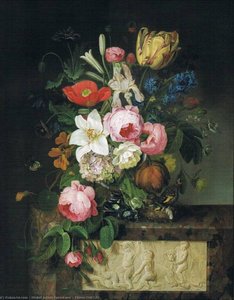
Quick Facts
- Artistic Movement Or Style: Floral Still Life
- Date Of Death: Living
- Full Name: Michel Joseph Speeckaert
- Nationality: Dutch
- Notable Artworks:
- Flower Compositions
- Botanical Art