 Preview
 Send
Send Share
Share
 Details

 Download
 Similars
 X-Ray
X-Ray Diaporama
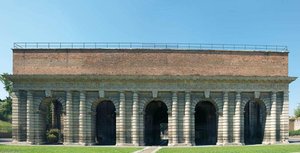
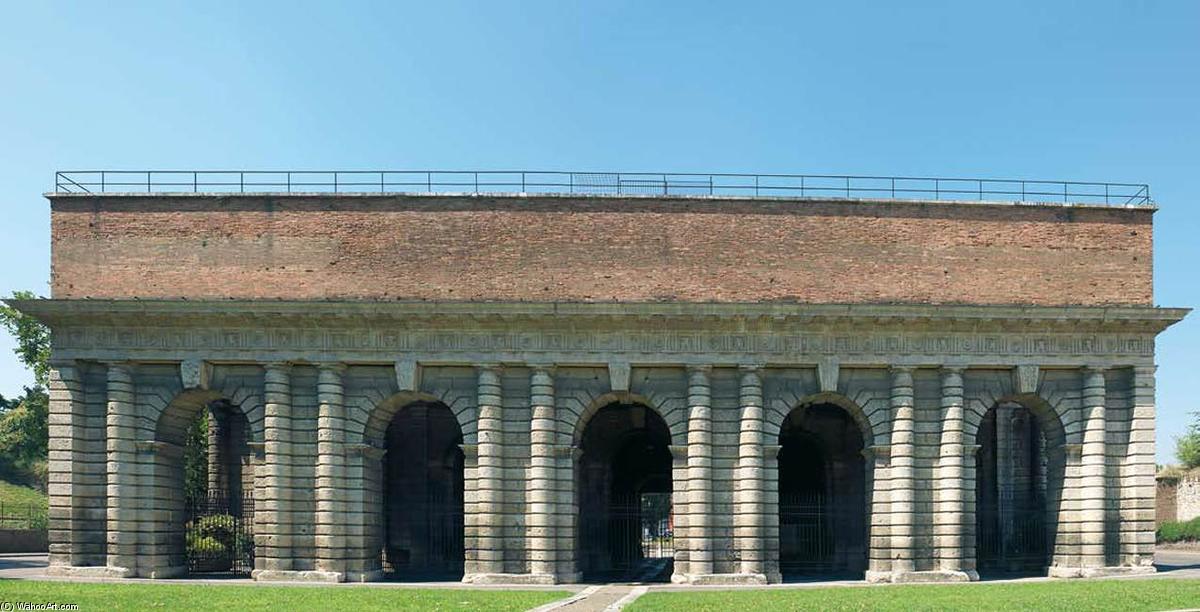
Porta del Palio

 Read More
Hand Made Oil Reproduction
Hand-painted oil on canvas in your size and frame, made to order by our artists. ( Buy Print Buy Image)




































Pick from our preset sizes that match the artwork's original proportions.

You may enter your own dimensions to fit a specific frame or space. If your selected size does not match the original image's proportions, we will either crop the artwork or extend the painting with additional hand-painted elements. A digital mockup will be sent for your approval before production begins.
Please note that the on-screen preview does not reflect the actual cropping or extension. Only the mockup will accurately show the final composition.
While custom sizes are available, we recommend selecting a dimension from the predefined list to preserve the original proportions.
After order, ArtsDot.com team will email client for instructions and provide a mockup preview
Worldwide Delivery () in 3/4 weeks instead of standard 5 weeks. (31 August). No compromise on quality.

Free Worldwide Express Shipping

High-Quality Linen Canvas

Full Shipping Insurance

Customs Tax Refund Guarantee

True Color Matching Guarantee

60-Day Return Policy (Defects Only)

100% Money-Back Guarantee

Bulk Discount Offer
 Glass option is only available in size under 110 CM

Porta del Palio
Reproduction Medium
Reproduction Size
-


Total Price
$ 263
Related Artworks








Artist Biography
Michele Sanmicheli: Architect of Venetian Fortresses and Classical Grace
Michele Sanmicheli (1484-1559), a name perhaps less familiar than those of Bramante or Palladio, stands as a pivotal figure in the architectural landscape of 16th-century Italy. Born in San Michele Extra, near Verona, he rose from humble beginnings – his father and uncle were stonemasons – to become one of Venice’s most prolific and influential architects, leaving an indelible mark on fortifications, palaces, and religious structures across a vast geographical area, encompassing Venice, Verona, Dalmatia, Bergamo, Brescia, Crete, and Corfu. His legacy isn't defined by grand, revolutionary designs but rather by a meticulous execution of classical principles, particularly his masterful use of Doric columns, imbuing even the most utilitarian structures with an understated elegance and enduring strength.
Sanmicheli’s early life was shaped by family tradition and a keen interest in art. He apprenticed alongside his father and uncle, learning the fundamentals of stonemasonry and architecture within their workshop. This grounding proved invaluable when he later moved to Rome around 1505, seeking further education under the tutelage of renowned architects like Antonio da Sangallo, Raphael, and Sansovino. His time in the Eternal City exposed him to the glories of classical antiquity, a fascination that would profoundly influence his architectural style. He also benefited from connections with humanist circles, absorbing the intellectual currents of the Renaissance.
The Rise at Orvieto Cathedral
A significant turning point in Sanmicheli’s career arrived in 1509 when he accepted the role of master builder at the construction site of Orvieto Cathedral. This prestigious commission provided him with invaluable experience in managing a large-scale building project and honed his skills in coordinating diverse tradesmen. He remained in Orvieto for nearly two decades, overseeing the cathedral’s completion and establishing himself as a respected architect throughout central Italy. During this period, he also undertook various private commissions, demonstrating his versatility and expanding his reputation.
His work at Orvieto was not merely about erecting a magnificent edifice; it involved meticulous planning, logistical management, and the skillful integration of different architectural elements. He demonstrated an understanding of structural engineering that was remarkably advanced for his time, ensuring the cathedral’s stability and longevity. The experience gained during this period would prove crucial when he later assumed responsibility for fortifying Venice's defenses.
Venetian Fortifications and Palace Design
Sanmicheli’s most enduring legacy lies in his contributions to Venetian fortifications and palace design. Following the fall of Constantinople in 1453, Venice recognized the urgent need to strengthen its defenses against Ottoman incursions. Sanmicheli was appointed as a military architect, tasked with designing and overseeing the construction of numerous fortresses along the Adriatic coast and throughout the Venetian Republic. His designs were characterized by their practicality, efficiency, and adherence to classical principles – particularly his consistent use of Doric columns, often without bases, creating a sense of solidity and grandeur.
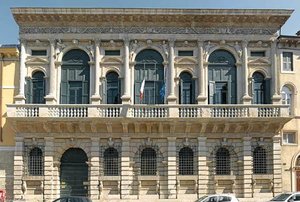
Beyond fortifications, Sanmicheli was also commissioned to design palaces for wealthy Venetian families. His approach blended functionality with aesthetic appeal, incorporating classical elements into the layouts and facades. Notable examples include the Palazzo Bevilacqua in Verona, showcasing his ability to create harmonious spaces that reflected both civic pride and aristocratic taste. His work on Porta del Palio in Verona is another testament to his skill, blending military necessity with artistic elegance.
Influence and Legacy
Michele Sanmicheli’s influence extended beyond the immediate commissions he received. He was a skilled teacher and mentor, passing on his knowledge and techniques to subsequent generations of architects. His meticulous approach to design, combined with his deep understanding of classical principles, set a standard for Venetian architecture throughout the 16th century. While he may not have sought fame or recognition during his lifetime, Sanmicheli’s contributions shaped the architectural landscape of Italy, leaving behind a legacy of enduring beauty and structural integrity. His work continues to be studied and admired for its elegance, practicality, and profound connection to the classical world.
His exploration of Greek architecture, facilitated by his travels in Dalmatia and Crete, is particularly noteworthy. The incorporation of Doric columns without bases – a stylistic choice that was relatively rare in Italy at the time – suggests an influence from ancient Greek precedents, demonstrating Sanmicheli’s intellectual curiosity and willingness to draw inspiration from diverse sources.
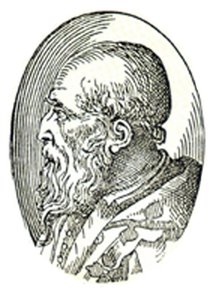
michele sanmicheli
1484 - 1559 , Italy
Quick Facts
- Artistic Movement Or Style: Venetian Renaissance
- Artists Or Movements Influenced By This Artist: ['Classical architecture']
- Artists Who Influenced This Artist:
- Bramante
- Raphael
- Sansovino
- Date Of Birth: 1484
- Date Of Death: 1559
- Full Name: Michele Sanmicheli
- Nationality: Italian
- Notable Artworks:
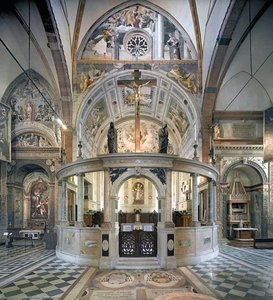
- Choir screen
- Palazzo Bevilacqua
- Porta del Palio
- Place Of Birth: San Michele Extra, Italy