 Preview
 Send
Send Share
Share
 Details

 Download
 Similars
 X-Ray
X-Ray Diaporama
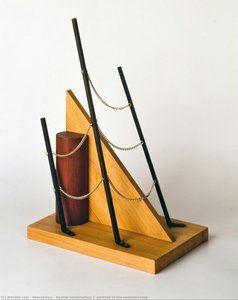
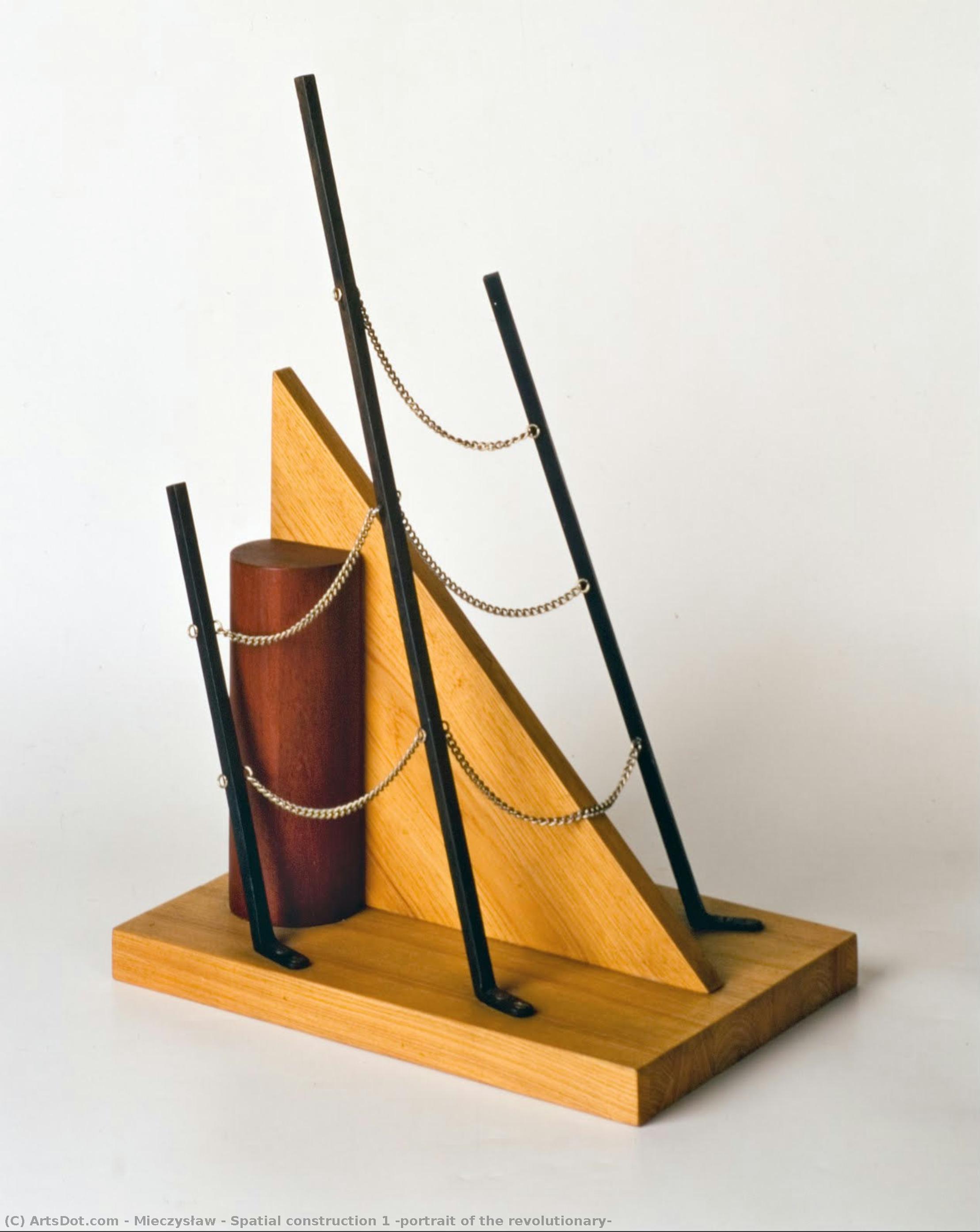
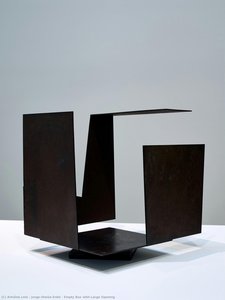
Spatial construction 1 (portrait of the revolutionary)
 1922
1922 53.0 x 36.0 cm
 Read More
Hand Made Oil Reproduction
Hand-painted oil on canvas in your size and frame, made to order by our artists. ( Buy Print Buy Image)




































Pick from our preset sizes that match the artwork's original proportions.

You may enter your own dimensions to fit a specific frame or space. If your selected size does not match the original image's proportions, we will either crop the artwork or extend the painting with additional hand-painted elements. A digital mockup will be sent for your approval before production begins.
Please note that the on-screen preview does not reflect the actual cropping or extension. Only the mockup will accurately show the final composition.
While custom sizes are available, we recommend selecting a dimension from the predefined list to preserve the original proportions.
After order, ArtsDot.com team will email client for instructions and provide a mockup preview
Worldwide Delivery () in 3/4 weeks instead of standard 5 weeks. (30 August). No compromise on quality.

Free Worldwide Express Shipping

High-Quality Linen Canvas

Full Shipping Insurance

Customs Tax Refund Guarantee

True Color Matching Guarantee

60-Day Return Policy (Defects Only)

100% Money-Back Guarantee

Bulk Discount Offer
 Glass option is only available in size under 110 CM

Spatial construction 1 (portrait of the revolutionary)
Reproduction Medium
Reproduction Size
-


Total Price
$ 263
Related Artworks









Artist Biography
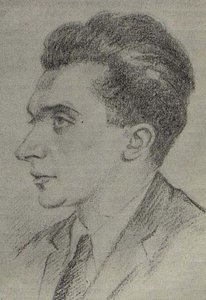
Mieczysław Szczuka: Life and Artistic Journey
- Born: October 19, 1898, Warsaw, Poland
- Died: August 13, 1927, Tatra Mountains, Poland (aged 28)
- Nationality: Polish
Mieczysław Szczuka was a significant figure in the Polish avant-garde art scene of the early 20th century. He was not only a painter and graphic artist but also an avid mountaineer, whose life tragically ended during a climbing expedition. His artistic career spanned various movements including Cubism, Futurism, Constructivism, and Productivism, reflecting his experimental approach to art and design.
Early Life and Artistic Education
- Szczuka received his formal artistic education at the Academy of Fine Arts in Warsaw from 1915 to 1918 under Professor Miłosz Kotarbiński.
- During this period, he met Teresa Żarnowerówna, who became both a life partner and a significant collaborator in his artistic endeavors.
- Initially influenced by Expressionism, Szczuka's early works featured dramatic religious paintings exhibited at the Polish Arts Club in Warsaw in 1920.
Artistic Development and Key Movements
- Shift to Constructivism: By 1921, Szczuka began moving away from traditional painting towards more abstract and spatial compositions, influenced by Cubism and Futurism. He experimented with wood and papier-mâché, creating multi-faceted works that explored textural effects and color intensity.
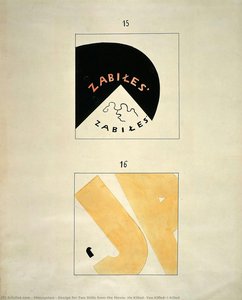
- Productivism and Utilitarianism: A key aspect of Szczuka's artistic philosophy was his embrace of Productivism, advocating for the social utility of art. This led him to focus on design projects such as typography, theatre sets, monuments, and abstract films.
- "Blok" Group: In 1924, he co-founded the "Blok" group alongside Żarnowerówna, Henryk Stażewski, and Edmund Miller. This collective championed Constructivist and Suprematist ideals in Polish art. The group's journal served as a platform for disseminating their ideas and showcasing their work.
- Influence of Russian Constructivism: Szczuka’s artistic evolution was significantly shaped by Russian Constructivism, which emphasized the integration of art with social and industrial production.
Major Works and Contributions
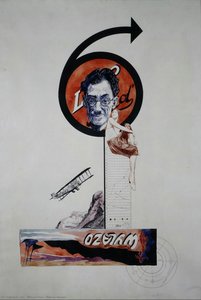
- Spatial Construction – Portrait of a Revolutionary (1922): This work exemplifies his exploration of spatial design and typography.
- Abstract Films: Szczuka experimented with abstract film, pushing the boundaries of cinematic expression. Details about these films are scarce but demonstrate his innovative spirit.
- Book Illustrations and Typography Designs: He made significant contributions to Polish book illustration and typography, reflecting his commitment to utilitarian art.
- Theatrical Set Design: Szczuka designed sets for theatrical productions, integrating avant-garde aesthetics into the performing arts.
Legacy and Historical Significance
- Szczuka's work remains an important example of Polish Constructivism and Productivism, demonstrating a commitment to social engagement and functional design.
- His tragic death at a young age cut short a promising career, but his contributions continue to inspire artists and designers today.
- He is remembered as a pioneer who challenged traditional artistic conventions and sought to integrate art with everyday life.
Mieczysław Szczuka
1898 - 1927 , Poland
Quick Facts
- Artistic Movement Or Style:
- Constructivism
- Productivism
- Artists Or Movements Influenced By This Artist: ['Blok Group']
- Artists Who Influenced This Artist:
- Miłosz Kotarbiński
- Futurists
- Dadaists
- Date Of Birth: October 19, 1898
- Date Of Death: August 13, 1927
- Full Name: Mieczysław Szczuka
- Nationality: Polish
- Notable Artworks:
- Spatial Construction – Portrait
- Self-Portrait with a Palette
- Place Of Birth: Warsaw, Poland